



New Delhi: When the 2025 Delhi Assembly elections were announced, all the contesting parties knew that the key to power in the National Capital rested with its women voters. And so, all parties rushed to woo them, with promises of monthly cash benefits, free bus rides and dedicated pension schemes.
Over 1.5 years later, the BJP government in Delhi is set to roll out one such promise, but with the quintessential ‘conditions apply’.
The Delhi Lakshmi Yojana, which offers a monthly assistance of Rs 2,500 to women from Economically Weaker Sections (EWS), is a series of eligibility and disqualification hoops, and even guidelines on how this money should be used. The benefit, which is expected to reach about 17 lakh women, according to officials, will cover women between 21 and 60 years of age whose family income is up to Rs 2.5 lakh per annum, and has been living in Delhi for at least 10 years.
But a woman who has more than three children, or who pays income tax or files GST returns, or whose family owns a four-wheeler, or whose family consumes more than 2,400 units of electricity, or who has a criminal record will not be eligible.
Those applying will also have to submit an endorsement letter from the MP or MLA of their constituency. Every application will go through a four-stage verification process.
And once a woman does succeed in jumping through all of these hoops to qualify for the scheme, she is still not entitled to receive the money directly in her bank account. Instead, she is given two ways to receive the benefit— she can either choose to have the entire sum of Rs 2,500 invested in a Recurring Deposit (RD) or Fixed Deposit (FD), or receive Rs 1,000 through a Central Bank Digital Currency (CBDC) wallet and have the remaining Rs 1,500 deposited into an RD or an FD account.
And if she picks the second option, she still doesn’t get to choose what she would spend this money on. The CBDC wallet comes with its own list of goods and services that the money cannot be used for—including alcoholic beverages, tobacco products, and lottery tickets.
The destiny of election-linked freebies goes through a similar lifecycle in most states—a broad, open-ended announcement right before the elections to woo voters, a harsh reality check owing to financial constraints once the party actually comes to power, a realisation that the promise in its entirety may be unsustainable, and then a scheme that is just a faint shadow of the promise that birthed it.
In Maharashtra as well, in a bid to retain power, the BJP-led ruling Mahayuti promised cash handouts of Rs 1,500 to women under the Mukhyamantri Majhi Ladki Bahin Yojana in 2024. To bolster its commitment, over 2.3 crore beneficiaries received monthly installments of the Rs 1,500 payout for months before the polls.
However, since then, the number of beneficiaries under the scheme has fallen from to 1.66 crore, with around 81 lakh registered beneficiaries being removed from the scheme following an e-KYC verification drive, citing non-eligibility. Ineligible beneficiaries included over-age women, vehicle owners, government employees and even 14,000 men.
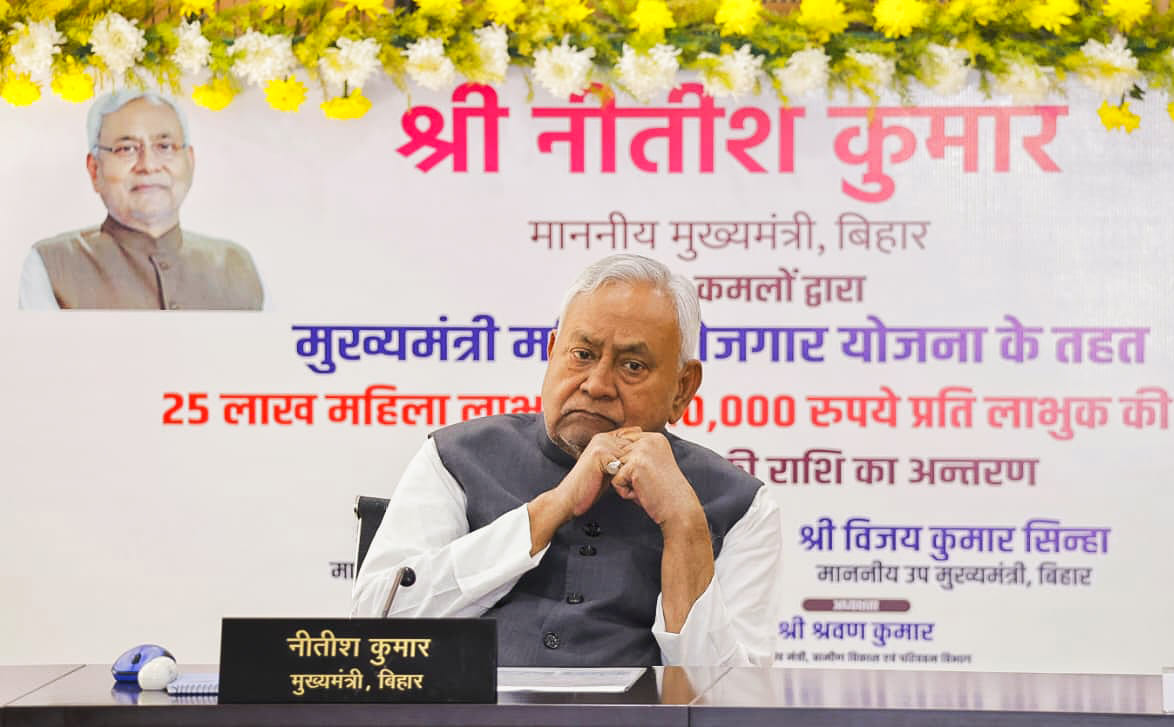
Similarly, the Mukhyamantri Mahila Rojgar Yojana, a Bihar government initiative, was launched by Prime Minister Narendra Modi a month before the polls in November 2025, to transfer R. 10,000 each into the bank accounts of 75 lakh women across Bihar.
The scheme promised the “possibility” of additional financial support of up to Rs 2 lakh in subsequent phases. But these installments haven’t reached the women so far.
Then Bihar Chief Minister Nitish Kumar had announced in January that action to release the second installment under the scheme had been initiated, but Opposition in the state has alleged that the state’s coffers are empty and the installments haven’t come through.
While the schemes are often credited by analysts and even parties themselves for bringing them into power, their implementation is often a far cry from the promises that are made during elections, no matter the party in question— whether it is the Mahayuti government in Maharashtra, the BJP government in Delhi and Haryana, the Aam Aadmi Party government in Punjab, or the Congress government in Karnataka and Himachal Pradesh.
For a state government, the implementation of broad-based election promises also often turns out to be a double edged sword. For instance, non-implementation of its promise of Rs 1,000 for women continued to harm the AAP government’s credibility not just in Punjab but even in Delhi.
But implementation of the five promised guarantees in Karnataka led to then Deputy Chief Minister DK Shivakumar admitting that the state did not have funds for development. The guarantee schemes also had a direct impact on development in the state, with a 2025 Comptroller and Auditor General (CAG) report saying that they reduced capital expenditure towards infrastructure by around Rs 5,229 crore in 2023-24.
Madan Sabnavis, Chief Economist at CARE Ratings, explains that whenever elections are being held, there is always a tendency for these policies to be spoken about, but at the end of the day, all governments have to function according to the Fiscal Responsibility and Budget Management (FRBM) rules and the fiscal space available to them.
“I think we have to take (such announcements) with a pinch of salt because these are only announcements which are made. Finally, at the end of the day, if you see what is delivered, it’s all based on what can be accommodated given the budgetary numbers. States have to go according to their fiscal deficit ratios,” he explains.
A tale of two states: Delhi & Punjab
When the Aam Aadmi Party threw its hat in the ring for the Punjab Legislative Assembly elections in 2022, it emerged as a major alternative to the Congress, the Shiromany Akali Dal and the BJP in the state. And one of their five guarantees was a monthly allowance of Rs 1,000 to women aged 18 years or above.
However, what followed over the next four years was a prolonged wait that may also have hurt Arvind Kejriwal’s campaign in the 2025 Delhi Assembly elections, which the AAP lost to the BJP.
While the AAP government never openly blamed financial constraints for the delay in implementation of the promise, the state’s economy has often been a cause of concern. Its revenue deficit, when adjusted for inflation, increased five-fold from Rs 544 crore in 1990-91 to Rs 24,588 crore in 2022-23, and its debt-to-GSDP ratio has remained between 45 percent and 47 percent in the recent estimates.
It is projected to be 45.1 per cent in the state’s 2026-27 budget—the highest among large states.
It was only on 1 July, with just months to go before the next Punjab elections, that the government rolled out the ‘Mawan Dhiyan Satkar Yojna’ to provide financial assistance of Rs 1,000 per month to general category women, and Rs 1,500 per month to women belonging to the Scheduled Castes. A dedicated budgetary outlay of Rs 9,300 crore was earmarked for the scheme for FY 2026-27. Meanwhile, Punjab’s outstanding debt is projected to approach the Rs 4.50 lakh-crore mark during FY 2026-27.
The scheme was announced in the 2026-27 budget, which Punjab Finance Minister Harpal Singh Cheema called “Saari Guarantiyan Puri Karan Wala Budget” (a budget to fulfil all guarantees), saying that 97 percent of all adult women in Punjab will be eligible under the scheme.
The money has initially been transferred in the bank accounts of nearly 36 lakh women, releasing three monthly installments together. And those who have registered themselves but haven’t got the money yet have been assured that they would receive the installment on 1 August.
Karnataka’s conundrum
While Punjab’s promise remained on paper for 4 of its 5-year term, the opposite is happening in Karnataka. The government is implementing its promises, but has been criticised for doing so at the cost of development.
For the Congress party, the June 2023 victory in Karnataka was historic. It was a comeback of sorts for the party that has been on a downward spiral across states since 2014, when it lost power at the Centre to the BJP. The party not just won 135 seats, it did so with the largest vote share seen in Karnataka since 1989.
However, two months after the victory, the state government came under fire from the Opposition when deputy chief minister DK Shivakumar made a statement that it did not have funds for development as it had budgeted Rs 40,000 crore for implementing the five election gurantees—free electricity of up to 200 units per month, free 10 kg rice per month, free bus rides for women, Rs 2,000 per month per woman head of a family, and Rs 2,000 monthly stipend to unemployed graduates and diploma-holders.
In February this year, DK Shivakumar reportedly admitted that the guarantees were a “burden” on the state exchequer, but that they will continue. However, he hinted at some pruning in the list, saying many people were drawing benefits in the name of ‘dead people’.
Last month, he declared that the beneficiaries have to submit fresh applications to continue to avail of the benefits, in another bid to streamline the beneficiaries.
Meanwhile, the spending on these schemes is estimated to be Rs 51,034 crore—14 percent of the state’s total expenditure—in 2025-26, and Rs 51,286 crore in 2026-27, which is 12 percent of the total expenditure, excluding debt repayment.
According to a 2025 report of the Comptroller and Auditor General of India on the state’s finances for 2023-24, the five guarantee schemes accounted for 15 percent of the revenue expenditure for 2023-24.
The schemes also contributed to a 12.54 percent increase in expenditure from the previous year, resulting in a revenue deficit of Rs 9,271 crore.
The state’s fiscal deficit increased from Rs 46,623 crore in 2022-23 to Rs 65,522 crore in 2023-24. The report said that in order to finance the guarantee schemes and the deficits arising due to them, the state availed net market borrowing of Rs 63,000 crore— Rs 37,000 crore more than the previous year’s net borrowings.
The report made another revelation: the guarantee schemes also reduced the capital expenditure towards infrastructure by around Rs 5,229 crore when compared with the previous year.
A transactional democracy
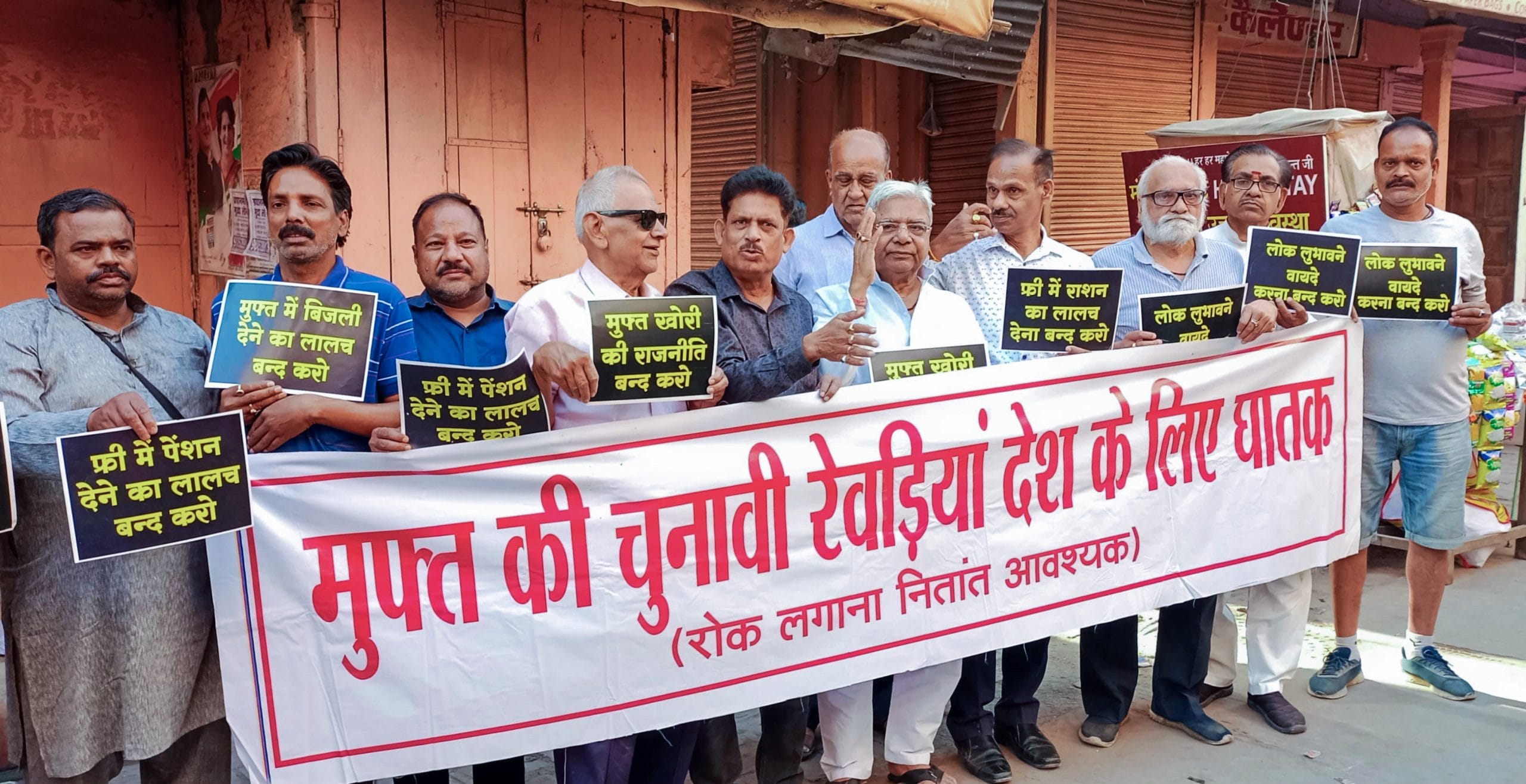
According to experts, the fate of election-linked freebies reflects both the ground realities of implementing welfare schemes and the increasingly transactional nature of Indian democracy.
Sabnavis says that as a social welfare programs, which, he says, are loosely called ‘freebies’, several governments have been announcing financial schemes for women.
“Now they are supposedly cleaning up the sheets, and lots of women have been excluded. So the overall cost of the programme itself has come down. If you’re looking at it from the practical way of doing it, there’s always a limited space which is there for governments to provide for these social welfare programmes, especially when they are cash transfers,” he explains.
Sabnavis says that if a scheme is linked to employment or education, like midday meals, they are usually carried out, while cash transfers are usually cut down.
“Once you’re in power, you become responsible because you have to be responsible because of the constraints you have. There’s a fixed amount of revenue you earn, and a fixed amount of borrowing. Interest, subsidies, pension, salaries have to be paid. They do whatever is possible with what gets left over. So, they cut back on expenditure from the scheme, or keep renaming things, or divert funds from some other scheme,” he explains.
ज़ाकी रही भावना जैसी
पूरे बिहार को पता है कि मोदी जी और नीतीश कुमार जी बिहार की माताओं-बहनों को अभी 10000 हज़ार का उपहार देना शुरू किए हैं।
बुजुर्ग-विधवा-दिव्यांग को 1100 रुपये हर महीने दे रहे हैं। बेटियों को सरकारी जॉब में 35% डोमिसाइल लागू किया है। पंचायतों में नारीशक्ति को…
— BJP Bihar (@BJP4Bihar) September 29, 2025
According to political analyst Prof Chandrachur Singh, a professor of political science at Delhi University, political parties no longer treat their voters as citizens, but as consumers.
“And voters know this. Indian voters are very conscious of their right to vote, but the fact of the matter is that they do not look to vote for empowerment. They know that whosoever comes to power, it’s not going to lead to a massive change in their day to day life. So whatever they can get at that point in time is good enough,” he explains.
Consumers also have short-term memory, Singh asserts. “There used to be a generation of consumers of my father’s generation who were very much attached to any object that they would purchase. Remember the pen that we used to value, now you use the pen and then throw it because you don’t have any attachment with it. I think that is an analogy I will use to describe what’s happening right now.”
Diluting ‘sankalp’
In September 2024, weeks before the Haryana Assembly elections, BJP National President JP Nadda released the ‘Sankalp Patra’ for the polls in Rohtak with much fanfare. This document promised that “all women in Haryana” will receive Rs 2,100 per month.
Last year in September, the Nayab Saini government notified the ‘Deen Dayal Lado Lakshmi Yojana 2025’, stipulating a benefit of Rs 2,100 per month for every eligible woman.
However, the notification considerably reduced the ambit of the scheme, and subsequent notifications shortened it further— by January, only 10 lakhs of 80 lakh potential beneficiaries had registered for the scheme.
When the scheme was announced, it included only women who are 23 years and older, from families with a verified yearly income of not exceeding Rs 1 lakh per year, and with a 15-year residency condition.
It excluded women who are in receipt of any of the 10 social security financial assistance schemes listed in the scheme, or who is receiving any other financial assistance from any government or local/statutory body, owned and controlled by the government, or if she is an income tax payee, among other things.
In January this year, the cabinet approved another watering down of the scheme, splitting the Rs 2,100 monthly benefit, and locking half in a state-operated deposit account. This amount accumulated in the deposit account will be paid to the beneficiaries on maturity, and the tenure of the deposit will be decided by the government, although it cannot exceed five years.
But the additional eligibility criteria has slightly expanded the ambit of the scheme, making those women eligible whose children study in government schools and score more than 80 percent in their Class 10 or 12 board exams or achieve grade-level competency under NIPUN Bharat Mission in classes 1 to 4, or mothers who successfully rehabilitate their children from severe or moderate acute malnutrition.
For such women, the annual income cap is fixed at Rs 1.8 lakh compared to the Rs 1 lakh cap applicable to other beneficiaries.
A new-year gift
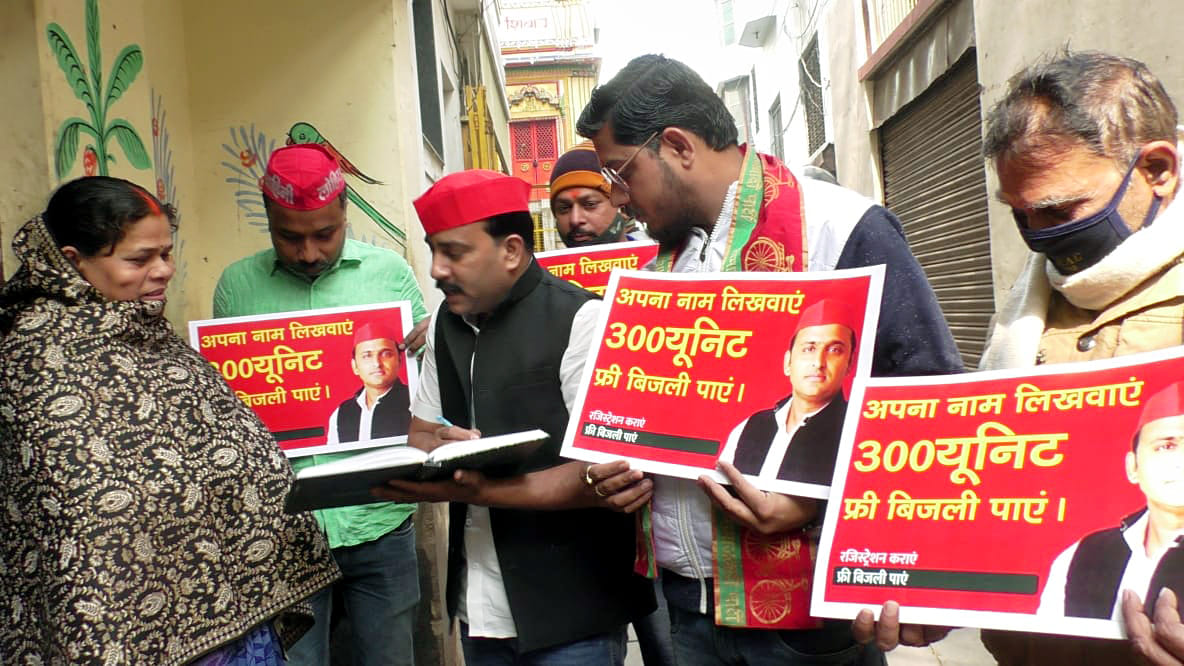
In the neighbouring Himachal Pradesh, the Congress party had promised to hike the number of free units of electricity to 300, and provide Rs 1,500 per month for all women between 18 to 60 years, before coming to power in the state in 2022.
A month before this promise by the Congress, the then BJP government in the State had launched the ‘125 Units of Free Electricity’ scheme, claiming that over 14 lakh electricity consumers were now getting zero electricity bills.
The Congress won the election. And instead of a hike, the new government had to by 2024 rationalise even the 125 units free scheme, excluding tax-paying consumers from it and restricting its application to ‘one family one meter’.
Citing severe financial crunch, Industries Minister Harshwardhan Chauhan had told the media that while the BJP government launched the scheme, the burden was borne by the Congress government.
“Rs 900 cr were spent on this scheme in 2022-23. This escalated to Rs 1,000 cr in 2023-24,” he was quoted as saying in 2024. On 1 January 2025, Himachal Pradesh Chief Minister Sukhvinder Singh Sukhu’s new year’s gift to his state came in the form of relinquishment of the subsidy on all five power connections registered in his name. Simultaneously, he urged affluent citizens in the state to also relinquish their subsidies.
In the budget this year, with Assembly elections scheduled for late next year, the government finally announced that it would provide 300 units of free electricity per month, but only to “one lakh poorest families” in the state, under the Mukhya Mantri Apna Sukhi Parivar Yojana. The “sisters” of these 1 lakh families will also be provided Rs 1,500 per month, by expanding the ‘Indira Gandhi Pyari Behna Sukh Samman Nidhi Yojana’ in a phased manner.
As per news reports, 1.16 lakh families have been identified for the scheme. For other domestic consumers, the state government provides a subsidy of Rs 1.72 per unit in the 125-300 units consumption bracket, lowering their pay from the actual tariff of Rs 5.89 per unit. Those consuming up to 125 units per month will continue to receive a zero-bill, for up to two electricity meters per household.
(Edited by Ajeet Tiwari)
Also Read: Your ‘revdi’ is freebie, mine is ‘upliftment’ & how one wrong turn can ruin a track record