


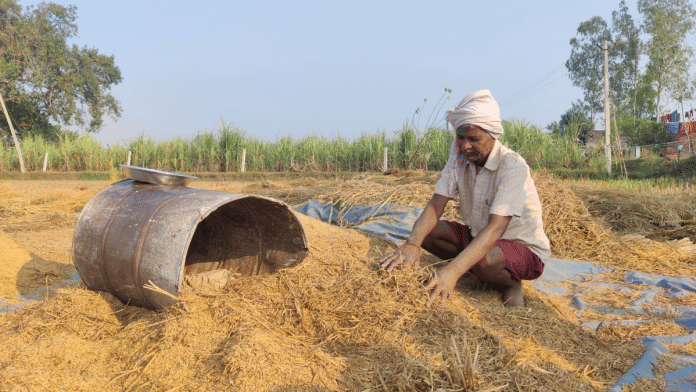
Shahjahanpur: In Uttar Pradesh’s Shahjahanpur, the sun no longer sinks into a mist of grey smoke rising from acres of fields. Instead, the staccato groan of large industrial balers punctuates the evening. A tractor drags them across fields, sucking in loose strands of straw, razing off the remaining stubble, and dropping a neatly compressed and tied block of stubble onto the shaven soil. A labourer just has to pick those blocks up, load them onto trucks, and the soil is ready for the next sowing season in record time.
But this wasn’t always the case.
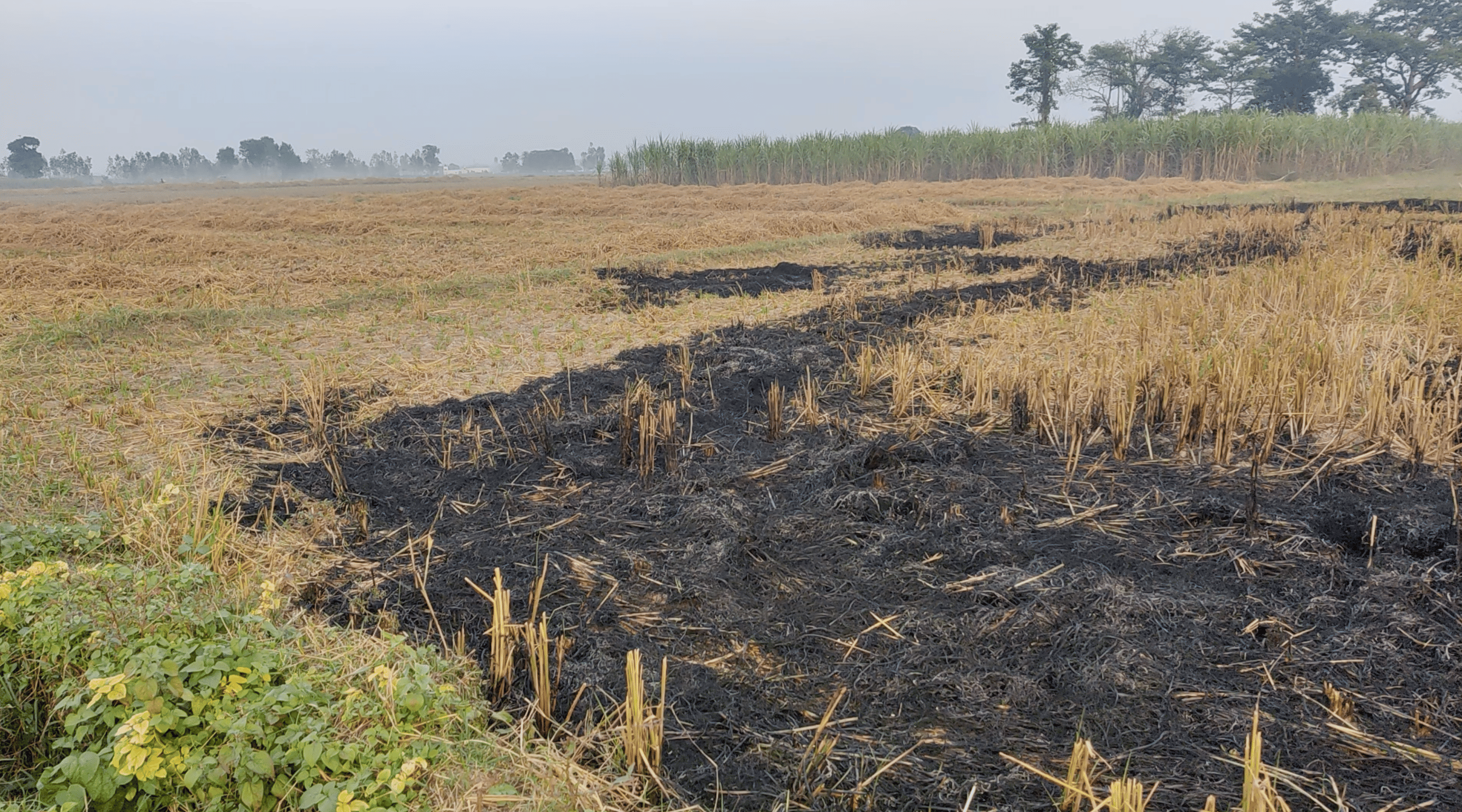
Earlier, farmers such as Balvant Singh would wait for the darkness, with a matchbox in their pockets. Come nightfall, they would set thousands of acres ablaze, and the cold November winds would carry the smoke hundreds of kilometres toward the National Capital Region.
This was the parali, or stubble, that once burned polluted the air across UP cities and blanketed Delhi-NCR in a cloud of toxic smog.
Now, 42-year-old Balvant has traded the stealthy matchstick for the groan of diesel engines. As he stands sentinel over his fields, a mechanical rake gathers the paddy straw into long parallel rows. Then comes the industrial baler, which eats up the loose straw and spits out dense, rope-bound blocks that he will sell to compressed biogas plants.
This unsung success story, first reported by Ramji Mishra for ON AIR in October, is one that many policymakers in Delhi and Punjab haven’t yet woken up to.
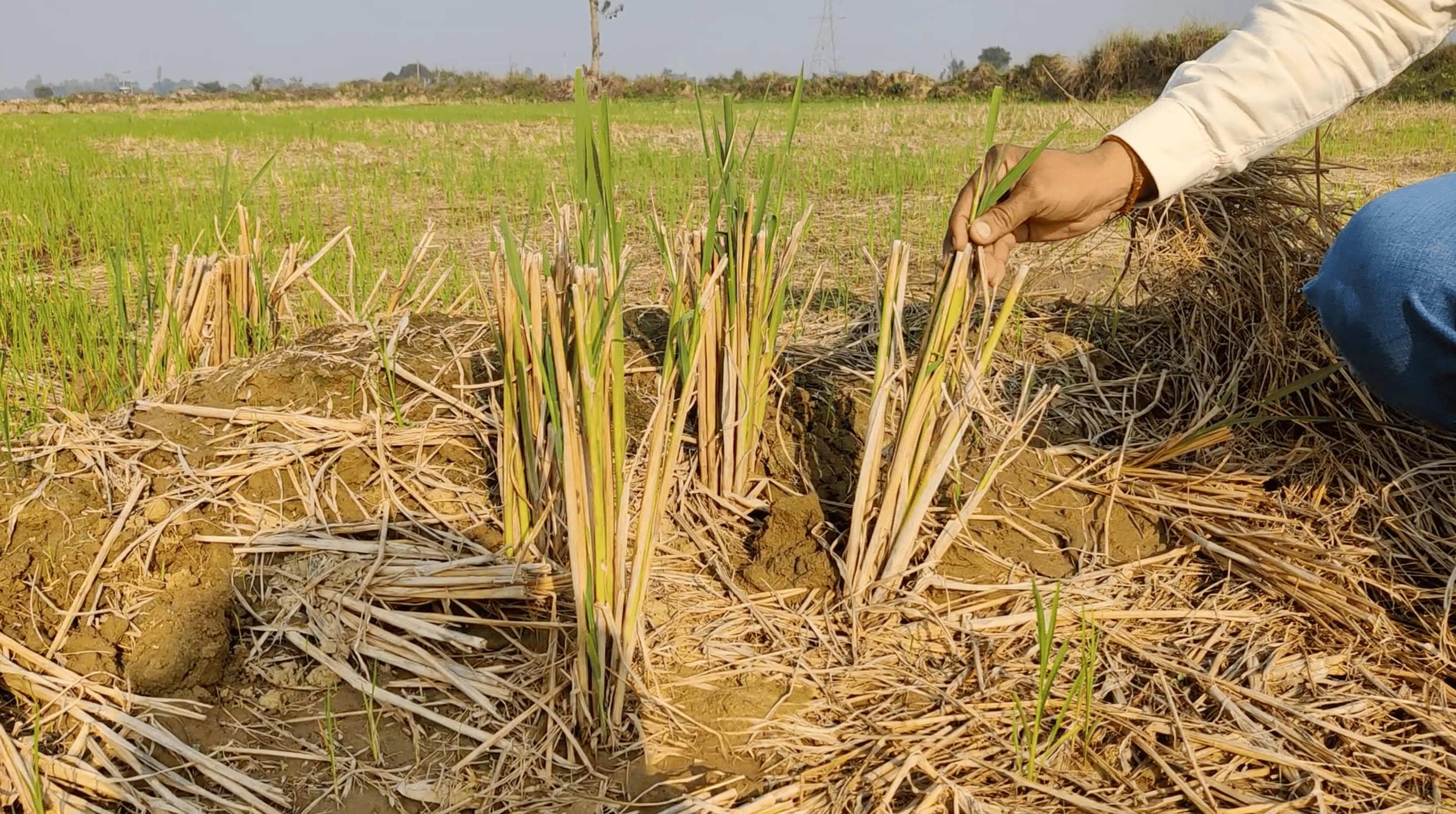
“Gathering dry straw manually has massive labour costs. Burning it all up requires just one matchstick, and the field is clear in 10 minutes. But now that we have these machines that can cut the harvest, and even trim the parali, into small pieces, and pack it up, we can clear the fields quickly and even sell the parali to make a profit,” Balvant told ThePrint.
A majority of farmers in the city echo Balvant’s experience. Even as toxic winter smog settles over New Delhi and parts of North India, Shahjahanpur is no longer the culprit it once was. Five years ago, the district topped UP’s farm fire tally, recording nearly 423 fires in 2021, with nearly two-thirds of them in the Powayan tehsil alone. Since then, according to data from the Indian Council of Agricultural Research, those numbers have fallen steadily from 327 in 2022, to 132 in 2023, to 163 in 2024, and 129 in 2025.
But as of November 2026, satellite tracking has spotted only 12 fires in Shahjahanpur.
This success is not the result of penalties and intimidating police officials, such as the ones tried in Punjab. Instead, the district administration found a way to connect farmers who own large land holdings to operators of industrial balers who can clear fields free of cost and sell the compact parali to National Thermal Power Corporation thermal plants and compressed biogas factories.
At the NTPC thermal power plants, the parali is blended with coal to generate electricity. According to existing policies, the power plant is allowed to mix five to 10 per cent of such biomass along with the coal. Since power plants cannot burn loose parali, they first shred it, grind it, and compress it into “biogas pellets” which are fed into coal mills.
At Compressed Biogas (CBG) factories, the parali is first treated with chemicals, then mixed with water inside large sealed tanks. In the following weeks, anaerobic bacteria, the kind that does not need oxygen to grow, ferment the mixture and produce raw biogas, usually methane or carbon dioxide.
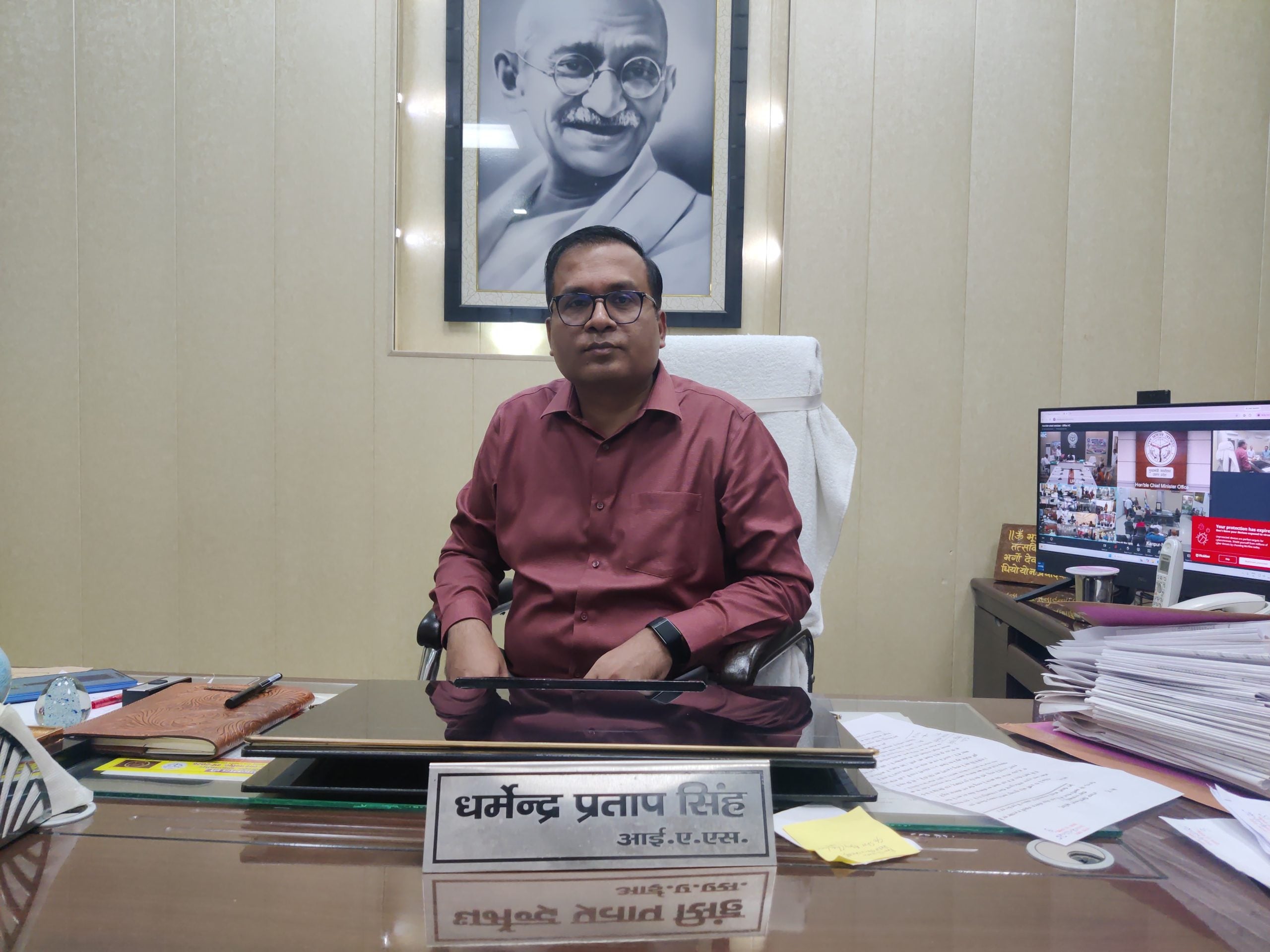
Sitting in his chamber, with stacks of files on his desk and a long line of concerned citizens outside his door, District Magistrate Dharmendra Pratap Singh said that nearly 130 biogas plants are functional in UP at the moment, another 47 are being constructed, and many more have been proposed.
“Until you give farmers an alternative way to get rid of their parali, they will burn it. Where else can they take it? Two years ago, when I went on an inspection, an entire eight to ten kilometre stretch of irrigation canal was choked full of parali dumped by desperate farmers,” Dharmendra Pratap told ThePrint.
“Now, we have given them an alternative, and this is a functioning model that can be replicated. We have connected balers with farmers, giving subsidies on machinery, and launched biogas plants. This will drastically reduce stubble burning across any district in India without penalties,” he added.
The night chaupal
The policies to bring about this change might have been crafted in air-conditioned rooms, but much of the credit goes to late-night conversations between farmers and officials, huddled on wooden cots, with small fires to keep them warm.
Once the satellite monitoring began, the darkness no longer kept farm fires a secret. The DM added that as soon as district officials realised that the stubble burning usually began between 6 pm and 11 pm, they set up a joint task force including revenue officials, agricultural officers, police constables, and village heads. The task force would arrive at villages at nearly 10 pm to camp overnight and try to convince farmers that setting their fields ablaze was harmful for the environment and the soil.
Many of them knew about the consequences of stubble burning, but had no other choice.
District crop protection officer, Sanjay Kumar, recalled the sullen mood of these midnight gatherings or chaupals. Only about 25 to 50 men would show up, some angry, some just looking to be heard.
“Sometimes they would be aggressive. They would shout: ‘Why should we listen to you? You drive here in government cars while we are dying under the sun! Big industrial factories and distilleries are also releasing dark smoke into the sky 24 hours a day, but that is not pollution for the government! But we burn our parali to prepare the field, you threaten us with police action!’ After listening to them, I could feel that their frustration is completely genuine,” Kumar said.
In many parts of Shahjahanpur, the paddy harvest is immediately followed by potato cultivation. Kumar explained that the potato needs to be sown within 10 days of the paddy harvest so that it can be sold in Delhi’s wholesale markets by December, before the winter wheat is sown. To most farmers, the only solution to this tight schedule was burning the parali.
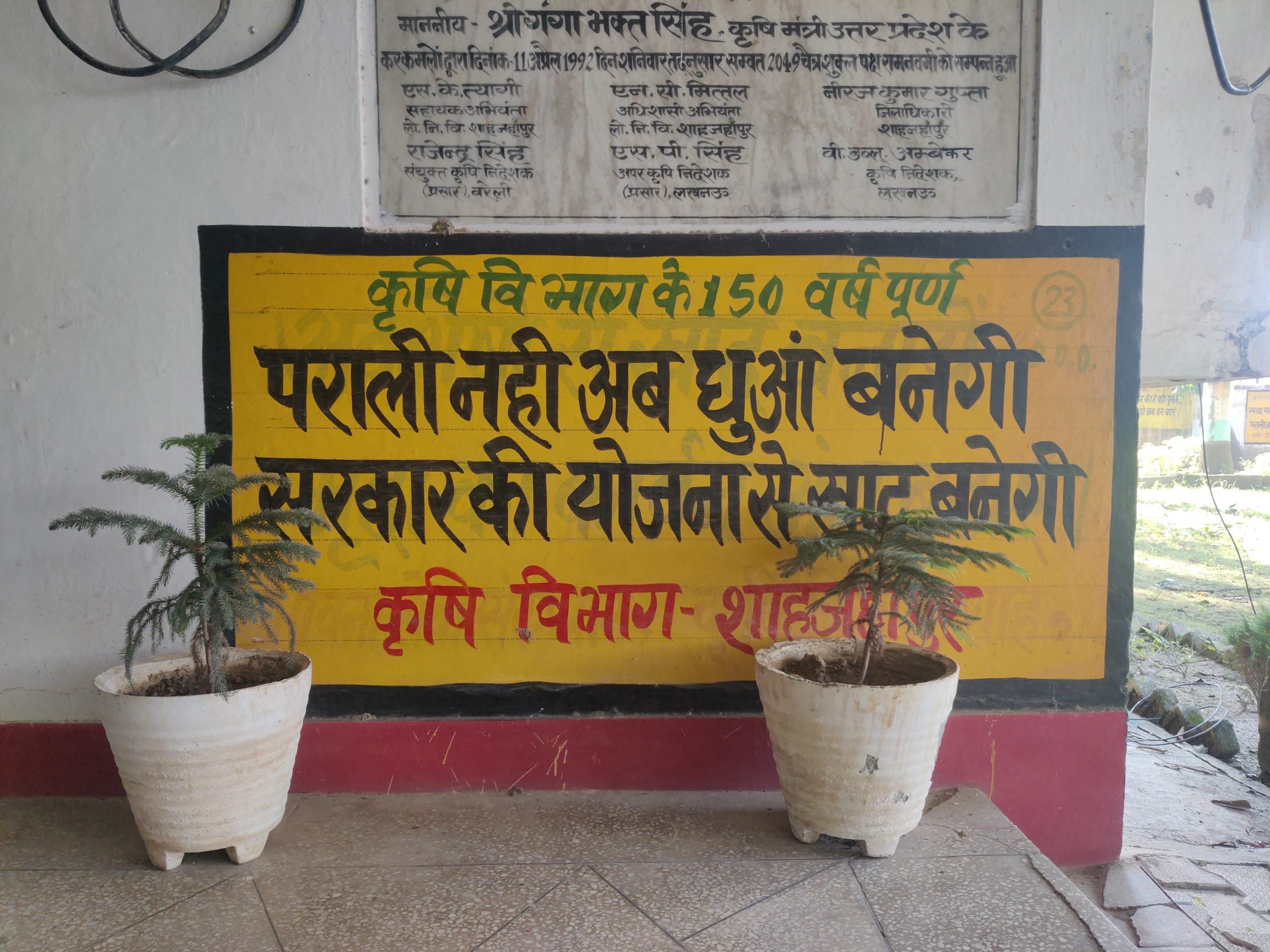
Although the DM, Kumar, and several other officials see these night chaupals as pivotal in changing the mindset of farmers, some working farmers remain sceptical of the initiative.
“Those were just picnics for officials,” said Rajiv Singh, a 55-year-old farmer, who owns 40 bighas in the region.
“Meetings would happen, and about 10 to 20 people would show up, mostly local politicians and their ‘chamchas (lackeys)’. The actual working farmers hardly went. People would nod and say, ‘Fine, sir, we won’t burn’, but if they had to sow a crop in two days, they would just set the fire later at night,” Rajiv added.
Although the awareness campaigns made some farmers question their burning habits, what really made the difference was the subsidies that began in 2021, which allowed farmers to buy machines that would not just raze the stubble from the ground, but also segregate it into neat piles, and convert those piles into packets of stubble.
“What changed things is the industrial baler. Now at least we don’t have to make rounds of police stations,” said the paddy farmer.
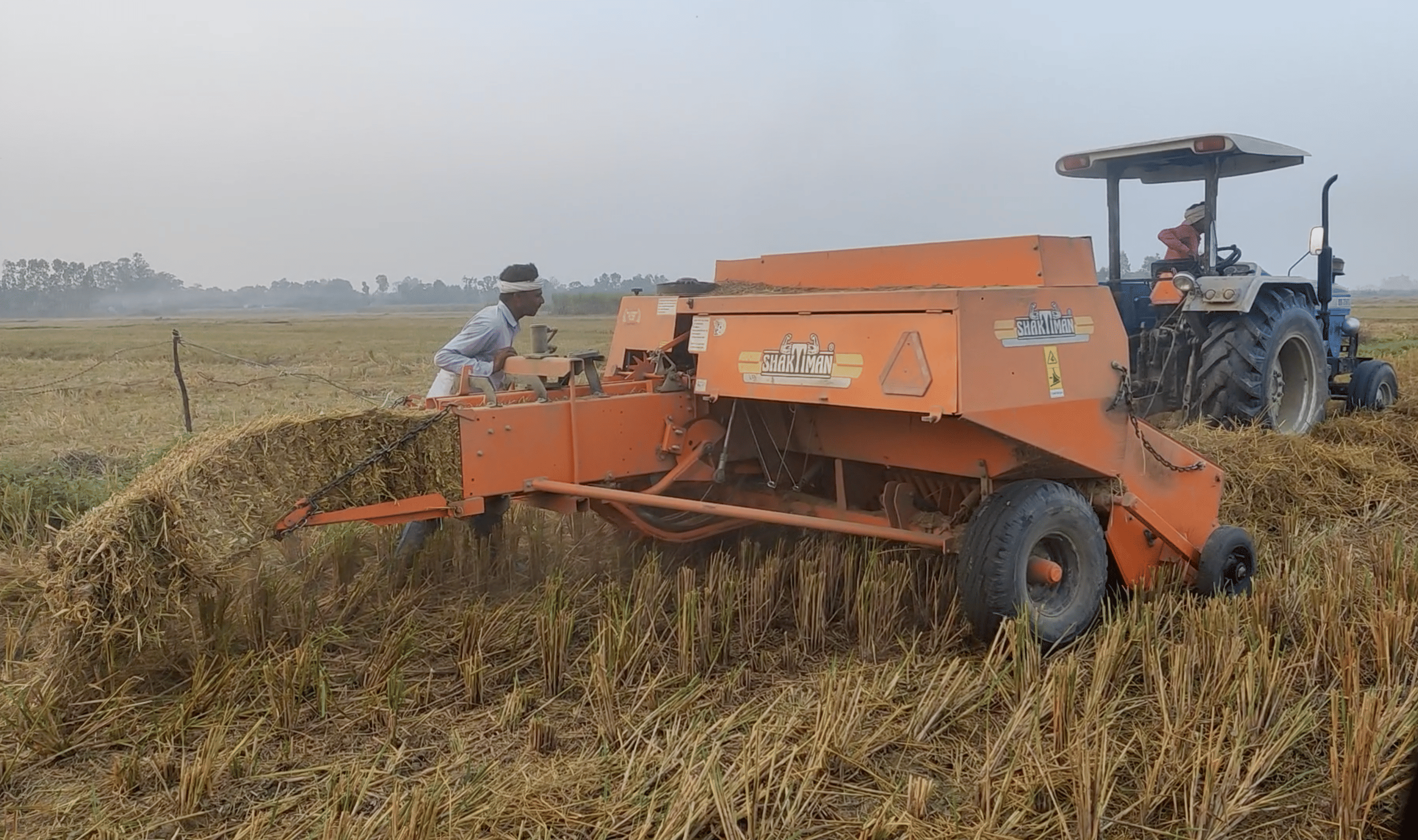
Rajiv does not own an industrial baler himself, nor does he plan to eventually invest in one. He is one of nearly 500 farmers who rely on Balvant Singh’s baler to help clear their fields. Initially, Balvant would charge them a nominal fee for using the baler, but now he offers it for free.
“No profit, no loss. I don’t even care about the profit or loss. I just need my field to be cleared,” he said, adding that he didn’t mind if Balvant sold the parali to make a profit.
Balvant added that investing in a baler was not something all farmers could afford, even with the government subsidies.
Also Read: Marathwada got El Niño warnings in March. Few prepared—now taps are dry, fields dead
Costs of a baler
The industrial baler is a large metallic box built with thick steel walls and powered by hydraulic cylinders. These balers are mostly manufactured by Shaktiman, AIM Industries, Urmi Engineering, and other such companies. The rotating front sucks in the loose straw, and it compresses it either into larger cylinders or cubes, depending on the machine.
Even once it was made available to farmers, only big farmers such as Balvant, a minority in the region, had Rs 25 lakh to spare on a baler.
Buying it also meant investing in a fleet of five to six high tonnage tractors, rotary slashers to cut the remaining stubble, automated rakes to pile the stubble into neat rows, hydraulic trolleys to transport the packaged stubble, and nearly a 20-25-man crew of labourers. Balvant puts this total cost at nearly Rs one crore. Even with subsidies for the baler ranging from 50 to 80 per cent, the operational cost of diesel and transport makes this entire process inaccessible for most medium to small farmers.
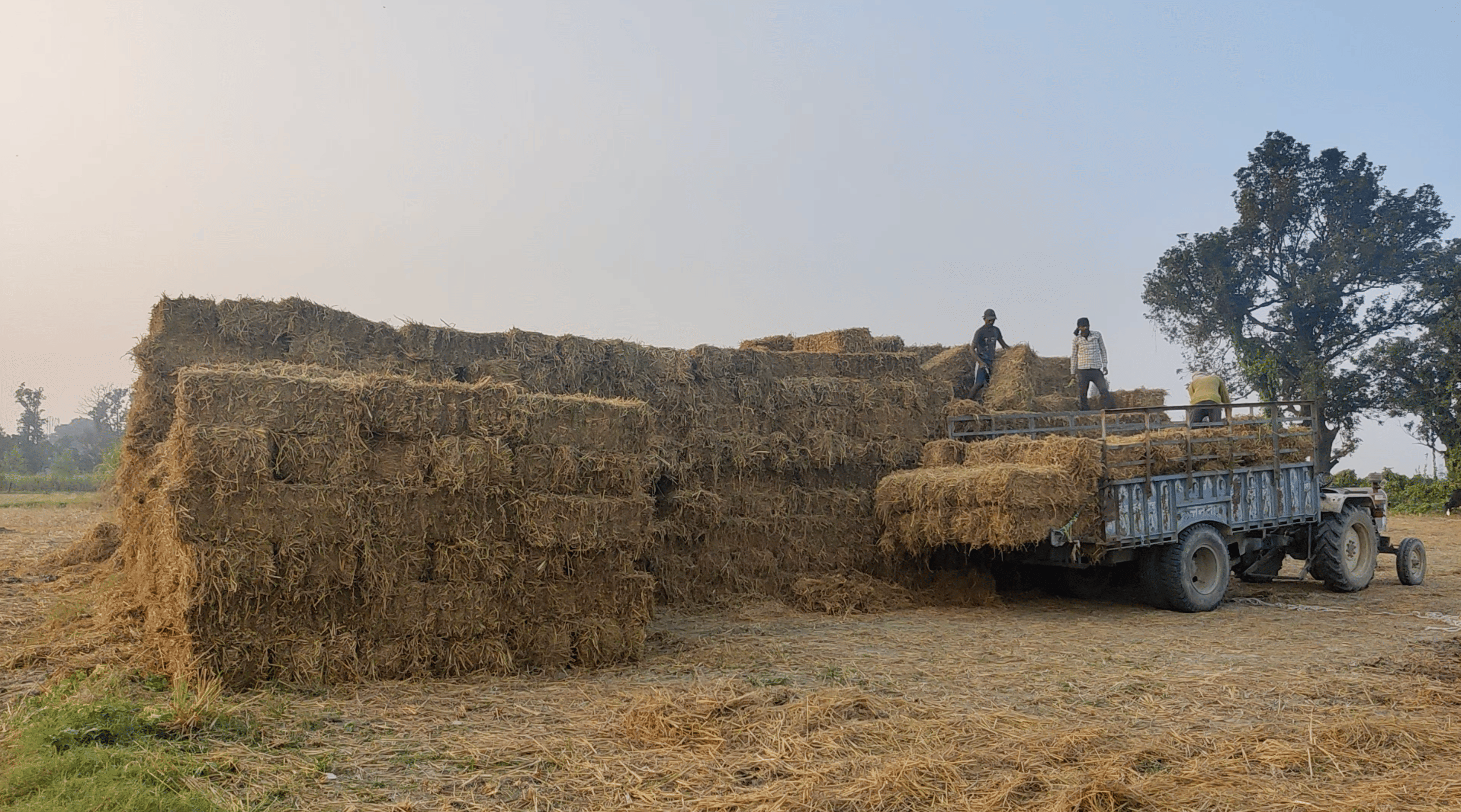
The government has tried to make much of this machinery as cheap as they can. Through an online lottery, they have given away at least 18 major machines this year alone — subsidies that amount to about Rs seven to eight crore, according to the DM.
Even as commercial balers haul stubble to industrial facilities, the district’s medium-scale farmers have another solution — in-situ mulching.
A farmer’s best friend
Ever since the burning stopped, Narveer Singh has welcomed back an old guest into his farms — earthworms.
The 44-year-old is among the farmers who cannot afford to buy a baler and the accompanying paraphernalia. But for about Rs two to four lakh, further reduced by subsidies, he can afford a mulcher and a mouldboard that shreds the stubble and upturns the topsoil, burying it nearly eight inches below the earth. Some light irrigation over the mulch also speeds up the decomposition of the soil.
“Four or five years ago, the conventional practice was straightforward — harvest the crop, let the stubble dry, and set it on fire,” Narveer said.
“With subsidies, we use a mulcher to shred the stubble finely and an mouldboard plough to invert the soil. But even then, the high-horsepower tractors and implements like mulchers costing Rs two lakh are beyond smallholders. Setting up village cooperative societies to rent these implements at nominal rates would permanently resolve the issue for farmers who own just one to four acres,” he added.
The churned-up soil and the return of earthworms spell healthy days for Narveer’s soil.
Not too long ago, there was a rural belief that if they burnt the residual crop, it would destroy pests and other diseases and prepare the soil for the next harvest. However, during the night chaupals, agricultural officials explained to farmers that a crop often has to fight different diseases and pests as it grows older. The pests that attack it in its infancy are not the same that return to weaken it when the harvest is near. Therefore, burning the stubble does not always guarantee protecting the next crop from illnesses.
Instead, the shock of a fire destroys thousands of colonies of microbes in the soil that are essential for plants. These are the very colonies that help transform urea into ammonia and then finally a form of nitrate that plant roots can absorb. When a farmer chooses not to burn their fields, they prevent the soil from losing its water retention capacity, and they save themselves the trouble of relying heavily on chemical fertilisers.
“Currently, 30 to 40 per cent of farmers incorporate stubble into the soil. Moving forward, our goal is to push this to 70 to 80 per cent so that stubble burning ceases completely. This will also increase carbon levels in the soil, reducing their need to use chemical urea and diammonium phosphate fertilisers,” said agriculture development officer Jitendra Patel.
Also Read: Red rot is ravaging UP’s sugarcane belt. Farmers pinning hopes on scientists for a way out
Those who can’t afford to buy or rent
Far from the drone of tractors, balers, and mulchers, Shahjahanpur also has another reality — the small farmer who owns barely a few acres of land.
When harvest season draws close, Ram Shankar picks up his sickle and walks into the field. He needs no machines. Slowly, he chops off the paddy by hand and ties them into neat sheaves.
As he beats the sheaves to collect the wheat, his cows and buffaloes roam the field, chewing on the stubble that remains. For him, that stubble is not industrial waste to be sold, nor a nuisance to be burnt off.
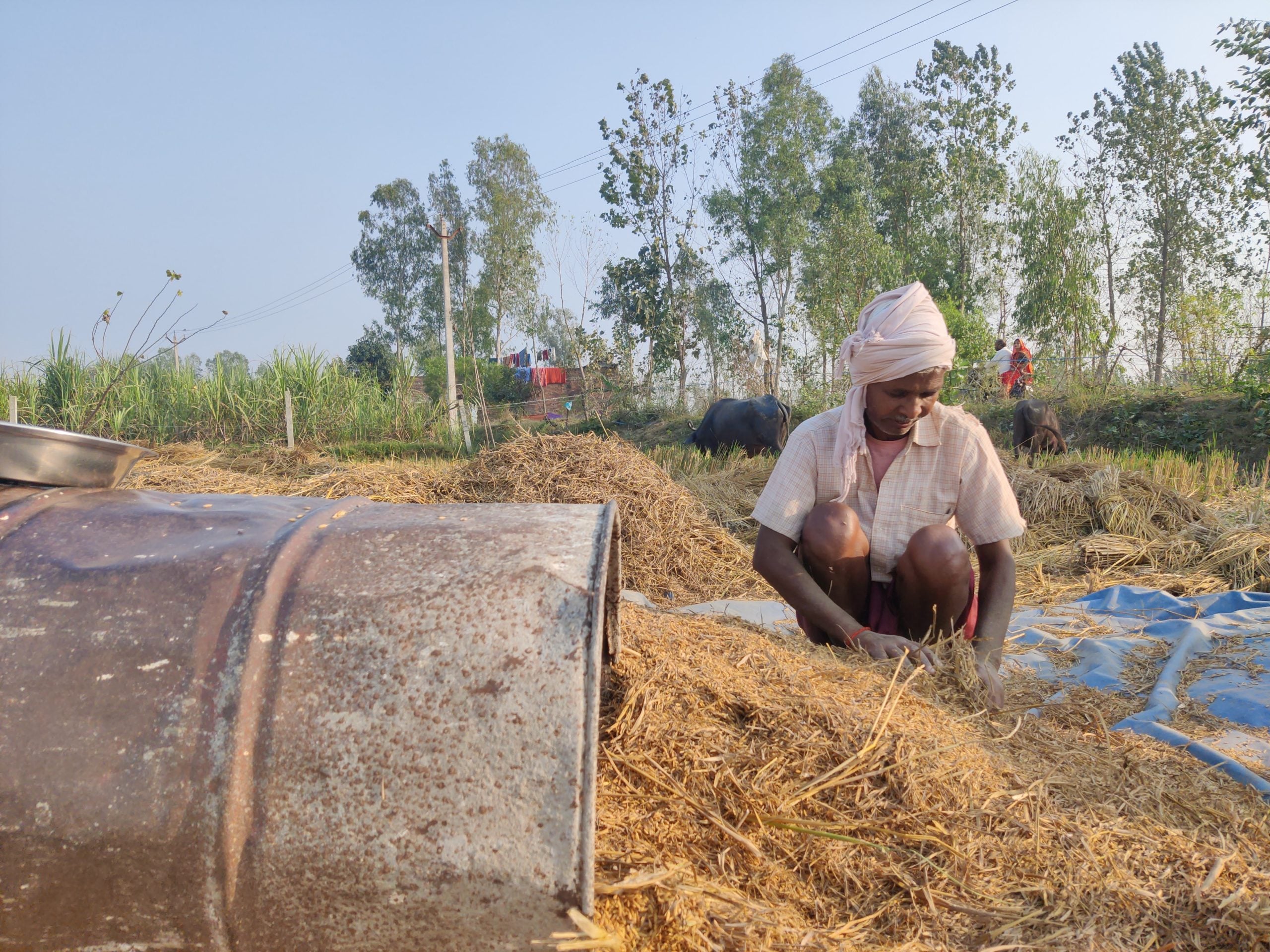
“We cut it by ourselves and feed it to our cows. Earlier people used to burn it, but I never did. Why would we burn it? Whatever little we produce is needed for our animals and for warming ourselves during the winter months,” Shankar said, adding that even if he did have any extra fodder, he would give it to the district’s 170 gaushalas where stray cattle can benefit from it.
Although Shankar has no need for the industrial balers and mulchers, many of the other farmers in the region, with small land holdings, often approach the bigger farmers to use their machinery. Balvant Singh alone helps clear the stubble in the lands of nearly 500 farms in the region. He expects no payment and makes a profit by selling the parali at about Rs 350 per quintal to the NTPC in Dataganj.
After subtracting his operating costs, Balvant Singh still makes a profit of Rs 500 to Rs 600 per acre from the stubble alone. His seasonal profit can go from Rs two lakh to over Rs seven lakh at times. Other farmers with balers have reported earning nearly Rs 20 to 25 lakh by selling over 8,000 quintals of parali in one season.
A last resort
Despite the stories of change, as the sun sets, there is still some smoke in the distance, proof that some farmers still resort to burning the stubble out of desperation. Over the past decades farming has stopped being in tune with the rhythm of nature. Every harvest launches the frantic rush to plant the next crop.
This year, unseasonal rains made matters more difficult.
“When combine harvesters run through wet ground after unseasonal rain, they churn the mud and leave uneven trenches. Balers cannot operate on wet fields, and mulchers get clogged with mud. If a farmer has to plant wheat within five days and his field is a swamp of tangled wet straw, he feels he has no other alternative but to wait for it to quickly dry and then to set it on fire,” said Pawan Gupta, a 55-year-old farmer.
These are “emergencies”, explain other farmers in the region, insisting that such fires are no longer the norm in the district.
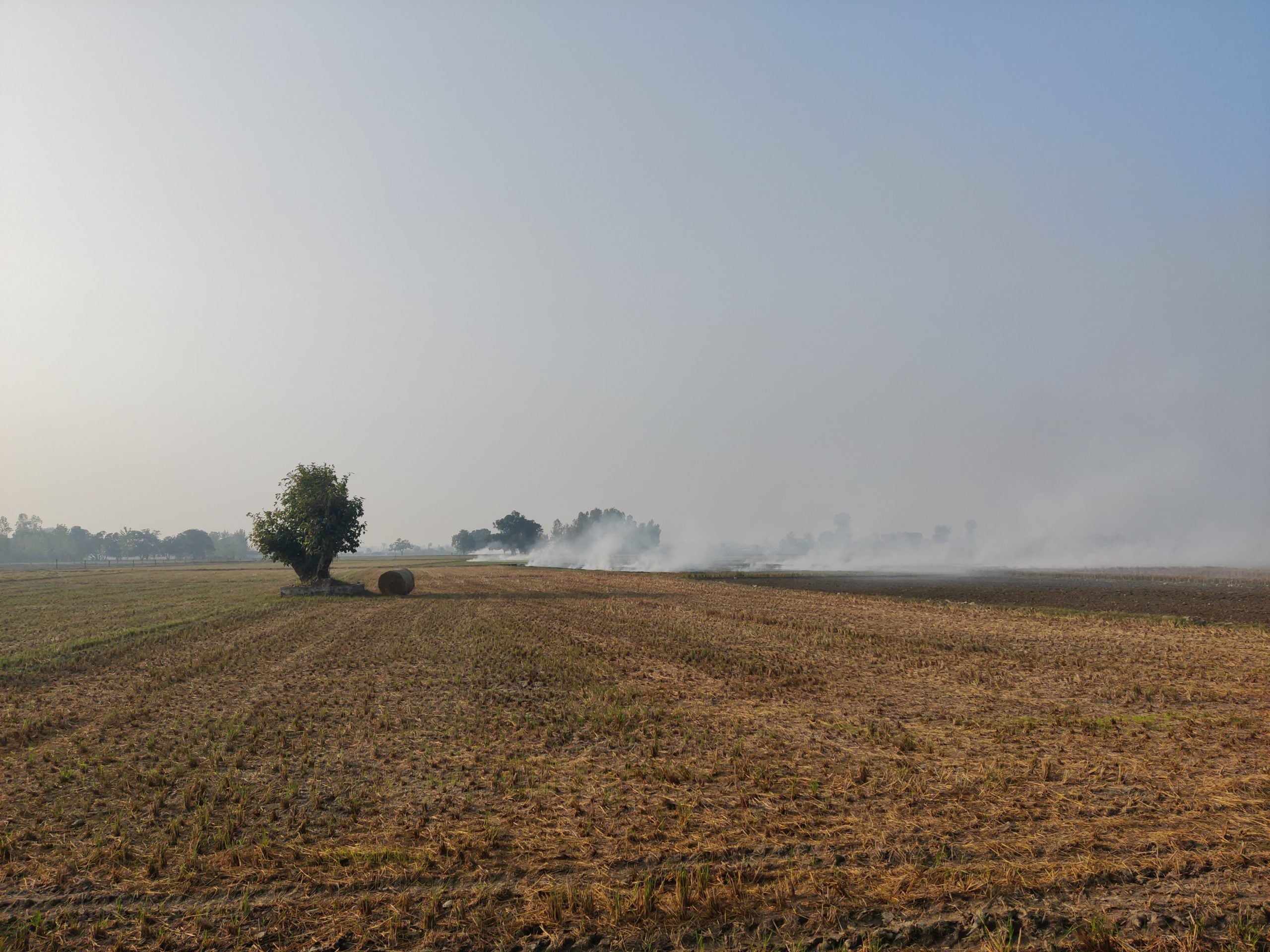
As night falls, the air in the district is far cleaner than it used to be, and the matchstick remains a last resort that only a few turn to.
“When someone burns a field today, it is not out of defiance; it is an emergency. We can’t say that 100 per cent of the farmers have stopped burning the crop, but in a few years, as these machines become more accessible, and we can maybe even rent them at nominal prices, the burning will stop completely,” said Paramjit Singh, a 33-year-old paddy farmer.
(Edited by Insha Jalil Waziri)