



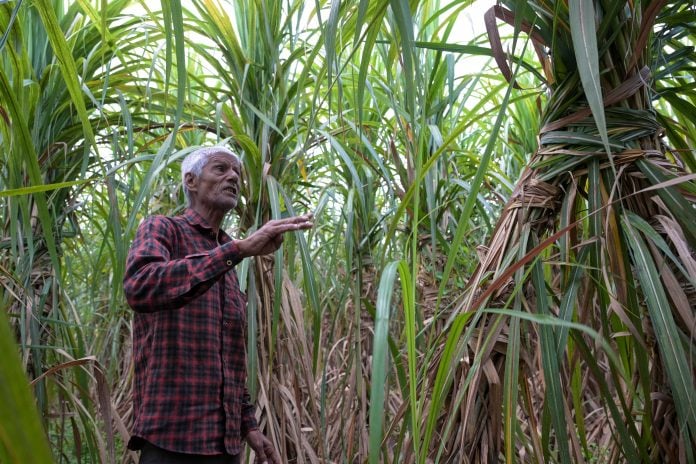
New Delhi: From a distance, the hundreds of acres of sugarcane fields across Western Uttar Pradesh are still the postcard image of one of India’s wealthy agricultural belts. But step closer and the mirage shatters.
Davendra Kumar Dhama reaches for an eight-foot stalk of sugarcane, his fingers brushing past rust coloured patches on the cane’s yellow exterior. As his calloused palm twists the cane, it snaps all too easily. Inside it is not the pale white juicy fibre whose nectar creates sugar, molasses, rum, and even beer sometimes – the cane is nearly hollowed out, stained red, with patches of green fungus releasing a pungent acidic smell into the monsoon air. Dhama, now in his sixties, needs no autopsy to confirm what murdered his sugarcane – red rot.
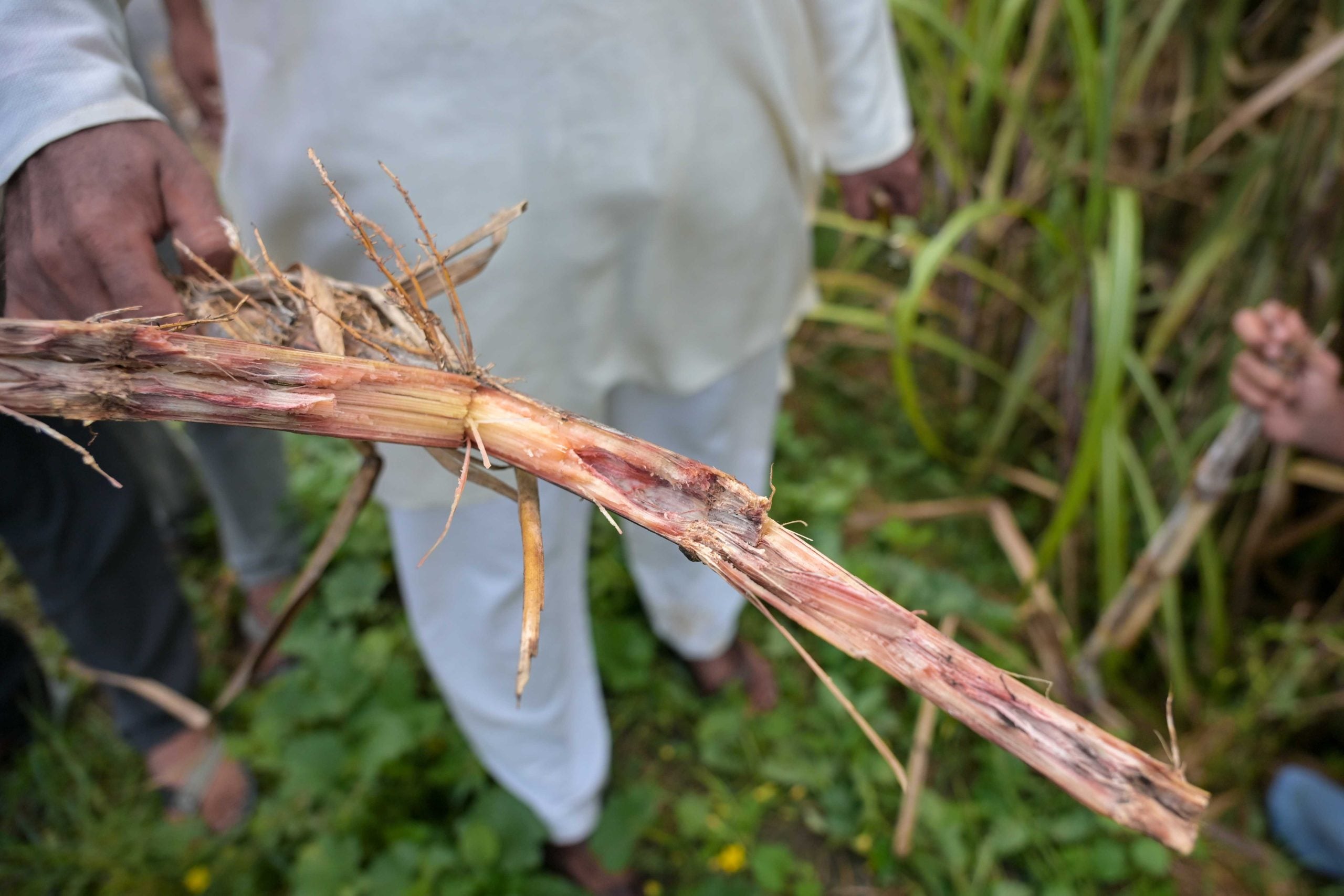
“It started at the shoot, the rot set in, and the disease ate downwards through the veins. By the time we harvest this crop, the whole cane will be dry straw. The sucrose is gone, the juice is sour, the cane is half its weight. This is not just any disease; it is sugarcane cancer,” Dhama told ThePrint.
It is a race against time for India’s agricultural scientists too. Indian Council of Agricultural Research’s Sugarcane Breeding Institute (ICAR-SBI) at Coimbatore is 114 years old. Ever since it was established in 1912, the institution has been trying to breed better varieties of sugarcane. The Indian Sugar and Bio-energy Manufacturers Association and the All-India Coordinated Research Project (AICRP) on Sugarcane are also working together to test new varieties before they can be commercially released.
Dhama’s story is not confined to Sankhroud village in Baghpat, UP. The entire western belt of UP, producing nearly 60 per cent of the state’s cane output, has been ravaged by a fungal disease that goes by many names – Colletotrichum falcatum, red rot, Lal sadan rog. The fungus itself is a well-known killer among agronomists, but its attack on sugarcane fields is a more recent development spurred by rampant monoculture.
For over 15 years, UP has witnessed the golden age of sugarcane. The reason – CO 0238 or Karan-4, a variety of sugarcane bred in 2009 by Bakshi Ram, the former director of ICAR-SBI, Padma Shri Awardee 2023, and former director of the UP Council of Sugarcane Research. ‘Do-sau-adtis’ or 238 as it is called by farmers, increased their yields to nearly 80 to 85 quintals per bigha (about 0.62 acres). The attractive yields enticed farmers across the country, and soon nearly 90 per cent of cultivable sugarcane land in UP was covered by CO 0238.
Although the variety might have been resistant to red rot at first, hundreds of acres of CO 0238 gave the pathogen a large playground to evolve, adapt, and mutate into new versions of itself that could break through CO 0238’s genetic armour. The fallout has turned what used to be one of the most dependable crops into an uncertainty. Farmers are now paying the price for the sugarcane success.
Between 2019-2020 and the 2025-2026 sugarcane crushing season, UP’s output has sunk from 126.4 lakh tonnes to 89.5 lakh tonnes. In fields across Baghpat, Meerut, Muzaffarnagar, this collapse means that farmers are spending thousands on extra medications for their fields and struggling to break even.
“I warned them this could happen. Initially, I advised maintaining it at around 50% of the area, but nobody listened because both farmers and the industry benefited. But now that the tragedy has already happened, I can’t go up to a devastated farmer and say ‘I told you so’,” Bakshi Ram told ThePrint over the phone.
A disease that refuses to stay in one field
As half a dozen sugarcane farmers sit cross legged on jute woven cots in Fatehpur Majri, some are wearier than others, frowning because they know that the medicines they sprayed in their fields yesterday have been washed away by the morning’s rain. Worn out notebooks contain details of their mounting debt and an increasing number of receipts for chemicals and medicines.
“Old varieties used to give us about 40 to 50 quintals per bigha. But 238 gave us nearly 80. It grew like wild bushes, one seed could give us eight thick canes,” said 45-year-old Vipin Malik, who left his job as assistant bank manager at a branch of the Industrial Development Bank of India, to return to Fathpur Majri, to sugarcane fields, and to his ailing parents. He does not recommend the decision. “There is no profit left in sugarcane farming. This disease has ruined us.”
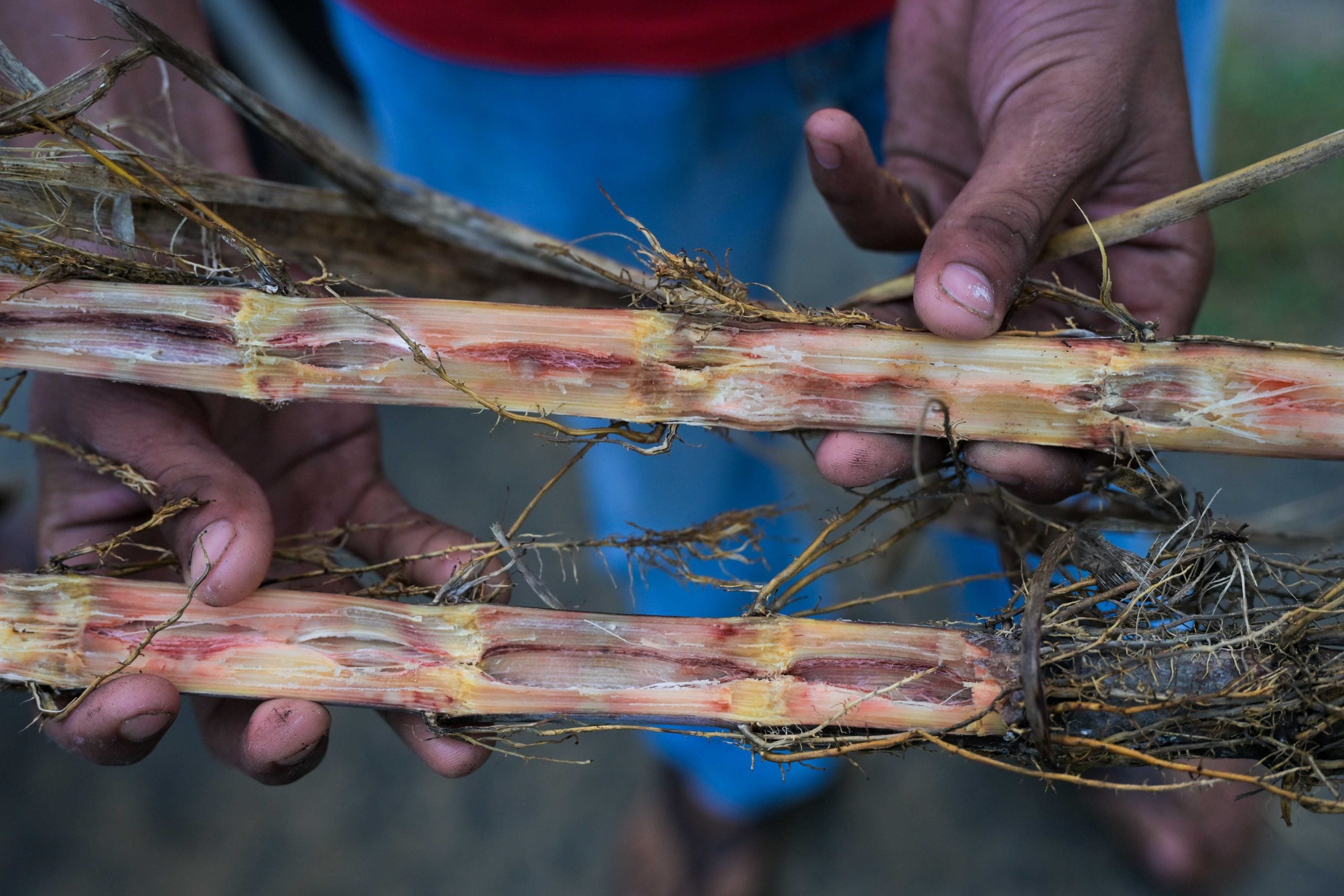
While farmers have been recommended medicines and pesticides for their fields, a fungal disease that has spread to this extent is hard to cure in isolation in one field. The irony is not lost on them. Every few weeks, one of them sprays his fields with medicine, but the rot survives in neighbouring fields, and makes its way back to his sugarcane in no time.
Weather patterns have only worsened the carnage. When the hot and humid easterly winds, purva, blow in from Bihar and eastern UP, they carry the fungal spores and spread them through the air. When relentless rains soak sugarcane fields in pools of water, the roots begin to rot, the plant’s immunity collapses further, and the farmer can do nothing but watch helplessly.
“Red rot is both seed-borne and soil-borne. If an infected set is planted, disease builds up over the season. Sugarcane is kept as a ratoon crop for a second year. An initial 5-10 per cent infection can turn into a 30-40 percent in the next season. Farmers fail to do a soil treatment or seed set treatment, and Co 0238 has become immunodeficient over time. Like an immunocompromised person catching pneumonia in a slight drizzle, this variety now succumbs to any minor pathogen attack,” said Dr Shivam Singh from Baghpat’s Krishi Vigyan Kendra.
According to Singh, the only solution is to replace the variety because managing red rot chemically is “virtually impossible”. Chemical sprays have a limited efficiency and dipping the seeds before planting is also an expensive measure.
A frustrated Malik admits that nothing seems to be on their side – not their fields which often carry spores of the fungus from one crop to another, not the weather and the unpredictable rains, not the mills, and certainly not the government.
Living hand-to-mouth
Every two weeks, when the staggered payments from sugar mills reach 76-year-old Khushi Ram’s wrinkled hands, he takes whatever cash he has received straight to the nearest agrochemical dealers. Buying the medicines for his ailing plants alone can cost anywhere from 4,000 to 8,000 per crop.
The tractor tillage costs Rs 1,000, the manual labour is another Rs 1,000, buying the seed cane costs between Rs 2,500 to 3,000 per bigha, and the fertilizers and urea cost about 2,000 per bigha. For landless labourers, the rent alone is 12,000 per bigha. To break even, they need to produce at least 60 quintals per bigha, but last year they could manage only about 35 to 40 hand-to-mouth .
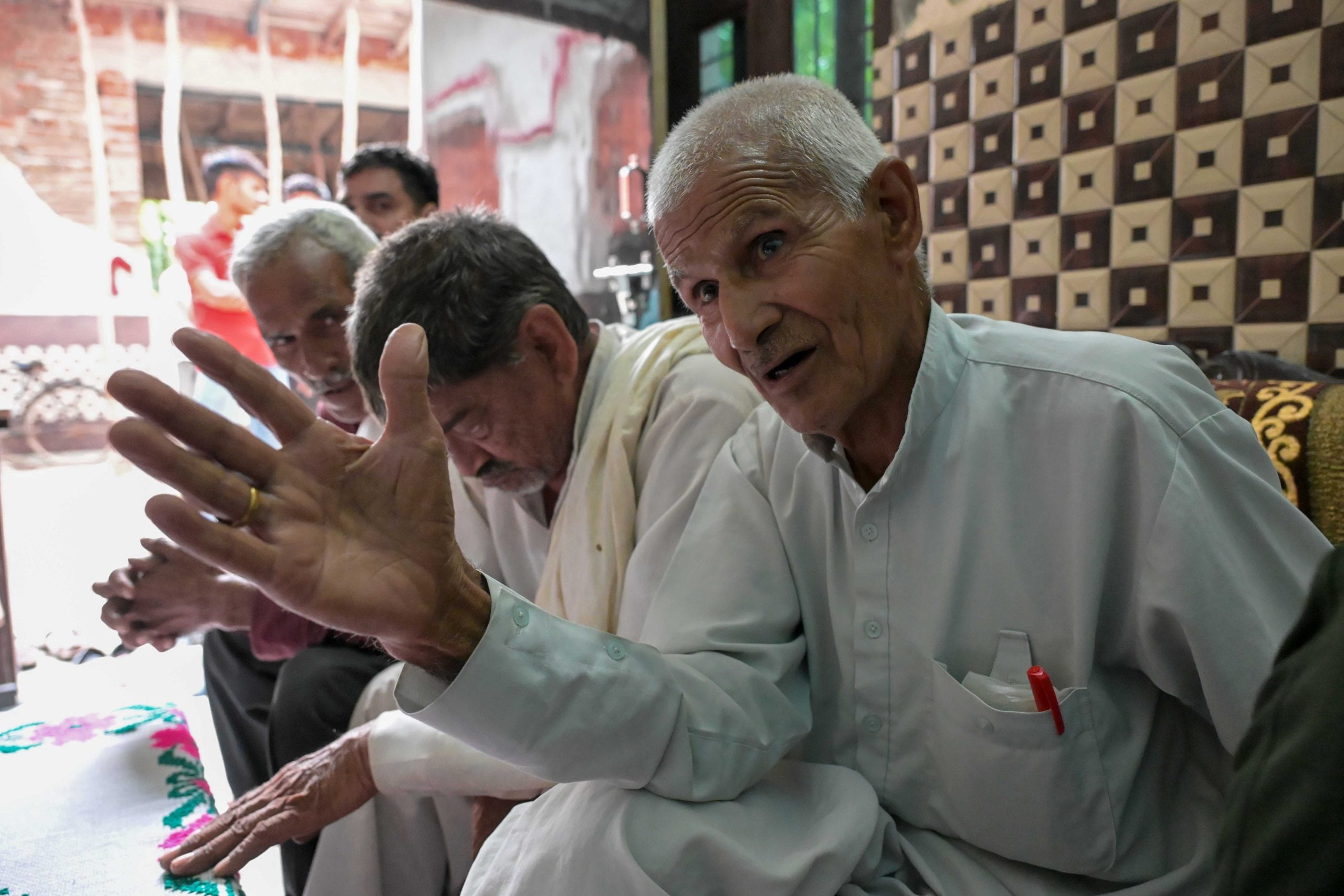
“We live a hand-to-mouth life. In the old days, there were hardly any major cash expenses involved in farming. Five years ago, two sprays of Coragen lasted the entire season. Now, we spray every twenty days. But you spray today, and within three weeks, the top leaves are yellow, and the disease is back. We dump Ferterra, Carbofuran, Thiodicarb, and Tebuconazole into the soil. But half the chemicals found in local markets are junk,” Ram said.
But 62-year-old Dharam Pal is not among those who are still faithful to CO 0238. Every few years, ‘tauji,’ as he is called by others, researches new varieties of sugarcane to plant. Tauji wades through his sugarcane fields, the sharp leaves giving him invisible little cuts on his hands as he parts them to head deeper inside. He is proud to announce that these fields do not have CO 0238. Instead he has planted several other varieties – 16202, 18231, 19321, and even 17018.
“You see, no disease here!” Dharam exclaims.
“No profit either,” Malik chimes back.
Tauji’s antics are entertainment to most. Even though they spend thousands on medicines for their red-rot-infested crops, they still prefer a variety that will give them at least some guaranteed yield. Tauji’s experiments often just lead to bigger losses. Their yield is low, and their seed price is high, a combination no one else wants to gamble with. Tauji knows it too, but what might seem like a futile “passion project” is likely to be one part of the solution to Western UP’s red-rot crisis.
ICAR’s Sugarcane Breeding Institute in Coimbatore is set to release a new variety, Co 20016, also called Karan 20, which the institute hopes could be the new Co-0238.
Karan 20 has not been released commercially yet. It will be placed before the Central Varietal Release Committee soon, and it might be available to farmers next year. So far, it has gone through rigorous tests in the past three years, and The Indian Express reported that the variety is likely to produce more sugarcane per hectare compared to Co-0238. However, whether the variety will be resistant to red rot is yet to be determined.
Breeding disease resistance into a crop like sugarcane is a complex process. Sugarcane is an octaploid – each nucleus has eight chromosomes. In maize there are two, in wheat six, and in cotton four. This makes any type of gene editing very difficult.
“Sugarcane is bred conventionally. We have to identify parents, and then study how their qualities combine in the cross over. Since 2009, wide varieties have been released by research centres, but none have matched the cane yield and recovery of CO 0238,” said Bakshi Ram.
As farmers struggle, scientists race to find a replacement
When the night falls, and the farmers huddle over ‘hookkeh pe charcha ‘, some of the younger ones still remember a time when they would run across their parents’ fields, gaping at the aerial machines spraying medicines from the skies. The government used to do that, but it has been decades since the state took that initiative.
Sugarcane in UP is governed by the State Advised Price (SAP), which currently stands at about Rs 370 per quintal. For years, they have demanded that this price be raised to at least 500 or 600.
“Look at the hypocrisy. The mill takes our cane, makes white sugar, molasses, alcohol, and high-grade ethanol. From the remaining fiber, they make particle boards. From the pressed mud, they produce organic fertilisers and compressed biogas. They are making so much money, but we get just 370! A packet of Parle-G biscuits has better rights – the shopkeeper cannot charge you less or more than Rs 5. Why is it that as a farmer, we have to buy fertilizer at MRP, diesel at MRP, tractors at MRP, but when we sell our harvest, someone else decides the price?” Malik exclaims.
During the last UP elections, the Rashtriya Lok Dal, Samajwadi Party and Bahujan Samaj Party coalitions stressed several times that the election was about ‘ganna’, sugar cane, and not ‘jinnah’, referring to the controversy where Jinnah’s photo was hung at the Aligarh Muslim University. As UP’s 2027 elections draw near, Fatehpur Majri’s farmers are determined to make ganna an election issue again.
Although CM Yogi Adityanath increased sugarcane prices by about Rs 30 in the past two years, Malik was quick to point out that along with that, transport costs soon went up too.
“This is not a ‘mudda’. Sugarcane crops have always had diseases. We know diseases have grown, and like every year, we will raise the price farmers get for their crop. There are existing subsidies already; it is possible that farmers don’t know about them. Yogi ji has said that we will talk about it, and we will see what can be done,” said Yogesh Dhama, the Bharatiya Janata Party MLA from Baghpat.
The land that farmers refuse to let go
As the sun sets over Baghpat, a stray dog saunters along the narrow path between two sugarcane fields, crossing from one to another, unaware of the metal wire that now divides the fields. Davendra Kumar Dhama finds it a lot harder to ignore those wires that have turned his once 95-bigha plot into several smaller plots.
Fragmented generation after generation, these plots are now slowly being carved up and sold off. Every week the property registry sees another entry, and another farmer sells just a bigha or two to clear some bank loans, marry off a child, or pay for their private coaching classes.
None of Dhama’s children want to till the land, but the older generation can hardly fathom parting with their fields.
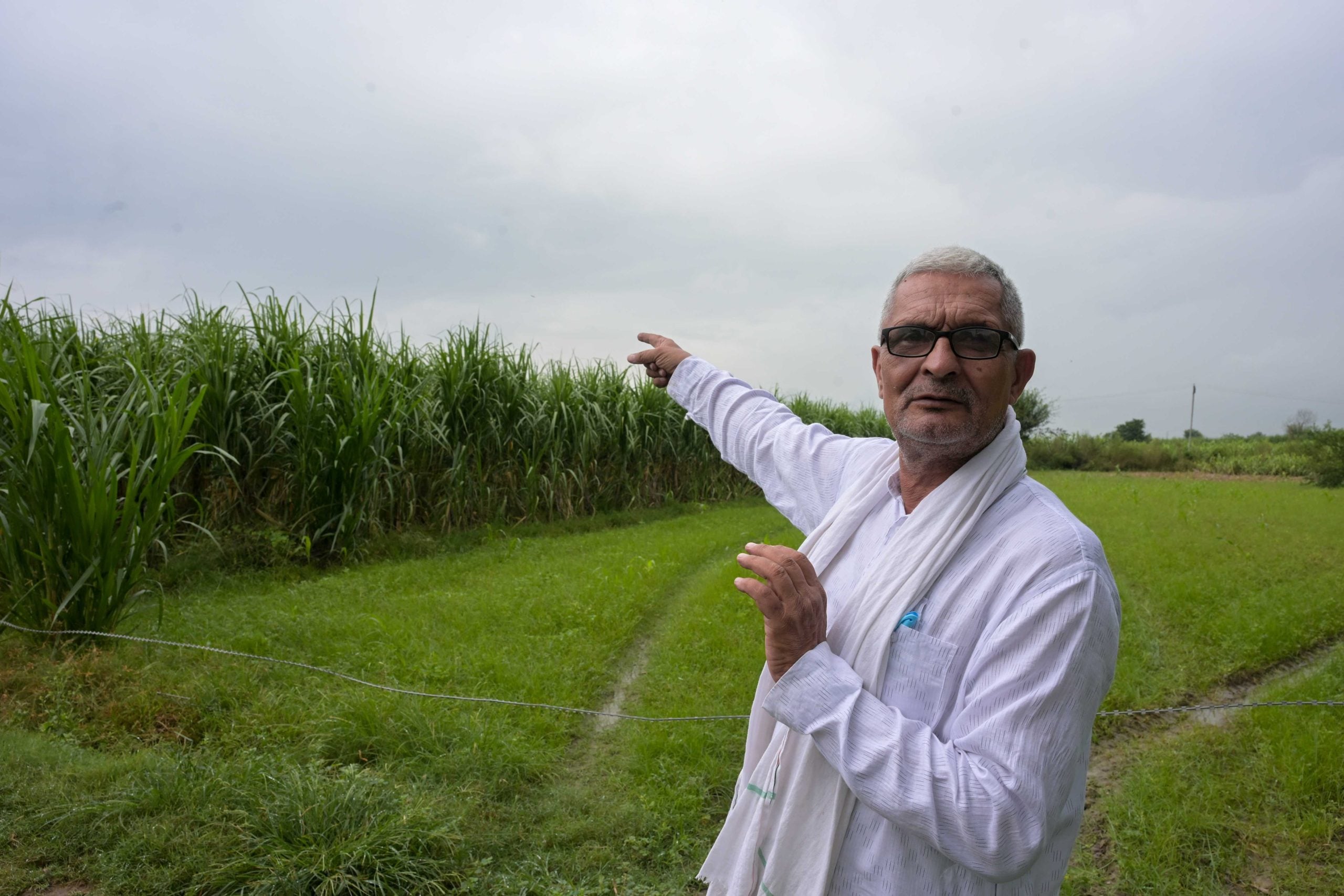
“Land is not a commodity. It is the dharohar (legacy) of our ancestors. If you have land, you have dignity. If you fall sick, or want to borrow money, people will give you 50,000 if they know you have two bighas to your name. Once you sell it off, no one will even give you a cup of tea,” said Dhama.
Sugarcane was once the kind of crop that could pull a farmer out of poverty. Today, those very farmers wait helplessly as scientists hurry to find new varieties before red rot overtakes UP. In this race, the farmer watches from the sidelines, hoping the scientist will win.
(Edited By Raunaq Lekhi)