



Chhatrapati Sambhajinagar/Beed/Jalna: The Spanish term El Niño has slipped seamlessly into the rural Marathi lexicon this year. For a region used to repeated droughts, this year hit different. Wells usually dry up by December. But it is only October, and villages across Maharashtra’s Marathwada region are already scrambling for water.
Taps have run dry, fields lie cracked and parched, and families are guarding every mug of water as though it is gold.
It isn’t as if they didn’t know what was coming.
In March, government authorities had started warning villages about the impending El Niño, a global climate phenomenon that can bring a drier monsoon to India. But abundant rain in June lulled farmers into a false sense of security.
Many went ahead and invested money, seeds and scarce water in their sugarcane, cotton and soybean fields, paying little heed to the forecasts. Now, as the rainfall deficit deepens, the earlier warnings have come true. For farmers, it is already too late.
Marathwada is staring at what could be its worst drought in decades, with 74 of the region’s 76 talukas declared drought-hit. For older farmers, it is evoking memories of the devastating 1972 drought, one of the worst in Maharashtra’s post-Independence history and a watershed moment in the state’s agrarian crisis.
And yet, nothing appears to have changed. No lessons have been learned from past crises and farming practices remain stubbornly unchanging. Water-guzzling crops continue to be grown, investment in sustainable agriculture and water conservation is still inadequate, and the state goes through its rinse-repeat drought cycle.
“We surveyed the agricultural lands in our village and we only have enough to get us through 15 more days. We have met the government authorities to start supplying us with water tankers. We have never seen such a crisis in October,” said Chakradhar Hendre, panchayat secretary of Ambesawali village in Beed district.
Our initial assessment shows that we only have about 31 per cent water in our reservoirs and just enough cattle fodder to see us through till February. But if the dry spells continue, we might be facing a problem
– Vinay Gowda, Chhatrapati Sambhajinagar district magistrate
Ambesawali is no stranger to drought. But for the past two years, it was battling floods, with roads and fields inundated. Nobody imagined the village would swing from too much water to almost none so quickly, according to Hendre.
India Meteorological Department (IMD) data shows that the southwest monsoon withdrew from Marathwada with a rainfall shortfall of about 39 per cent, the highest in the state, followed by Vidarbha at about 27 per cent. On 25 September, the Maharashtra government issued a resolution officially declaring drought in 265 talukas across the state, including in Latur, Beed, Chhatrapati Sambhajinagar, Jalna, Dharashiv and Nanded.
Madhavan Nair Rajeevan, former secretary of the Ministry of Earth Sciences (MoES) and a senior researcher specialising in monsoon variability and predictions, warned that the coming months are looking grim.
“For India, the deficient monsoon is likely to have implications for agricultural production and water availability, particularly in regions already experiencing water stress. However, it will not end there. We should expect continued influences of this strong El Niño during the coming months. The ensuing winter could be warmer than normal, followed by a potentially hot and challenging pre-monsoon season, with an increased risk of severe heatwave events,” he said.
Also Read: Red rot is ravaging UP’s sugarcane belt. Farmers pinning hopes on scientists for a way out
Reaction vs readiness for drought
Mahesh Damodar, an agriculture officer posted at Buldhana in the Vidarbha region, pauses for a moment to think about the long-term schemes introduced over the last decade to minimise the impact of droughts. He scratches his head and clicks the pen in his hand before finally giving up.
“I am not sure if there are any,” he said sheepishly.
Agricultural officers like Damodar, who are on the ground managing the crisis, find themselves struggling for answers. Tasked with conducting field surveys to assess crop damage for compensation, these front-line officials often bear the brunt of residents’ anger and frustration.
Another one of their immediate tasks is explaining the crisis to villagers, many of whom do not quite grasp how a global climate phenomenon originating thousands of kilometres away in the Pacific Ocean can determine whether their crops survive. Across villages, officials have begun holding weekly meetings to lay out the impact of erratic rainfall and brace residents for the dry months ahead.
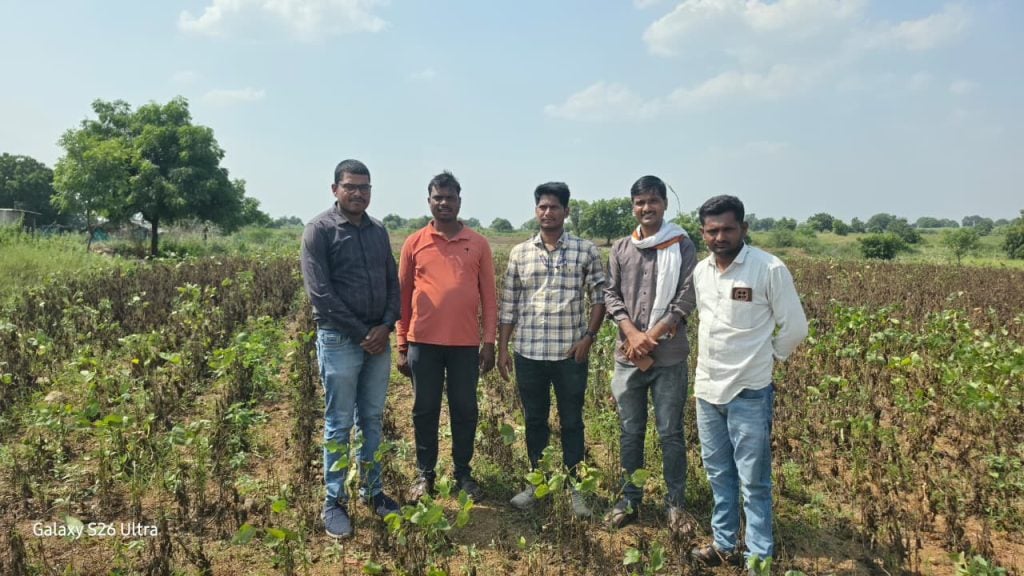
But the government’s interaction with villagers rarely extends beyond these field officers. Residents across Beed, Jalna, and Chhatrapati Sambhajinagar districts say elected legislators—a regular presence during election season—have yet to show up to hear their concerns.
ThePrint tried to contact Beed MLA Sandeep Ravindra Kshirsagar of the NCP (SP) via calls, text and email. This report will be updated if a response is received.
The absence is particularly striking given the region’s political heft. Beed district has produced several high-profile leaders, including BJP’s Pankaja Munde, currently Maharashtra’s environment and climate change minister, and NCP’s Dhananjay Munde, a former agriculture minister. Latur, among the worst-hit districts, was represented for five terms by former Maharashtra Chief Minister Vilasrao Deshmukh.
The government cannot continue to support the growth of [water-intensive] crops in the region and expect that the farmers will magically move to other crops. Unless there is a strong alternative that provides equal or more income and better government support, farmers will continue growing these water-intensive crops
– Narhari Shivpure, Gram Vikas Sanstha
The looming crisis was already on Maharashtra’s political radar months ago. Ahead of the June monsoon session, Shiv Sena (UBT) leader Bhaskar Jadhav questioned the government’s preparedness given the El Niño warnings. NCP (SP) leader Jayant Patil also flagged the state’s declining reservoir levels, which stood at 23 per cent in June compared to 31 per cent the previous year.
This drought could have demonstrated the effectiveness of the farmer-support schemes and resilience measures rolled out over the years. Instead, this year’s crisis has exposed what experts and farmers describe as a gap in that support. Year after year, government interventions have remained reactive, stepping in after crops fail or water sources run dry, rather than helping farmers build farming systems resilient enough to withstand extended dry periods.
Flagship schemes such as the World Bank-assisted Nanaji Deshmukh Krishi Sanjeevani Prakalp, aimed at making smallholder farms more climate-resilient and profitable, and the Centre’s Pradhan Mantri Fasal Bima Yojana, which provides crop insurance, have also failed to percolate to smaller villages.
While Maharashtra claims to have poured massive funds into irrigation, these investments have failed to translate into a network of projects that could insulate drought-prone regions from repeated water crises.
In 2018, the Centre approved Rs 13,651 crore to finish 91 pending irrigation projects to make Maharashtra “drought-proof”. By 2024-25, central assistance released under the package stood at nearly Rs 3,024 crore, with official documents claiming 70 projects had been completed to create 2.16 lakh hectares of irrigation potential.
However, the backlog remains substantial. In April this year, data presented to the state cabinet showed that another Rs 2.56 lakh crore would be needed to complete 225 irrigation projects approved since 2022.
The ground reality is a perpetual loop of reaction without readiness.
Reservoirs running dry
A year ago, Marathwada’s eight districts received abundant rain—947 mm against a normal of 679.55 mm. This year, they received just 445 mm. Latur was worst impacted, recording about half its usual rainfall: 362.7 mm against 706 mm.
Vinay Gowda, collector and district magistrate of Chhatrapati Sambhajinagar—which has also been severely affected—told ThePrint that nine of the district’s ten tehsils (sub-districts) have been declared drought-affected.
Under the central government’s Drought Management Manual, the affected tehsils have reached ‘Trigger-1’, the first alarm bell in a three-step process. It is activated when a combination of indicators cross specified thresholds —including dry spells longer than 21 days, rainfall deviation, and standardised precipitation metrics.
The manual says that a seasonal rainfall shortfall of 50 per cent or above during the kharif (starting in June) or rabi (starting in November) period, or an overall seasonal deficit exceeding 25 per cent, automatically activates ‘Trigger-1’. Trigger-2 assesses the impact of a drought, while the final stage involves field checks to determine severity and the relief needed.
“The problem in our district has been uneven rain. In August and September, Chhatrapati Sambhajinagar has received only 35 per cent of the normal rain. This has severely declined agricultural productivity,” Gowda said.
The plants are supposed to be four to five feet tall, and laden with cotton flowers. But because of no rain, the fields are completely dry
– Parmeshwar Shinde, Ambesawali sarpanch
He added that the region’s only saving grace is the 50-year-old Jayakwadi dam, with a capacity of 2,909 million cubic metres (MCM). Located around 50-100 km from the affected villages, it is holding more water than other reservoirs because of relatively more rain in the Nashik side. Its counterparts, such as Majalgaon, Sina Kolegaon and Yeldari reservoirs have already hit critical levels. Their water levels are between 25-40 per cent, according to the state Water Resources Department’s portal.
“In the current stage of drought management rules, we are conducting ground-level surveys to assess the damage. Our initial assessment shows that we only have about 31 per cent water in our reservoirs and just enough cattle fodder to see us through till February. But if the dry spells continue, we might be facing a problem,” DM Gowda added.
For now, the administration’s toolkit for drought management comes down to seasonal desilting of drains and digging new wells.
The desilting exercise is part of the state’s annual pre-monsoon protocol to keep water channels clear so that rainwater can reach local wells and reservoirs and recharge groundwater.
“We have also identified villages where new wells and baolis will be dug. This will ensure that whenever it rains, water is stored for future use,” Gowda said.
Stopgaps without solutions
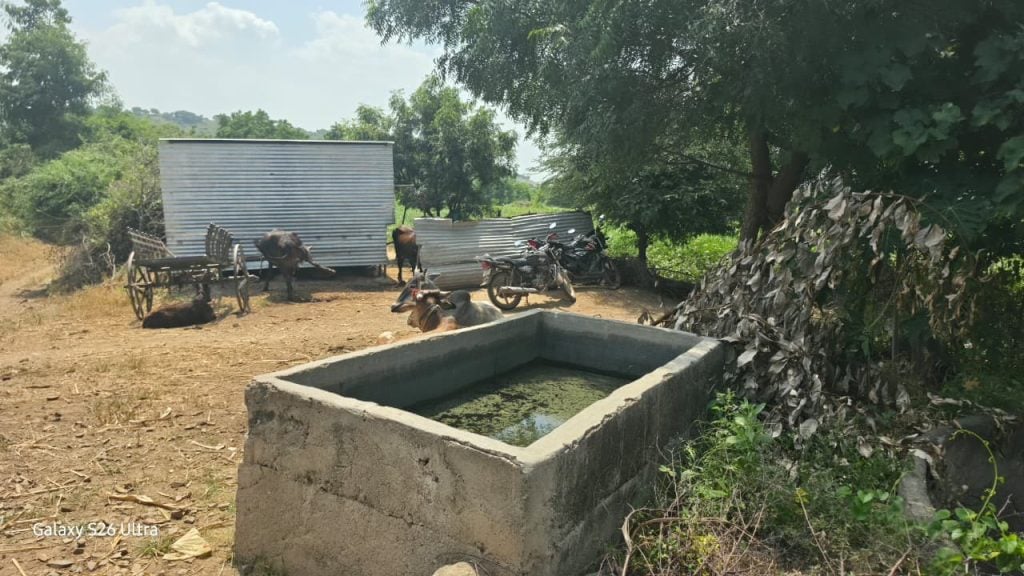
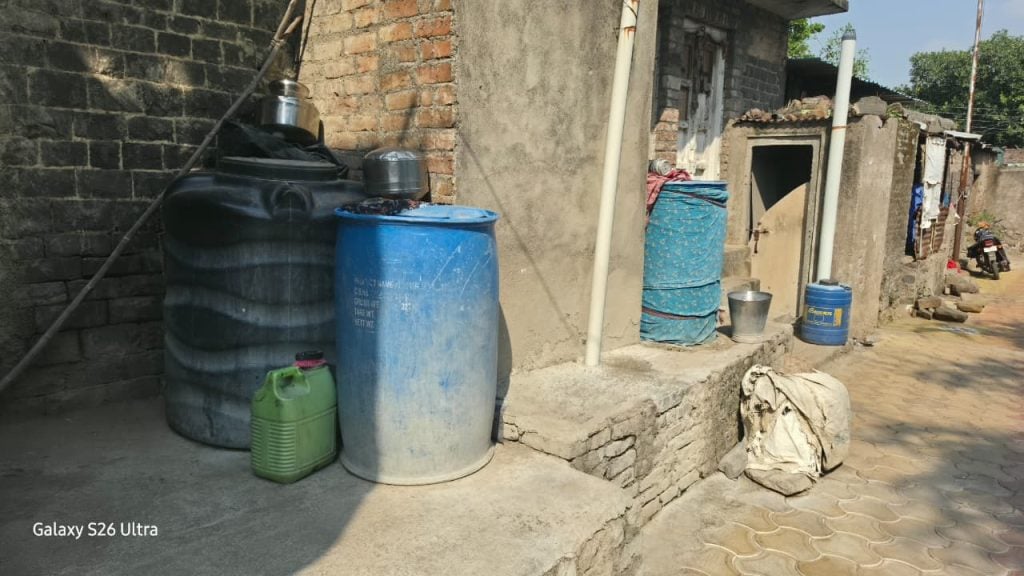
In most villages in Marathwada, water has become so scarce that its use from wells and local reservoirs is now restricted to drinking and other essential needs. Strict restrictions have also been imposed on water-intensive activities such as construction. Tankers now ply the broken village roads.
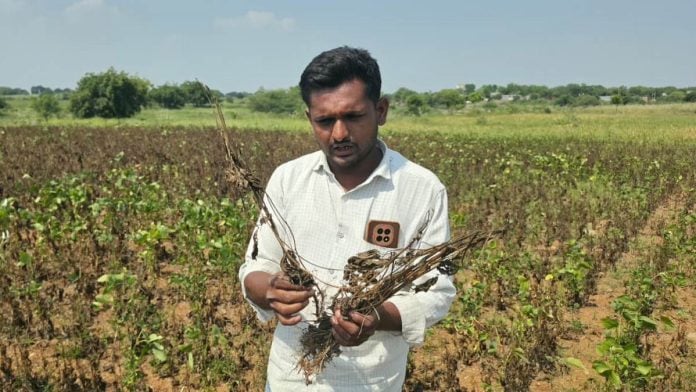
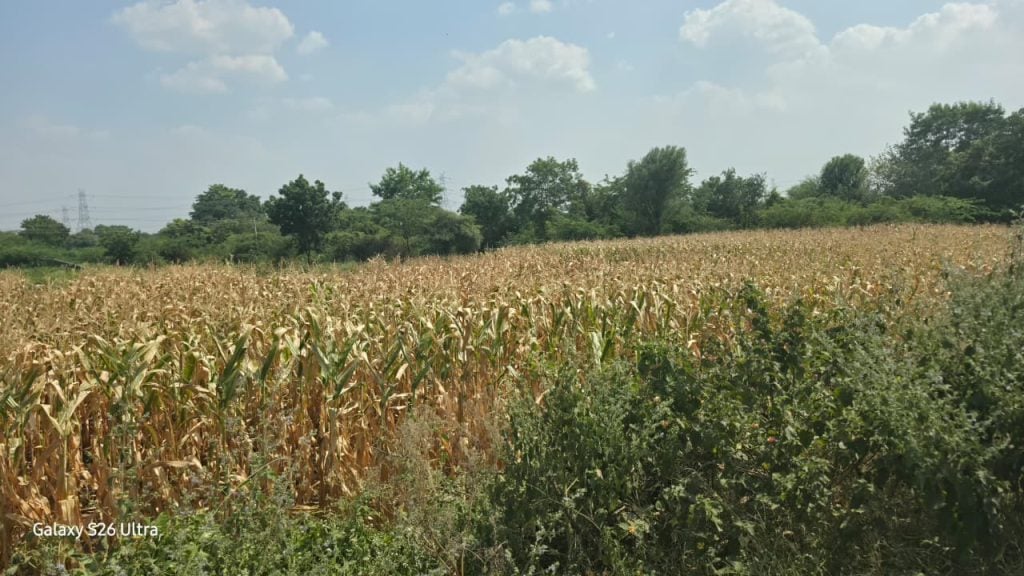
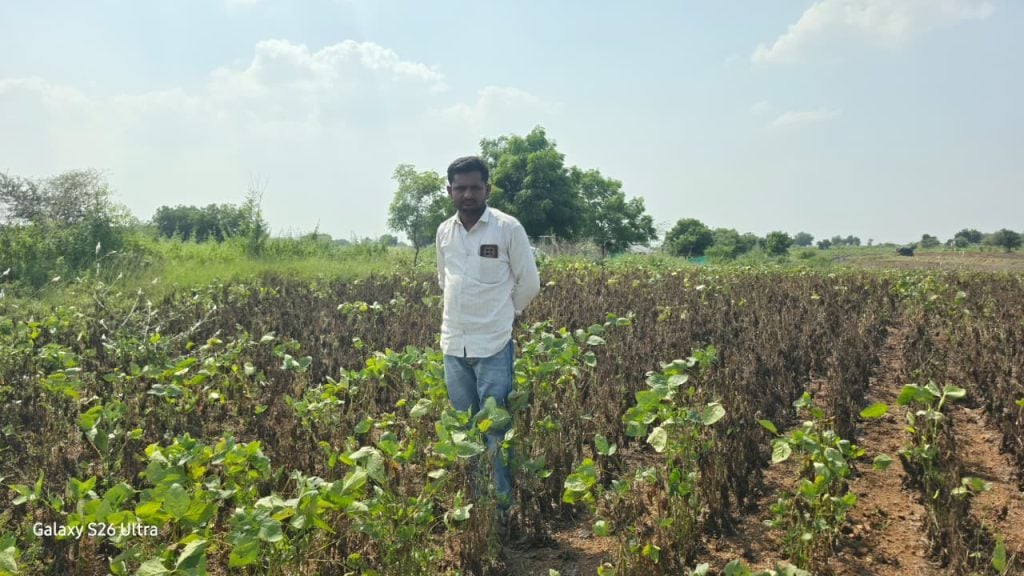
But the crisis is most starkly visible in the farmlands. Under the harsh October sun, cotton stalks stand brittle, soybean leaves have curled and withered, and the soil beneath farmers’ feet has crumbled.
Marathwada’s climate crisis is not new. Year after year, the region falls victim to recurring drought and prolonged periods of water stress. Despite these repeated shocks, there is still no reliable, long-term strategy that farmers or agricultural officers can fall back on when the rains fail. The reaction-mode is how the administration tackles the crisis each time.
Instead of helping farmers transition to less water-intensive crops and adopt more climate-resilient farming practices, the government is continuing to incentivise patterns of agriculture that place enormous pressure on its limited water resources, experts say. This could leave farmers even more vulnerable to drought in the coming years, considering its history of increasingly erratic rainfall.
“The Marathwada region is one of the most vulnerable to the climate crisis. This year’s impact has been because of El Niño, but we have witnessed droughts several times over the last decade. The government needs to come up with reliable long-term solutions and not react to these events each time,” said Narhari Shivpure, founder secretary of Gram Vikas Sanstha, a non-profit working on water and soil conservation with farmers across Marathwada.
When the crops turn to dust
Twenty-nine-year-old Parmeshwar Shinde, the newly elected sarpanch of Ambesawali village in Beed, has spent the past week surveying its fields. At this time of year, the vast stretches of land should be a bountiful expanse of lush, fertile green harvest. Instead, the fields are an ashen patchwork of dust and dying plants.
Shinde bends down, pulls out a stunted, shrivelled cotton plant and crushes it between his palms. When he opens his fist, the dry stem has crumbled into powder.
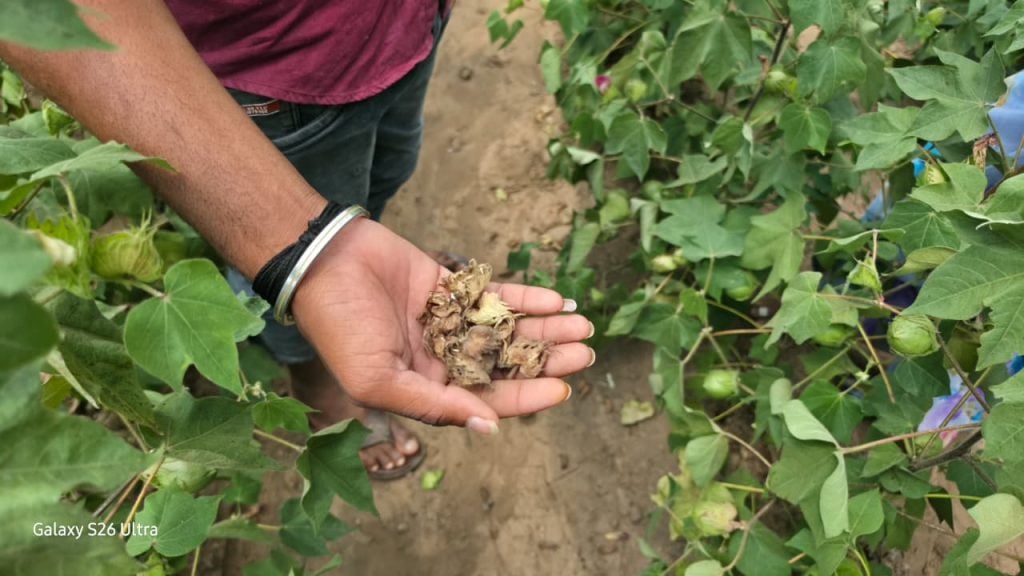
“The plants are supposed to be four to five feet tall, and laden with cotton flowers. But because of no rain, the fields are completely dry,” Shinde said. The panchayat’s initial surveys show that around 90 per cent of the village’s crops have been damaged by the drought this year.
The last time the village received rain was in June. Since then, every time the sky is overcast even for a moment, the entire village gathers in a prayer.
“People have given up hopes of saving the crops. Currently, their focus is survival. The drinking water is fast depleting. We had experienced drought-like conditions even in 2012 and 2016, but in none of those years had we run out of water by October itself. The coming months look grim,” panchayat secretary Hendre said.
Worst drought since 1972?
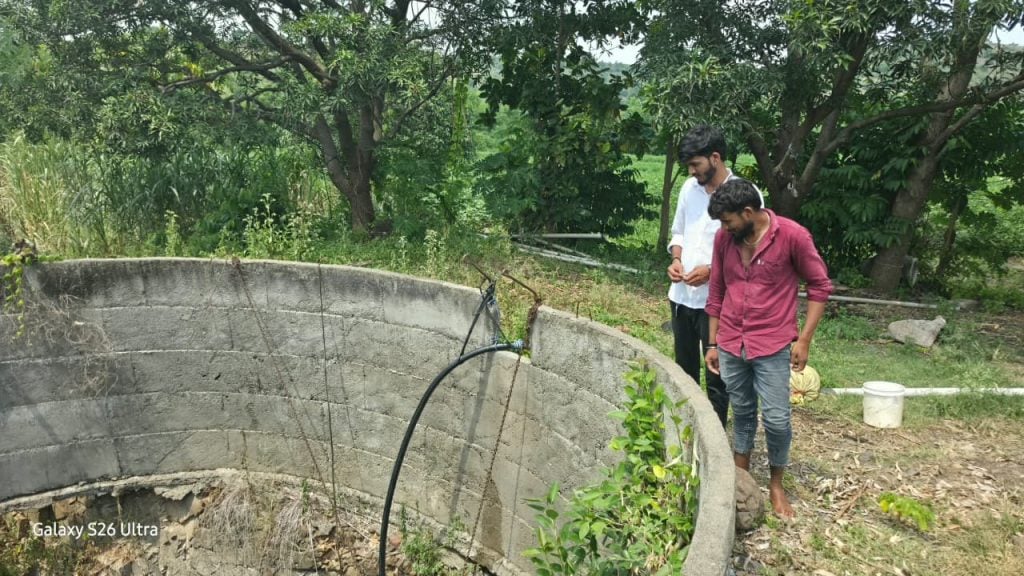
Around two hours away from Beed, in Jalna, the situation is no different. Water has become the sole subject of conversations in Kandari village. It has even created a new hierarchy. Those who own wells on their land have suddenly found themselves in a position of power.
With water sources drying up, desperate villagers are approaching these well owners, some of whom are selling their water at a premium. Each bucket of water is going at Rs 100. Villagers say this is still a better alternative than waiting for government tankers to arrive and, even when they do, hauling pots of water for kilometres back to their homes.
“If someone has an emergency need, we do give them a bucket or two. But since the water levels are down, we need to run the motors for around seven-eight hours and that costs money,” said Vishwamba Nausagar, who owns a well.
Forty-three-year-old Sheila Baban Dakne, another Kandari resident, grew up hearing about the dushkal of 1972 from her father.
“I have only heard stories about the 1972 droughts. People and animals were just dropping dead. Farm lands had all dried up,” she said, recounting the stories she had been told.
Back then, the drought ravaged 21 of Maharashtra’s then 26 districts, affecting roughly 1.8 crore to 2 crore people. Nearly 50 lakh people had to depend on government-funded relief work to survive and many ended up migrating from their villages.
Last month, Maharashtra Chief Minister Devendra Fadnavis raised the spectre of another 1972.
“We are heading towards a severe drought. This could be worse than 1972,” he warned.
The paradox of sugarcane and cotton
For a region so frequently parched, Marathwada has a puzzling affinity for thirsty crops.
A 2023 study published in the journal Climate highlighted this contradiction. Between 1981 and 2018, rainfall in the region showed a declining trend, with an annual mean of 662.9 mm. Yet, since 1996, farmers increasingly moved away from crops that needed less water—including jowar, bajra and wheat— in favour of water-intensive crops such as cotton, sugarcane, maize, and soybean.
“Per hectare, production and area growing high-water-requirement crops (mostly cotton and sugarcane, etc.) have remarkably increased in the last two decades (after the year 2000) throughout Marathwada,” the report said. It added that Aurangabad (now Chhatrapati Sambhajinagar) saw the biggest rise in sugarcane production, followed by Jalna and Latur.
The study also found that farmers’ heavy dependence on groundwater was taking a toll. Groundwater levels declined by an average of about 3.5 metres over the period studied. All districts of Marathwada, except Osmanabad, showed declining groundwater levels in both the pre- and post-monsoon seasons. Some of the steepest declines were recorded in Parbhani (5 metres), Hingoli (4 metres) and Beed (4 metres).
Narhari Shivpure of Gram Vikas Sanstha said farmers are clinging on to these crops because they bring higher incomes and enjoy government support.
“The government cannot continue to support the growth of these crops in the region and expect that the farmers will magically move to other crops. Unless there is a strong alternative that provides equal or more income and better government support, farmers will continue growing these water-intensive crops,” Shivpure said. He added that alongside a concerted effort to move farmers to more sustainable crops, the government must invest in programmes that teach efficient irrigation methods and prepare farmers for droughts.
A village that broke the cycle
Shivpure’s team has shown that there is a way out. In Chinchuli village in Chhatrapati Sambhajinagar, farmers have managed to weather the current drought with little disruption. This was the result of years of changes in how they farm and manage water.
In 2018, when Shivpure’s team started working with Chincholi, they were staring at an uphill task. Farmers here were deeply rooted in traditional agricultural practices and feared that any digression from them would cost them their livelihoods. But years of persistent efforts are beginning to pay off. When other villages are grappling for water, farmers here have enough to sail them through the season.
This season, right when El Niño alarms were going off in government agriculture offices, Chinchuli residents dug recharge pits to capture the early monsoon rainwater. They are now drawing on this stored water to meet their daily needs and support their farms through the dry spell.
With help from Gram Vikas Sanstha, villagers have also raised money through donations and door-to-door collections to fund long-term measures such as repairing check dams, desilting local drains and constructing groundwater recharge points. Their soil conservation efforts have increased the area under fertile soil in the village by 1.5-2 per cent over the past eight years.
Over the years, the farmers here have also been trained in practices like protective irrigation, a method that uses limited amounts of water during critical growth stages of crops to save them from a total failure during dry spells.
But Chinchuli remains an exception. Without sustained government backing, such community-led efforts exist in silos. Even their neighbouring villages don’t pick up the best practices and are left susceptible to droughts.
Also Read: The Alps swallowed Homi Bhabha’s plane. Melting glaciers bring up India’s 60 yr old secrets
Climate exodus
In Ambesawali, climate change is fuelling another crisis—mass migration. Years of alternating droughts and floods have pushed villagers to leave their farmlands behind and seek work elsewhere. At least half the village’s residents migrate seasonally to Karnataka and Tamil Nadu, where they work as labourers in sugarcane fields.
The exodus starts in July. Young men and women pack their bags and board trains heading south. For the next six months, their houses remain locked, left in the care of their neighbours.
“They earn more working in other states. They work for six months, save money, and then come back. For the next six months, they take up some odd jobs in the village,” said Ambesawali resident Ramesh Gundekar. According to him, those who leave earn up to Rs 25,000-30,000 a month.
Residents say that the migrants have slowly become the “rich and the posh” of the village. They do not have to worry about farm loans or stare anxiously at the clear skies. They have a more predictable income.
“We used to look down upon these people, but now it seems like they made the right choice. At least they are not left worrying about the rains every year,” said another resident, Tukaram Gundekar.
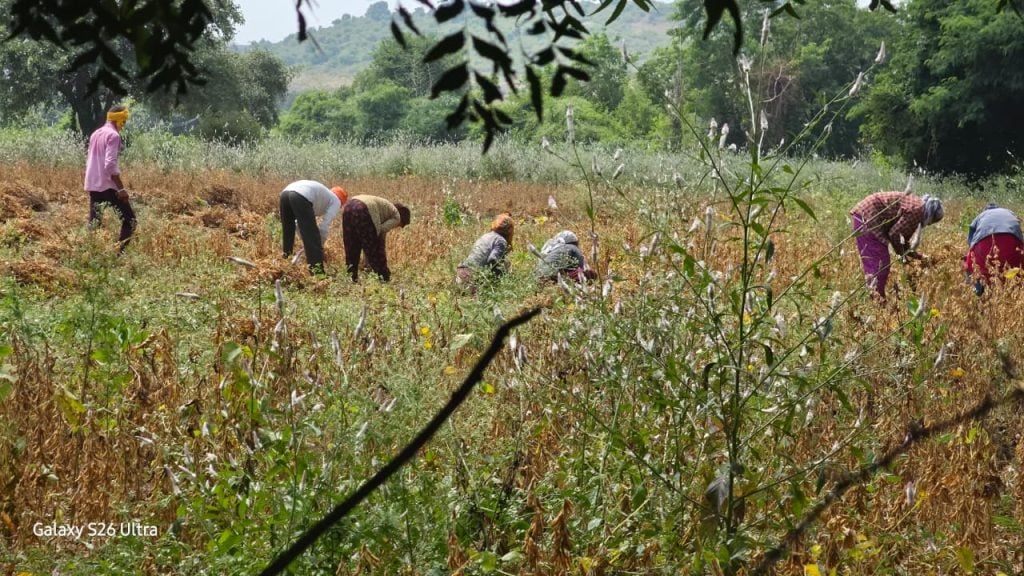
Those who stay behind are struggling to salvage what remains of their crops. Many have abandoned their fields altogether, leaving the crops to wither. Harvesting what little remains would cost more money. There’s little left to spend after pouring their savings into seeds, fertilisers and farm equipment at the start of the season.
The worst may be yet to come. The IMD has warned that El Niño is yet to peak, which means that its impact is likely to extend through this year and up to the next monsoon season too.
“Agriculture is no longer a viable option in this region. A farmer can fight pests or a competitive market, but how will he fight the weather?” Hendre asked.
(Edited by Asavari Singh)