


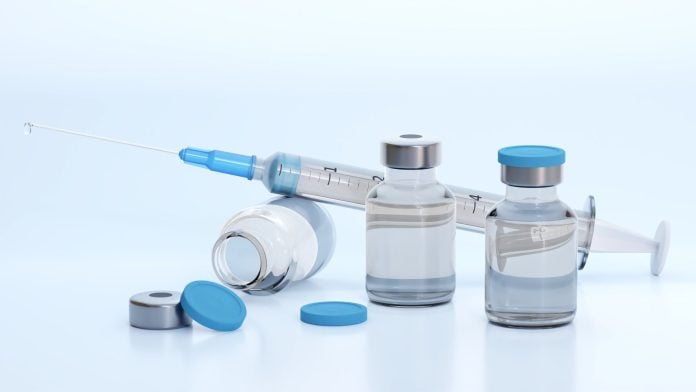
New Delhi: Hyderabad-based biotech startup PopVax has announced that it will design and manufacture personalised Messenger RNA (mRNA) cancer vaccines using genetic information from individual patients’ tumours, a move that could mark a new direction for India’s mRNA research ecosystem.
An mRNA vaccine gives the body instructions to make a harmless piece of a virus so that the immune system learns to recognise and fight it. It does this without using the actual virus or a weakened version of it.
The technology was used in Covid-19 vaccines, including Pfizer-BioNTech’s Comirnaty and Moderna’s Spikevax.
But unlike Covid-19 vaccines, which targeted a common protein found in the coronavirus, personalised cancer vaccines are designed using genetic information from an individual patient’s tumour.
The company estimates that the process, from receiving a patient’s tumour sequencing data to manufacturing a vaccine ready for shipment, will take 8 to 10 weeks.
PopVax will offer the service through its RNA Foundry, an integrated research, development, and manufacturing facility in Hyderabad. However, it will come at an estimated cost of $300,000 (around Rs 2.7 crore) per patient, making it accessible largely to wealthy patients who can afford an experimental treatment.
Speaking to ThePrint, PopVax founder Soham Sankaran said the company would initially work with patients whose physicians understand the regulatory requirements for accessing experimental medicines.
He said that PopVax will design and manufacture the vaccine, while decisions on its use will rest with the patient, their physician and the relevant country’s regulator.
Explaining the rationale behind the personalised approach, Sankaran said, “The future of medicine for cancer must be personalised because there is no solution, on average, that works for everybody.”
The announcement comes amid growing global interest in personalised cancer vaccines, with companies such as Moderna and BioNTech advancing similar approaches through clinical trials, with mixed results.
The need is also large. The Indian Council of Medical Research’s (ICMR’s) National Cancer Registry Programme estimated about 15.7 lakh new cancer cases in India in 2025. An earlier ICMR estimate found that one in nine Indians is likely to develop cancer in their lifetime.
PopVax’s announcement is an experimental design and manufacturing service, not an approved treatment or an ongoing clinical trial of its cancer vaccine.
How personalised mRNA cancer vaccines work
The process starts with a small sample of the patient’s tumour, which is analysed to identify genetic changes specific to the cancer.
PopVax uses this information to identify proteins, or parts of proteins, that could help the immune system recognise cancer cells. Some of these proteins are produced because of mutations in the tumour, while others are found mainly in cancer cells.
The company then uses a machine-learning tool to predict which of these proteins are most likely to trigger an immune response. It uses the selected targets to create an mRNA vaccine. Once injected, the vaccine gives the body’s cells instructions to produce these proteins. This is intended to train the immune system to recognise and attack cancer cells carrying the same proteins.
The mRNA is packed into tiny fat-based particles called lipid nanoparticles, which help carry it into the body’s cells.
Sankaran said PopVax had developed its own technology to make these particles and a special fat molecule used in them. “This formulation can be stored in a regular refrigerator, which could make transportation and storage easier,” he said.
Global trials advance, but no vaccine approved yet
Several global companies are already testing mRNA-based cancer vaccines, with mixed results.
Moderna and Merck’s personalised candidate, mRNA-4157 (intismeran autogene), is the furthest along. The companies announced positive topline results from the Phase 3 trial on 19 August this year and published detailed data on 22 October. In the trial of 1,137 patients whose melanoma had been surgically removed, adding the vaccine to the immunotherapy drug pembrolizumab, which is also sold as Keytruda, cut the risk of recurrence or death by 42 per cent compared with pembrolizumab alone.
Meanwhile, BioNTech faced a setback and terminated the Phase 2 trial of its personalised candidate BNT122 in colorectal cancer on 28 August. This came after the trial’s independent safety monitoring board noted a numerical imbalance in overall survival data. The vaccine was being tested on its own, without an immunotherapy drug. The board found no new safety signals, the company said. However, a separate trial in pancreatic cancer, which combines the vaccine with an immunotherapy drug and chemotherapy, continues.
Dozens of other such trials are under way. Moderna and Merck are running nine trials across several cancers, including three Phase 3 studies in lung cancer, while China’s Everest Medicines has reported early data from a first human trial.
However, no mRNA-based cancer vaccine has received regulatory approval anywhere in the world as of November 2026. PopVax expects to begin trials in the next one to two years.
India’s mRNA ecosystem and the road ahead
India has developed mRNA research capabilities, particularly after the Covid-19 pandemic. Pune-based Gennova Biopharmaceuticals developed GEMCOVAC-19, India’s first mRNA-based Covid-19 vaccine. At the Centre for Cellular and Molecular Biology (CCMB) in Hyderabad, researchers began developing an mRNA platform in 2021 with government support.
Scientist Dr Madhusudan Roy, CEO of its Atal Incubation Centre, said the institute had developed the mRNA platform by 2022 and extended its work to diseases such as chikungunya. Sankaran’s startup PopVax was incubated at the centre.
“Putting the technology together, bringing in the right people and then making this happen is a massive achievement for a startup,” Roy told ThePrint, referring to PopVax’s work in building its mRNA platform and manufacturing capabilities.
However, as of November 2026, no Indian-developed mRNA cancer vaccine has been identified as having entered human clinical trials.
Sankaran said the company is expected to enter clinical trials in India and other countries. “India does not have as well-developed a single-patient access pathway for domestically developed experimental therapies as some other countries,” he added.
The treatment also has important limitations. Sankaran said the vaccines were not intended as standalone treatments or cures, and would have to be used alongside other therapies. Their effectiveness would depend on the tumour’s molecular profile, the patient’s treatment history and the stage of the cancer, he said
PopVax currently has 100 patient slots, with scope to scale up manufacturing, Sankaran added.
Funding is another challenge. “Indian investors were often reluctant to back biotechnology and deep-tech research, limiting the ability of companies to develop new platforms,” Sankaran said.
Dr Roy said established Indian vaccine companies tended to wait for new technologies to demonstrate success elsewhere before adopting them.
The next test for PopVax will be whether its experimental approach can demonstrate safety and meaningful clinical benefits in trials, and whether the cost can eventually come down enough to make it accessible to more patients.
“Over time, as we bring down costs and conduct more conventional clinical trials in India and elsewhere, personalised cancer vaccines will become more democratised,” Sankaran said.
(Edited by Anupama Yadav)