



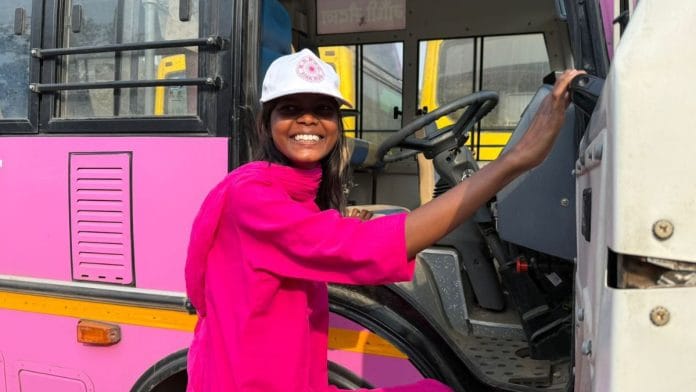

Patna: Inside a sprawling bus depot in Patna, 21-year-old Ragini Kumari, dressed in jeans, a pink kurti and flip flops, eases a pink bus out of a crowded parking lot as rows of male drivers watch. She is among Bihar’s first women bus drivers hired under the state’s flagship Pink Bus initiative — a scheme attempting to push women into one of Bihar’s most male-dominated public spaces: its roads.
“Parking se nikal paaogi na gaadi ko (Will you even be able to take the bus out)?” a colleague asked her. Ragini did not take her eyes off the steering wheel.
“Aap logon ko hum ladkiyon par bharosa kab hoga (When will you start trusting us girls)?” she shot back. “At least try trusting us.”
Moments later, the bus rolled out of the depot towards Gandhi Maidan, one of the regular routes now driven by Ragini, one among six of Bihar’s first batch of women bus drivers.
All six women hired by the Bihar State Road Transport Corporation (BSRTC) this month belong to the Musahar community, among the state’s most deprived and marginalised Dalit groups. Their appointment last month by the Nitish Kumar government was hailed as a milestone in women’s mobility and empowerment. But for the women, the battle has only just begun. Outside the depot were the burdens of caste, poverty and patriarchy. Inside it waited for distrust, misogyny and a transport system still reluctant to hand them the wheel independently.
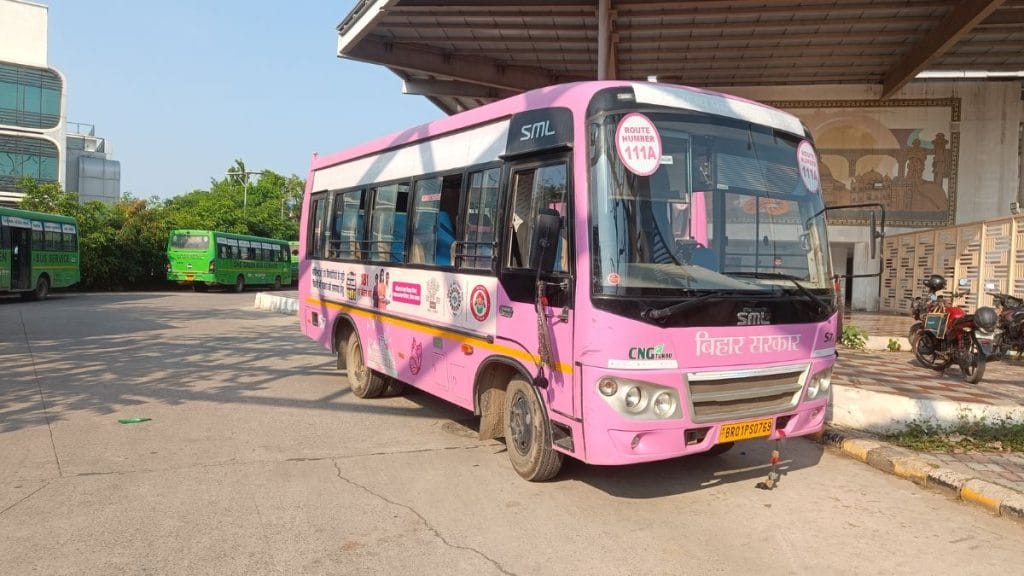
Launched last year, Bihar’s Pink Bus initiative was envisioned as an all-women ecosystem — women passengers, women conductors, women nodal officers and women drivers. Introduced across six cities, the buses were meant to provide safer public transport for women. Yet a year later, the transport department has managed to recruit only six women drivers for 100 buses, most of which are still operated by men.
For Musahar women trying to enter one of Bihar’s most male-dominated professions, the barriers begin at home and continue at the depot: families pushing marriage over work, male colleagues questioning their competence, and transport offices unequipped for women workers.
For generations, the rat-eating Musahars — classified as Mahadalits in Bihar in 2007 — remained trapped at the bottom of the caste hierarchy, historically pushed to the edges of villages as landless labourers and treated as untouchables by the so-called upper castes. According to Bihar’s caste survey, the community constitutes around 3.08 per cent of the state’s population, but only 0.4 per cent are employed in government jobs. Nearly 79 per cent of Musahar families earn less than Rs 6,000 a month.
Now, six young women from a community long pushed to Bihar’s margins are trying to take control of its roads.
“In the patriarchal society of Bihar, the entry of these girls in this male dominated profession is revolutionary. These girls showed strength and it will inspire many young women across the state to challenge the patriarchal mindset,” said Sudha Varghese, a social worker and Padma Shri awardee who has worked closely with the Musahar community. “It can only be challenged once Musahar youth will get jobs.”
Same hierarchy, different terrain
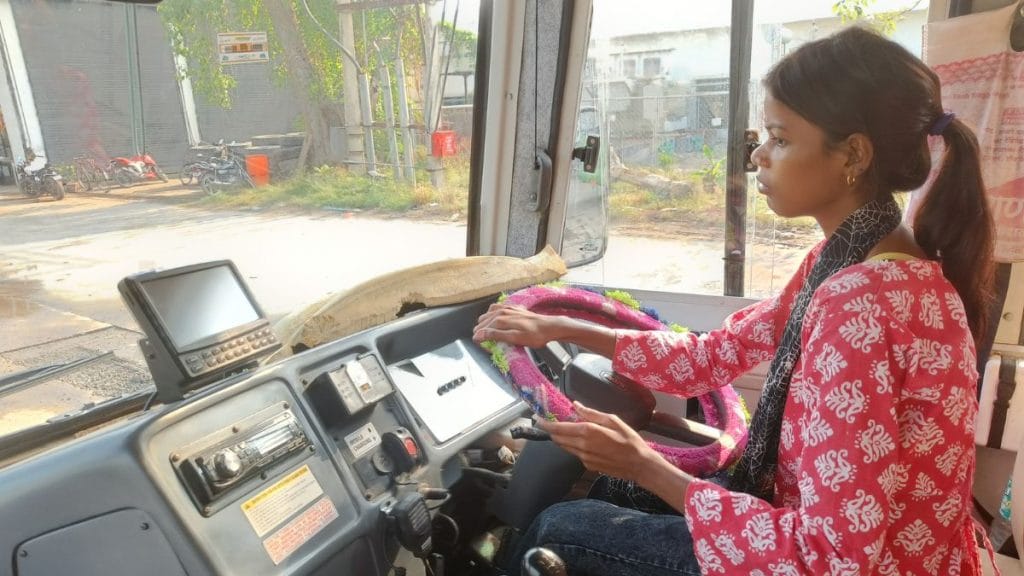
For the women, the driver’s seat was only the beginning. At 6 every morning, 21-year-old Ragini Kumari waits at the Bihar State Road Transport Corporation (BSRTC) bus depot while most Patna is still in slumber.
“When I’m touching the steering of the bus, it gives me confidence and it makes me self-reliant. Each time I start the bus, my whole journey full of struggle flashes before my eyes,” Ragini said, as she pressed the accelerator.
All six recruits — Ragini Kumari, Gayatri Kumari, Aarti Kumari, Saraswati Kumari, Baby Kumari and Anita Kumari — were trained at the Institute of Driving and Traffic Research (IDTR) in Aurangabad during the scheme’s launch in 2025.
The programme came with a tagline — Mahilao ko suraksha aur samman dene ko tatpar Bihar sarkar (Government of Bihar is committed to ensuring the safety and dignity of women) and was flagged off in six cities — Patna, Gaya, Muzaffarpur, Darbhanga, Bhagalpur and Purnea. While women conductors were recruited quickly, finding women drivers proved far harder.
At the Aurangabad centre, 16 women underwent training for light and heavy motor vehicle licences. Their days began with classroom lessons on traffic laws, accident prevention and road safety before moving to practical driving sessions across the institute’s large training grounds.
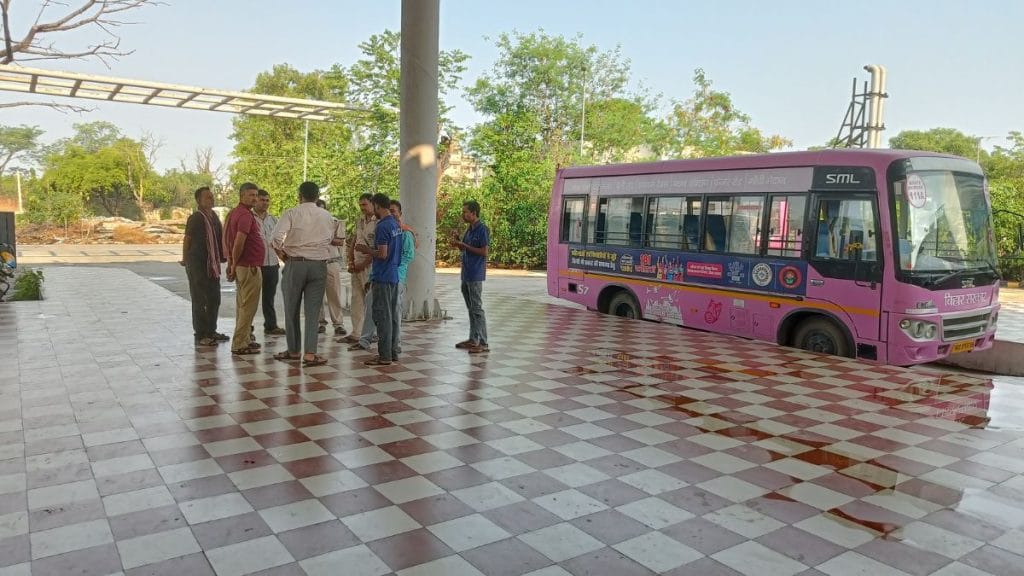
All 16 passed the examination. Only six eventually joined duty.
“The rest were stopped by their families or got married,” said Ragini, who was introduced to the programme through Nari Gunjan, an NGO working with Musahar communities in Bihar.
For many, the challenge began long before the roads.
Ragini’s father initially refused to send her to Aurangabad, nearly 150 km away from their village Allaudinchak in Patna’s Punpun area.
“My father did not allow me to go. I left home for the training anyway,” she said. “It was not an easy journey.”
Back in the village, neighbours taunted her parents for allowing their daughter to live away from home and instead advised her to get Ragini married off.
“Kaisi maa hai ki beti ghar se bahar rehti hai (What kind of mother lets her daughter stay outside),” her mother Soni Devi recalled hearing repeatedly. Sitting inside her dimly lit, modest home on a congested street, Devi said she still chose to support her daughter.
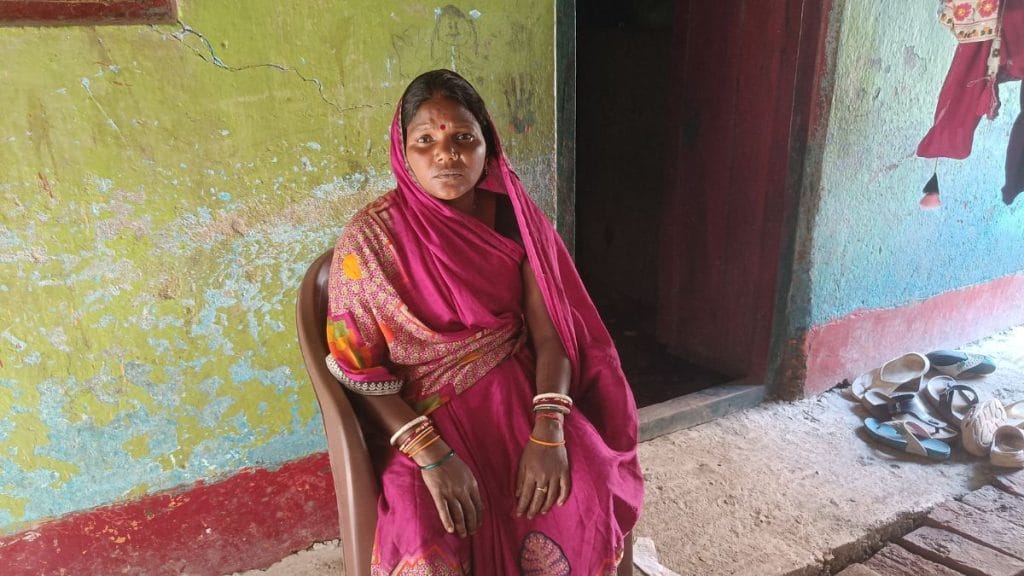
“I gave her a free hand to pursue whatever she wanted. I spent my whole life in poverty but do not want a similar life for her,” she said.
Ragini, who studied history honours at a college in Masaurhi, is now renting a house for Rs 3,000 a month with her other colleagues, a few minutes away from the bus depot. Her mother is confident about her daughter’s career.
“I know my daughter is rewriting history and will bring us out from gareebi (poverty),” she said.
Ragini’s father is a school teacher but the rest of the girls’ parents are daily wage labourers.
Historically associated with rat-catching and agricultural labour, Musahars have long remained socially and politically excluded. A 2019 study titled Substantially Present but Invisible, Excluded and Marginalised: A Study of Musahars in Bihar by Tata Institute of Social Sciences professor Gaurang Sahay described the community as one that has constantly faced “social neglect, doubts and torture that begin right from the time of their birth.”
For the Musahar women drivers, the roads were just a new battleground.
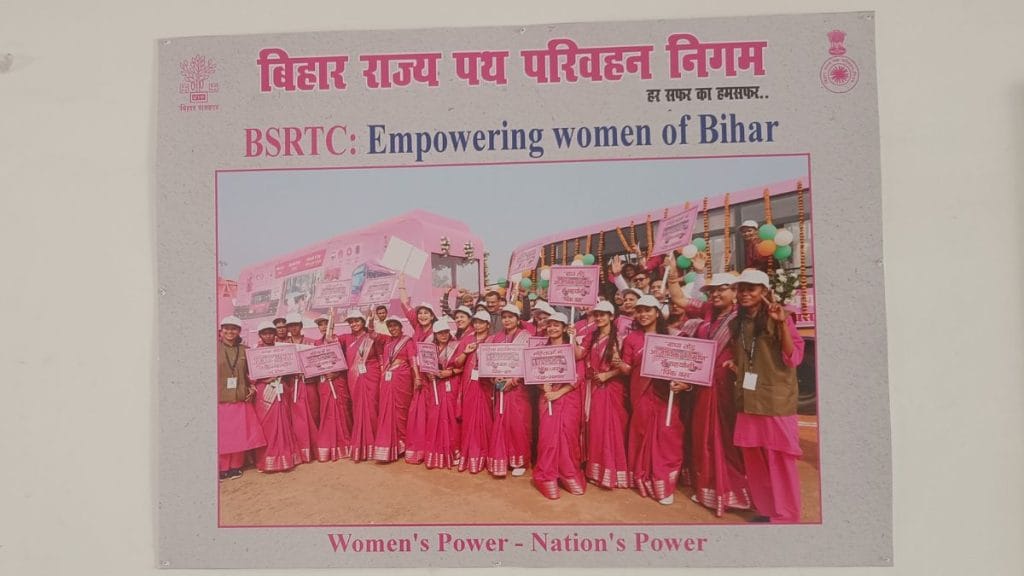
‘This is a man’s job’
At the BSRTC office in Patna, photographs of the six women drivers line the walls. One poster reads: “Women’s Power, Nation’s Power.” Another describes the Pink Bus service as “for women, by women and operated by women.”
But acceptance didn’t arrive with the posters.
Most mornings begin before sunrise at the bus depot, where the women report for duty around 6 am and often return home only by 8 or 9 at night.
Even after being hired, they are rarely allowed to drive independently on busy routes.
Out of the 100 Pink Buses introduced across Bihar, all currently operate with male drivers alongside the women recruits. Officials say the women are still learning how to navigate Patna’s congested roads.
The women see it differently.
“The department simply doesn’t trust that we are capable of driving,” said 21-year-old Aarti Kumari from Bhojpur district, 60km from Patna.
Their bodies became sites of scrutiny — male drivers routinely question their physical ability to handle buses.
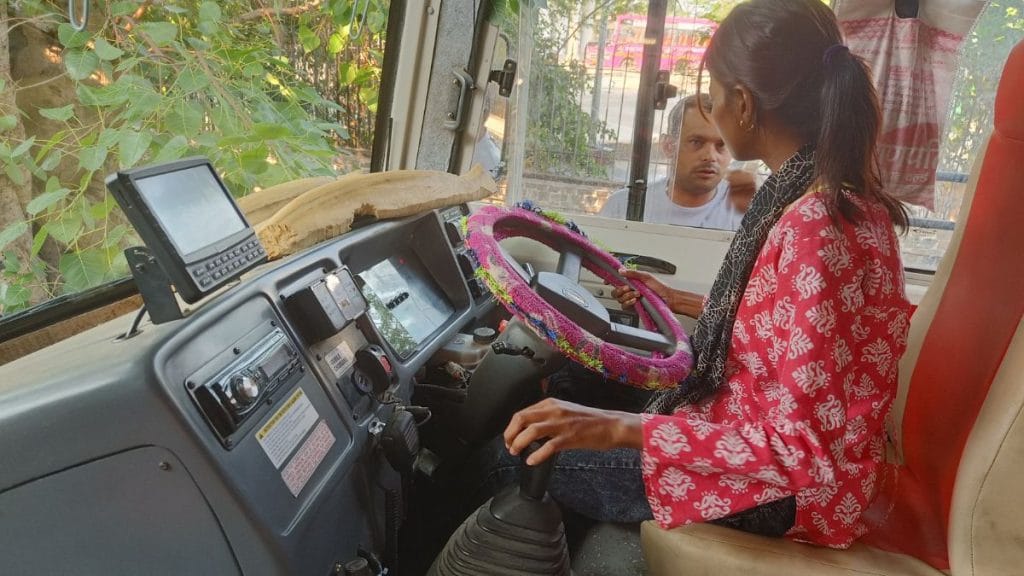
“They keep taunting us about our height, weight, and physique,” Aarti recalled colleagues telling them. “Shareer mein jaan nahi hai, gear kaise lagaogi (You do not have enough strength in your body, how will you shift gears?)”
Rahul Rai, a driver at the depot, says the women are not allowed to drive alone due to lack of experience.
“Patna roads are difficult,” he said. “Ye mardon ka kaam hai. Isme ye ladkiyan nahi tik payengi.” (This is men’s work. These girls will not last.)
Transport officials denied discrimination but admitted the women were still being supervised.
“They are capable, but they are new,” said Mamta Kumari, assistant regional head of BSRTC and nodal officer for the Pink Bus initiative. “So we sent a male driver with them who guides them. Once they gain more experience, they will drive independently.”
There is no timeline yet for when that will happen. Bihar hired women drivers before fully accepting women as drivers.
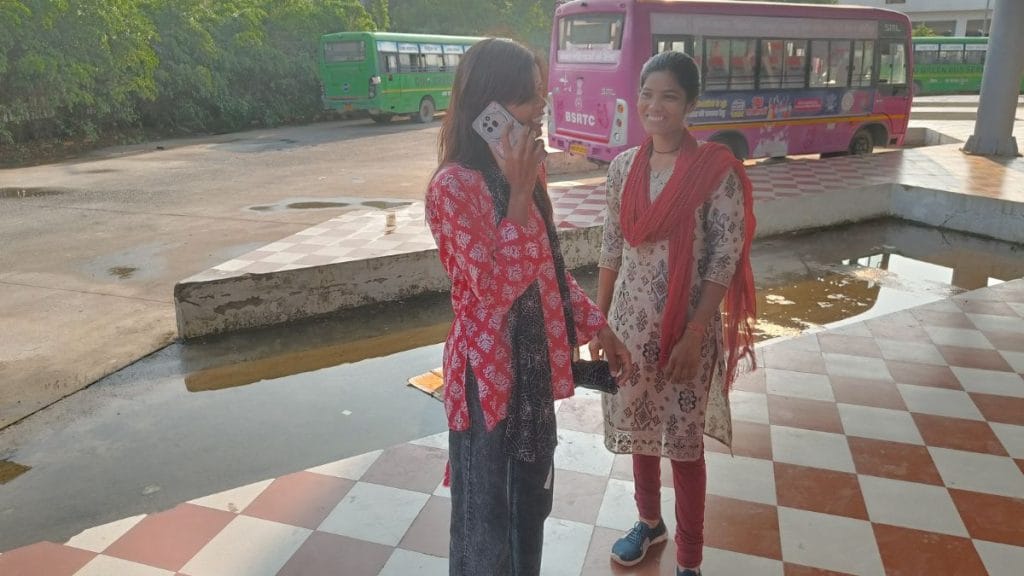
The women are defiant.
“Those who underestimate us, we will prove them wrong,” Aarti said. “We are not ones to give up.”
The women also allege that basic workplace facilities were initially denied to them.
“We carried water from home and waited till we returned home to use the restroom,” said Ragini.
The issue was eventually raised with senior officials after Sudha Varghese intervened.
“I told the department clearly that untouchability and tactics involving such discrimination to remove these girls would not be tolerated,” Varghese said.
For the Musahar women, the job did not free them from hierarchy. They grew up navigating caste exclusion and poverty; inside the depot, they encountered another entrenched order — male control over public space.
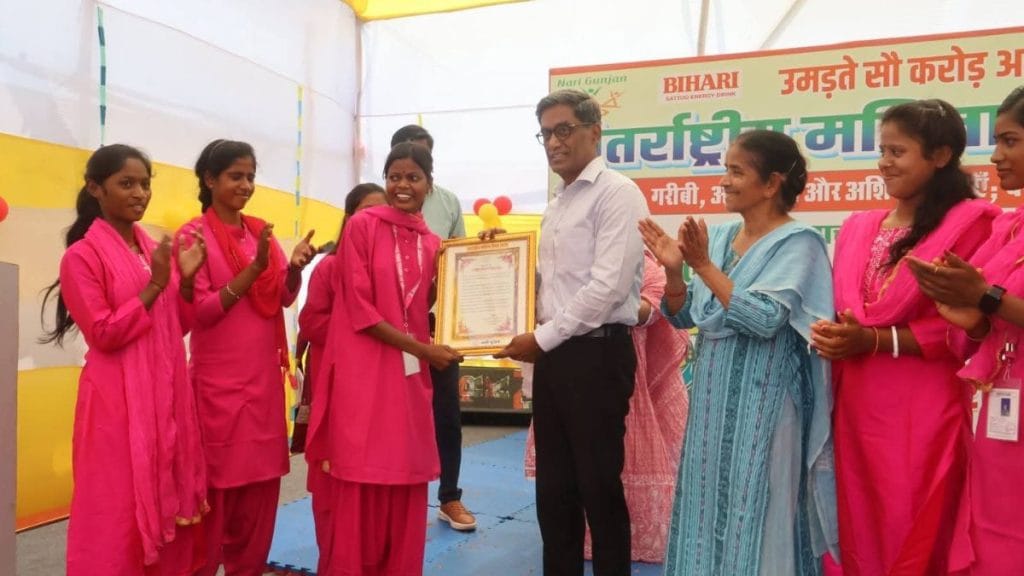
‘Our own space’
Away from the depot’s hostility, the buses themselves have begun creating something rare in Bihar’s public transport system — a space women say finally feels their own.
One of the Pink Bus routes runs between Gandhi Maidan and Danapur Junction, cutting through some of Patna’s busiest roads. The 22-seater buses are fitted with CCTV cameras, panic buttons and sanitary pad kits, and are reserved exclusively for women passengers.
Inside, the atmosphere is markedly different from the overcrowded city buses many women are used to.
“Normal buses are packed with men. I feel safer when women drive the buses,” said Shruti Jha, a passenger who took the 15-km journey last week. “Here, it feels like our own space.”
Women passengers often take selfies and videos when they see female drivers behind the wheel.
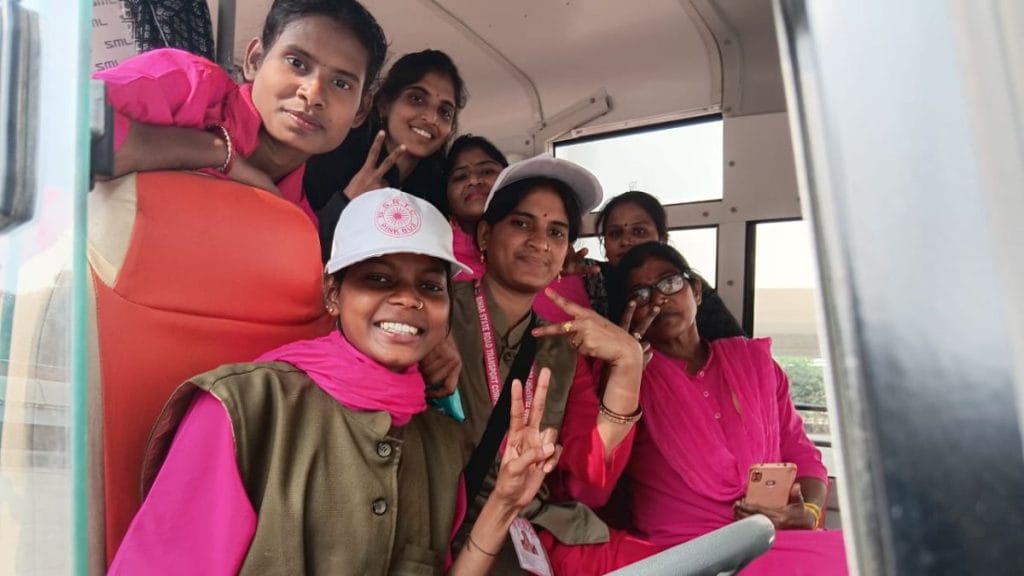
According to BSRTC data, nearly 5.74 lakh women used Pink Buses in Patna between June 2025 and April 2026, generating revenue of around Rs 1.25 crore. Across six cities, close to 10 lakh passengers used the service during the same period.
But the buses struggled initially.
Transport officials said passenger numbers remained low during the first few months because many women were unaware of the service. The department later launched outreach drives in schools and colleges and pasted banners across cities promoting the initiative.
Nodal officer of the pink buses Mamta Kumari visited women’s colleges and several schools to spread awareness about the initiative, which helped improve traffic.
Officials say the buses are now operating on a “no-profit, no-loss” basis.
Doubt, distrust and dreams
For many in the depot, the Pink Bus is the destination. For the women driving them, it is only a beginning.
The proudest moment for the six women came earlier this year when a tableau featuring the Pink Bus initiative won first prize during Republic Day celebrations at Patna’s Gandhi Maidan.
“When I drove that day, all my fear disappeared,” Ragini said. “I’m really attached to the Pink bus now.”
Soon afterwards, their photographs spread across local newspapers and social media pages. Headlines hailed them as Bihar’s daughters breaking barriers.
“Bihar mein Pink Bus ki kaman sambhalengi mahilayein (Women to take the helm of Pink Buses in Bihar),” read one.
But the bus is not the end goal for many.
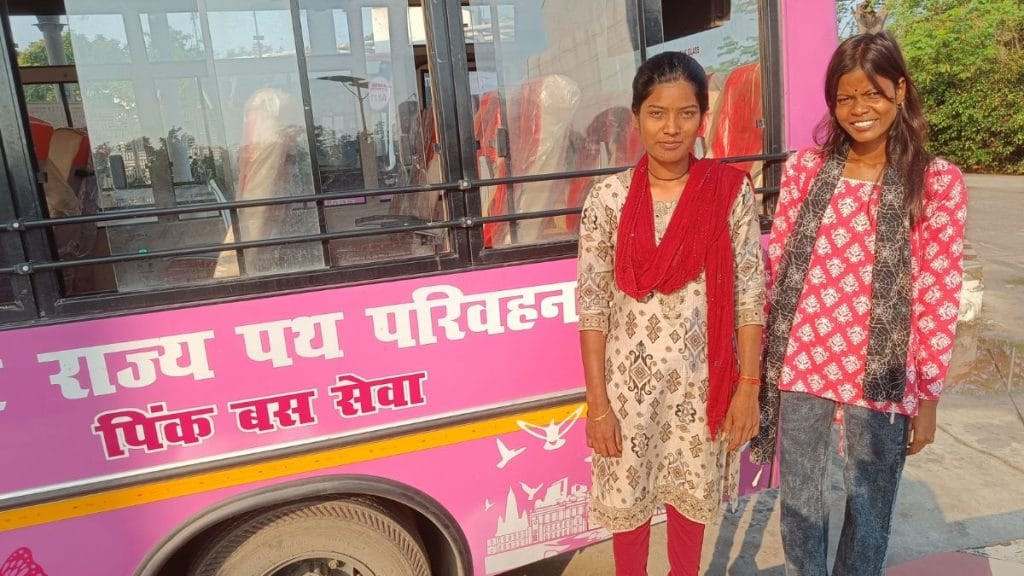
Aarti, who studied geography honours before joining the programme, said she wants to work and travel before marriage.
“I want a private job. I never wanted a government job,” she said.
For now, the women earn around Rs 17,000 a month through an outsourcing agency — modest salaries, but transformative for families that have spent generations on the margins.
The job has changed how they see themselves too.
“Because of this bus, people know us now,” Aarti said. “Our photos are on Google.”
Yet none of them see driving as the final destination.
For Ragini, the immediate dream is simpler: driving through Patna’s roads without a male supervisor beside her.
“I don’t want to rot in the same place my entire life,” she said, eagerly waiting for her first salary. “I want to travel the whole world and learn new things. This is only the start.”
(Edited by Stela Dey)