





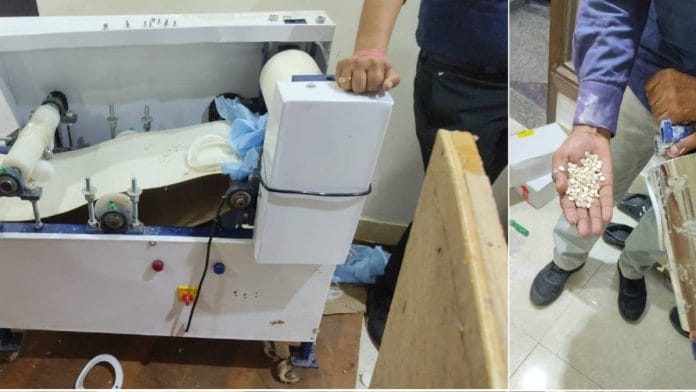

New Delhi: A commercial chapati-cutting machine packed with Captagon pills has exposed India’s emergence as a transit point in a shadowy international drug network stretching from Syria to Saudi Arabia.
Last week, the Narcotics Control Bureau (NCB), hot on the drug smuggling trail following reports and intelligence about the use of India as a transit point by international cartels, received a tip-off from a foreign anti-drug agency about a drug consignment in the Delhi area.
The tip-off referred to a portion of the consignment containing highly addictive narcotics with hallucinogenic impact on the body, notorious in the West Asian market, according to NCB officials.
Working on the tip-off, the NCB raided a rented accommodation in South Delhi’s Neb Sarai area on 11 May, leading to recovery of 31.5 kg of captagon tablets—the first-ever seizure of the drug by Indian agencies. The cache of tablets, embossed with two half-moons, was concealed in a commercial chapati-cutting machine and was en route to Jeddah, Saudi Arabia.
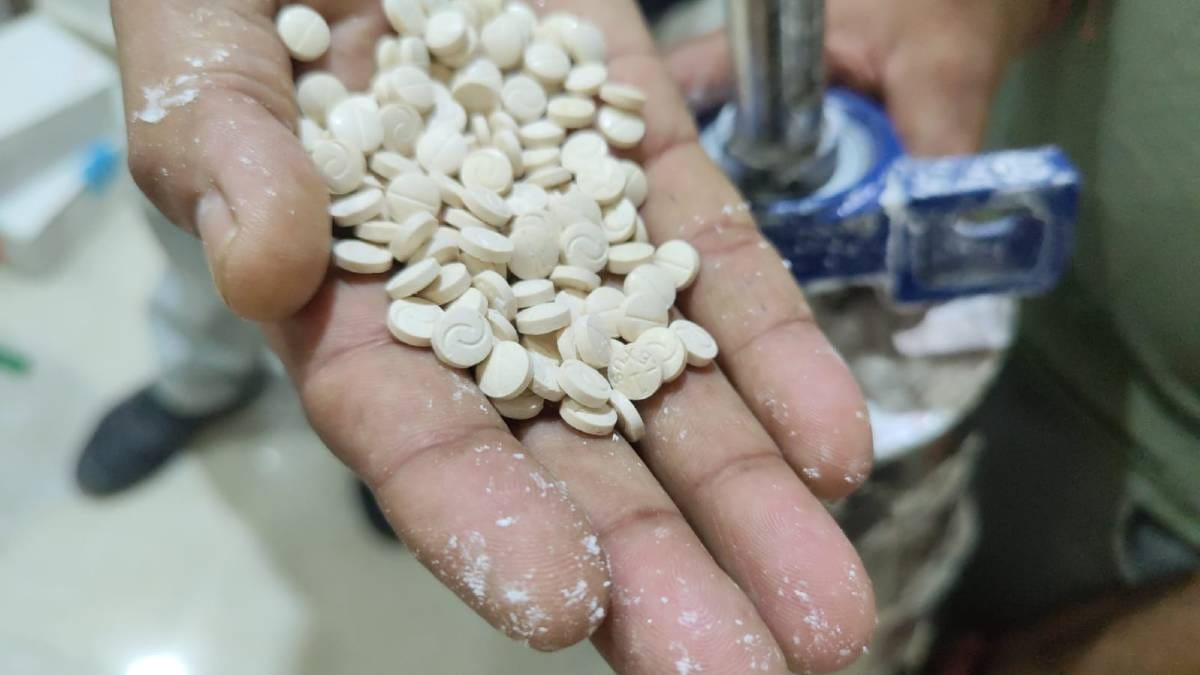
Captagon mainly contains fenethylline and amphetamine which are psychotropic substances under the Narcotic Drugs and Psychotropic Substances (NDPS) Act, 1985. The pill is a stimulant and has been a major source of addiction for youth in West Asian countries such as Saudi Arabia for over a decade. Its ubiquitous presence in that market has been traced to illicit factories and facilities in strife-torn Syria during former president Bashar al-Assad’s regime, with border routes with Jordan as a key transport pathway.
From the Neb Sarai accommodation, the NCB also arrested a Syrian national, Alabras Ahmed, who was found to be staying in India illegally as his visa had expired.
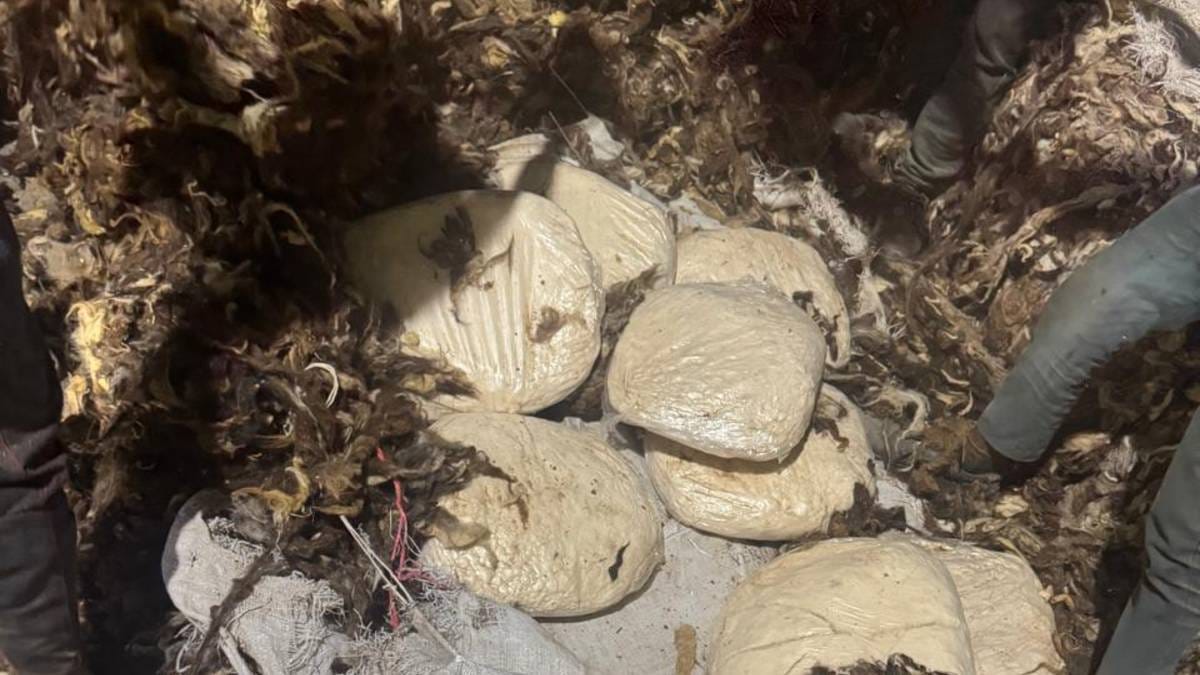
The drug consignment seized in Delhi turned out to be the tip of the iceberg, as the NCB further recovered 196.2 kg of captagon powder from a container at Mundra Port in Gujarat, following questioning of the accused.
The container had come from Syria with a declaration stating that it contained sheep wool. The NCB also arrested a man from Uttarakhand for facilitating Ahmed in obtaining a manufacturing facility on rent in Dehradun, the officials said.
Union Home Minister Amit Shah posted about the NCB drug bust, codenamed ‘Operation Ragepill’, on X Saturday, stating that Indian agencies would ensure that the nation is not used as a transit route by international drug cartels.
“Glad to share that through ‘Operation RAGEPILL’, our agencies have achieved the first-ever seizure of Captagon, the so-called “Jihadi Drug”, worth Rs 182 crore. The busting of the drug consignment destined for the Middle East and the arrest of a foreign national stand out as shining examples of our commitment to zero tolerance against drugs,” he wrote.
Captagon is often referred to as a “jihadi drug” because of its alleged use and trafficking by extremists in conflict zones in parts of West Asia.
Speaking to ThePrint, an NCB official said: “The drug is widely abused in parts of the Middle East (West Asia) for its stimulant and euphoric effects. Captagon consumption is known to produce heightened alertness and energy, suppression of hunger and fatigue, temporary euphoria, prolonged wakefulness, increased confidence and aggression, impaired judgment and impulsive behaviour, as well as psychological dependence upon repeated use.”
Also Read: No ‘narcotics jihad’, Kerala cops say spike in drugs came after alcohol dried up in lockdown
From German labs to Saudi market
Composed of 50 milligrams of fenethylline, a synthetic drug of the phenethylamine chemical family to which amphetamine also belongs, Captagon was launched as a brand name by the German pharmaceutical company Degussa in the 1960s. At the time, it was introduced to the market as a round, whitish tablet with a logo consisting of two half-moons.
In Europe, the drug was prescribed by physicians as a central nervous system stimulant to treat conditions such as attention deficit disorder and narcolepsy. However, as the United Nations included fenethylline under the purview of the UN Convention on Psychotropic Substances, 1971, Captagon ceased to exist in its original form in the European market.
Over the next few years, adulterated Captagon appeared in the market as demand boomed in the West Asian countries, leading to production in Bulgaria and Turkey for over a decade between the 1990s and the mid-2000s, according to a report by the European Monitoring Centre for Drugs and Drug Addiction (EMCDDA).
By the mid-2000s, the manufacturing base of the drug shifted to illegally-run laboratories in southeastern Europe, specifically in Turkey, Bulgaria, Slovenia, Serbia and Montenegro, from where it was illegally transported to consumer markets primarily in Saudi Arabia, says the report.
By 2015, the Saudi government estimated that 40% of the youth, aged between 12 and 22, were addicted to Captagon. The trend persists in the country and the region, according to NCB officials.
What also fuels the illicit trade, according to a report of the United Nations Interregional Crime and Justice Research Institute, is the leverage and margin that its sale offers. For a tablet that costs only a few rupees to produce, including packaging, the profit margin is huge, with a selling price ranging from $10 to $25.
Why ‘jihadi drug’
Before the NCB seizure of the drug in Delhi and raid on Dehradun manufacturing facility put the spotlight on the pill, Captagon had dominated headlines a decade ago in October 2015, when the Lebanese authorities detained a Saudi prince and his four associates before they could smuggle two tonnes of Captagon through Beirut international airport. The widely reported bust sparked off a diplomatic tussle between Lebanon and Saudi Arabia.
Captagon trade in West Asia has also boomed to unprecedented levels since 2011, following the onset of the Arab Spring. Syria is an alleged hub, with the nation fragmented between the Assad regime, rebel groups, and extremist organisations including the Islamic State of Iraq and the Levant (ISIL) during the peak years of the civil war.
Reports had emerged of ISIL cadres and other armed groups running on Captagon, staying awake for days without a sense of tiredness. Several accounts of fighters in Syria referred to the “superhuman energy” created by the drug, contributing to its widespread use in the country.
It was due to its alleged widespread use and acceptance among combatants in Syria that Captagon earned the name “Jihadi drug” in law enforcement circles.
Various international investigations and conflict-zone recoveries over the past decade have also indicated that Captagon tablets were found among armed groups and trafficking syndicates operating in war-affected regions. The enormous profits generated from Captagon trafficking have reportedly become a significant source of illicit financing for organised criminal and extremist-linked networks in certain regions.
“The terminology emerged because the stimulant effects of the drug allegedly enabled users to remain awake for extended periods, suppress fear and exhaustion, increase aggression and risk-taking behaviour, and sustain prolonged combat-like activity under stressful conditions,” the NCB official said.
The Assad regime was also accused of running a massive Captagon cartel, sending huge consignments at times through the border with Jordan. In the months after the fall of Assad, the new administration of Ahmed al-Sharaa and the Jordanian government have signed cooperation agreements for vigilance and crackdown on the Captagon cartel.
(Edited by Nida Fatima Siddiqui)
Also Read: Rich, wealth-flashing drug peddlers NCB is looking for. They are the ‘pandemic brats’