





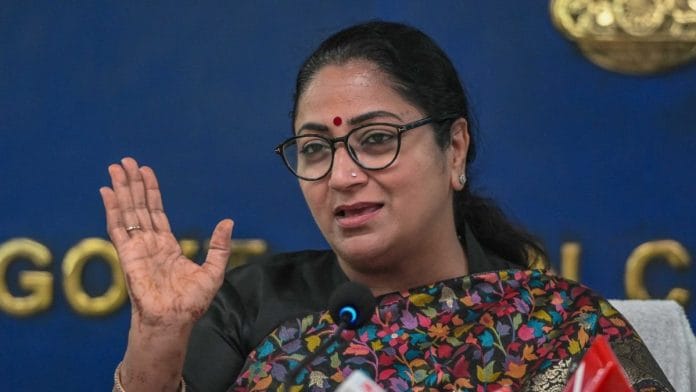


New Delhi: Delhi Chief Minister Rekha Gupta on Friday announced that the national capital is set to launch a new initiative ‘Clean Air, Healthy Delhi’—a project with an estimated cost of Rs 8,300 crore—in collaboration with the World Bank. The project will be funded 65 per cent by the World Bank and 35 per cent by the Delhi government.
Beginning in September this year, the initiative will continue for seven years, until August 2033. Its implementation will be defined in a preparatory workshop on 10 July, where different government departments, agencies, and senior World Bank officials will meet to define their respective responsibilities.
The NCR’s pollution problem is not new, and this initiative is aligned with the National Clean Air Programme (NCAP) and the PM’s vision of Viksit Bharat 2047.
‘Not merely a pollution control programme’
The project aims to better manage the air quality by improving monitoring, data analytics, the Integrated Command and Control Center (ICCC), public awareness, and better coordination with other states in the Indo-Gangetic Plain.
“The initiative is not merely a pollution control programme but a long-term investment aimed at providing Delhi residents with cleaner air, better public health and a more sustainable urban environment,” said CM Rekha Gupta in a press release.
She added that the project also plans to cut emissions by phasing out older vehicles, promoting EVs, improving public transport and strengthening the monitoring of Pollution Under Control (PUC) certificates.
In particular, the initiative will focus on better management of road dust, construction and demolition waste, solid waste management, water pollution, and preserving the city’s green spaces.
Among the stakeholders in the initiative are all the major departments and agencies of the Delhi government. Including the DPCC, the transport department, the Public Works Department, the MCD, the Delhi Jal Board, the DDA, and NDMC, and even the Department of Economic Affairs.
The Delhi CM added that clean air is the right of every citizen and such an initiative reflects the government’s commitment to ensuring clean air in the capital city.
Also read: Delhi launches Rs 7,000 crore EV policy, mandates electric autos from 2027
Pollution problem in Delhi
The pollution problem in Delhi is a chronic public health crisis driven by a complex mix of local emissions, regional agricultural practices, and unavoidable geographical traps.
A few reasons why Delhi reels under a thick layer of smoke almost the entire year, especially during the winters.
1) Vehicular and freight emissions: Regular traffic contributes roughly 23 per cent to 40 per cent of Delhi’s local particulate matter (PM 2.5).
2) Stubble burning: In October, farmers in neighbouring states like Punjab and Haryana burn crop residue. Winds carry the resulting thick smoke straight into the National Capital Region (NCR).
3) Location: Delhi sits in a low, bowl-shaped land within the Indo-Gangetic Plain. In winter, cold weather and low wind speeds trigger a temperature inversion—acting like an atmospheric lid that traps pollutants close to the ground.
(Edited by Saptak Datta)