



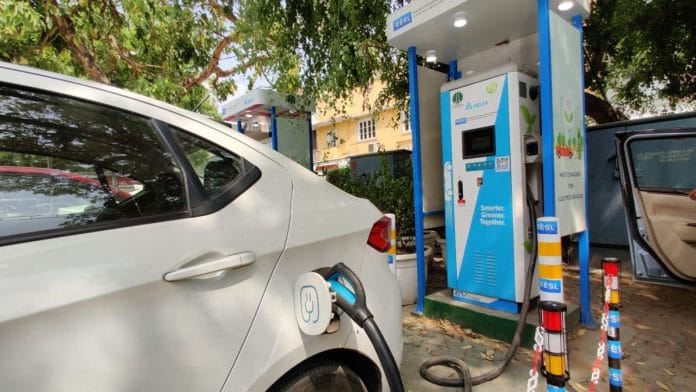

New Delhi: The Delhi government will invest Rs 7,000 crore over the next four years under its Electric Vehicle Policy, Chief Minister Rekha Gupta announced on Monday while unveiling the new policy. The policy includes EV purchase incentives, road tax exemptions, phased mandatory registration of electric three-wheelers, and incentives for scrapping older vehicles.
According to a press release issued by the government, this is the first EV policy by any state in the country with such wide-ranging benefits and such a high level of investment.
“Delhi will emerge as India’s largest zero-emission mobility capital,” the CM said during the press conference.
The EV Policy is set to come into effect on 1 July and remain in force for four years until 30 March 2030. According to the government, it will provide benefits worth Rs 15,000 crore to residents. These include the government’s direct investment of Rs 7,000 crore, along with road tax and registration fee exemptions and the expansion of charging infrastructure.
Customers purchasing electric two-wheelers will receive a Rs 30,000 incentive, while those purchasing electric three-wheelers will receive a Rs 50,000 incentive in the first year after purchase. The policy also provides a 100 per cent exemption on road tax and registration fees for all new EVs, except four-wheelers, where the exemption applies only to vehicles with a showroom price of less than Rs 30 lakh.
“All benefits will be disbursed through direct benefit transfer,” states the EV policy document shared by the Delhi government.
Also Read: BMW, Kia, XUV owners are fighting for EV chargers. Green goals vs RWA & red tape
What are the incentives?
Apart from customer-centric incentives and benefits, the policy introduces a phased mandatory registration of electric vehicles over the coming years.
From 1 January 2027, Delhi will have only electric autos and three-wheelers—both passenger and goods vehicles. Mandatory electrification of two-wheelers will begin from 1 January 2028. The policy will also phase in the electrification of school buses, with 30 per cent of all school buses in the city to be electric by March 2030.
“The transport department undertook extensive consultations with stakeholders, vehicle manufacturers and industry representatives before finalising the policy,” said Pankaj Kumar Singh, Delhi Transport Minister, during the press conference.
The policy also provides scrappage benefits for owners of vehicles that comply with Bharat Stage (BS) IV or older emission norms. According to the policy document, owners scrapping two-wheelers will receive Rs 10,000, those scrapping three-wheelers Rs 25,000, and those scrapping four-wheelers Rs 1,00,000.
“This policy gives our children cleaner air to breathe while reducing India’s dependence on fossil fuels,” said Ashish Sood, Delhi Power Minister, during the press conference.
(Edited by Prashant Dixit)