





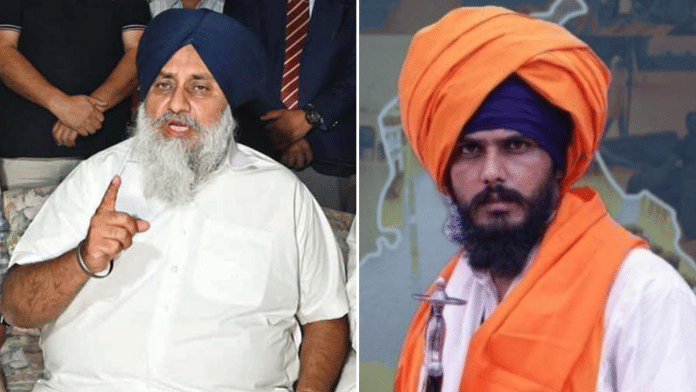

Chandigarh: Shiromani Akali Dal (SAD) president Sukhbir Singh Badal has launched a renewed attack on jailed MP Amritpal Singh and his radical political outfit SAD-Waris Punjab De.
At Baba Bakla Sahib on the occasion of Rakhar Punia, Badal urged Punjabis to “shun the anti-Punjab and anti-Panth stooges of agencies” who according to him were working with the sole purpose of weakening the SAD and taking the state back to the dark militancy period of the 1980s.
This is the second time in less than a week that Badal has openly attacked Amritpal, referring to him as an individual propped up the deep state to demolish a “secular” Akali Dal and radicalise politics.
On Wednesday, Badal had asked how a person who arrived from Dubai as a clean shaven youth and reinvented himself as the “heir” of Punjab could be trusted.
He said this complete ignorance of the Sikh ‘rehat maryada’ was the reason why Amritpal used Sri Guru Granth Sahib as a shield during the march to a police station.
With elections expected early next year, Badal’s move is being seen as part of a larger political contest over who gets to define the future of panthic politics, a space firmly held by the Akali Dal for decades but expected to get divided with the emergence of the SAD-WPD.
Out of power for almost a decade, the situation has become more acute for SAD because Amritpal is no longer an individual MP. His outfit SAD-WPD is preparing for the Punjab elections, announcing candidates and deliberately targeting the panthic vote.
One revealing choice was Satwant Singh, the son of Kehar Singh who was executed for his role in Indira Gandhi’s assassination. His candidacy was explicitly presented as recognising families that made sacrifices for the panth.
The ploy
Instead of taking a cautionary middle ground, Badal has decided to stand up to Amritpal.
Following the Nanded attack, Badal’s return to political life was marked not centred on his ordeal but by turning Amritpal into his principal target by drawing a distinction between panthic politics and a politics that places Khalistan at its ideological horizon.
Sukhbir’s political objective is to make that distinction as stark as possible.
“These people have no respect for our religion. They shamelessly use religious garb to attack us inside Gurughar. If they come to power, they will attack us in our homes. They want the dark era of the 1980s to return when people feared venturing out of homes and the honour of our womenfolk was violated,” Badal said at Baba Bakala.
ਰੱਖੜ ਪੁੰਨਿਆ ਮੌਕੇ ਬਾਬਾ ਬਕਾਲਾ ਸਾਹਿਬ ਵਿਖੇ ਅਕਾਲੀ ਕਾਨਫ਼ਰੰਸ ਵਿੱਚ ਸ਼ਾਮਲ ਹੋਈ ਸਮੂਹ ਸੰਗਤ ਅਤੇ ਪੰਥ ਦਰਦੀਆਂ ਸਮੇਤ ਹਾਜ਼ਰ ਸਮੁੱਚੀ ਲੀਡਰਸ਼ਿਪ ਦਾ ਤਹਿ ਦਿਲੋਂ ਧੰਨਵਾਦ ਕਰਦਾ ਹਾਂ।
ਇੱਕ ਸੱਚ ਸਾਨੂੰ ਸਦਾ ਯਾਦ ਰੱਖਣਾ ਪਵੇਗਾ ਕਿ ਪੰਥ ਅਤੇ ਪੰਥਕ ਸੰਸਥਾਵਾਂ ਤਦ ਹੀ ਮਜ਼ਬੂਤ ਰਹਿ ਸਕਦੀਆਂ ਹਨ, ਜੇਕਰ ਸ਼੍ਰੋਮਣੀ ਅਕਾਲੀ ਦਲ ਮਜ਼ਬੂਤ ਰਹੇਗਾ। ਇਹੀ… pic.twitter.com/GqCpmkwuBR
— Sukhbir Singh Badal (@officeofssbadal) August 28, 2026
The SAD-WPD has focused their entire political attention on decimating the Akali Dal, centring around the sacrilege controversies of 2015 and the subsequent punishment imposed by the Akal Takht on Badal.
They have repeatedly questioned the Akali Dal’s claim to panthic authority under the Badals. “If the Badals failed to protect Sikh institutions when they themselves controlled Punjab, why should they now be trusted as guardians of the Panth?” is their constant refrain.
Badal’s bid to declare Amritpal as a “fraud” panthic draws from the latter’s sudden and mercurial rise in Punjab following his return from Dubai in August 2022. His politics became associated with confrontation and violence quickly.
In February 2023, Amritpal and his supporters descended on the Ajnala police station demanding the release of his associate Lovepreet Singh Toofan who was arrested in a kidnapping case.
Most disturbing was the presence of the Guru Granth Sahib in the procession, creating a situation in which the police was faced with the dilemma of confronting an aggressive mob in the presence of the Guru Granth Sahib.
In May, a court framed charges, including attempt to murder, causing grievous injuries, obstructing public servants, criminal conspiracy, damaging government property and criminal intimidation, against Amritpal in the Ajnala case.
There are other serious allegations as well. The Punjab Police have linked Amritpal to the investigation into the October 2024 murder of his former supporter Gurpreet Singh Harinau. Amritpal will soon be facing a trial in this case as well.
This is the material from which Sukhbir is constructing his central political argument: that there is a fundamental difference between them and Amritpal and company.
He has positioned Akali Dal to be the political representative of the Sikh Panth, a party that fought for Sikh political and religious interests and guardian of institutions such as the Shiromani Gurdwara Parbandhak Committee (SGPC) and simultaneously the party of governance, development and stability.
On the other side, Badal says, is the Waris Punjab De Akali Dal, put together overnight by fraudulent people whose background is of the Congress and who intend to promote confrontation, instability and violence in Punjab.
“That argument has an obvious resonance in Punjab because of its history. The Badal family’s most enduring political claim has been that the Akali Dal brought Punjab back from the violence of the 1980s and 1990s into democratic politics,” Kanwalpreet Kaur of the department of political science in Chandigarh’s DAV College said.
“Sukhbir is, therefore, attempting to revive an old political binary: Sikh identity and Punjabi interests can be defended through democratic politics and constitutional means, but a politics of separatism and confrontation threatens to reopen Punjab’s old wounds,” she added.
Also Read: As Modi meets Sachkhand Ballan chief, why Punjab’s largest Dalit dera matters politically
The limits
But the fact that SAD is no longer the uncontested repository of panthic legitimacy is also visible.
The scale of Amritpal’s 2024 victory exposed that vulnerability. Contesting from jail as an Independent from Khadoor Sahib, he won more than four lakh votes, while the SAD’s Virsa Singh Valtoha received only about 86,000.
The other candidate supported by Amritpal was Sarabjit Singh, son of Beant Singh, one of the assassins of Indira Gandhi. He won from Faridkot with a margin of over 60,000 votes.
Sukhbir had attacked Amritpal in 2024 as well, asking how someone who had adopted the Sikh appearance and taken Amrit only recently could claim to represent the panth against a 103-year-old Akali institution. He had alleged that Amritpal was “propped up” by central agencies to damage the SAD, a charge he repeated Wednesday at Malout.
This allegation is not going to sit well with the Bharatiya Janata Party (BJP) with whom the SAD wants a tie up for the elections.
On 7 August, Badal met Prime Minister Narendra Modi—their first one-on-one political meeting since the two parties broke their 23-year alliance over the farm laws in 2020. The meeting revived speculation about an alliance before the 2027 Punjab election.
Publicly, the BJP continues to say it is preparing to contest all 117 assembly seats on its own. At the same time, there are indications that discussions over a possible seat-sharing arrangement are taking place behind the scenes.
But Badal’s repeated invocation of “peace” seems to be the meeting ground for the two parties. For the SAD, peace is a familiar political claim. For the BJP, law and order and security provide a natural political vocabulary.
A renewed alliance could be presented as a union built around stability, security, development and a common opposition to forces perceived as capable of taking Punjab back towards violence.
(Edited by Tony Rai)
Also Read: Sukhbir Badal’s attacker in custody, PM Modi dials Harsimrat