


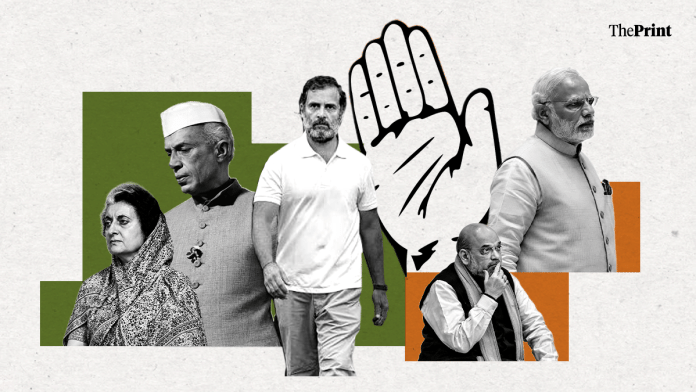
New Delhi: “The Congress has always believed in a strong public sector working alongside the private sector. Public banks are not assets to be sold off, they are tools to build the nation,” Lok Sabha Leader of Opposition Rahul Gandhi wrote in an open letter to the employees of IDBI Bank last week.
The Congress leader was extending his support to them in opposing the disinvestment of the bank, and accusing the Modi government of “selling” institutions built during the Congress’s rule.
In a post on X, he recalled how IDBI—formerly the Industrial Development Bank of India—was established during the Congress’s time, to build the nation’s industry. The letter raised the question as to why a profitable public bank was being sold, and told the employees that when IDBI is privately owned, reservation for SC, ST and OBC candidates will go with it.
IDBI was conceived in 1964, at a time when India was building the foundations of its industrial economy, and reflected former PM Jawaharlal Nehru’s vision for growth guided by the state, national planning and a strong public sector. Six decades later, Rahul seems to be dialling back to that vision, challenging the contrast that the current government offers to it.
His defence of public ownership, emphasis on “jitni abadi, utna haq” or proportional representation, repeated calls for a caste census, and his “anti-monopoly” and “anti-creating oligopolies” clarification have all given the Congress’s economic politics a distinctly leftward inflection.
However, this isn’t an entirely new direction for the party. The Congress has traditionally been a centre-left party. Nehru’s democratic socialism defined the contours of state-led development and a mixed economy, while Indira Gandhi’s bank nationalisation, restrictions on private capital and politics of ‘garibi hatao’ pushed the party further to the left, before the 1991 reforms marked a sharp departure for India’s economy to embrace liberalisation, open up the economy and make room for markets to play a role in the country’s growth.
The United Progressive Alliance (UPA) government that followed pushed for an expanded welfare agenda with the right to employment, food and education, while economic liberalisation continued. By this time, the state was no longer viewed as the sole driver of economic growth, but its role in protecting the rights of its citizens, especially the most vulnerable, remained intact.
In the past, the drivers of the party’s political and economic philosophy have ranged from ideological conviction to political compulsion. Under Rahul Gandhi, the party seems to be reviving its leftward tilt, with experts blaming this perception on a concoction of factors: the BJP’s hard right making the Congress’s left tilt look more pronounced, Rahul Gandhi’s own ideology, the Congress targeting the voter base opposed to the economic right, and even the lack of a purely defined ideology.
“Under Rahul Gandhi’s leadership, the Congress has moved in a centre-left direction over the past few years. This leftward shift has been visible at three important moments in the party’s history: under Indira Gandhi in the early 1970s, under Sonia Gandhi during UPA-I, and now under Rahul Gandhi, particularly from 2023–24 onwards,” Jawaharlal Nehru University (JNU) Professor Emerita Zoya Hasan told ThePrint.
She points to Rahul Gandhi’s emphasis on social justice, the politics of representation and the caste census, as well as his formulation “Jitni abadi, utna haq” as broad indications of this shift.
“However, the ideological direction of the Congress will become clearer only when the party is in power. The two earlier shifts that I have mentioned took place when the Congress was in government, so we could discern their ideological content more clearly. The Congress is now in Opposition, and what it will do when it comes to power at the Centre remains to be seen. The party is yet to articulate a clear position on economic policy,” Hasan said.
Those within the party disagree with such a characterisation, but assert that the BJP’s rightward swing may be making the Congress’s leftward tilt more pronounced.
Former Maharashtra chief minister and senior Congress leader Prithviraj Chavan says that the Congress party remains centre-left and there does not seem to be a discernible leftward switch.
“The Modi sarkar is definitely way, way to the right. So the Congress party appears comparatively to the left… I don’t think the Congress party moved anywhere, but the BJP has taken the country far to the right,” he told ThePrint.
“The economic left-right divide has now manifested itself into Hindu-Muslim divide. But underlying it is the same thing—that left-leaning parties are secular and right-leaning parties are what the BJP is today. So it is the rightward swing of the BJP, which is making it seem more leftward,” Chavan added.
Senior Congress leader Jairam Ramesh asserts that “it is not a question of tilting towards the left, it’s a question of doing what the times require”.
“The moment you talk about inequality in our country, it’s considered to be a leftist agenda. There’s nothing leftist about it. When inequalities are glaring, when growth is leading to sharpening wealth and income inequalities, it is natural to respond to that. There is nothing leftist about it,” he told ThePrint.
“The left-right binary is a bogus binary. The sooner we get out of it, the better,” he added.
Also Read: Congress’ new darling & the face of youth anger: what Neha Bora’s rise means for flailing Left
Nehruvian socialism
The Congress before and after Independence was a big tent under Jawaharlal Nehru, accommodating a wide spectrum of political philosophies, social classes, and regional factions—all coming together first with the goal of Independence, and later with the aim of nation-building.
Nehru’s own philosophy was “democratic socialism”, not socialism per se, Jairam Ramesh explains. “So, democracy came before socialism. It was also a planned economy, but not in the Soviet sense. It was planned in a democratic framework.” Historian Madhavan K. Palat, who is the editor of Selected Works of Jawaharlal Nehru, wrote in a column for The Hindu that Nehru believed India could be freed from imperialism only by “unshackling from its capitalism through some form of socialism, and from its dictatorship through some form of democracy”.
Nehru’s democratic socialism showed in his land reforms and abolition of zamindari system, introduction of laws on labour welfare and protection of workers, and the mixed economy that he pushed through the industrial policy resolution of 1956, which established state control of strategic sectors such as defence production, coal and mineral industries, steel and heavy machinery, and railways and strategic infrastructure, while allowing a regulated space for private enterprise.
Nehru also set up the Planning Commission in 1950, inspired by the USSR’s centralised planned economy, which offered a radical solution to a world that had seen the pitfalls of free markets during the Great Depression.
Prof Hasan acknowledges that Jawaharlal Nehru’s nation-building project after Independence could also be seen as having a leftward orientation, but cautions against conflating that period with subsequent ideological shifts within the Congress.
“This was immediately after Independence, when the foundations of the republic were being laid. The state had to deal with the aftermath of Partition, including the violence and the enormous refugee crisis. The state system, democracy and the economy were all taking shape, and the challenges confronting a newly established state were enormous,” she said. “Nehru’s 17 years as Prime Minister, therefore, constituted a foundational period.”

As for the relationship between the Congress and the left during Nehru’s time, Jairam points to the existence of the Congress Socialist Party.
“The Congress has always been a big tent. Remember there was a Congress Socialist Party with Jaiprakash Narayan, Ram Manohar Lohia, and Kamla Devi Chattopadhyaya. And they considered Nehru to be their patron. In fact their complaint was that Nehru was not socialist enough,” Jairam Ramesh explained.
However, it was Indira Gandhi who steered the country further left, with her second term, from 1971 till her post-Emergency defeat in 1977 being viewed as her most socialist phase, a slight lull in the immediate aftermath of the India-Pakistan war notwithstanding.
Also Read: From Bengal to Haryana and Tamil Nadu, what explains Congress’s obsessive fondness for Left
A split and a turn
It was the 1969 split in the Congress—the years leading up to it as well as the years after—that fundamentally changed the Congress’s ideological character.
Three of Indira Gandhi’s policies have widely been considered as explaining the left tilt that the party took under her leadership—the 1969 bank nationalisation, which nationalised 14 major private banks, bringing a large part of the banking system under government control, the 1971-73 coal nationalisation, and the 1972 general insurance nationalisation.
It was the chronology of events leading up to the bank nationalisation, among other things, which set the stage for the split of the party into the faction that supported Indira Gandhi, and the one that backed the ‘Syndidate’, a powerful group of senior Congress leaders that represented the party’s more conservative, right-of-centre bent. Since the Syndicate and then finance minister Morarji Desai did not favour the nationalisation, Indira Gandhi took over the portfolio herself on 16 July 1969 and announced nationalisation three days later, prompting Desai to resign in protest.
After the split, Indira Gandhi announced that her party will no longer accommodate all shades of opinion within its fold, as it had done pre- and post-Independence. This is recorded in political science professor Francine R. Frankel’s book India’s Political Economy, 1947-2004: The Gradual Revolution, where Indira Gandhi is quoted as saying that “our doors will be shut to those who are working against our policies, our way of thinking and our ideology”. Jagjivan Ram, who became the Congress president right after the split, went on to officially “invite all progressive forces believing in our ideology to join the organisation”, during his presidential address to the plenary session at Bombay in December 1969.
“The split, and its aftermath, opened the way for the socialists and communists who left the Congress in the 1930s and 1940s to reenter the party. It reestablished the left as an important political faction inside the successor Congress (Requisitionists),” the book notes, about the faction led by Indira.
Indira Gandhi’s increased reliance on P.N. Haskar as a political adviser was also viewed as having played a part in this leftward tilt. Haskar was a career civil servant, and had held important diplomatic posts in Germany, eastern Europe and Great Britain. He was also a dedicated socialist, as per Frankel’s book.
“Since his student days, when he participated in communist labour front organisations and by some accounts became a member of the Communist Party of India (CPI), he had believed that social change in India would require more radical political methods than democratic processes were likely to allow,” the book notes.
According to the book, it was Haskar who pushed Indira Gandhi to take several initiatives that helped her prevail over the Syndicate, including the bank nationalisation, abolition of privy purses in her 10-point programme, and removal of Desai— guiding her through the 1969 split in the party and an alignment with the CPI to help her remain in power.
The reforms that changed it all
However, Indira Gandhi did pivot away from her hardline socialist policies during 1973–1974, in light of the crisis inevitable in a post-war economy, when the inflation rate ballooned to 33 per cent owing to the monsoon failures and 1973 oil shock.
The trajectory is elaborately discussed in historian Srinath Raghavan’s essay on Indira Gandhi in the book Makers of Modern Asia, edited by Ramachandra Guha. Raghavan wrote about an “underappreciated” turning point in her economic philosophy, when she turned to more liberal economic advisers including former PM Manmohan Singh, her government sought a $935 million loan from the International Monetary Fund (IMF), and she devalued the rupee. All these measures, according to Raghavan, contributed to improving India’s foreign exchange position and its exports.
The economic outlook of Indira’s successor Rajiv Gandhi then set the country on the path of liberalisation, initiating the economic restructuring that culminated in the 1991 reforms. By the early 1980s, the economic growth of India’s neighbours in Asia, and industrial and economic stagnation back home, was increasing the echo of voices for finding a new direction for the country. Several committees were then set up on deregulation, trade reform and public enterprise reform—all of them suggesting at least slight liberalisation or deregulation.
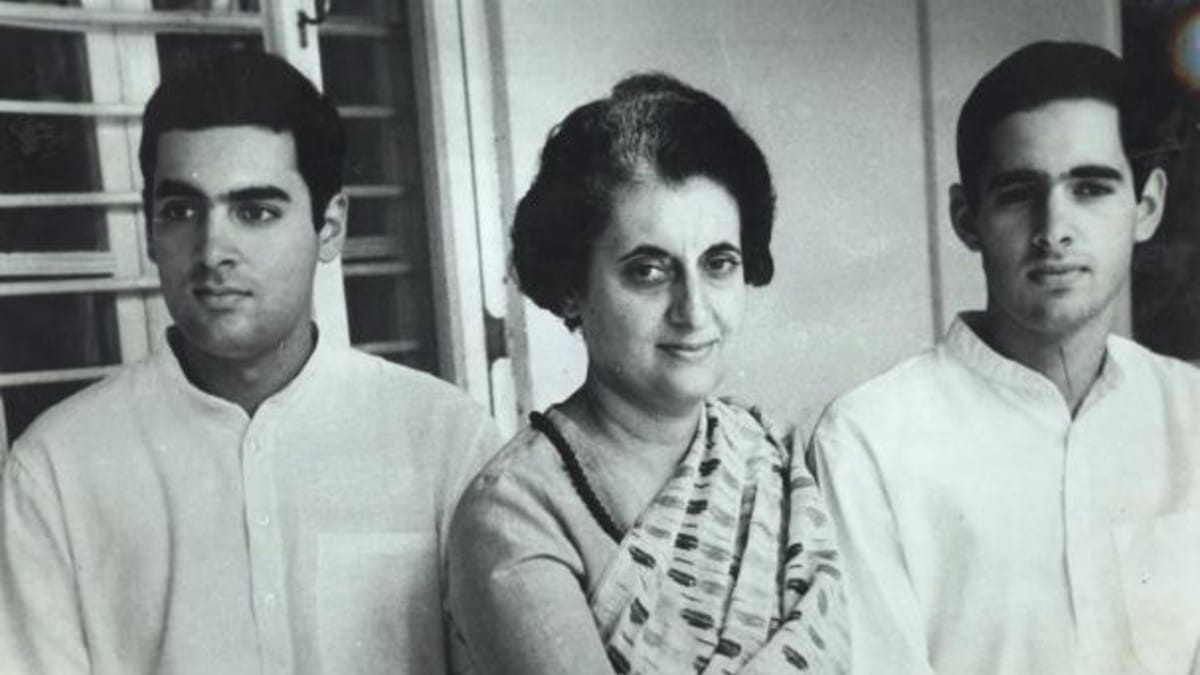
The economic reforms of 1991 were monumental in steering the country into an economic direction viewed widely as a clear break from the path that India was on since Independence.
The reforms were introduced by a Congress government led by then Prime Minister P.V. Narasimha Rao, with Manmohan Singh as the finance minister. The precursor to the step was a combination of economic, fiscal and balance-of-payments crises. The opening up of the markets, dismantling of licence raj, privatisation, disinvestment and globalisation—all pointed to a shift away from the direction of socialism that the country was being steered towards.
Chavan says there had always been a “left-right tension” within the Congress party ever since the 1920s and 1940s.
One of the inflection points, he says, came in 1991. Chavan, who was a part of that Parliament, added, “There was a big opposition to Manmohan Singh for taking a U-turn on the economic policy. But then Manmohan Singh explained that this had to be done since the financial crisis was grave. There was a huge tension within the Congress party even then.”
The left within the Congress party, which was pro-farmer and pro-workers’ rights, thought that Manmohan Singh was taking the Congress far to the right, closer to the Americans, he says.
“So from Nehruvian politics, from Indira Gandhi politics of welfareism, we are going away for high growth rates and international trade. So there was tension, but thanks to Narasimha Rao who stood behind it firmly, economic reforms took place, and there was a right-ward course correction, and a right-ward swing in the 1991 to 1996 period,” he explained.
According to Jairam’s book To the Brink and Back: India’s 1991 Story, the BJP welcomed the industrial policy reforms on the grounds that they were a “total repudiation of Nehruvian policy that had run its course”. However, in response, Narasimha Rao emphasised the continuity aspects of the reforms and explained how they were not deviations from Nehru’s vision.
As against this, the left and a few other parties like the Janata Dal had attacked the industrial policy package “as not just an abandonment of Nehru’s vision but as something that would erode national sovereignty and lead to greater unemployment”, the book says.
The Congress party lost the subsequent elections in 1996, owing to two reasons according to Chavan—the Babri Masjid dispute and the rightward lurch of the party, “which the common man of India did not like”.
Also Read: Political stunt? Why Indira Gandhi’s bank nationalisation was questioned even 50 years ago
‘The kitchen cabinet’
The 2004 Lok Sabha elections are widely regarded as one that surprised both the victor and the vanquished.
The then Prime Minister Atal Bihari Vajpayee’s popularity and his government’s economic achievements popularised through the mega “India Shining” campaign were pitched against the Congress’s plank of focusing on protecting the interests of the common man or the aam aadmi. Along with other partners, the Left Front with its 59 MPs extended crucial support to the United Progressive Alliance-I government.
The Congress-led alliance backed by the left parties during this time steered the ideological course of the UPA in a progressive direction, as Zoya Hasan writes in her book Ideology and Organisation in Indian Politics. A host of rights-based welfare initiatives, including the Right to Education and Mahatma Gandhi Rural Employment Guarantee Act (MGNREGA), were introduced.
Several of these welfare measures were courtesy the National Advisory Council (NAC), which was dubbed the “kitchen cabinet” by India Today back in 2010. The NAC comprised left-leaning liberals, civil rights activists, social welfare workers and former bureaucrats. It drew its legitimacy from the fact that it was headed by then Congress president Sonia Gandhi.
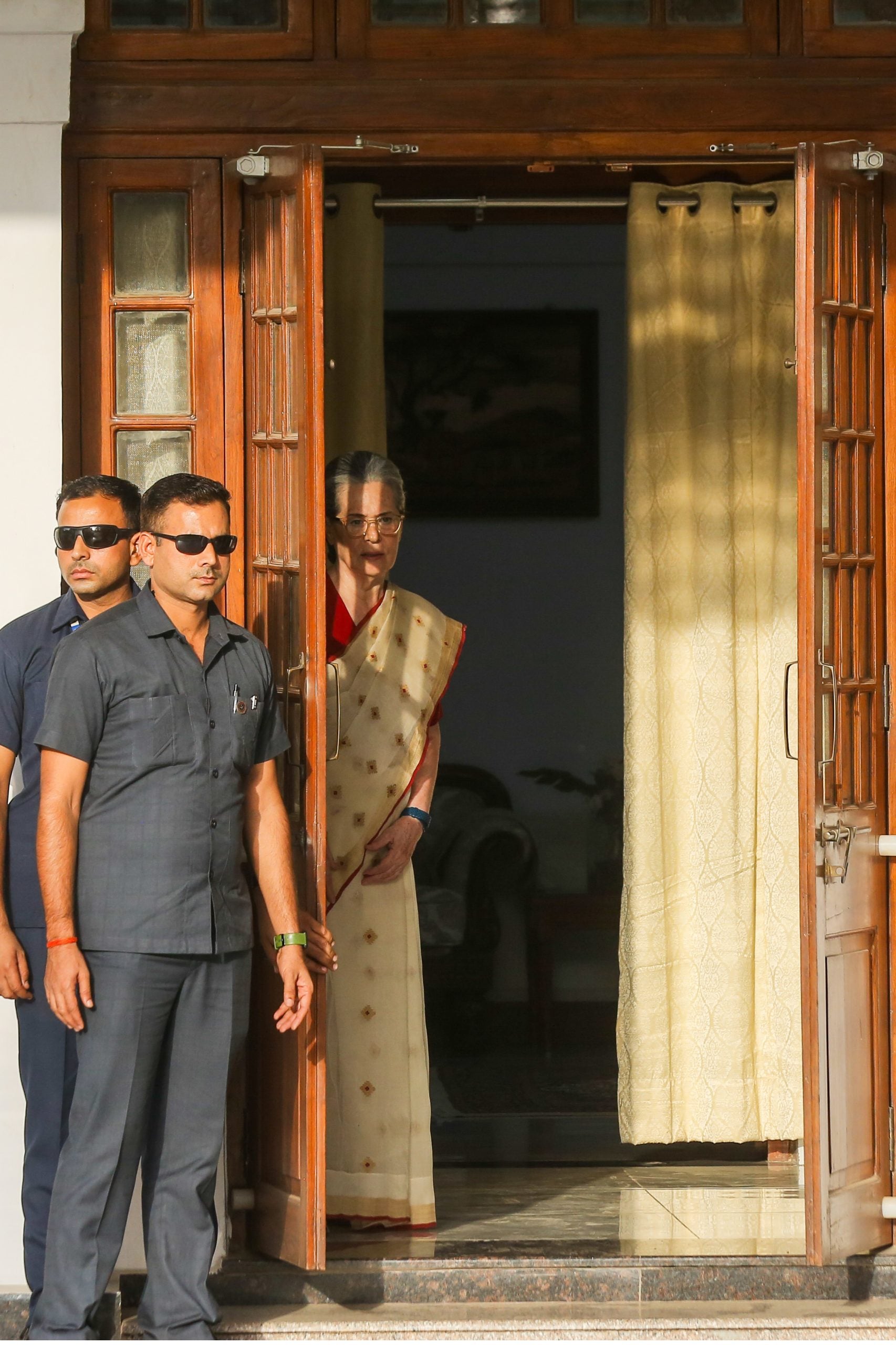
“The United Progressive Alliance, as its name suggests, was a coalition government that depended on the outside support of the Left parties, and this helped tilt the Congress in a leftward direction. But even independently of the Left, Sonia Gandhi was interested in steering the Congress and the UPA in that direction. The rights-based legislation introduced during UPA-I is a clear illustration of this ideological shift,” Professor Hasan explained.
However, UPA-II did not sustain the same ideological orientation.
“The centrist and more neoliberal forces, in a way, reasserted their importance,” she told ThePrint.
Also Read: A shame-faced modesty pervades 1991 reforms. This is strange and inappropriate: Ashok Desai
Change with continuity
Professor Hasan traces the Congress’s earlier centre-left orientation to Indira Gandhi’s leadership in the early 1970s.
“The Congress was then a centre-left party. However, after 1991, the party introduced neoliberal economic reforms. That was obviously not centre-left. It was centrist, and one could even argue that it was essentially centre-right. This orientation continued until 2004, when the Congress unexpectedly defeated the BJP,” Hasan said.
However, Jairam Ramesh says the 1991 reforms did not display an ideological shift.
“Even at the height of reforms that started in 1991, the reforms were anchored in the principle of change with continuity. If you see the industrial policy liberalisation of 24 July 1991, it gives the background to why we were doing the reforms and that the reforms were change with continuity,” he told ThePrint, asking critics to look at Singh’s and Rao’s speeches at the time.
“The 1991 reforms were basically seen to be in tune with the Congress’s economic policies of change with continuity. Remember that even in the 1950s, the private sector grew. There was a large private sector that was growing with public funds in the 50s and 60s,” he said.
“So the 1991 reforms, when people say it was a rightward tilt, I don’t agree with it,” he said. “It was very much part of the centre-left. There was a crisis and the crisis needed a response, and the response was reforms in the area of trade, in industry and in fiscal management,” Jairam Ramesh added.
As for the UPA-I, Chavan, who was a part of the government then, says that in Manmohan Singh’s government, the priority was foreign policy and not economic policy.
“It was because the economic policy was directly dependent on the support of the members of the communist party. So any socialist policies were accepted but any pro-capitalist policies were completely rejected by their party. So, there was restraint,” he said.
Chavan, therefore, asserts that Manmohan Singh’s premiership didn’t mark a leftward lurch for the Congress either—it was just pressure from the Samajwadi Party and left parties that made it seem so.
As an example, he refers to the Congress wanting to privatise Neyveli Lignite Corporation Limited, headquartered in Tamil Nadu. The proposal, he says, was dropped after another alliance partner, the DMK, opposed it. As against this, he says, Manmohan Singh felt that MGNREGA was “open ended” and so the initiative was first launched only in 56 districts and then opened up to the whole country after it was felt that the move would not be a disaster.
“So there were a lot of leftward lurching schemes that were moderated by Manmohan Singh’s ideas of staying right-of-centre and the communist parties’ support ensured that there was a left turn too. I think we have profited from alliance partners,” he added. However, he says, “now what we do will be purely Congress party”.
‘More left than the left’
Back in 2015, an exchange between Rahul Gandhi and CPI(M) general secretary Sitaram Yechury caught the country’s attention through diary items in various newspapers. As per an Indian Express diary entry from the time, Rahul joked with Yechury in the Parliament’s Central Hall that some people felt that he (Rahul) was more left in his political ideology than the left itself.
He wasn’t wrong. Rahul’s affinity for the left has often been often discussed. He looked up to Yechury for advice and discussions alike, and now relies on Dipankar Bhattacharya, general secretary of CPI (ML) Liberation, according to author Rasheed Kidwai.
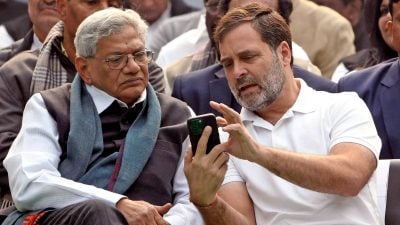
“So the Congress under Rahul has become more left than the left in a way. It has got to do with his education in Cambridge. He’s very deeply influenced,” Kidwai told ThePrint. “In India, those who are opposed to the economic right are very scattered but they have a huge constituency. So it makes political sense on the part of Rahul Gandhi to be leaning towards the left because when you are in the opposition, you have a vast territory to rely on.”
In 2023, Rahul Gandhi first spoke about “jitni abadi, utna haq” or proportional representation in Kolar, ahead of the Karnataka assembly elections that year. Ever since, he has often spoken about the caste census as a mere starting point for addressing concerns of inequality and concentration of wealth.
In a 2024 op-ed for The Indian Express, he wrote about how the original East India Company wound up over 150 years ago, but the raw fear it then generated was back, with a new breed of monopolists taking its place. In a post a day after, he clarified that he is not “anti-business”, but “anti-monopoly” and “anti-creating oligopolies”.
In early 2024, he called the caste survey a “social X-ray”. Addressing a rally in Hyderabad in 2024 while releasing the party’s poll manifesto, he said that, if voted to power, the Congress would conduct a financial and institutional survey to ascertain the distribution of wealth among the people in the country. However, days later, he clarified that he had only spoken about inequality and injustice, and not of taking any particular action like redistribution. Rahul has also repeatedly criticised the central government’s stance on public sector banks, accusing the administration of using them as an unlimited source of funds for their “fraudulent friends”, and backing bank unions against privatisation efforts. He has fervently opposed the labour codes as a bid to weaken workers’ rights.
There have been voices within the party that have also often pointed to this tilt.
For instance, in 2019, after the party’s poor performance in the Lok Sabha elections, the Congress’s national media coordinator Rachit Seth wrote a controversial blog post blaming the “left-leaning lieutenants” of the Congress. In the blog post titled “The ‘Deshdrohi’ tag!”, which was later deleted, Seth sought to list out the reasons why the BJP was able to successfully brand the Congress “anti-national”. The blog had urged that the “left-leaning lobby should be thrown out of the Congress” to save the real Congress.
In 2021, in an interview to Deccan Herald, former Congress spokesperson Sanjay Jha said the “Congress under Rahul Gandhi moved too far to the left of centre in economic thinking and almost allowed the BJP to make it more polarised”.
However, Kidwai still chooses to reserve judgement on whether this is the most leftward tilt that the Congress has seen in its history. “The Congress and the BJP and every other political party has a different yardstick when they are in the opposition and when they are in power.”
Also Read: Don’t deride public sector. Evidence shows commercial banks in woeful state—Indira Gandhi
‘A pragmatic party’
Senior Congress leader Jairam Ramesh says the Congress has never fought shy of saying that it has been a centre-left party.
“To say that there is now a leftward tilt is completely wrong. It’s historical, because the Congress party has been unabashedly a centre-left party. It’s not a leftist party,” he clarified, adding, “I don’t see any perceived guilt. I don’t see any contradiction. I don’t see any intensification. Its philosophy has always been centre-left.”
While the leftist parties, he says, are dogmatic, his party is pragmatic. The Congress has always stood for secular values, he adds.
“The Constitution itself reflects those values. So it’s not a question of being left. It’s a question of doing what the times require. If the times called for the 1990s reforms, that’s what Dr Manmohan Singh and Mr Narasimha Rao embarked on. The reforms have been very successful but now we have to worry about inequalities. We have to worry about investment in education, investment in health,” he said.
“Why should that be called leftist agenda?” he asked.
Chavan highlights the continued pull and push of left-right tension within the Congress, saying it has now taken the shape of “soft Hindutva” versus “hard secular”.
“On one side are hard Ambedkarites or hard Constitutionalists. On the other side is soft Hindutva, which asks ‘How can we become a Muslim party? We have to take on board Hindu sentiments’. But the other side says, if you want to go towards soft Hindutva, people would choose hard Hindutva of the RSS. Why would they pick fake Hindutva of the Congress party,” he explained.
The economic tension, Chavan says, is now divided on these communal lines.
When communists advise Congress
While the leftward tilt may be becoming more pronounced because of the BJP being on the far right, experts assert that the Congress still needs to define its ideology on the political economy for a clear position to become visible.
Prof Hasan describes the Bharat Jodo Yatra as a “major turning point in the politics and strategy of the Congress”. However, she argues that this political repositioning under Rahul Gandhi needs to be accompanied by a clearer articulation of the party’s economic ideology.
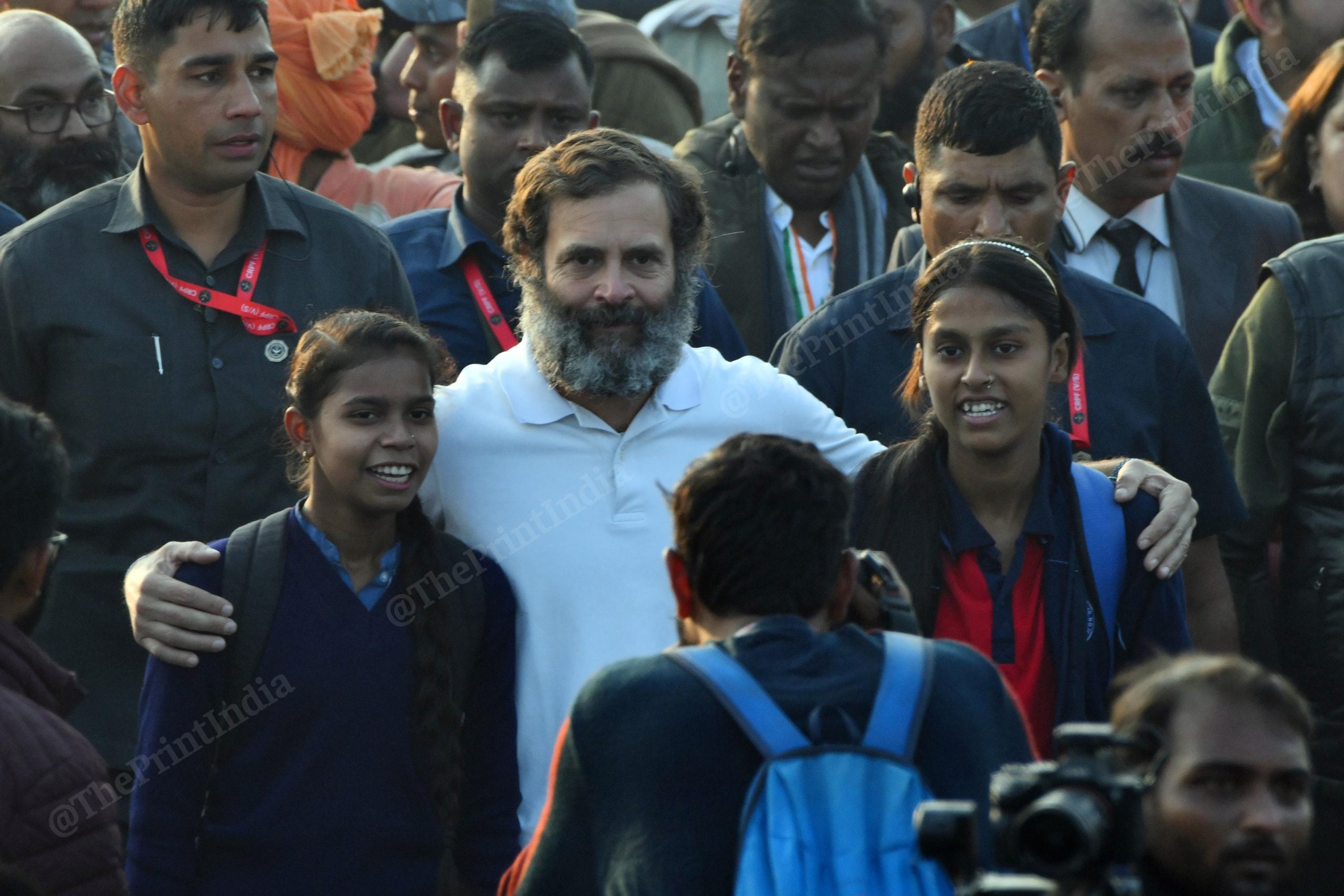
“The Congress must address questions of political economy, where its approach remains essentially neoliberal. Piecemeal criticisms of the existing economic order will not take the party very far. It needs to adopt a much more systematic and structured position on these issues.… I do not think the Congress or Rahul Gandhi has done that as yet,” she told ThePrint.
However, not everyone sees the current ideological stance of the Congress party as having a leftward tilt.
Historian Bhagwan Josh, who specialises in India’s social and political history, says there is a deep-seated crisis of ideology within the Congress.
“Till Mrs Gandhi, the Congress had a very clear-cut ideology. It was centre-left… After her, Rajiv Gandhi came, and there was total ideological confusion after that… It has no political ideology, it has an economic perspective of development, but it has no conception to meet a challenge from the right, ideologically. Till today, it does not know how to oppose the RSS and the BJP,” he said.
According to Josh, it was the Emergency that destroyed the ideological congruence that the party was displaying up until then combining the idea of development and distribution. “After the Emergency, Mrs Gandhi was more concerned about her political power rather than any kind of social perspective.”
“Not only did the Congress lose its hegemony, but it also pushed Congress into a deep crisis of ideology,” he said.
For Josh, Rahul’s closeness to Yechury is also not a testament to his ideology. “When Sitaram Yechury failed, he started advising the Congress. The failed left always advises the Congress. And the Congress always goes to the leaders of the CPI or CPI(M) to seek advice but both are incapable of having a very deep introspection,” he added.
The ideological confusion, he says, exists in the ranks of the left as well as the ranks of the Congress.
“The crisis is how neither the left nor the Indian National Congress knows how to meet the challenge of the RSS, the BJP and Modi. That is the crisis,” Josh said, adding, “They have never asked this question: how is it that an ideology and organisations like the RSS and the BJP have come to power in this country when they have never participated in the national movement in this country at all. Neither the left, nor Rahul Gandhi can answer this question.”
(Edited by Sunanda Ranjan)
Also Read: From liberalisation to lost momentum—the promise of 1991 has been only partially redeemed
Why so many articles are coming about Sonia Gandhi and Rahul Gandhi? Why so much advertisement by media? Why is Indian media so lame duck? What has Sonia Gadhi done for India? Had she not been the wife of Rajiv Gandhi, would she been Congress president? Even Rajiv Gandhi would not have been had he not been the son of Indira Gandhi. Coming to Sonia, she ensured a “Yes Boss” man as PM, an unknown Congress state leader as the president of India who hired 11 trucks to take all items from the Rashtrapati Bhavan. Sonia was the invisible PM during her presidency and under her leadership the Congress party became the most corrupt party. The terrorist attack 26/11 happened under her leadeship and no action was taken. India’s standard became the lowest ever during Sonia’s reign. So why so much free publicity by media?