




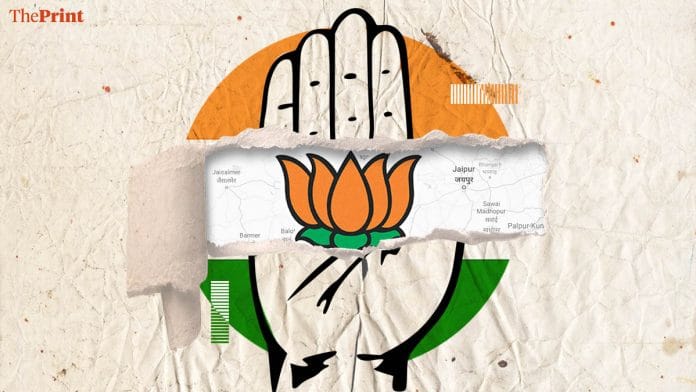

The Congressisation of the Bharatiya Janata Party is an old story—high commandist culture, installation of weak leadership in most states, sycophancy, and disconnect with the people as criteria for promotion, arrogance of power and so on.
To cite an example of the last attribute, just think of the cussed silence of the top government functionaries at the Centre about repeated incidents of rape and murder in the national capital even as the city’s women protested to reclaim the night.
Another major attribute of the Congress Party was to practise Kabir’s “Kaal kare so aah kar (Do tomorrow’s work today)” advice in reverse, procrastinating endlessly to avoid taking a decision. The BJP has adopted this Congress practice extensively.
By the time the party decided on JP Nadda’s successor as the party president, Nadda had virtually completed the second tenure. Prime Minister Narendra Modi is now keeping his ministers under tenterhooks as suspense about a Cabinet revamp continues. Many ministers are now holding multiple portfolios. And many others remain ministers by way of political accommodation, which has begun to reflect in governance now. See, for instance, the Micro, Small and Medium Enterprises (MSME) ministry. This sector is so crucial. You may not remember the MSME minister’s name. Not because of a memory problem. But because he has done little worth remembering. The minister is Jitan Ram Majhi, who last made headlines when he advised legislators to take five to 10 per cent commission or cuts from constituency development funds. He leads the Hindustani Awam Morcha (Secular), a party with one Lok Sabha member and five MLAs in Bihar. Why has PM Modi then given such an important portfolio to the 81-year-old leader? Perhaps because he is from the Musahar community, a Dalit sub-caste constituting three percent of Bihar’s population.
Another Dalit face (from the Paswan/Dusadh sub-caste) in the Modi Cabinet with an important portfolio is Chirag Paswan, the minister for food processing industries, from the Lok Janshakti Party (Ramvilas); the Dusadhs constitute 5.31 per cent of Bihar’s population.
There are two other Cabinet members from Bihar with very important portfolios— textiles minister Giriraj Singh (BJP) and Panchayati Raj & Fisheries, Animal Husbandry and Dairying minister Rajiv Ranjan Singh alias Lalan Singh of the Janata Dal (United). Both happen to be Bhumihars, who constitute 2.9 per cent of Bihar’s population. So, out of 29 Cabinet ministers, excluding the PM, four are from Bihar. You may not hear about their ministries beyond ceremonial speeches and customary meetings. So why is PM Modi retaining them in the Cabinet? Not on account of their performance as ministers, for sure. It’s despite their non-performance. It’s about political accommodation.
Three of them are the BJP’s allies with 18 MPs in the Lok Sabha. If their castes are also the consideration, then they together constitute nearly 11 per cent of the total population in Bihar.
A deafening silence
You start looking at the performance of other Cabinet ministers and you know why the government seems to be drifting.
Parliament’s monsoon session hasn’t been prorogued in seven weeks since it was adjourned sine die. The government can’t decide if it still wants to push for delimitation based on the 2011 census or simply back out.
For several years, the Congress looked resigned to the BJP being a far superior party with a dedicated cadre, along with a decisive and farsighted leadership with nimble feet and a sharp strategic mind, not to mention a charismatic PM and the Rashtriya Swayamsevak Sangh as its ideological fountainhead, which is also the assembly line for new talent. The Congress just resigned itself to fate. However, of late, the opposition party seems to have found the will to fight.
Also Read: Five things PM Modi can do for his legacy but won’t
A change is afoot
Just look at how the party high command displayed decisiveness to drop Amrinder Singh Raja Warring as Punjab Congress president. They replaced Bhupesh Baghel with Sachin Pilot as the state in-charge to gather objective feedback and carry out the needful. Mind you, Rahul Gandhi has liked Warring since the days when he had started the “democratisation” exercise in the Indian Youth Congress; Warring was a national office-bearer in the IYC then. Yet, Gandhi dropped him when he had to.
A few months back, Gandhi showed similar decisiveness in Karnataka when he replaced Siddaramaiah with DK Shivkumar as the chief minister. A couple of weeks before that, the 56-year-old had intervened decisively in favour of VD Satheesan as Kerala CM at the cost of his confidant and national general secretary (organisation) KC Venugopal. But the Gandhis acting decisively isn’t a new thing.
In 1990, Rajiv Gandhi had unceremoniously removed Veerendra Patil as Karnataka CM, alienating a significant section of the Lingayats forever from the Congress. What’s different now is the fact that his son isn’t doing it through a fiat; he is doing it through wide consultations involving all stakeholders, ensuring a smooth transition.
Last month, Rahul Gandhi called up former Maharashtra Congress MLA Rahul Bondre late at night to convince him against joining the BJP. A few days back, he held a meeting to post-mortem the Delhi University Students Union elections and pulled up Kanhaiya Kumar, the NSUI in-charge, for its defeat.
When was the last time one saw Rahul Gandhi dumping his loyalists for greater organisational good or going out of the way to dissuade a former MLA from quitting the party?
Gandhi is famously known as a leader whose short shrifts to senior party colleagues had prompted them to quit the Congress. His Sangathan Srijan Abhiyan, or the campaign for organisational rejuvenation, has also been quite successful with the selection and appointment of district Congress chiefs through extensive consultations and deliberations.
Whether it is him being forcibly removed from outside the PM residence, his seven-hour sit-in protest at a Delhi police station to force the registration of an FIR by an injured student or his “chhatro ki goonj” events or even his latest “satyagraha” campaign inviting people to share their stories with him, Gandhi is suddenly looking like a very different leader. Many BJP leaders have told me as much in private. What he used to be lampooned for by the BJP earlier—his sartorial choice, his speeches, his impulsive politics, or even the public display of his love for his pet—is now drawing significant traction on Instagram and YouTube and from the youth of the country,
How has it come about? Probably, Rahul Gandhi has finally accepted and learned to become an opposition leader. Or, he has come out stronger from years of taunts, ridicule and “Pappufication” by his political rivals. Or, he is suddenly fired up by the huge traction he is suddenly getting from Gen Z. His recent speeches suggest that he is now convinced of PM Modi’s aura diminishing and making him vulnerable after 13 years in office.
So where does Rahul Gandhi go from here? The Assembly elections early next year will show how much of his traction among the youth on social media translates into votes for the Congress. That will give us an inkling of the Congress’ future trajectory.
DK Singh is Political Editor at ThePrint. He tweets @dksingh73. Views are personal.
(Edited by Insha Jalil Waziri)