




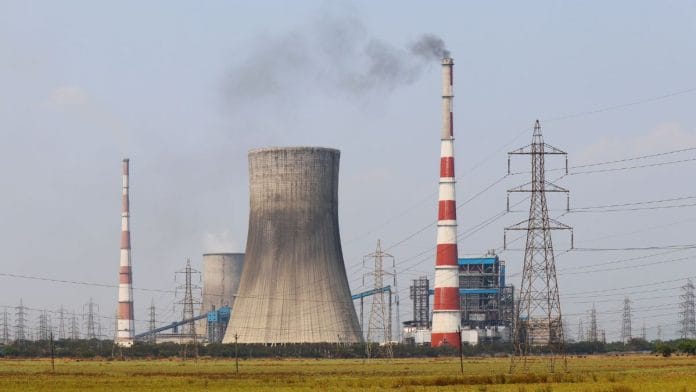

The share of renewable, non-fossil fuel sources in India’s installed electricity capacity has crossed 50 per cent. India now has the world’s third-largest renewable fleet, and it is growing faster than ever. Installed capacity, however, does not translate directly into electricity generation. On that measure, India remains a coal-based economy. Coal still supplies close to three-quarters of the electricity we consume. A policy framework that bridges this gap between a 50 per cent clean installed-capacity mix and a 75 per cent coal generation mix is the challenge for India’s energy transition.
The costs of continuing coal
Solar generates electricity only when the sun is shining, while wind can be seasonal and uneven. Coal, by contrast, runs around the clock. So why should we care about the dominance of coal? Because it is the single largest source of the country’s carbon dioxide emissions. India’s coal-dominated grid and its pledge to achieve net-zero emissions by 2070 cannot co-exist indefinitely.
Coal plants also emit fine particulate matter, sulphur dioxide and nitrogen oxides that lodge in the lungs and bloodstream, contributing to asthma, strokes and heart disease. The burden falls hardest on the poor who are least equipped to absorb the health and productivity losses. Research estimates that emissions from India’s coal-fired plants were associated with over 80,000 premature deaths in 2015. This could rise four- to five-fold by 2050 if coal capacity keeps expanding. Another study estimates that if currently planned plants are built alongside the existing fleet, deaths linked to coal-plant pollution would exceed 112,000 a year, about an eighth of all deaths attributable to ambient PM 2.5 in India.
Global capital is slowly moving away from coal. Over 200 major financial institutions now restrict coal financing, and building new coal plants in India will increasingly mean finding scarce, expensive financing for a technology the world is trying to leave behind.
Finally, a coal-dominated grid is expensive for India’s exports because of the European Union’s Carbon Border Adjustment Mechanism (CBAM), which now puts a price on the carbon embedded in the steel, aluminium, cement and fertiliser that it imports. This has adverse consequences for Indian MSMEs that rely on the coal-based grid and export to the EU market. The UK is soon going to levy its own CBAM from 1 January 2027, further damaging our export prospects.
Also read: Piyush Goyal says India is on track for $1 trillion exports. FTA kite has a string problem
The gaps in RE today
So why not simply switch? As we mentioned earlier, solar only runs during the day. Without enough storage technology to convert intermittent solar or wind into round-the-clock supply, such a shift is not yet possible. The Central Electricity Authority’s National Electricity Plan projects that the country will need roughly 411 GWh of storage by 2031-32. This capacity will largely come from battery storage, or pumped hydro storage.
The most recent data suggests that cumulative installed battery energy storage capacity reached 5.9 GWh, while pumped storage is at about 7.2 GW (which translates to roughly 40-45GWh). India therefore has a long way to go to even meet the storage capacity to integrate the renewables already targeted. These figures do not describe a world where India is not using coal, as a “no-coal” system would require both renewables and storage several times larger than these targets.
Also read: Pakistan cannot reclaim Harappan heritage without embracing its Hindu history
The phase-out of coal
That a complete switch is not possible in the near future, does not mean we should not aspire to it over time. Take the example of OECD countries. They, too, did not make the transition overnight. Many relied on, and continue to rely on, natural gas as a bridge fuel, but in a way that it does not dominate the energy landscape. The United Kingdom closed its last coal-fired station in September 2024. Their energy mix is dominated by renewables at 47 per cent, but natural gas comes second at 28 per cent. The United States, which has a relatively higher share of fossil fuels than countries in Europe, generates 41 per cent of its electricity from natural gas and 17 per cent from coal — far below India’s 70 per cent share from coal. Even in China coal-based electricity generation has fallen to around 54 per cent. The point is simple — India needs to start planning an explicit glide path such that over the next decade coal does not dominate our electricity system.
What would such a plan look like? India needs to set a declining ceiling on coal’s generation share. It has to stop approving new coal-fired power plants, put a price on coal’s health and carbon costs, and treat storage and transmission with urgency. This runs counter to the government’s current policy which aims to add 80 GW of thermal power capacity by 2031-32. It is true that India needs far more electricity, and that demand is rising fast. But meeting that demand need not require more coal. Research by Nikit Abhyankar, Shruti Deorah, and Amol Phadke of the Lawrence Berkeley National Laboratory suggests that a grid built primarily on renewables and battery storage is the least-cost way to meet India’s growing electricity demand through 2030 — leaving only a limited role for new coal.
A debate over the exact numbers — how much storage, how quickly it can be built, at what cost, and how large a residual role coal should play — is important. But that debate can only begin with the decision to phase-out coal. The need of the hour is a strategy document that charts coal’s decline, year by year.
Renuka Sane is managing director at TrustBridge, which works on improving the rule of law for better economic outcomes for India. She tweets @resanering.
Views are personal.
(Edited by Janaki Pande)
We need more such columns. Sensitise both the government and the public about the imperative need to phase out King Coal much more swiftly.