






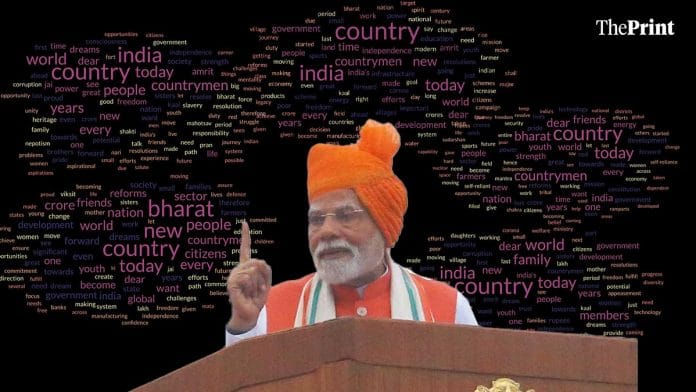


Just a few days ago, the new Congress-led government in Kerala laid out a white paper as a damning report card of the devastated public finances caused by 10 years of CPM misgovernance. Similarly, in 2014, when Prime Minister Narendra Modi came to power, he took over an economy in shambles after 10 years of misgovernance by a Congress-led UPA government. So the story of the last 12 years of Narendra Modi’s government is one of contrasts that needs to be told and understood.
In July 2019, writing in a national newspaper, I called PM Modi Asia’s leading moderniser. I argued that the first budget of his second term was the harbinger of a New India — not merely a statement of fiscal intent, but the beginning of a genuine structural expansion of a $2.7 trillion economy that had long underperformed its potential.
Seven years on, that thesis has been vindicated at a scale I could not have fully imagined when I wrote it, despite the Covid pandemic, two global wars, and multiple international challenges not of our making.
Today, 10 June 2026, Prime Minister Narendra Modi completed 4,399 consecutive days in office, surpassing the record of Jawaharlal Nehru, India’s first Prime Minister, to become the longest-serving democratically elected Prime Minister in the history of the Republic. The milestone matters not as political trivia but as a historical marker. It demarcates 12 unbroken years of a singular governing vision and demands that we assess honestly what those 12 years have produced.
My answer, as someone who served in Parliament and then government for part of that period, is unambiguous: these 12 years have been the most transformative, consequential, and, in the most profound sense, redemptive chapter in India’s post-Independence story.
Also Read: The real Modi story begins where comparisons with Nehru end
The economy: from Fragile Five to sixth largest
When Narendra Modi took office in May 2014, India was classified as one of the ‘Fragile Five’ economies, vulnerable to capital flight and currency crises. Growth was slowing. Inflation was crippling the lives of millions. Corruption was rampant. Trust in the government had eroded. Policy paralysis had become a phrase symptomatic of the UPA era.
Twelve years on, the Modi era has been defined by major economic reforms, including GST, and the doubling of India’s economy to $4.3 trillion last year. As of 2026, India stands as the world’s sixth-largest economy, with an estimated GDP of approximately $4.15 trillion, a position that reflects a decade of strategic policymaking and the collective resilience of 1.4 billion citizens.
India’s economy expanded by 7.7 per cent in real terms during the financial year 2025-26, with growth accelerating to 7.8 per cent in the January-March quarter. This is not a one-quarter anomaly. It is the continuation of a decade-long pattern of India being the fastest-growing major economy in the world, a pattern built on structural reform, not cyclical luck.
The digital economy tells an equally remarkable story. Broadband connections grew from 6.1 crore in March 2014 to 99.56 crore by September 2025, while the cost of wireless data dropped from Rs 269 per GB in March 2014 to Rs 8.31 per GB by June 2024. UPI processed 24,162 crore transactions in FY2026, a feat that has drawn global admiration and emulation, positioning India as a leader in the global digital economy.
These numbers describe not just an economy that has grown, but a society that has been structurally rewired. Financial inclusion, digital identity, direct benefit transfer, the plumbing of a modern welfare state was built in these 12 years, and it worked.
Security: The end of strategic restraint
Perhaps no transformation is more consequential, and more personally meaningful to those of us who spent years watching India absorb provocation without a response, than the transformation in India’s national security doctrine.
For decades, India operated under an unofficial doctrine of strategic restraint. Terrorist attacks were silently absorbed. Cross-border provocations were responded to with diplomacy. India’s response to violence was calibrated to avoid escalation, often at the cost of deterrence. Strategic restraint became another way of spelling WEAKNESS in a world where strength and resilience commanded respect.
Narendra Modi ended that doctrine.
From the abrogation of Article 370, to the campaign against Naxalism, to new capabilities in high-tech defence, India today stands more secure and self-reliant than at any point since Independence. Operation Sindoor, India’s swift and precise military response to the Pahalgam terror attack in 2025, further demonstrated this resolve.
The Surgical Strikes of 2016, the Balakot airstrikes of 2019, and Operation Sindoor in 2025 form a continuum, a new strategic grammar in which India responds to terrorism not with dossiers, but with decisive force. By 2025, the government had clearly articulated five firm norms: a strong response to terror attacks, zero tolerance for nuclear blackmail, no distinction between terrorists and their sponsors, terrorism first in any dialogue, and an uncompromising stand on sovereignty.
This is not aggression. It is the establishment of credible deterrence, something that India’s adversaries had long doubted India possessed. The strategic transformation of the last 12 years has made India safer than it has been in a generation.
Democracy: Deepened, not diminished
There is a narrative, promoted largely by those whose politics has been rejected by voters at the ballot box in 2014, 2019, and 2024, that India’s democracy has weakened under Modi. That claim deserves to be treated with the contempt it deserves, and rejected entirely.
PM Narendra Modi became only the second leader after Jawaharlal Nehru to win three consecutive terms, when the BJP-led National Democratic Alliance secured 293 seats in the 2024 general elections. Three consecutive mandates, each won on the same platform of development, security, and India First. This is democracy functioning exactly as it should. The people spoke. Repeatedly.
The deeper measure of democratic health, however, is not electoral but institutional: whether governance has reached those it was previously designed to exclude. On that measure, the record is compelling. India achieved 100 per cent village electrification, while access to electricity stood at approximately 85.1 per cent of the population in 2014. And 89 per cent of people in India owned an account at a financial institution in 2025, up from 48.3 per cent in 2014.
These are not statistics. They are the democratisation of economic opportunity. When a woman in rural Rajasthan receives her gas cylinder subsidy directly into her bank account, bypassing every layer of leakage and corruption, that is democracy deepening in the most meaningful sense of the word.
The technology sovereignty bet
As someone who had the privilege of helping build India’s digital governance architecture, the IT Rules, the India Semiconductor Mission, and the Safe, Trusted, and Accountable framework for AI and platform regulation, I am acutely aware of how much the last 12 years have changed India’s relationship with technology.
When PM Modi took office, India was a passive consumer of the global technology stack, dependent on foreign chips, foreign platforms, foreign cloud infrastructure, and foreign capital to run its digital economy. The ambition was to change that, fundamentally.
In February 2026, Prime Minister Modi inaugurated Micron Technology’s Assembly, Testing, Marking, and Packaging facility in Sanand, Gujarat, marking the start of commercial semiconductor production on Indian soil. Today, startups such as Netrasemi and Mindgrove Technologies are designing cutting-edge chips. This is a beginning, not an endpoint, but it is a marker of progress that would have been considered groundbreaking even five years ago.
The India Semiconductor Mission, the DLI and PLI schemes, and the Digital India infrastructure are the foundations of a technology-sovereign India. Today, we are a nation that does not just consume cutting-edge technology, but manufactures and governs it. That ambition, seeded in the first term, institutionalised in the second, and now bearing its first commercial fruit in the third, is perhaps the most significant long-term legacy of these 12 years.
The scale of the transformation
I want to be clear about what I mean when I describe these 12 years as unprecedented. I do not mean unprecedented merely in the post-liberalisation era. I mean unprecedented in the entire history of modern India, including the foundational Nehruvian decade, which rightly commands its own chapter of respect in any honest account of this nation’s journey.
Nehru built the institutions. He gave India its constitutional framework, its scientific foundations, its universities, its dams, and the hardware of a modern state. That contribution is permanent and honourable. But his ideas about socialism, security, and sovereignty were utopian and shortsighted. Those came home to roost in the face of Chinese and Pakistani aggression.
What Narendra Modi has built is the hardware and the software for our country to not just be some moral outpost, but a strong nation, with its strength built on real economic and security muscle; its confidence stemming from the optimism of a billion Indians and their unleashed dreams; and the governance systems, digital infrastructure, security doctrine, and economic confidence that allow that hardware to run at full capacity for the first time. And he has done it at a scale, and with a directness of purpose, that no Prime Minister, including Nehru, would have been able to match.
The numbers are staggering in their cumulative effect. An economy that has grown from $2 trillion to over $4 trillion. A digital payments system processing more than a hundred billion transactions a year. Near-universal rural electrification. Over half a billion people brought into the formal financial system. A military that strikes back ruthlessly when India is attacked. A diplomatic posture that commands respect in Washington, Moscow, Riyadh, and Beijing simultaneously. A semiconductor industry beginning to take its first steps on Indian soil.
This is what 12 years of purposeful, consistent, and courageous governance produces.
Also Read: Somnath Temple & Ram Mandir tell one story—of a wounded civilisation meeting a modern state
A personal note
I began my association with the work of this government as an MP who believed that India’s technology policy needed urgent and serious reform. I had the honour of contributing to that reform, of helping build frameworks that I hope will serve India for decades.
Looking back, what strikes me most is not any individual policy or programme. It is the restoration of India’s belief in itself. The conviction, which had been ebbing for a generation, that India could match the world’s best, that Indians could deliver, that India’s strategic interests would be defended, that no Indian citizen would be left behind.
Narendra Modi did not give India that conviction. India always had it, buried under decades of under-achievement and lowered expectations. What he did, and what makes these 12 years genuinely historic, is that he excavated it, amplified it, and pointed it at the future.
On 10 June, he surpassed Jawaharlal Nehru’s record and become the longest-serving elected Prime Minister in India’s history. It is a record that belongs to him alone. But the transformation it represents belongs to 1.4 billion Indians, who mandated it, who participated in it, and who will carry it forward. They made the right choice for our nation. Take a bow!
History is not made by years in office. It is made by what those years produce. On both counts, the verdict of these 12 years is already clear. Thank you, PM Modi, for your service and leadership, and to many more years of the same.
Rajeev Chandrasekhar is BJP Kerala State President, MLA for Nemom, former Member of Parliament (Rajya Sabha), and former Minister of State for Electronics & IT and Skill Development & Entrepreneurship. He was Member of Parliament from 2006 to 2024. He served in the Government of India from 2021 to 2024. Views are personal.