



This is Part 2 of a two-part series. Read Part 1 here.
New Delhi: It’s 7.30 am, and Vasant Kunj is beginning the day. But Deepak Kumar is already in a race with time.
Paddling his three-wheeled cart through Sector C, he moves from one home to another, calling first for geela kuda (wet waste), then collecting the dry stuff from outside doorsteps. He carries mostly overflowing bags to his cart, sweeps up what is left behind, and quickly moves on.
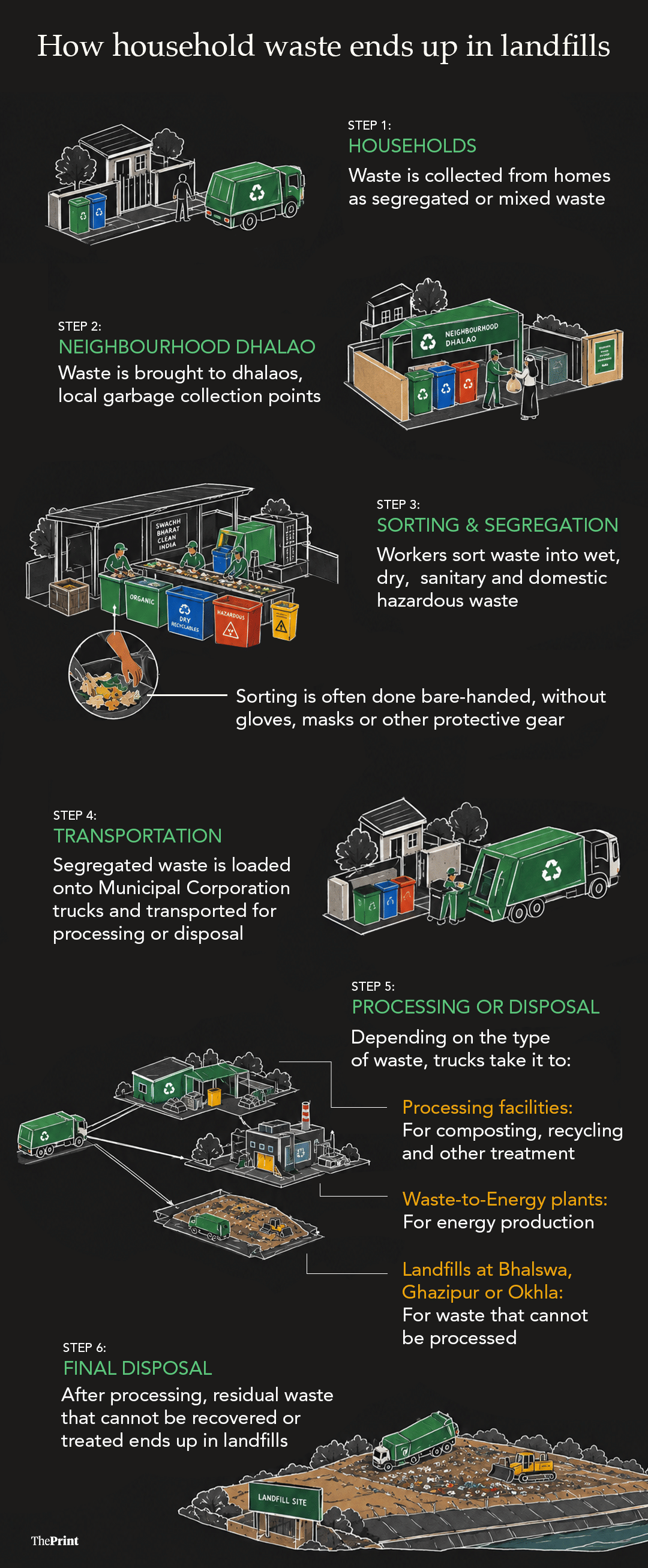
“We don’t even have time to breathe. We have to be quick because the Municipal Corporation’s truck arrives at the dhalao early,” he says. Dhalaos are the three-walled garbage disposal structures that dot the Capital’s residential zones.
Kumar’s rush points to one of the reasons garbage is piling up along Delhi’s roads. Waste arrives continuously at neighbourhood dhalaos, but the trucks that pick it up and carry it away do that only in rounds.
In between these pickups, collectors keep arriving with fresh loads from hundreds of homes and dump them. If a truck is delayed, a round is missed; if the gap between two pick-ups stretches, the waste has nowhere to go. This leads to accumulation of garbage that eventually spills on to the road.
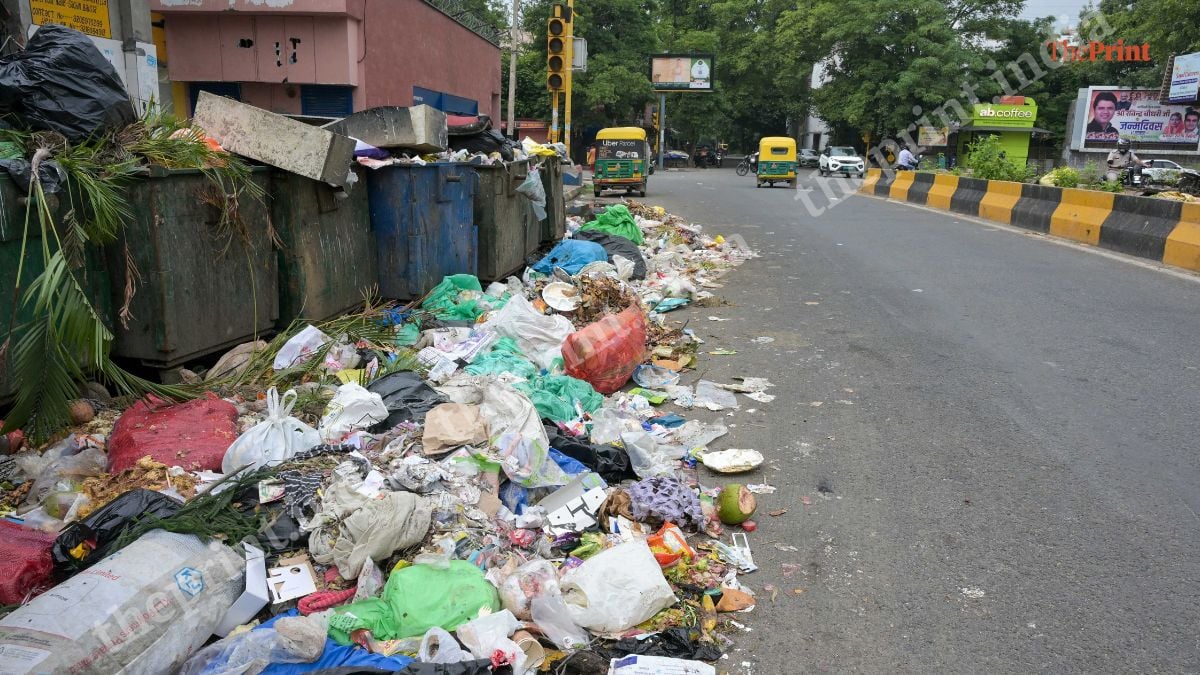
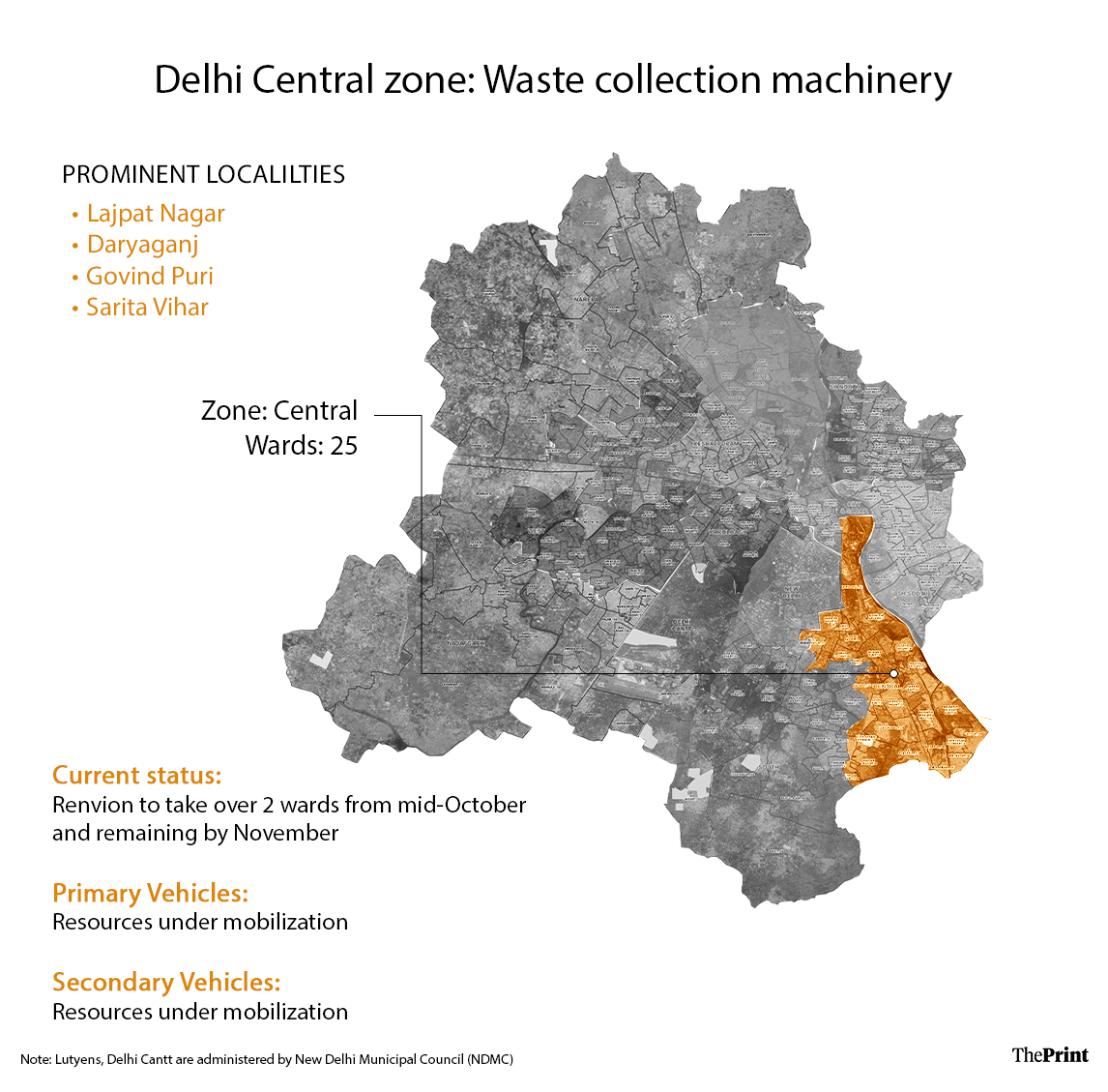
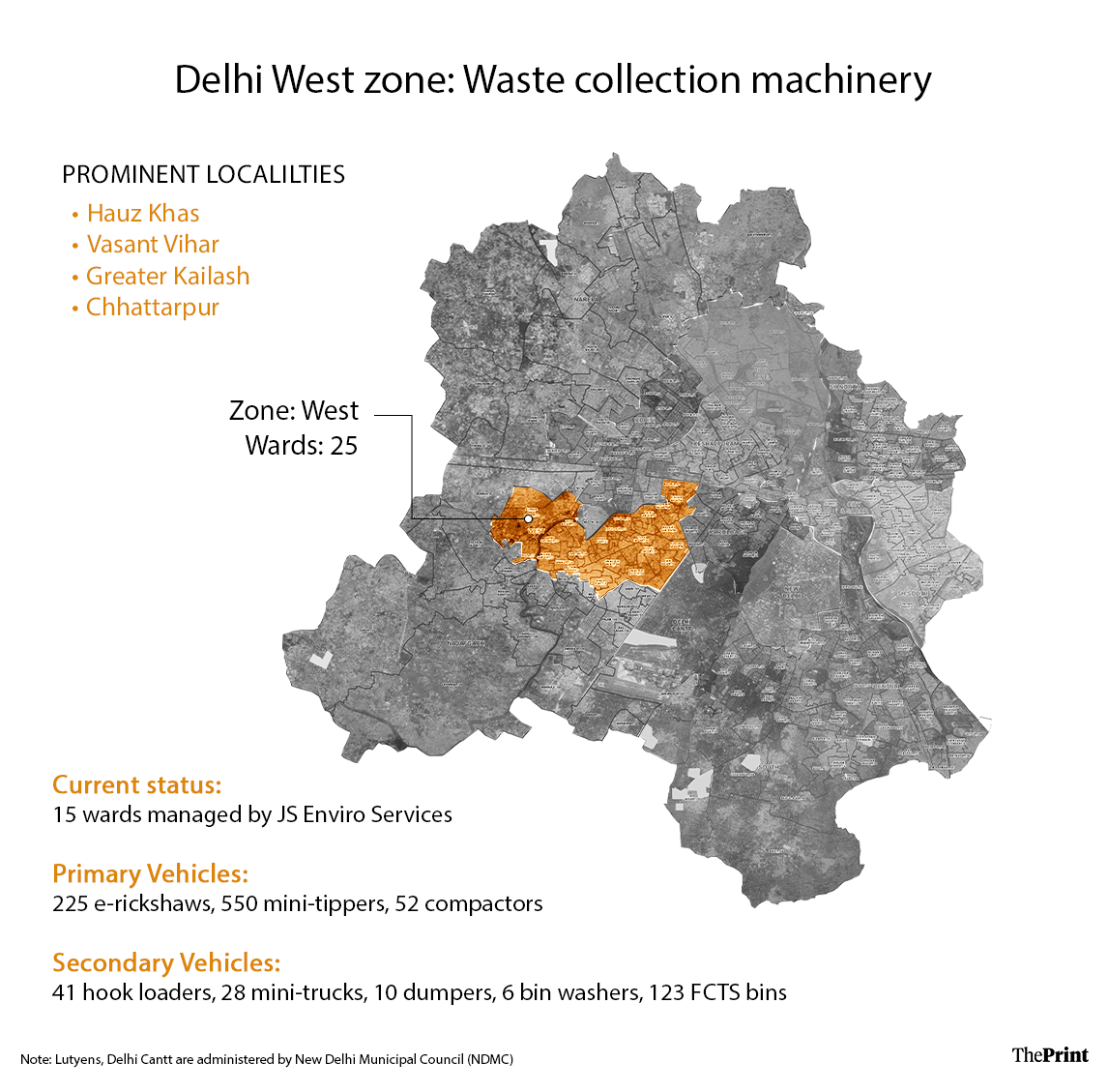
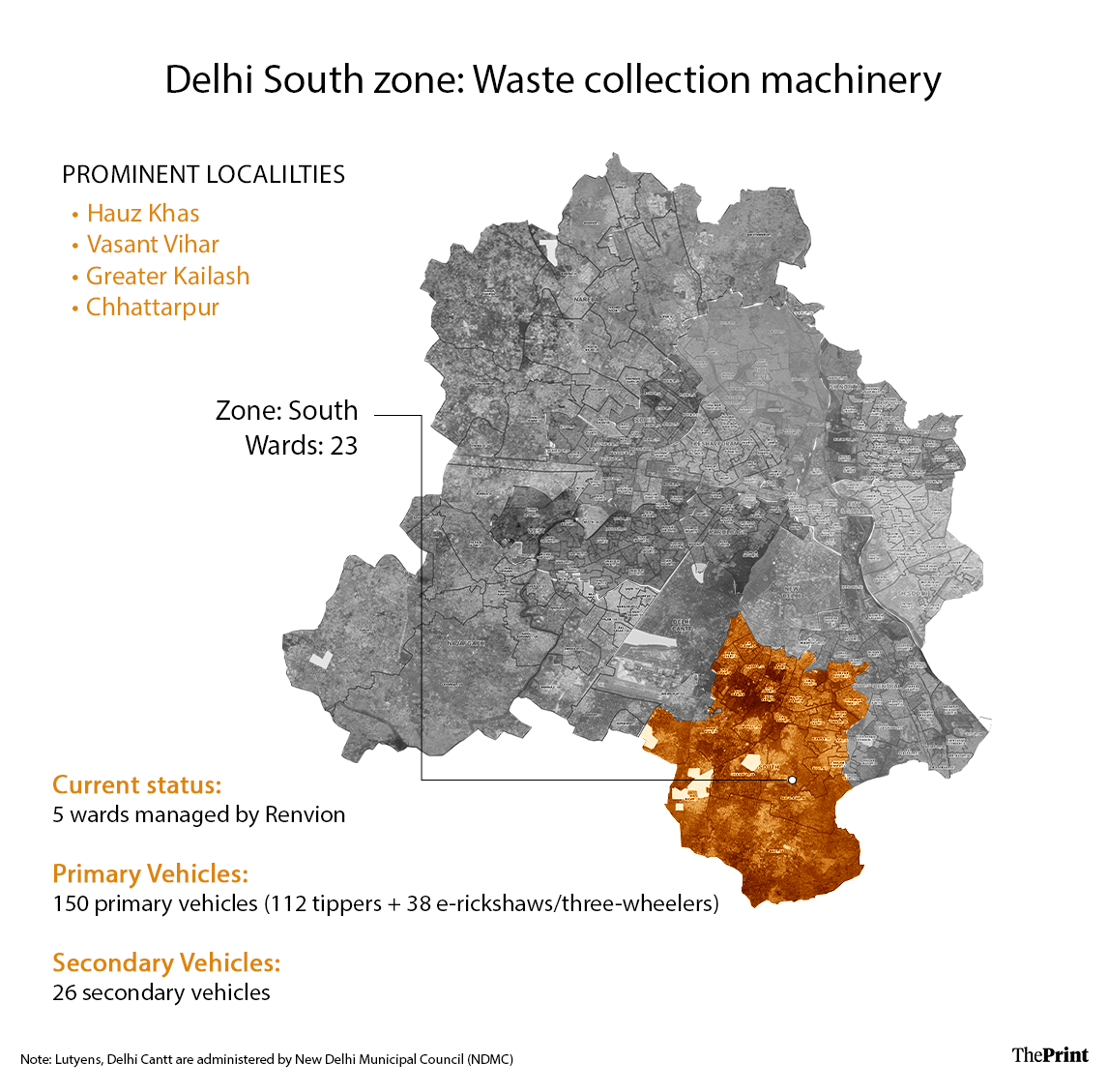
Data accessed by ThePrint shows that only five of the 23 wards of the Capital’s south district are managed by a private body, Revnion, as of now, with 150 primary vehicles and 26 secondary vehicles, while the central district is yet to have resources mobilised. These are the two districts where ThePrint has found massive dhalaos.
At Vasant Kunj’s Sector C dhalao, ThePrint saw this cycle unfold in a matter of minutes. Workers raced to sort an overflowing mound before a concessionaire truck arrived. The garbage was loaded and the dhalao completely cleared in about 15 minutes. But even as the truck pulled away, more collectors began arriving with fresh loads. The pile started building again.
It is a cycle repeated across a city that generates roughly 13,500 metric tonnes of municipal solid waste every day but has the capacity to process only about 8,000 metric tonnes.
Long before this waste reaches a processing plant or one of Delhi’s towering landfills, it has to pass through a fragile chain of private collectors, waste-pickers, dhalaos, compactors, trucks and sanitation workers. Keeping garbage off the streets depends on each link moving quickly enough for the next.
ThePrint followed Delhi’s garbage from the doorstep of an affluent Vasant Kunj home to a neighbourhood dhalao, on to a concessionaire truck, through a processing facility and finally to a landfill to understand why, despite daily collection, garbage keeps returning to the Capital’s streets.
Also Read: Dwarka was Delhi’s middle class dream. Now it’s fighting traffic, garbage, water woes daily
A race from doorstep to dhalao
Deepak Kumar, originally from Banaras in Uttar Pradesh, entered private waste collection while looking for work in Delhi two years ago. He now earns roughly Rs 12,000 a month, charging households between Rs 100 and Rs 200 each for collection.
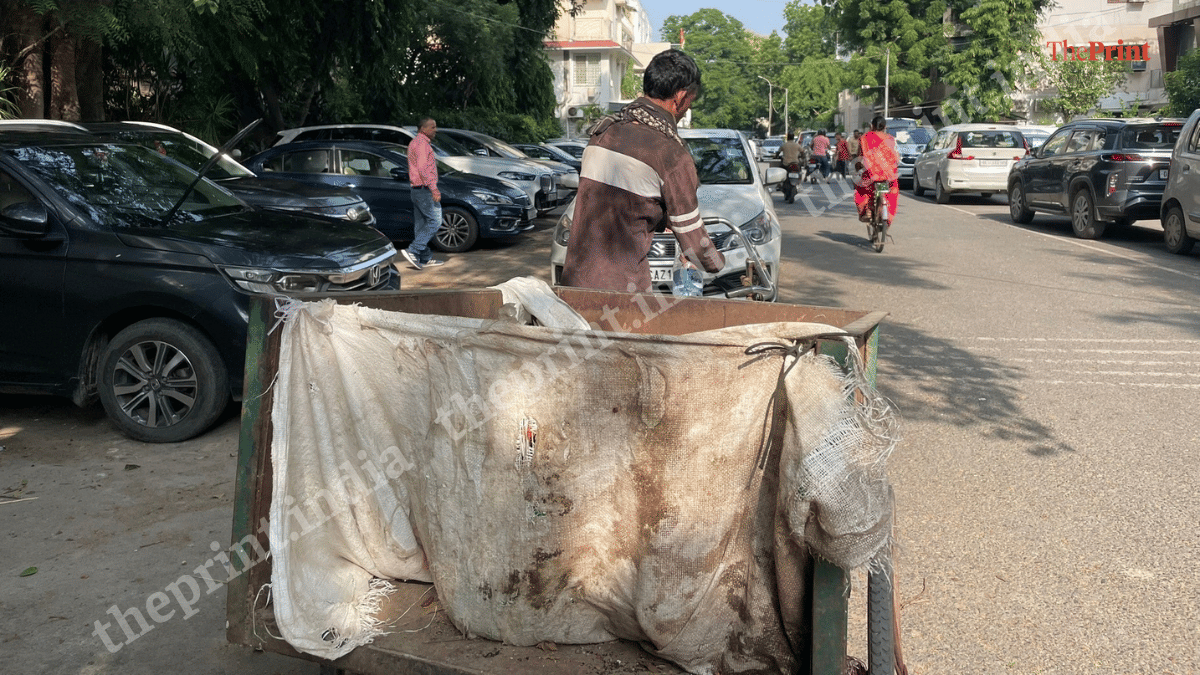
He is not alone. By early morning, at least 10 private collectors can be seen moving through Sector C.
Their first task is getting household waste out before the next link in the chain arrives.
At around 9 am, barely one-and-a-half hour after Kumar begins his round, the consequences of that daily flow are already visible at the Sector C dhalao. Against the boundary wall of a manicured DDA park sits a mound of overflowing garbage bags. Nearly a dozen workers begin sorting through it. Some squat on the ground, separating waste with bare hands, without gloves, masks or other protective equipment.
The division of labour is quick. Some workers continue collecting from residential blocks while others remain at the dhalao, sorting and shifting the waste into large blue and green bins.
They, too, are racing against the clock.
Within 25 to 30 minutes, the mound is sorted.
When the concessionaire’s compactor arrives, the driver and two helpers drag the bins towards its hydraulic lift and empty them one after another.
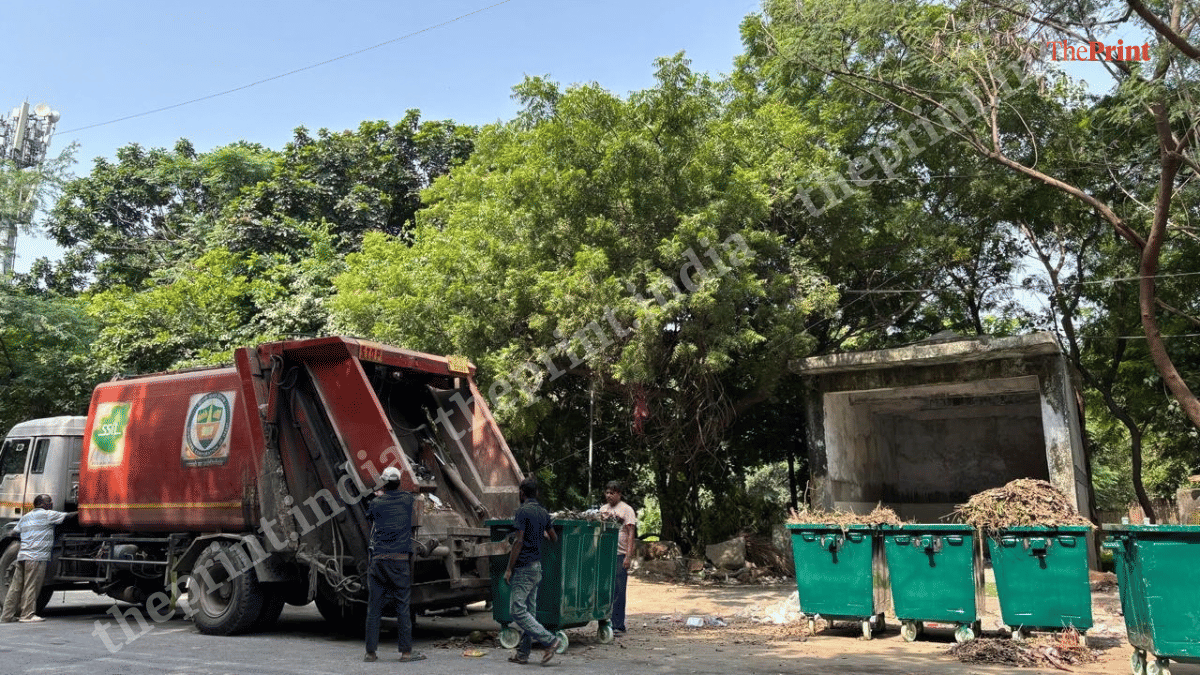
Within about 15 minutes, the overflowing dhalao is almost clear. But it doesn’t last.
As the truck pulls away towards the processing facility, more waste collectors begin arriving. Bags start accumulating again and the workers wait for the next municipal vehicle.
Also Read: Delhi’s garbage mountains are finally coming down. New ones are rising
The weak link
Delhi’s municipal waste system essentially operates through two stages: primary collection from households and secondary transportation towards processing facilities.
Ideally, collected waste should move to Fixed Compactor Transfer Stations (FCTS), from where it can be transported onwards. But FCTS are not available everywhere.
Delhi currently has around 500 dhalaos but only about 350 FCTs, according to a senior municipal official. Replacing the old, open dhalaos is difficult. So is adding an FCTS which requires land, scarce in Delhi.
As a result, neighbourhood dhalaos continue to act as consolidation points—even in some of Delhi’s most expensive neighbourhoods.
This is what makes timing crucial. Waste keeps arriving from households irrespective of whether the next truck has arrived to take it away.
When collection and transportation remain in sync, a pile like the one in Vasant Kunj can disappear within minutes. But when that does not happen, the same waste remains at the collection point and spills over.
The other bottleneck
By around 11 am, the waste collected from Vasant Kunj is inside a concessionaire compactor heading towards Okhla.
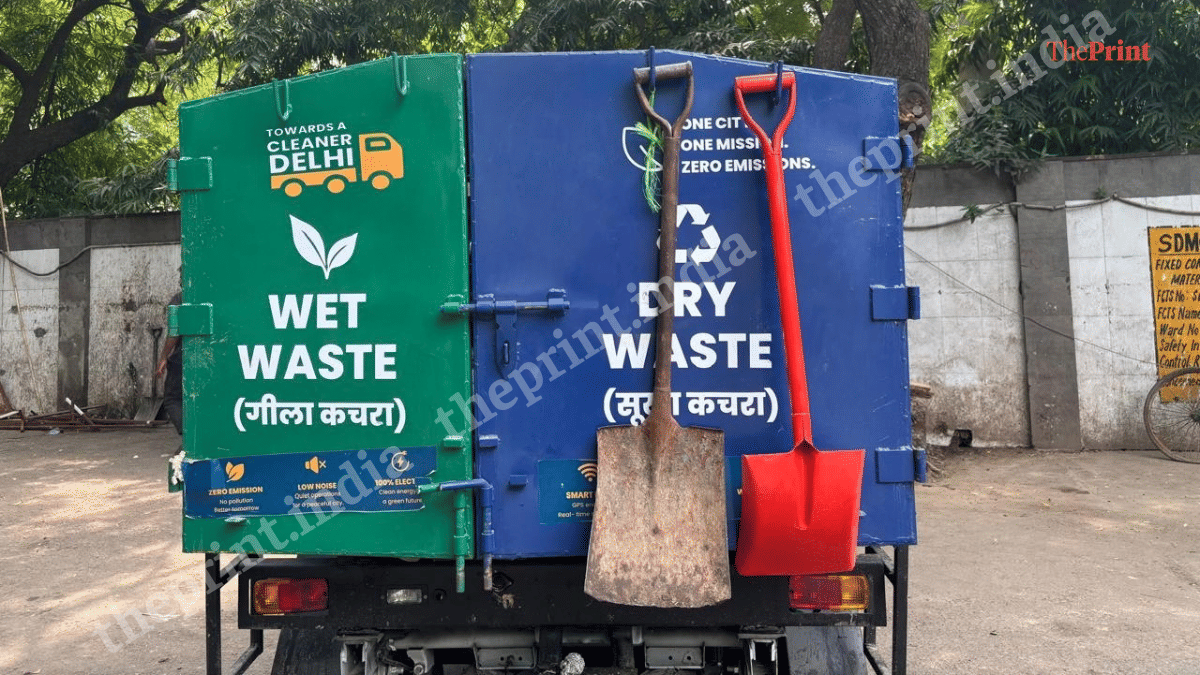
Some newer vehicles have separate compartments for wet, dry, sanitary and domestic hazardous waste. Wet waste can be composted and recyclable dry waste recovered, while other fractions move further down the disposal chain.
South Delhi’s waste is among the garbage received at the Timarpur-Okhla Waste Management Company’s Waste-to-Energy facility. Delhi has four major Waste-to-Energy plants—at Narela-Bawana, Ghazipur, Okhla and Tehkhand—and the Municipal Corporation of Delhi (MCD) says additional capacity is being created.
By afternoon, the trail reaches its final destination.
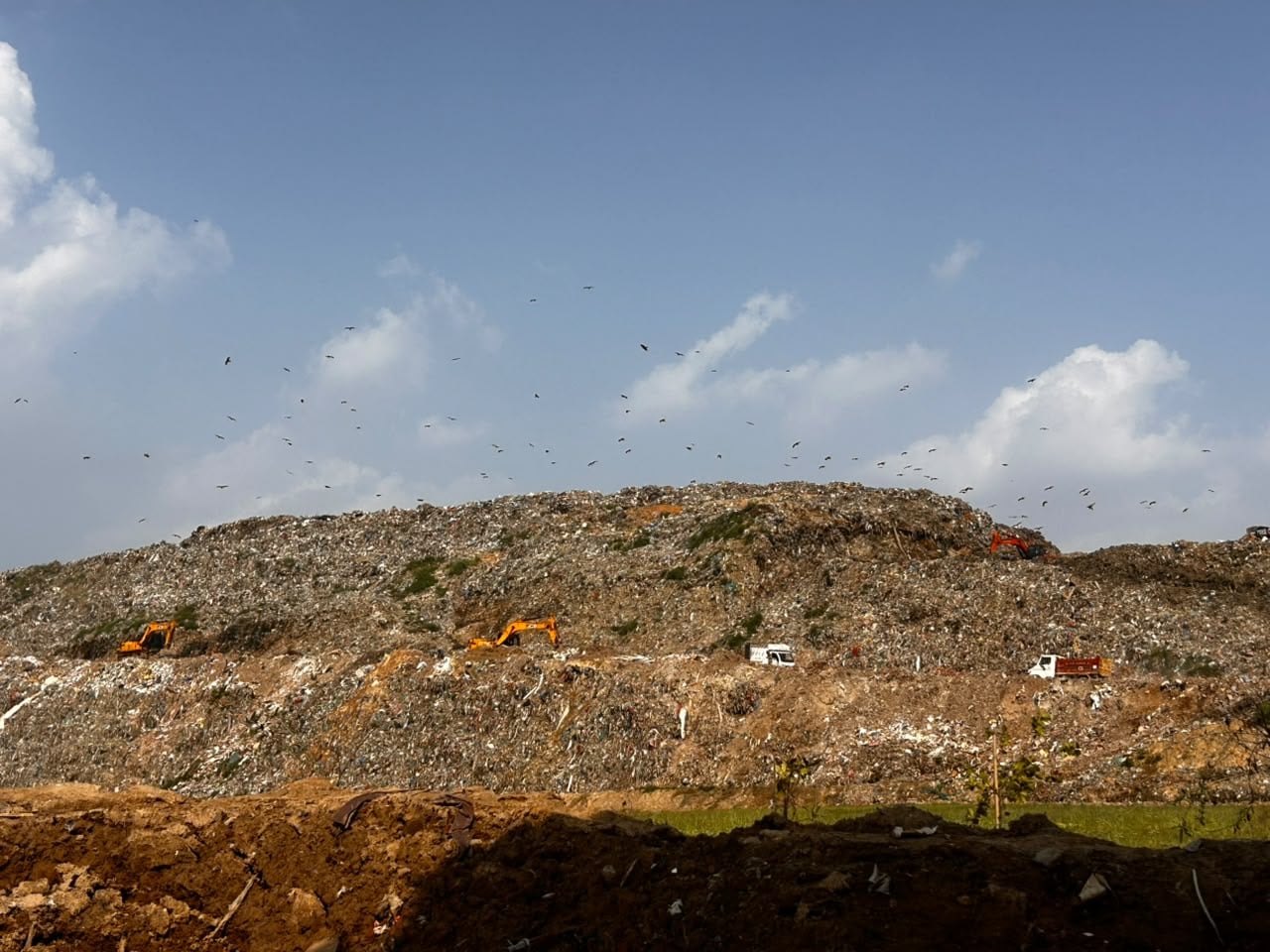
At the Okhla landfill, concessionaire trucks queue outside before crawling towards the massive grey-brown mound. Heavy machinery moves across its slopes while dust, diesel fumes and the smell of decomposing waste hang over the area.
Krishnanand has been driving municipal garbage trucks for around a decade. His job begins where another worker’s ends—collecting waste piled at transfer points, moving heavy bins with helpers and transporting the load onwards.
“Whatever can’t be processed anywhere else ends up right here on this mountain,” he says.
Normally, his team makes around two rounds. When garbage accumulates in the wards, the pressure on workers also increases.
Workers at the landfill told ThePrint they routinely operate amid waste and stench with inadequate protective equipment. One worker said some workers drink alcohol before or after shifts to cope with these conditions.
The pile never stops
Delhi has allocated roughly Rs 1,000 crore annually for garbage collection, transportation and processing across its 12 municipal zones. The government is simultaneously attempting to reclaim land at its three landfill sites and expand processing capacity.
Yet neither the household garbage nor the trucks bringing it stop while that capacity is being created.
That is why Delhi’s garbage problem is visible both in overflowing piles beside neighbourhood roads the enormous mountains at Ghazipur, Bhalswa and Okhla.
Between the two stands a chain of workers trying, every morning, to move thousands of tonnes of waste faster than the city can produce.
(Edited by Nardeep Dahiya)
Also Read: Punjab needs more than smart bins. It requires a waste management overhaul