





Headlines across North India have recently praised Haryana’s efforts at modern sanitation. Its ambitious plan introduces high-tech, four-stream bin systems across tourist and pilgrimage hotspots—complete with IoT-enabled sensors and geo-tagged monitoring.
It is encouraging to see a neighbouring state take positive steps toward modern waste management. However, it would be counterproductive for Punjab to simply replicate Haryana’s approach by installing smart bins in major cities and calling it a day. While ground-level segregation is essential, most municipal waste systems break down at the subsequent stages: regular doorstep collection, disciplined transportation, and, most importantly, functional processing facilities.
Without operational processing plants, high-tech bins are merely attractive receptacles for rotting garbage.
The urban stagnation
A walk through any of Punjab’s major urban centres—Amritsar, Ludhiana, Jalandhar, or Bathinda—reveals a nearly identical crisis. Piles of municipal solid waste, green horticultural debris, and construction waste litter roadsides, vacant plots, and irrigation canal banks.
While waste-to-energy and composting facilities are routinely touted in policy documents, ground reality tells a different story.
The numbers explain the gap. Punjab generated 4,222 MT of municipal solid waste a day in 2021-22 and collected 4,207 MT. But only 1,471 MT was treated — 35 per cent of the waste generated. The CAG attributed the low processing rate to inadequate infrastructure and under-utilisation of existing infrastructure.
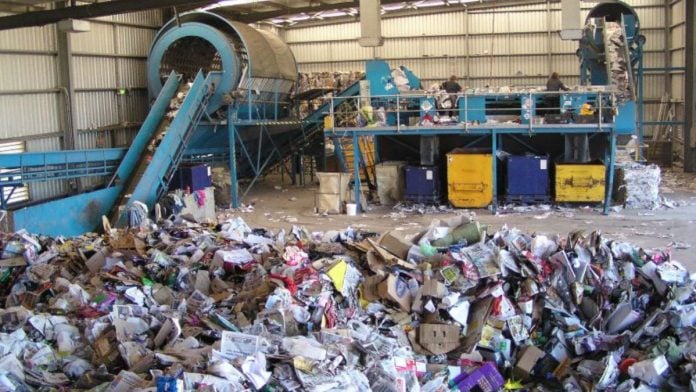
Processing infrastructure in the state remains either non-existent or severely underutilised. Unprocessed household waste is transported en masse to sprawling open dumps, where it sits rotting for decades, producing toxic leachate that threatens surrounding soil and groundwater.
High-tech bins mean little if the ultimate destination for waste remains an open landfill.
To break Punjab’s waste management deadlock, authorities must confront the elephant in the room: structural inefficiency and a lack of accountability within the sanitation workforce.
Decades of ingrained socio-cultural dynamics have allowed the informal waste management ecosystem to operate almost like a monopoly. Because workers often assume they are irreplaceable due to a lack of outside competition in the sector, many routinely skip duty hours, demand extended leaves, and ignore source-segregation protocols. Municipal authorities often respond by launching high-profile “cleanliness drives”—good PR exercises that fail to address root systemic issues.
What makes Punjab’s waste crisis particularly ironic is the concentration of intellectual capital within the state.
Institutions like the Indian Institute of Technology (IIT) Ropar, Punjab Agricultural University (PAU) Ludhiana, and Guru Nanak Dev Engineering College (GNDEC) possess immense technical expertise. They are uniquely positioned to design low-cost solutions for solid waste processing, green waste composting, and construction waste recycling.
Yet, the state government has failed to tap into this reservoir of local academic talent. Instead of developing customised engineering solutions, municipal bodies rely on outdated contractor-driven models that consistently fail to deliver.
Also read: The 3 failures that plague Punjab today
From exposure to execution
Capacity-building initiatives should not be reserved solely for bureaucrats. Frontline workers form the backbone of urban sanitation, and they require more than pep talks or symbolic cleanup drives.
The Punjab government recently made headlines by sending schoolteachers to Singapore to learn from international education models. A similar approach must be extended to sanitation workers. The government should utilise the Mukh Mantri Tirth Yatra Scheme buses to transport a cohort of at least 500 Safai Sevaks to Indore, Madhya Pradesh.
Indore, consistently recognised as India’s cleanest city, transformed its urban landscape by overhauling the work culture of its ground staff, implementing a zero-waste-to-landfill policy, and enforcing 100 per cent source segregation. Observing this operational ecosystem firsthand would inspire Punjab’s workforce and instil a modern work culture. Following this, a selected group of supervisors and sanitation workers could be sent to Singapore to study advanced waste-to-energy plants, automated road sweepers, and closed-loop recycling frameworks.
A cornerstone of the Indore model is the active recruitment of women in sanitation and community management. Women workers bring discipline, attention to detail, and strong community engagement to doorstep collection.
This presents Punjab with a prime opportunity to address workforce gaps while fulfilling a key social objective. Under the Mawan Dhiya Satkar Yojana, funds can be directed toward recruiting, training, and employing women in the sanitation sector. This approach achieves a double dividend: increasing women’s formal workforce participation while filling critical municipal vacancies with a dependable, disciplined workforce.
Adopting elements of Haryana’s high-tech model is a reasonable starting point, but it will only take Punjab so far. The chief minister and municipal leaders must prioritise four structural reforms:
- Construct and operationalise processing plants in major cities so collected waste is actually treated.
- Enforce workforce accountability and break monopolistic practices in daily collection and transportation.
- Engage academic powerhouses like IIT Ropar, PAU, and GNDEC to solve green and construction waste challenges.
- Organise exposure visits to Indore and Singapore for frontline Safai Sevaks, while actively integrating women into the workforce.
Only by tackling collection, processing, and workforce accountability in unison can Punjab clean up its urban centres for good.
Col Jasjit Singh Gill is an environmentalist. He is a member of the DISHA Committee, Ludhiana, and a former member of the Punjab State Task Force on Budha Darya Rejuvenation Project.
Views are personal.
(Edited by Saptak Datta)