



New Delhi: Tensions between Pakistan and Afghanistan are rising again, with Islamabad carrying out fresh air strikes in the latter’s Helmand and Kunar provinces on 1 October, claiming they killed 22 “terrorists”. The UN Assistance Mission in Afghanistan (UNAMA) confirmed the deaths of 10 civilians, including women and children. The strikes were the latest in a series of Pakistani attacks on Afghan soil.
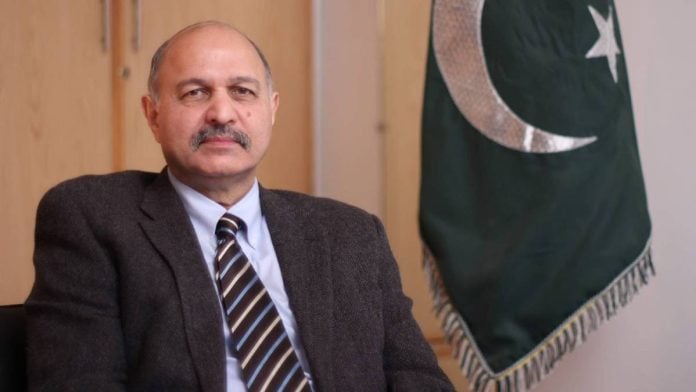
It is against this backdrop that former Pakistani senator and information minister Mushahid Hussain Syed has offered an account of how Pakistan’s decades-long attempt to shape Afghanistan contributed to the security problems it now faces.
Pakistan: Beneficiary of Afghanistan war
Speaking on the podcast ‘Khancast’, released on 25 September, Mushahid said the US’s Central Intelligence Agency (CIA) gave $2.1 billion to Pakistan’s Inter-Services Intelligence (ISI) during the Afghan jihad to train “1 lakh mujahideen and 20,000 Arab volunteers”, including slain al-Qaeda founder Osama bin Laden and the outfit’s leader Ayman al-Zawahiri, one of the main orchestrators of the 9/11 attacks.
He said Saudi Arabia matched the CIA’s contribution with another $2.1 billion, and that a total of at least $5 billion was utilised in Afghanistan during the Soviet invasion from 1979 to 1989.
Citing Brown University research, Mushahid said the US spent $2.2 trillion in Afghanistan between October 2001 and August 2021, amounting to about $100 million a day. Brown’s Costs of War Project puts the approximate share of costs for the Afghanistan-Pakistan theatre at $2.3 trillion from FY2001-FY2022. When future obligations for veterans’ care are included, the figure rises to $3.4 trillion.
Asked where the money went, Mushahid said Americans, the Afghan elite and some Pakistanis profited from it.
He said Pashtuns were the biggest victims of geopolitics, while the biggest gain of the Afghan jihad, in his view, was that Pakistan became a nuclear power under its cover.
Mushahid recalled that in 1975, Pakistan gave shelter to Afghan opposition figures including Ahmad Shah Massoud, Gulbuddin Hekmatyar, Abdul Rab Rasul Sayyaf and Burhanuddin Rabbani, who opposed Daoud Khan’s government. Pakistan reportedly did it as a tit-for-tat measure against Daoud’s ‘Pashtunistan’ policy, which had soured relations with Islamabad. “Afghan jihad’s preparation had already begun in 1975,” he said.
Also Read: Pakistan is fighting a two-front war. I saw it coming 15 yrs ago
‘Afghans do not belong to anybody’
Mushahid argued that Pakistan had long tried to shape Afghanistan by backing preferred leaders or factions. But, he said, “Afghans do not belong to anybody; they are poor but proud people, they are only their own and nationalists above all.” He added that all the country’s leaders, from Zahir Shah to Najibullah, Karzai, and even the Taliban, were “Afghan first”.
He dismissed attempts to treat Afghan leaders or factions as Pakistan’s “bande” or proxies, drawing a distinction from the political dynamics in Pakistan, “where an Army chief wants his man as Prime Minister while the Prime Minister wants his man as Army chief”.
By his account, Pakistan was pivotal in bringing Karzai to power in 2004. When Karzai sought General Pervez Musharraf’s help, Musharraf agreed and asked Afghan refugees to vote for him, resulting in Karzai’s victory, Mushahid said.
Mushahid also recalled a conversation with Richard Holbrooke, the former US special envoy to Afghanistan: Holbrooke, he said, asked who should become the country’s president because he wanted to “get rid of the Karzai chap”. Holbrooke had brought a list of potential candidates with him. Mushahid said he jokingly replied, “Karzai will outlive you.” He meant it politically, but Karzai ultimately outlived Holbrooke, who died in 2010.
Asked whether Pakistan still treats Afghanistan as its “fifth province”, Mushahid said the current establishment under army chief Asim Munir was the first not to hold that view or regard the Taliban as its own.
Talks with TTP?
Mushahid also recalled a national security meeting held on 5 July 2022 attended by then army chief General Qamar Javed Bajwa, Lt Gen Nadeem Anjum, the DG-ISI, and Lt Gen Faiz Hameed, then Corps Commander, Peshawar. Faiz gave a briefing on why it was necessary to open dialogue with the Tehreek-e-Taliban Pakistan (TTP).
Mushahid said only three people questioned the move: himself and political leaders Mohsin Dawar (National Democratic Movement) and Bilawal Bhutto Zardari (Pakistan Peoples Party).
Asked whether former Prime Minister Imran Khan favoured talks with the TTP, he said Khan had even suggested that the TTP should have an office in Peshawar.
On the current security situation, Mushahid said 2026 had already seen a heavy human cost, with 200 policemen killed and roughly 600 terror attacks reported in Khyber Pakhtunkhwa.
“Pakistan needs a healing touch, a course-correction, both in its domestic politics as well as its Afghanistan policy,” he said. The mix of geopolitics, counter-terrorism and Pakistani politics had become dangerous enough to explode at any time, he said, adding that China, Turkey, Iran, Qatar, Russia and Uzbekistan believed Pakistan’s approach was wrong.
The podcast ended with Mushahid saying Pakistan could make new mistakes, but should not repeat its old ones.
(Edited by Chingkheinganbi Mayengbam)
Also Read: Pakistan strikes Afghanistan days after Kohat mosque attack, Taliban says 3 of family killed