



New Delhi: Creation of bogus credits from sister companies with common directors, and initiating insolvency proceedings solely to obstruct a money laundering probe and subsequent attachment—these are the Enforcement Directorate’s broader allegations against the Mumbai-based Tayal Group of Companies.
Additionally, the company’s promoters are accused of colluding with resolution professionals, who admitted claims from these alleged fake and related-party creditors without verification.
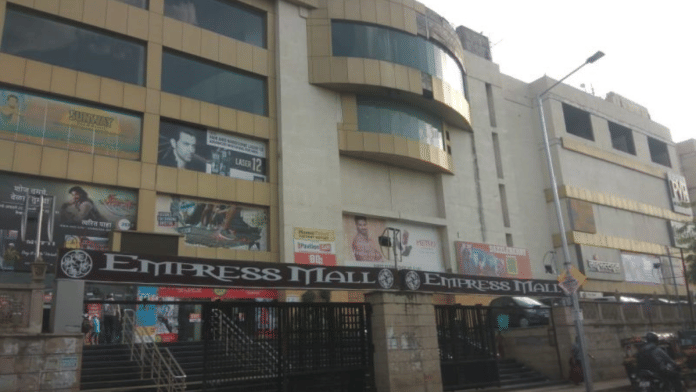
At the centre of the ED’s allegations against the promoters—Pravin Tayal, his son Saurabh, and brother Navin—is Empress Mall in Nagpur. Its provisional attachment was upheld by adjudicating authorities in October 2019 despite being contested by the promoters. The property was valued at Rs 483 crore at the time.
The ED’s latest round of allegations comes after it launched raids on the premises of the group in the last week of September. The development comes on the back of the agency launching several similar probes exposing alleged collusion between promoters of companies under liquidation and resolution professionals to allow the former to pocket assets through other firms. The assets, the ED claims to have found, have been re-acquired at huge haircuts, or discounts, of up to 90 per cent of the amount the insolvent company owed to banks and other creditors.
The ED’s money laundering probe spans two cases, and is based on FIRs lodged by the Central Bureau of Investigation (CBI) in May 2014 against the Tayal group for allegedly causing losses to public-sector UCO Bank. In 2020, the ED filed a prosecution complaint before a Mumbai court in one of the two cases, involving an alleged fraud of Rs 296 crore against UCO Bank by Krishna Lifestyle (KSL) & Industries, an entity of the group that owned the mall in Nagpur.
According to the ED, KSL & Industries was part of the Tayal group, which received proceeds of crime from a series of bank frauds committed by its promoters. The mall was provisionally attached in May 2019. The ED issued eviction notices in November 2021 and later took possession of the mall.
The second ED case involves an alleged Rs 524.61 crore fraud by other group entities, including ACTIF Corporation and Jaybharat Textiles & Real Estate. The agency says the total proceeds of crime identified in both cases amount to Rs 820.86 crore.
Officials say fresh evidence has emerged of new defaults by Tayal group entities, and documents are being examined to identify additional proceeds of crime.
Over a few days starting 30 September, the ED carried out searches at 12 locations linked to the Tayal group in Mumbai and Ahmedabad. It froze 215 bank accounts and seized Rs 20 lakh in cash after this latest round of searches.
ThePrint tried to get a response on the probe from the Tayals’ counsel Dinesh Jain, who appears for them in the money laundering matter, but he refused comment.
Web of entities
The proceedings against the Tayal group go back to 2014, when the CBI filed three FIRs against the Tayals and the group companies—Krishna Lifestyle & Industries, Global Softech, and Tayal Energy.
In its probe, the ED found that these companies and four others run by the Tayal family, along with chartered accountants and auditors, allegedly colluded and did not return over Rs 296 crore to UCO Bank. The funds, it alleged, were laundered through a web of shell companies connected with the same group.
Another group company, ACTIF Corporation, was allegedly found to have defaulted on loan repayments to a consortium of banks led by Bank of India, which sanctioned Rs 200 crore between 2007 and 2008 for the setting up of a textile plant in Maharashtra’s Kolhapur district. The CBI then filed a fourth FIR in August 2015.
One more FIR was registered in May 2016 on a complaint of fraudulent representation of manufacturing capacity and securing loans against another group company, Jaybharat Textiles and Real Estate.
In the same month, the CBI booked Mumbai-based Krishna Knitwear Technology (KKTL), its sister concern Eskay Knit (India), and the MD, Navin Kumar Tayal, for allegedly defrauding Andhra Bank. KKTL, according to the CBI, secured loans for setting up of a plant and machinery. But its accounts showed signs of financial stress and were later classified as a non-performing asset (NPA).
In October 2016, the ED began separately probing money laundering angles in these cases. It found that loans secured from banks were channeled to entities of the Tayal group and used to acquire properties, including Empress Mall.
The mall, according to the ED, was built on a plot acquired from the alleged proceeds of crime of KSL & Industries. The agency then stepped in to take possession of the prime real estate in Nagpur.
Months later, two firms—Abhinandan Multitrade and Express Suitings—filed an insolvency application against KSL & Industries in the National Company Law Tribunal (NCLT).
The NCLT admitted their claims for further hearing and while the resolution process was still underway, the adjudicating authorities under the Prevention of Money Laundering Act (PMLA) upheld the ED’s attachment of the mall in October that year. The resolution professional, allegedly in collusion with the promoters, then approached the NCLT again, seeking to quash the ED’s attachment of the land and mall. Their plea was rejected in December 2020. Before both the NCLT and NCLAT, the resolution professional argued that ED’s attachment should have been set aside since admission of the insolvency plea granted the company immunity. Both the NCLT and the NCLAT rejected the argument.
The creditors approached the NCLT’s appellate tribunal, the National Company Law Appellate Tribunal (NCLAT), arguing that the mall was a major source of income for the corporate debtor. Without the mall, they said, finding a satisfactory resolution plan in the insolvency proceedings would be difficult.
In January 2022, the NCLAT ruled that the appeal could not be considered at that stage. It noted that the case was still at the admission stage, with no resolution plan approved by the NCLT and no completed liquidation or sale of the company’s assets.
However, these proceedings were allegedly suppressed by the resolution professional, who was overseeing the intended insolvency proceedings—a fact pulled by the appellate tribunal under SAFEMA (Smugglers and Foreign Exchange Manipulators Act, 1976) that works as the final authority in the adjudication of properties attached by agencies such as the ED, Directorate of Revenue Intelligence and the Narcotics Control Bureau.
Additionally, the tribunal recorded that the appellant suppressed the fact that the ED had issued an eviction notice in November 2021, which the appellants did not challenge. Hence, the tribunal observed that there was no question of the original owners seeking to collect rent.
“The conduct of the appellant is otherwise such that it does not make them entitled to any interim relief. It is a fact that the appellant has produced internal correspondence from the department without disclosing its source. Such conduct of the appellant is to be taken seriously…,” the tribunal ordered in April 2023.
“In fact, the apex court has expressed serious concern about this type of conduct by the parties when internal correspondence was made a part of the documents without disclosing its source. For all the reasons given above, we dismiss the application for interim relief. The respondents would, however, maintain the mall property.”
Sources in the agency said that despite the mall being “technically and legally” in the agency’s possession, the rent has not been received since the agency took possession of the mall, which may amount to up to Rs 100 crore. “The probe is on to identify, among other things, the dissipation of the rental income of the mall, which also amounts to proceeds of crime,” an official said.
A similar strategy worked when another Tayal group company, Cubical Realty, successfully filed an insolvency resolution against Vidhant Realty, according to the ED. The insolvency proceedings were initiated by a third group company, Kausar Textiles.
“This was in clear violation of Section 29A of the IBC as the SRA company was beneficially owned by the Tayal family viz Pravin Kumar Tayal, Navin Kumar Tayal etc,” an agency spokesperson told ThePrint.
(Edited by Tony Rai)
Also Read: 10% commission & over Rs 700 cr in ‘tax evaded’—inside Gujarat CID’s probe into on-paper parties