



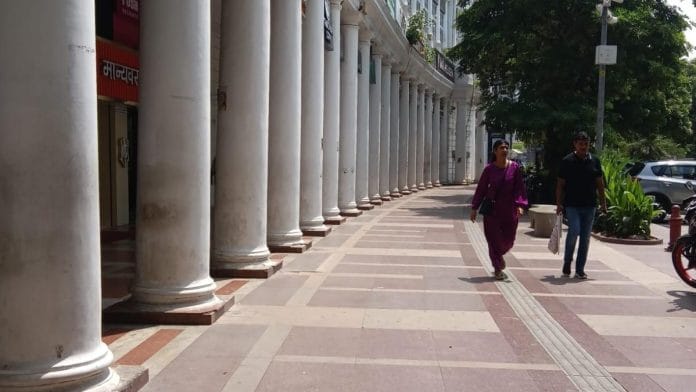
New Delhi: Delhi has a recurring dream for Connaught Place: to make the Inner Circle free of vehicles. But the idea has been floated, fought over and abandoned at least six times over the years.
Last month, New Delhi Municipal Council (NDMC) chairman Manoj Dwivedi revived the question in an X post. He asked Delhi residents for advice and “positive suggestions” on how the Inner Circle, also known as Rajiv Chowk, could be made vehicle-free, at least part of the time.
“Should we do it for full day or do it from 6 pm to midnight in summers and 11 am to 4 pm in winters?… Some different timing for weekends? What kind of activities would you prefer in Central Park and inner circle during no vehicle slots?” he asked.
At least once every person in NCR would have visited Connaught Place. I need your advise:
1. Can we make inner circle of CP vehicle free?. People can walk around freely like on some mall roads or central areas in foreign cities.
2. Should we do it for full day or do it from 6…
— Manoj Dwivedi (@dwivedimk_ias) September 3, 2026
He also described the idea as making CP walkable “like some mall roads or central areas in foreign cities” — in keeping with the long-unfulfilled ambition to bring stubbornly chaotic, vehicle-choked Delhi up to the standard of global cities. Many responses, however, did not seem to share this vision. Some were more worried about the impact on traffic elsewhere in CP and on the lack of parking.
“By making inner circle vehicle free, you’ll aggravate the traffic on the outer circle road, and consequently on all the roads leading there,” one comment read. “The problem will be solved, but a set of new problems will be created.” Another complaint was not about cars at all: “Sar ye random beggars, kaan saaf karne waale, joote saaf karne waala hatwado ya limit karwado to some block. They kill the experience of roaming in CP more than the traffic.”
Connaught Place is not the only market in Delhi where proposed pedestrianisation has been met by pushback. In Karol Bagh, Chandni Chowk and other smaller markets too, ambitious plans have largely been relegated to paper. The promise has been of cleaner, safer, more walkable streets. But either the parking and other facilities needed to make pedestrianisation work never get built and the vehicles are let back in, or the ban is imposed and then nobody enforces it.
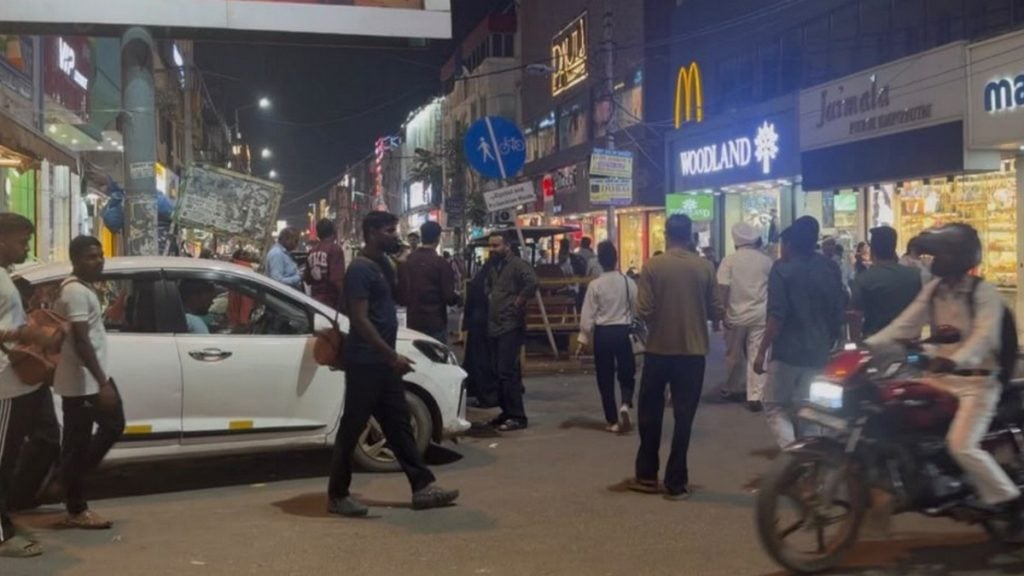
In CP, it’s also about ease of doing business. The New Delhi Traders’ Association (NDTA) has argued in meetings and court filings that customers come by car and a market without cars is a market without shoppers. And if walking in CP has become difficult, they blame the hawkers crowding its corridors.
You have high-end showrooms, you have jewellers over here, you have banks over here. You can’t expect [customers] to park their cars in Hanuman Road or somewhere else
– Atul Bhargava, NDTA president
The problem is that not everyone wants to walk. The weather, the potholes, the encroached pavements and just the sheer reluctance of the upwardly mobile middle class and the wealthy to ditch their cars all get in the way. After all, the cars are their status symbols. And the Delhi sun can be punishing.
The first major attempt to pedestrianise CP came in 2017, when then Union minister Venkaiah Naidu pushed for a three-month pilot. Traders shut the market for half a day in protest, calling the plan “ill-conceived”, and the pilot never went ahead. A second attempt followed in 2019 under then NDMC chairman Naresh Kumar. That plan fell apart two days before its proposed launch, after traders said the civic body was quietly rolling out a different plan from the one they had agreed to. Those are only the two most documented attempts. What they all have in common is that none produced a pedestrian zone that lasted.
To Dwivedi’s post on X, the NDTA replied that “regulation of traffic and not strangulation of businesses is requested”. Members of the NDTA alleged that they were subsequently blocked from commenting on the NDMC chairman’s posts.
Also Read: Delhi’s garbage mountains are finally coming down. New ones are rising
Pedestrianisation vs ‘walkability’ in CP
Connaught Place is “walker-friendly” by design, according to NDTA president Atul Bhargava. But to him, there is a difference between walking around CP and expecting shoppers to trudge long distances just to reach it.
“We have 15 feet of colonnaded walkways. It is the biggest walking plaza in the country today,” he said.
The market association says that CP, built in the 1930s, was always meant to be a “park and shop”, not a stroll and shop zone. The NDTA doesn’t want to lose its customer footfall in the chase of an impossible dream of pedestrianisation. It wants to look at the convenience of the shoppers too.
Bhargava estimates that 90 to 95 per cent of the association’s customers arrive by car, including jewellery buyers, older shoppers and women visiting in the evening.
“You have high-end showrooms, you have jewellers over here, you have banks over here. You can’t expect them to park their cars in Hanuman Road or somewhere else,” he said.
Bhargava points to the period between Christmas and New Year, when the market sees some of its highest footfall, as a test of whether pedestrians actually have a problem getting around CP.
“Even that time there was never a problem. There is no need for it [pedestrianisation],” he said.
Connaught Place is also a major junction for traffic moving across central Delhi. This is why any attempt to close it has run into the contention that traffic will just pile up elsewhere.
“We have seen whenever we have closed down the Inner Circle, the Outer Circle becomes jammed,” said Bhargava, adding that the traffic snarls extend to Mandi House, Gole Market, Panchkuian Road and Minto Road.
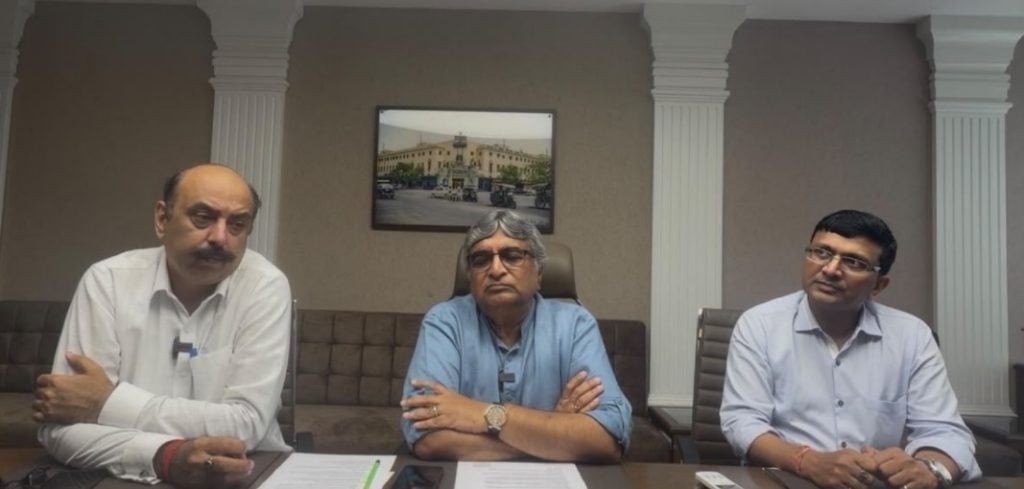
The NDTA’s objections to earlier pedestrianisation proposals also include inadequate parking and Delhi’s heat. It says removing parking from B and E blocks would push cars onto blocks already at capacity, while the Palika underground parking lot fills by 11 am on most mornings.
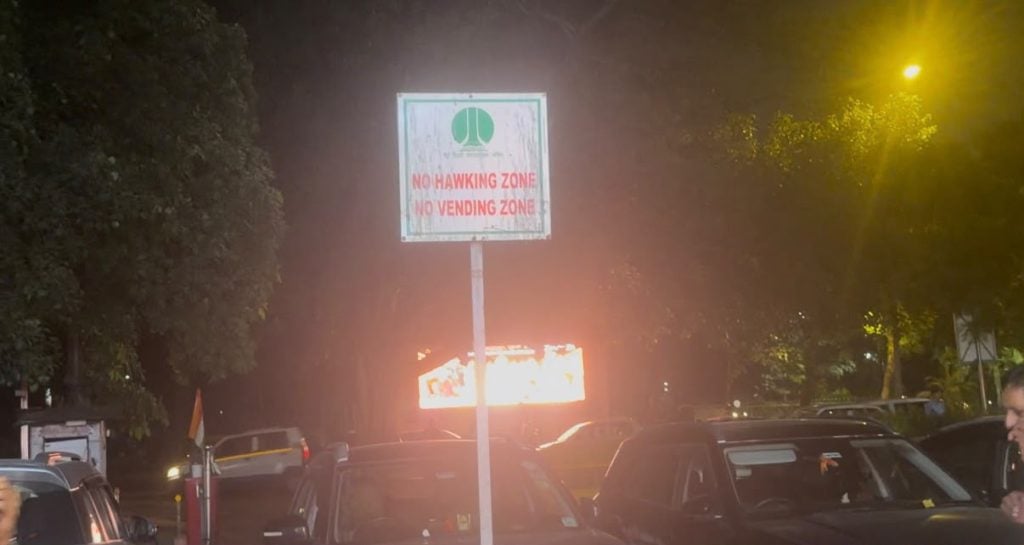
But the association does have a grouse when it comes to walkability within CP’s colonnaded corridors: street vendors.
“Walkability has become a little problem now because of the illegal occurrences here,” said Bhargava.
Vending zones are also part of the city life and commercial activities in a city. And without vending, the city will be dead. If everything is sold through a shop, it will be much more expensive. So vending zones are a must
– AK Jain, former DDA planner
Back in 1989, a Supreme Court-appointed committee headed by judicial officer GP Thareja was set up to identify places in NDMC areas where vendors could set up shop. Only about 80 vendors are authorised to sell in Connaught Place, the Delhi High Court noted in 2021, but Bhargava says there are now “369 people” hawking their wares here.
“Now, in a 15-feet corridor, if 4 feet is taken by these people, where will the people walk?” Bhargava said. “What we are suggesting is whoever are the legal hawkers over here, they should be given another place. Even the Supreme Court has said the right to walk is first, with the public at large on the pavements, on the corridors, wherever there is.”
Vendor groups, however, argue that the problem is the lack of designated spaces for them to operate.
“The basic issue is that there are no proper vending zones in Delhi,” said Rajesh Singh, a vendor-rights activist formerly associated with the National Association of Street Vendors of India (NASVI). “The MCD and NDMC should have created vending zones a long time ago. If more vending zones were created, spaces could be allotted on proper leases and the corruption would end.”
That dispute has already been through the courts more than once. In October 2021, hearing a petition filed by the traders’ association, the Delhi High Court directed the NDMC and Delhi Police to enforce a “zero tolerance” policy and remove unauthorised vendors with “bag and baggage”.
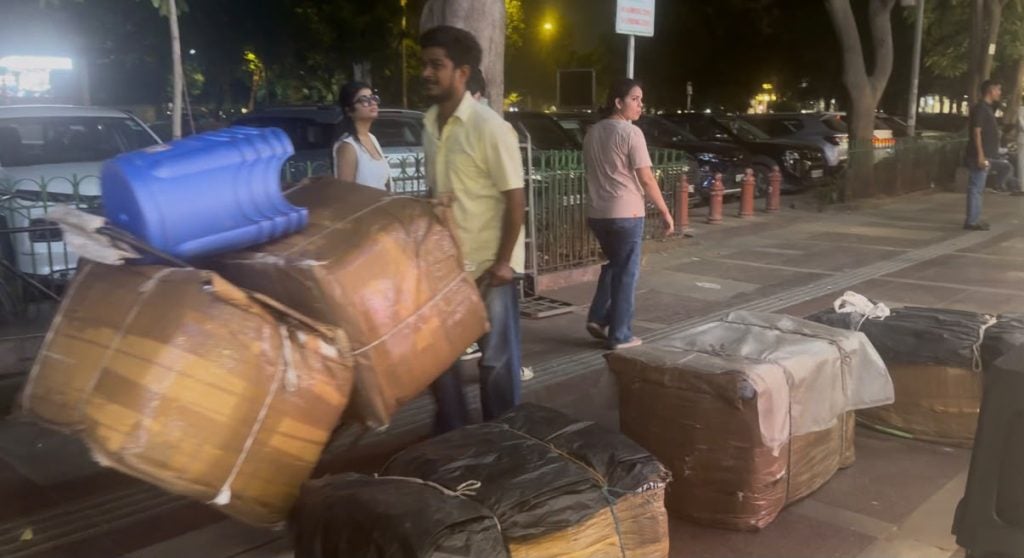
By November 2023, the court expressed surprise that vendors had returned, observing that this “could not have happened without the knowledge of the officials in charge”. It disposed of the case in January 2025 while reiterating its earlier directions. The association has since filed a fresh contempt petition, still pending, alleging that enforcement remains “selective” and “episodic”.
Bhargava pointed to the BRICS Summit last month as proof that enforcement can work if the will exists. Hawkers disappeared from the market for several days.
“For three to five days, all the hawkers were removed,” he said. “And people who came to visit CP felt so good, like going back to the 90s, 80s, 70s — absolutely crystal clear places for people to walk, shop around. The quality of customers was very good, it was easy to park.”
Karol Bagh’s failed experiment
If Connaught Place’s traders are fending off pedestrianisation proposals, their counterparts in Karol Bagh have already lived through a full implementation—and failure.
On Ajmal Khan Road, wedding showrooms glitter under bright signboards, from mid-range stores to brands such as Manyavar and Indiya. But the street outside carries the faded remnants of a project that was once promised to boost footfall.
Today, the barricades deployed to keep vehicles out have been pushed aside, most of them broken. Some benches installed along the stretch have fallen into disrepair while others have been removed. Vehicles have returned, though it is mostly e-rickshaws and auto-rickshaws that now weave through the nominally pedestrianised zone.
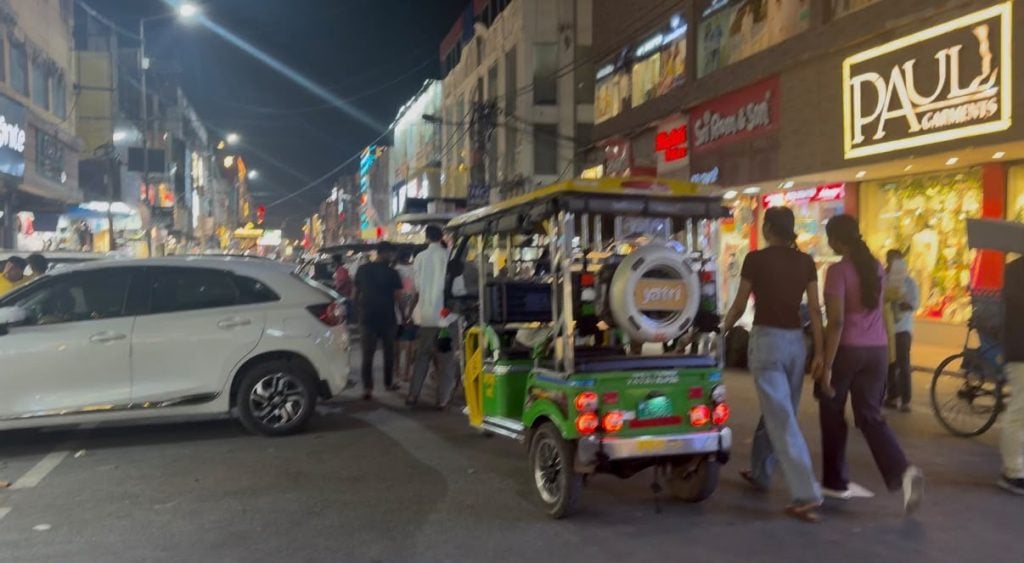
The shoppers the project was meant to attract have not returned in the same way. Several large showrooms now sit empty, and shopkeepers report that the market begins winding down by 8 pm, earlier than before. At the main roundabout, a pole still sports a sign pointing toward Ajmal Khan Road as a pedestrian zone—a visible marker of a vision that never quite materialised.
In 2019, the stretch was pedestrianised under the erstwhile North Delhi Municipal Corporation. Traders were assured that the closure would be accompanied by all the infrastructure needed to sustain a car-free market.
Pedestrianisation can only be done once you have proper infrastructure, which we lack, and still the idea was thrust upon us. We have lost business here because of it — our property prices have gone down, the rentals have gone down, the brands are not coming in
– Sanjeev Kapoor, Karol Bagh Traders’ Association secretary
Sanjeev Kapoor, secretary of the Karol Bagh Traders’ Association, recounted the list of promises in detail.
“We were told that the market will first get all the facilities that a pedestrian needs — adequate parking space, golf carts to go to-and-fro from the parking space to the market,” he said. Traders were also told the pavements would feature shaded canopies—similar to airport terminal walkways—complete with cooling dispensers around the market.
“None of that was delivered,” Kapoor said.
But worse was the fact that pedestrianisation had the opposite of its intended effect: it drove customers away. After retailers complained of falling sales, vehicles were allowed back on the stretch between July 2020 and April 2021. While an attempt was made to revive the pedestrian-only restrictions, the traders’ complaints returned too. In May 2023, the pedestrianised stretch was finally dismantled.
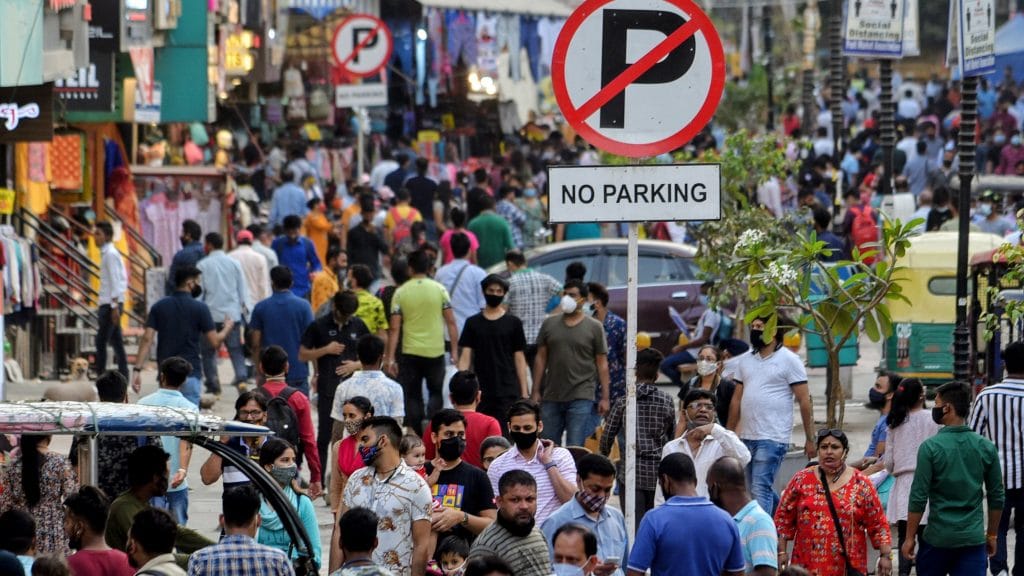
For Karol Bagh’s traders, the failed experiment is not a verdict on pedestrianisation as a concept so much as an indictment of flawed execution. Barring cars without first offering alternative access gave customers less incentive to visit.
“You cannot have a customer walking for so long,” Kapoor said. “People mostly come to Karol Bagh for wedding shopping. And someone who is coming for wedding shopping would not come in the metro, he will not come in a bus, he would rather come in a car because there is so much to carry.”
His conclusion is that the infrastructure has to precede the restriction.
“Pedestrianisation can only be done once you have proper infrastructure, which we lack, and still the idea was thrust upon us. We have lost business here because of it — our property prices have gone down, the rentals have gone down, the brands are not coming in,” Kapoor added.
Some replies to Dwivedi’s X post sounded a similar note of caution about rushed execution. Urban planner Piyush Girgaonkar, who has previously worked with the Union government, commented that the proposal was a “strong idea”, but recommended a phased, time-bound pilot that takes parking demand and Metro ridership into account. Such an approach, he wrote, would allow the administration to “adjust the scheme using evidence rather than assumptions”.
Can pedestrianisation work without policing?
The only recent attempt at pedestrianisation in Delhi that has not completely fallen apart is Chandni Chowk.
Sanjay Bhargava, president of the Chandni Chowk Sarv Vyapar Mandal, lobbied for the project for 25 years. The results initially exceeded traders’ expectations, but things began to unravel once implementation slipped.
“This project was initiated by us almost about 25 years back, and it was with the help of the Delhi High Court that we got this project cleared,” he said.
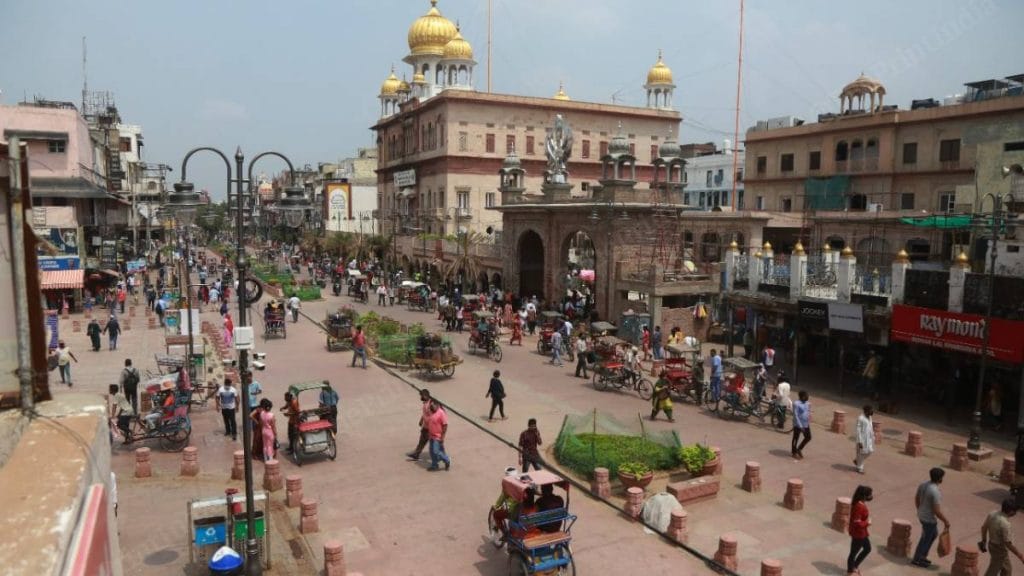
After the court cleared the project in 2018, it was carried out by the Shahjahanabad Redevelopment Corporation (SRDC, now renamed Indraprastha Virasat Punarvikas Nigam), in coordination with multiple government agencies, under the supervision of the Delhi High Court. Electric cables were taken underground and dedicated lanes were laid for pedestrians. Non-motorised transport, toilets, ATMs and benches were added. The stretch was declared a no-traffic zone for motorised vehicles between 9 am and 9 pm.
The revamped stretch was finally inaugurated in 2021. Along the way, the court periodically called agencies back to account for delays and continued monitoring the project until shortly after its inauguration.
“Till the time the court was monitoring it, it went very well. The moment the court disposed of these writ petitions, the total chaos happened,” Bhargava said.
This “chaos” has taken different forms. One is that the e-rickshaw and cycle-rickshaw fleet exploded beyond the caps that had been set. The scheme had allowed only 400 registered rickshaws to ply here—each painted red, issued official number plates, and permitted to operate during no-traffic hours.
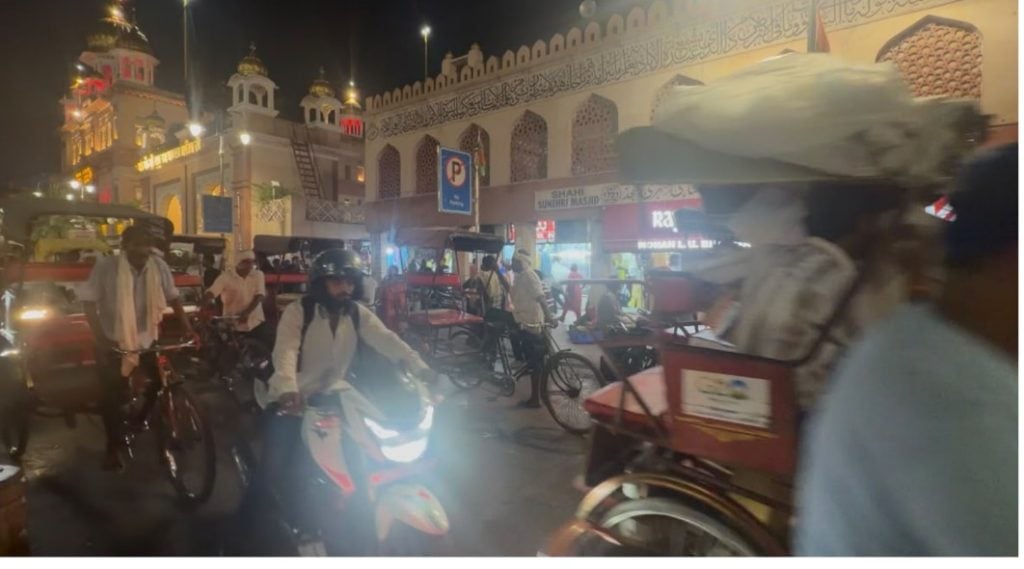
Today, Bhargava puts the number operating there at somewhere between 3,000 and 4,000.
Ram Ashrey, who holds one of the original licences and pays Rs 250 a day for it, says this proliferation has hit his earnings too.
“We got a licence from the authorities to function in the area, for which we have to pay Rs 250 daily,” he said. “Now other rickshaws have taken over, and our earnings are deeply affected due to this. They create chaos in this area, which is also an issue for the pedestrians. The traffic police and other authorities do not keep a check on this.” Roadside vendors too have taken over the pedestrianised stretches, which affects walkability.
For Bhargava, the lesson of Chandni Chowk is that for pedestrianisation to work in Delhi, constant vigilance has to be maintained.
“There is no official who wants to take up this job,” he said of the period after the court stepped back. “Even though there are so many directions, several court orders and SOPs for all stakeholders, nobody bothers. Until and unless you have a court direction, a court hearing, they will not do it. An abundance of court supervision is required for such projects.”
Also Read: DU’s North Campus is full of poorly lit, unsafe stretches. Students demand sturdy solutions
A tangle of agencies
The biggest enemy of pedestrianisation is the lack of coordination between agencies, according to AK Jain, a former DDA planner who has watched these attempts from inside the planning apparatus. Vendors, he says, get an unnecessarily bad rap.
“Vending zones are also part of city life and commercial activities in a city,” he said. “And without vending, the city will be dead. And it will be unaffordable also—because in vending zones, everyone gets affordable services or goods. If everything is sold through a shop, it will be much more expensive. So vending zones are a must.”
Other than accommodating vendors, planned rollout is essential for pedestrianisation to take off. Jain cited the case of Strøget, Copenhagen’s main shopping street. Back in 1962, shopkeepers fiercely opposed plans to pedestrianise it, fearing that keeping cars out would drive customers away. Instead, pedestrian traffic jumped 35 per cent in the first year, and the experiment was made permanent. What reportedly made it a success was that the city had not simply banned cars but redesigned the street for pedestrians and expanded the car-free network gradually.
Jain’s diagnosis of why pedestrianisation initiatives keep stalling has less to do with either cars or vendors than with the number of agencies that need to move in step to enforce restrictions. In Chandni Chowk, for instance, the Shahjahanabad Redevelopment Corporation was made the nodal agency, working with bodies such as the PWD, DDA and MCD. The project also required coordination with the Delhi Jal Board, Indraprastha Gas Limited, Delhi Police, Delhi Traffic Police and other agencies.
“They have to coordinate with the residents, with the traffic police, and sometimes even with the Delhi Metro, so that there is a comprehensive plan and last-mile connectivity available for everyone. So it’s all a little complicated. They don’t want to take on this trouble,” he said.
(Edited by Asavari Singh)