




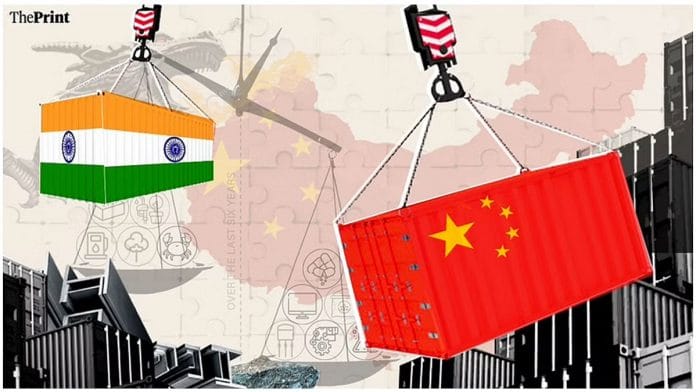

Terms and phrases such as “China Plus One”, “decoupling”, “de-risking”, and “alternative supply chains”, which were once ubiquitous, are now heard less often. Chinese commentators are arguing that the strategy has not worked and may in fact be failing. Last month, Western media outlets reported that companies that had moved their factories to Vietnam and India to avoid United States’ tariffs are quietly moving their orders back to China. One Chinese commentator described this as shattering a long-held illusion.
Another commentator argued that the evidence is already visible on the ground. A Dandong metal-casting factory lost an American order to India, but after the Indian supplier recorded a defect rate of more than 50 per cent and delays of three months, the order returned to China. A Hangzhou outdoor-furniture maker moved 30 per cent of its production to Vietnam in 2024, only to shut the factory this year and ship its production lines back to China.
Chinese industrial ecosystem
Moving a factory overseas is easier than recreating the industrial ecosystem around it. Final assembly can shift to India or Vietnam, but the suppliers, skilled workers, equipment makers, logistics networks, and technical expertise that support production take much longer to build, a commentary read.
A recurring argument in Chinese discussions of China Plus One is that China’s manufacturing strength lies in the completeness of its industrial chain. It is the only country with all 41 major industrial categories, allowing manufacturers to source almost everything domestically, from basic components to sophisticated machinery. The “one-hour industrial circle” of the Pearl River Delta exemplifies this. As one Guangdong industrial-robot maker put it: “If I’m missing a core component, I make one call and a supplier can deliver it within an hour, often with an engineer to solve the problem on the spot.”
Dense transport networks, digital supply chains, and a large pool of engineers and skilled workers underpin this ecosystem. Jin Canrong, professor at the School of International Studies, Renmin University of China, claims that in PPP terms, China’s manufacturing sector already accounts for 50 per cent of the world’s total.
China Plus One is also changing the way China participates in global production. Lu Jiangyong, professor of Organisation and Strategic Management at Guanghua School of Management, Peking University, describes it as a structural adjustment and a double-edged sword. China may lose some foreign investment and manufacturing links, but its industrial base allows it to remain deeply integrated into global production. Many multinationals are moving final assembly overseas while retaining R&D, key components, and sales in China, while Chinese companies are adding production capacity abroad. In Lu’s view, China is now shifting from the ‘world factory’ towards a ‘world supply centre’.
India at the centre
Much of the Chinese discussion of China Plus One centres on India, which is seen as one of the main beneficiaries of efforts to shift production and investments away from China. A vlog lamented that India had tried to copy China’s manufacturing playbook but fallen short, and asked whether China Plus One was now backfiring. Another asked whether the strategy was bankrupt and argued that India simply could not follow this path.
According to an analysis published on Sohu, India saw the US-China trade war as an opportunity to challenge China’s manufacturing dominance, with its Make in India push aligning with China Plus One. It made some progress, particularly in toys, but the gap remains wide: India’s toy exports to the US were just $100 million last year, compared with $11 billion from China and $3 billion from Vietnam. Indian manufacturers also remain dependent on China for key components, technology, and other inputs. Higher US tariffs have further exposed these vulnerabilities, with manufacturers losing orders and facing unsold goods and rising costs.
Chinese commentary acknowledges India’s advantages, particularly its enormous labour force, but questions whether these are enough to overcome the structural weaknesses of its economy. Rao Jinshan and Mao Yaxin, members of the South Asia Research Group and doctoral candidates at Xiamen University, argue that India’s material base has not kept pace. They point to the failure of the planned system to deliver comprehensive industrialisation, leaving inefficient state-owned enterprises alongside powerful and unwieldy conglomerates.
India’s dependence on China is another recurring theme. One commentator noted that for every one rupee of goods India sells to China, it buys seven rupees’ worth from China. On the surface, Indian exports to China are increasing, but the flow of money remains heavily weighted in the other direction.
Also read: Chinese commentary on Xi-Trump summit is a cross between flowers and daggers
A different China Plus One
There is, however, another side to the China Plus One story: Chinese companies going abroad. Chinese discussions distinguish this from foreign companies seeking to reduce their dependence on China. For Chinese companies, overseas expansion means adding capacity while keeping China as the industrial core. They retain R&D, core technologies, key components, and much of their higher-value manufacturing at home, while adding factories and operations in Southeast Asia, Mexico, the Middle East, and elsewhere. Overseas facilities handle assembly, processing, distribution, and local sales, helping companies diversify risks, avoid trade barriers, and enter new markets without dismantling their China-based supply chains.
The distinction is central to the Chinese view of China Plus One. Foreign companies may struggle to reproduce China’s industrial ecosystem elsewhere, while Chinese companies can expand abroad without giving up the networks, technology, and capabilities they have built at home. This distinction also shapes Chinese perception of India’s role in the China Plus One strategy. There is a widespread belief on Chinese online platforms that India may make some progress by attracting production and investment away from China, but that catching up with China’s manufacturing base remains a distant prospect.
Sana Hashmi, PhD, is a fellow at the Taiwan-Asia Exchange Foundation and George HW Bush Foundation for US-China Relations. She tweets @sanahashmi1. Views are personal.
(Edited by Aamaan Alam Khan)