





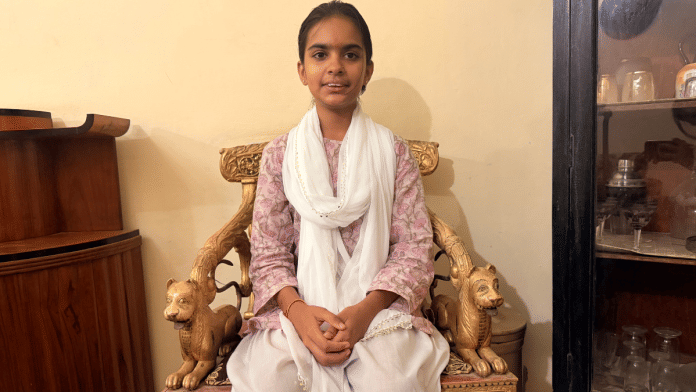


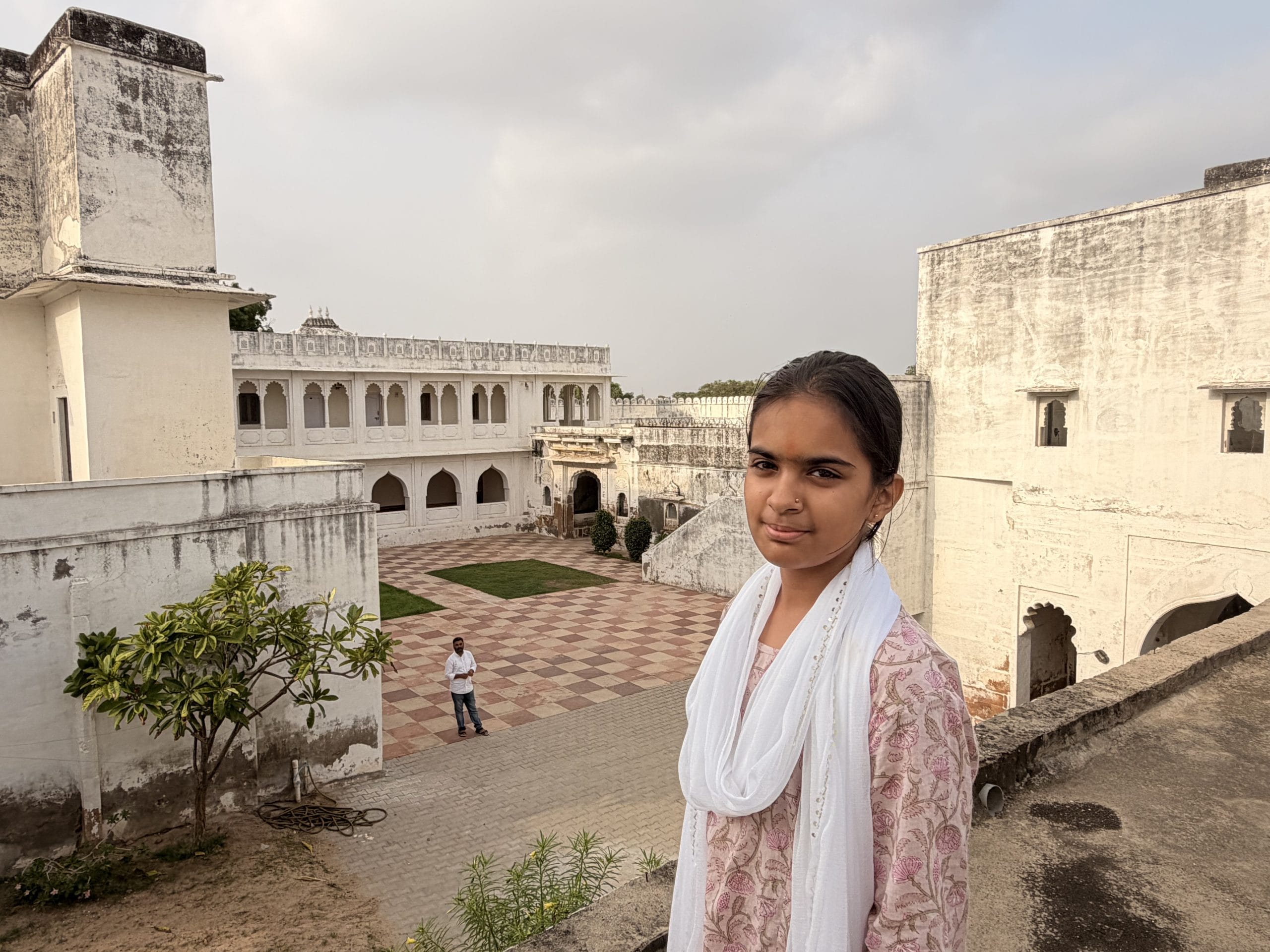
Kherwa, Rajasthan: The pond is gone now. Where water once sat at the foot of the old fort, there is only cracked earth and the memory of it. Thirteen-year-old Tejaswi Kumari Jodha, who less than three weeks ago became heir to the erstwhile princely estate of Rajasthan’s Kherwagarh in a decision that rewrote centuries of Rajput succession, points towards the empty patch of land as though she is still deciding whether to believe it herself.
“That land used to once be a pond,” she said in an exclusive, first interview to ThePrint, wearing a pistachio-pink floral kurta. “But it does not have any water anymore.”
It is a small, offhand observation, the kind children make while waiting for adults to finish talking. But in Kherwa, Pali, this week, almost everything has taken on the weight of before-and-after.
Twenty days ago, in this Marwar village 100km from Jodhpur, close to a thousand people gathered to watch Tejaswi Kumari Jodha — known here simply as ‘bai-sa’, an honorific for a daughter of a royal house — as she became the heir to Kherwagarh, a title that, for generations, would almost certainly have gone to a man. And it hasn’t, in any Rajput royal family in Rajasthan, until now.
Before village elders, Brahmin leaders, members of the extended family and representatives of the royal family of Jodhpur, Tejaswi had a turban tied to her head and a tilak drawn on her forehead in blood drawn from the royal priest’s thumb, sliced open with the flat ceremonial edge of a sword. It was the ‘pagh ka dastoor’ or the turban ceremony, a ritual by which the erstwhile princely estate of Kherwagarh names its heir. It had not been performed in 65 years. It had never, in Rajasthan’s living memory, been performed for a girl.
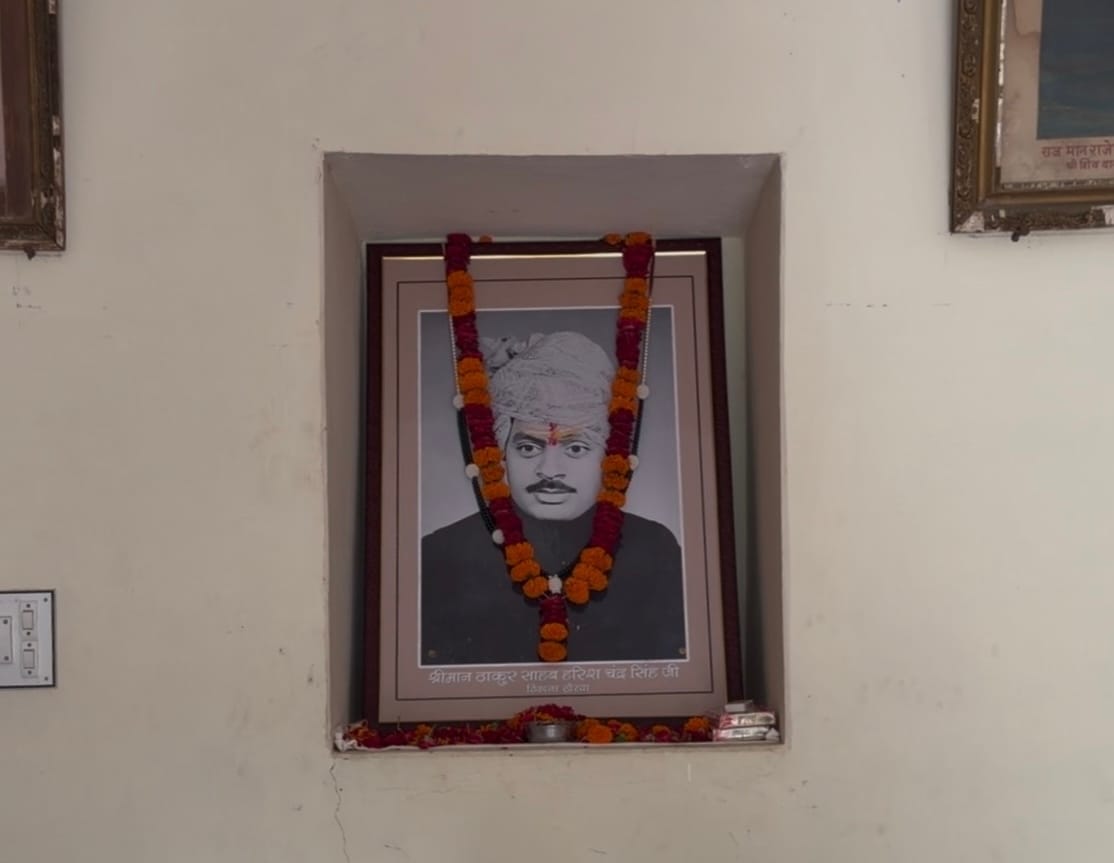
Her father, Thakur Harishchandra Singh Jodha, had died a month earlier in Jaipur after a long illness, at 78. He had no son. For generations, succession in Rajput royal families followed an iron-clad principle: if a ruler died without a son, the title passed to the nearest male relative in the bloodline, however distant. Daughters inherited affection, responsibility and, at times, property. The crown, however, almost invariably followed the male line.
Late Thakur Harishchandra’s brother-in-law, 77-year-old Bharat Singh Chauhan, dressed in a crisp white kurta-pyjama, called the succession “historic.”
“Before this, if the one sitting on the throne couldn’t give birth to a male child, then the closest relative in the bloodline with a male child used to inherit the throne, however distant, custom dictated that he would be the one made heir,” Bharat Singh explained. “Now that the bai-sa stands alone, everyone decided: why not declare her the successor herself?”
Historians describe the old succession system as practical rather than prejudiced — built for an age when the heir was expected to personally lead troops into battle, which is why families would reach for a distant male cousin over a closer female relative.
But women weren’t kept off the battlefield altogether. Historian Dr Rima Hooja cites exceptions like Umade Bhatiyani, a 16th century queen who led troops on the battlefield — but Tejaswi’s case is different, she says, because it’s the formal rite of inheritance itself.
“It is good that this innovation, if you can call it that, has come — because they are recognising the equality between boys and girls, men and women,” Hooja said. “The actual inheritance tika going to the girl is a first.”
A schoolgirl called ‘bai-sa’
Tejaswi is still trying to understand what any of this means.
She is in Class 7. She commutes some 30 km each day to a reputed English medium school in nearby Pali. She likes painting and animals and says she hasn’t really thought about what she wants to become when she grows up. Now, she smiles, it seems looking after the family’s estate may become her biggest responsibility.
When she speaks about her father, however, she is still every bit the thirteen-year-old daughter who lost him only weeks ago.
She remembers being told only that her daata was unwell. By the time she returned to Kherwa from Narayangarh, the family home had filled with mourners.
“I had no clue. I got to know about his death when I reached Kherwa,” she said. “All this while I thought that he was on his way to get treated in Ahmedabad.”
Beside her, sits her bhabhi-sa Yashshree — her cousin’s wife — in a floral yellow cotton poshak, tears sliding down her face as she listens to the child. Tejaswi stops mid-sentence to check on her.
“What happens here is that the moment something happens, people start crying,” she said, matter-of-factly, before turning back to her bhabhi-sa with a weak smile.
She explains, unprompted, the logic she’d built for herself in the car: her father’s health had dipped before — once, her mother’s blood sugar had dropped so low she lost consciousness, and the household had reacted then, too, with the same kind of collective panic and tears. So when she reached home to a crying house, she assumed it was something similar, a bad turn during the journey to Ahmedabad rather than the end of it.
It was her bhabhi-sa Yashshree who finally told her the truth.
“Toh maine daata ko laad bhi kiya,” she said quietly. She had, in the moment before understanding, still stroked her father’s forehead affectionately, gesturing with her hand: “Maine daata ke sar pe bhi aise aise kiya (I did this to his forehead).”
Yashshree begins crying again at this, and Tejaswi turns to her, half-laughing, half-pleading: “Arre yaar! Please na, bhabhi-sa, Please, don’t.”
Of the turban ceremony itself, she remembers being told only a day in advance.
“I was told there would be lots of people coming, and that they would tie a turban on my head,” she said, crediting two elder cousins for organising it all.
She calls the whole experience “extremely emotional.” Her mother is back at her family home, recuperating. The shock of it all has not settled in yet.
“There’s still a lot I have to learn,” Tejaswi said.
Also Read: This Rajasthan town is up in arms against Hindustan Zinc and tonnes of industrial waste
Traditions that bend
The ceremony may have been unprecedented. The logic behind it, the family insists, was simple: there was no reason to look beyond Tejaswi.
The family says the decision was discussed, deliberated, and eventually blessed by the pandits and Brahmin leadership, before seeking the approval of the former royal house of Jodhpur, whose symbolic authority still carries weight among many of Marwar’s erstwhile estates.
“Had it been a problem then this couldn’t have been possible,” Bharat Singh Chauhan said. “The decision has been taken after consulting everyone and their willingness to make a change, even the Jodhpur Maharaja.”
Reactions in the village are not uniform, and the family does not pretend they are.
“It’s a matter of pride that a girl has become a ruler,” several villagers told ThePrint.
But others, particularly among the village’s older residents, argued that the succession should have gone instead to a male cousin, in keeping with the custom the family ultimately set aside.
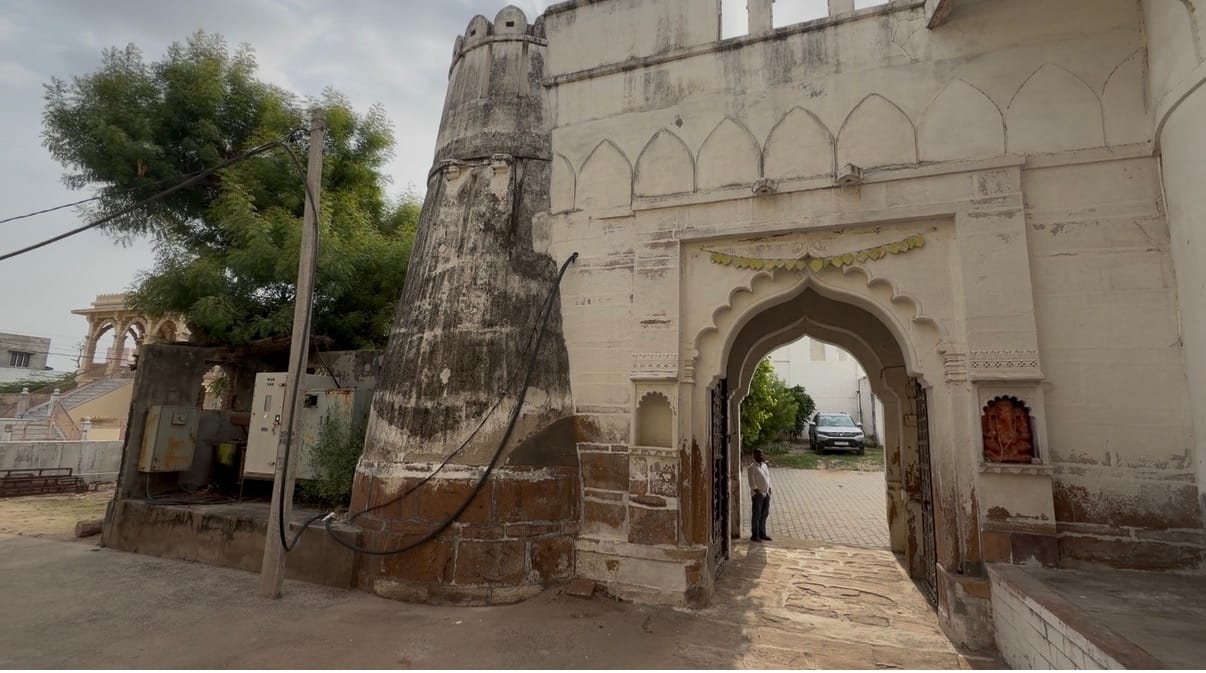
The family’s account is borne out, in part, by the scale of the ceremony itself. Regional Hindi newspapers described it as a historic departure from Rajput succession practices, while photographs and videos from the pagh ka dastoor travelled widely on social media. Representatives of several former estates—including Bhadrajun, Nimbalara, Jojawar and Dhamli—travelled to Kherwa to attend the ceremony in full Rajputana tradition, joining members of the erstwhile Jodhpur royal family, who formally tied the ceremonial turban on Tejaswi’s head.
Before the tilak, the palace was purified with water brought from the Ganga in Haridwar, while Vedic scholars performed traditional chants and anointment rituals. The family’s royal priest, Shankar Singh, performed the blood tilak, a rite the family says has long been associated with the succession traditions of the former Jodhpur royal house.
Tejaswi’s cousin Jaivardhan Singh Bhati from the Osian Royal family — her mother’s maternal side — sat in the same crisp white kurta worn by every man of the household, a deerstalker resting on his head and a gold chain around his neck. He traces the lineage that made the moment so freighted with history. Kherwagarh, he explains, was one of nine sirayats, or fiefdoms within Marwar, and it sat at the top of that list.
“Our first king was Motaraja Udai Singhji, after whom we had settled here, and since then it had emerged to be the number one sirayat in the Jodhpur state. We are Jodha Rajputs by lineage,” the 38-year-old said.
Historically, Kherwa functioned as a judicial bench of the Jodhpur court at Mehrangarh — it had its own jail, its own magistrates, and a chamber called Navchowki where judges once sat. That chamber still stands. But it has been folded into the portion of the palace that was converted into a hotel, and it has never been opened to guests. It remains, deliberately, locked.
Weight of a father’s legacy
None of it would have happened had Harishchandra Singh Jodha not been, by every account offered in Kherwa, an unusually beloved man.
Despite his lineage, he served two terms as village sarpanch and later as a member of the panchayat samiti, while continuing to mediate disputes, help villagers access government services and remain available to anyone who sought him out.
“Late Thakur Sahab Harishchand ji was a big personality… For the villagers he was considered to be a leader and a god. He used to help everyone, never treated anyone badly, never saw anyone as below him,” Tejaswi’s cousin from Osian, Jaivardhan said.
He describes a man who, even fifty years ago, when government machinery struggled to reach rural Marwar, was already there for the village and its people.
“Even if anyone would come looking for him in the middle of the night, he was ready to help,” he said. “Which is why people considered him to be their representative and had great admiration and love for him till date.”
Fifteen days before his death, despite failing health, he still held a meeting with villagers.
“This is the kind of love he had for the villagers,” the cousin said.
When he died, between 2,000 and 4,000 people attended his funeral, according to the family. Markets across Kherwa shut for the day, with neighbouring villages following suit out of respect for a man who was, by title, a minor royal, and by function, something closer to a folk elder.
In the family’s telling, Tejaswi inherited the gaddi as well as the goodwill her father had spent decades earning.
Also Read: Return of the matchmaker. Why young Indians are reviving arranged marriage
Learning to be ‘bai-sa’
Away from the ceremony, Tejaswi’s life remains ordinary.
“She goes to school in the morning. After school, she comes back, eats something, relaxes, then goes to her classes and studies. In the evenings, her friends come over to play,” Yashshree said. “Sometimes she cooks too. If she likes something, she’ll go into the kitchen with the cook and make it herself.”
Yet even before the pagh ka dastoor, Tejaswi’s ordinary days carried responsibilities few thirteen-year-olds do.
From a young age, she accompanied her father to village meetings, religious ceremonies and public functions.
“She had been shadowing her father since she was very young,” Yashshree said. “She attended all the functions with him. And if he wasn’t able to go, or if there was a symbolic reason for her to attend, she would represent him.”
Every Independence Day, she stood in for him at the flag-hoisting ceremony at the local school founded by her great-grandfather whenever illness or other commitments kept him away.
“Everywhere, she went with her father,” Yashshree said. “She was always present, watching everything that happened.”
Tejaswi has already been introduced to public life. Her family’s work is now helping her navigate it without her father.
“It will be difficult to say who she will go with now,” Yashshree said. “But yes, we’ll make sure she attends all the events. Somebody will always be there to guide her.”
For the moment, the family says, there is no grand plan for the future.
“Right now, she has to focus on her studies. She has to make herself strong,” Yashshree said. “It is in our genes to guide people, but that has to be nurtured. She is still very young. Once she is capable enough, she will take her father’s legacy forward and work for the people, the way it has always been done here.”
Then she pauses before offering a glimpse of the child beneath the title.
“She’s very kind-hearted. If she sees someone suffering, she notices it. Just the other day, she was worried about children playing in the afternoon sun.”
Old customs, new lives
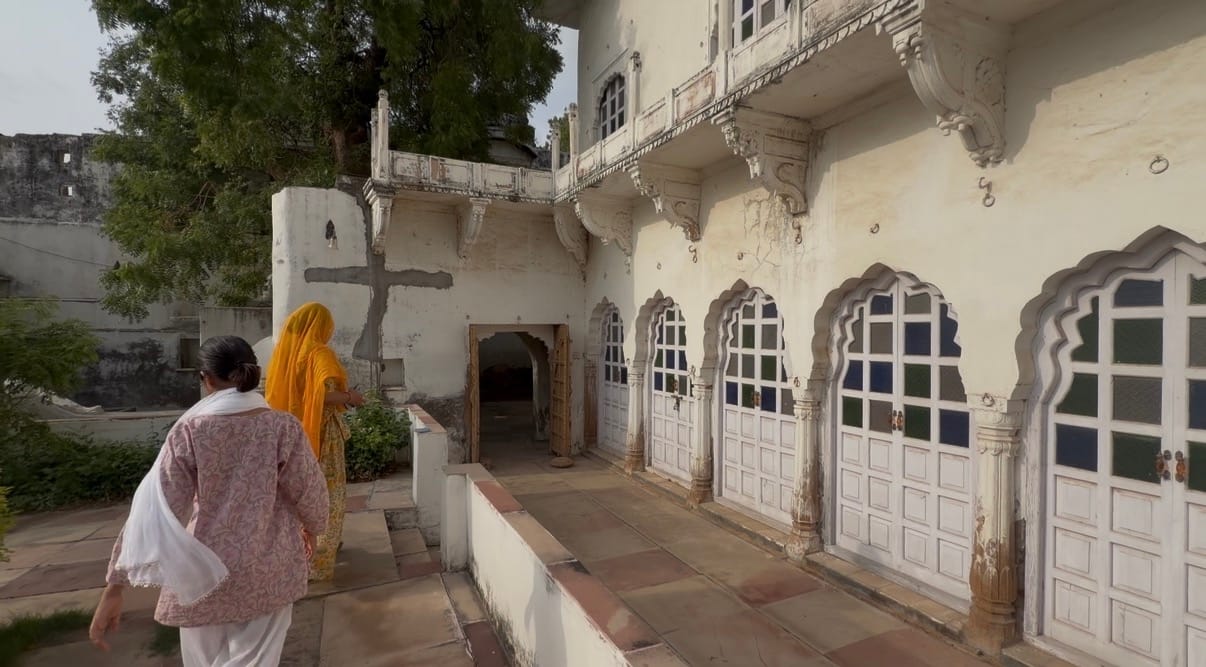
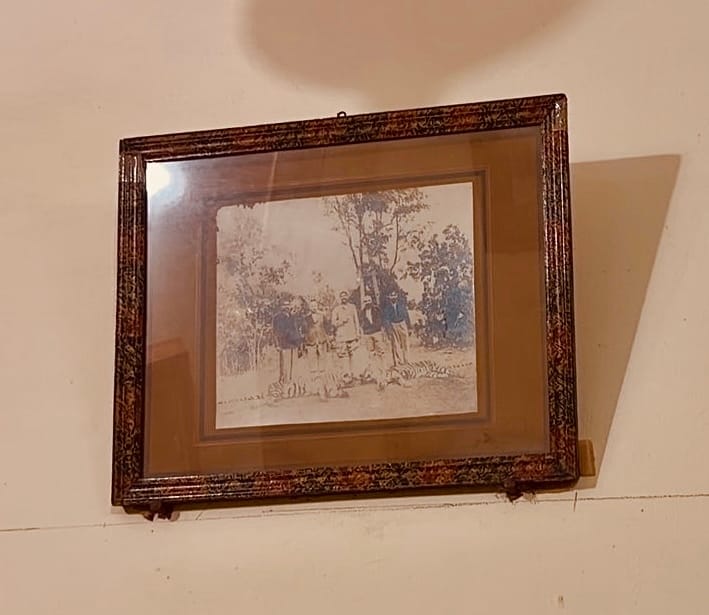
The portion of the palace where the family still lives is filled with rooms and courtyards, resembling a maze more than a home. Black-and-white photographs line the walls: hunting parties standing over tigers, royal weddings, portraits of ancestors. Glass-fronted cupboards display old crockery and toys. Another is filled entirely with swords.
Those swords, Yashshree says, became unexpectedly controversial after photographs of the pagh ka dastoor spread online.
“Many people objected to why she was holding a sword in her hand,” Yashshree said. “They do not understand that the swords are worshipped in Rajput tradition — they hold the same piousness for us that the kirpan holds for the Sikh.”
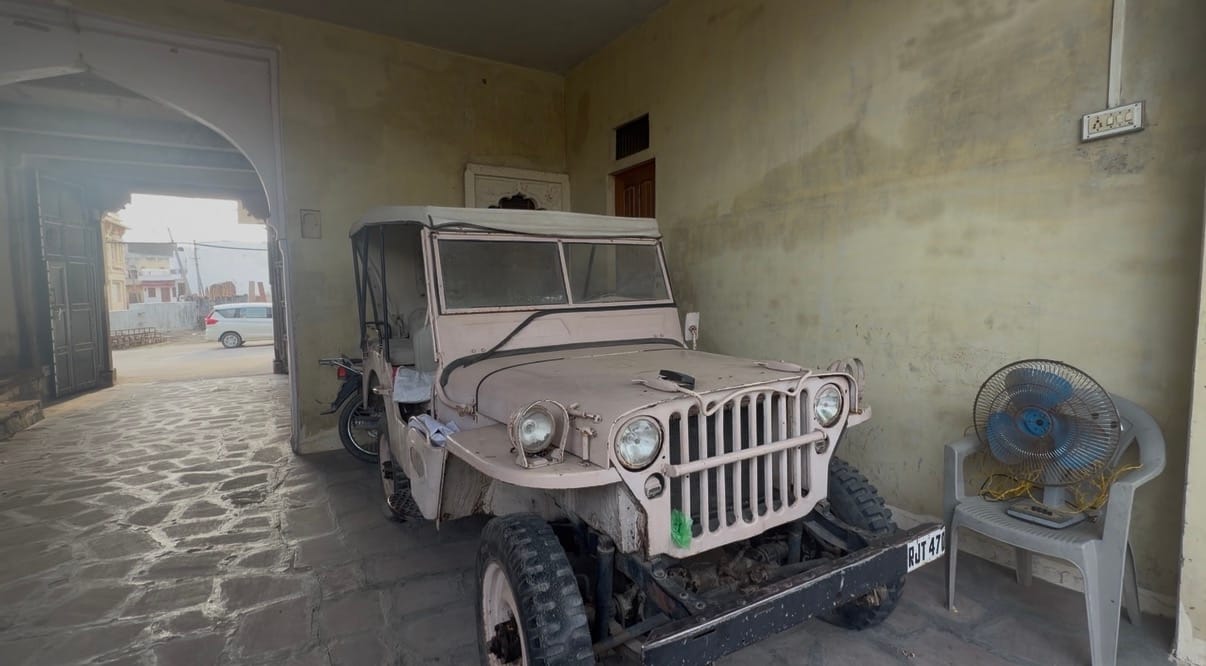
Traditionally, the tilak that marks a successor follows the sword; and in the rare instance a wedding must proceed without the groom present, the vows are still, on occasion, taken with a sword standing in his place. The family was open about nearly everything in the house — its vehicles, its architecture, its ceremonies — but the swords, she made clear, are treated as something closer to sacred, and personal, than the rest.
The building itself carries the story of a slow shift of traditions inside its walls.
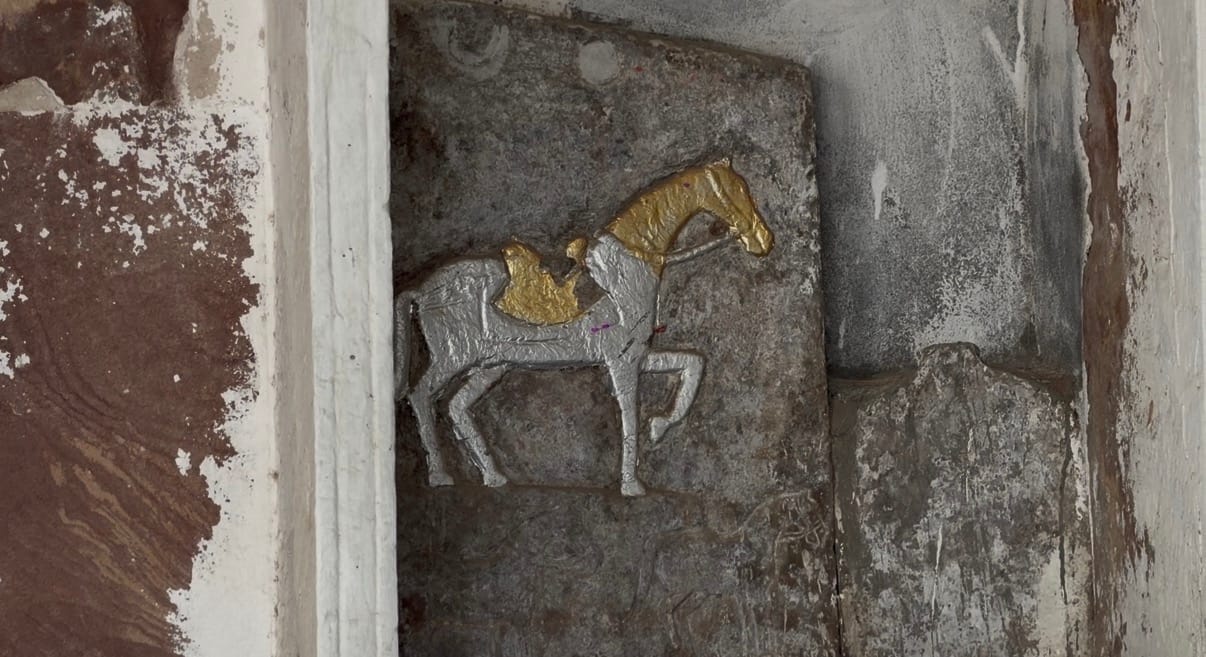
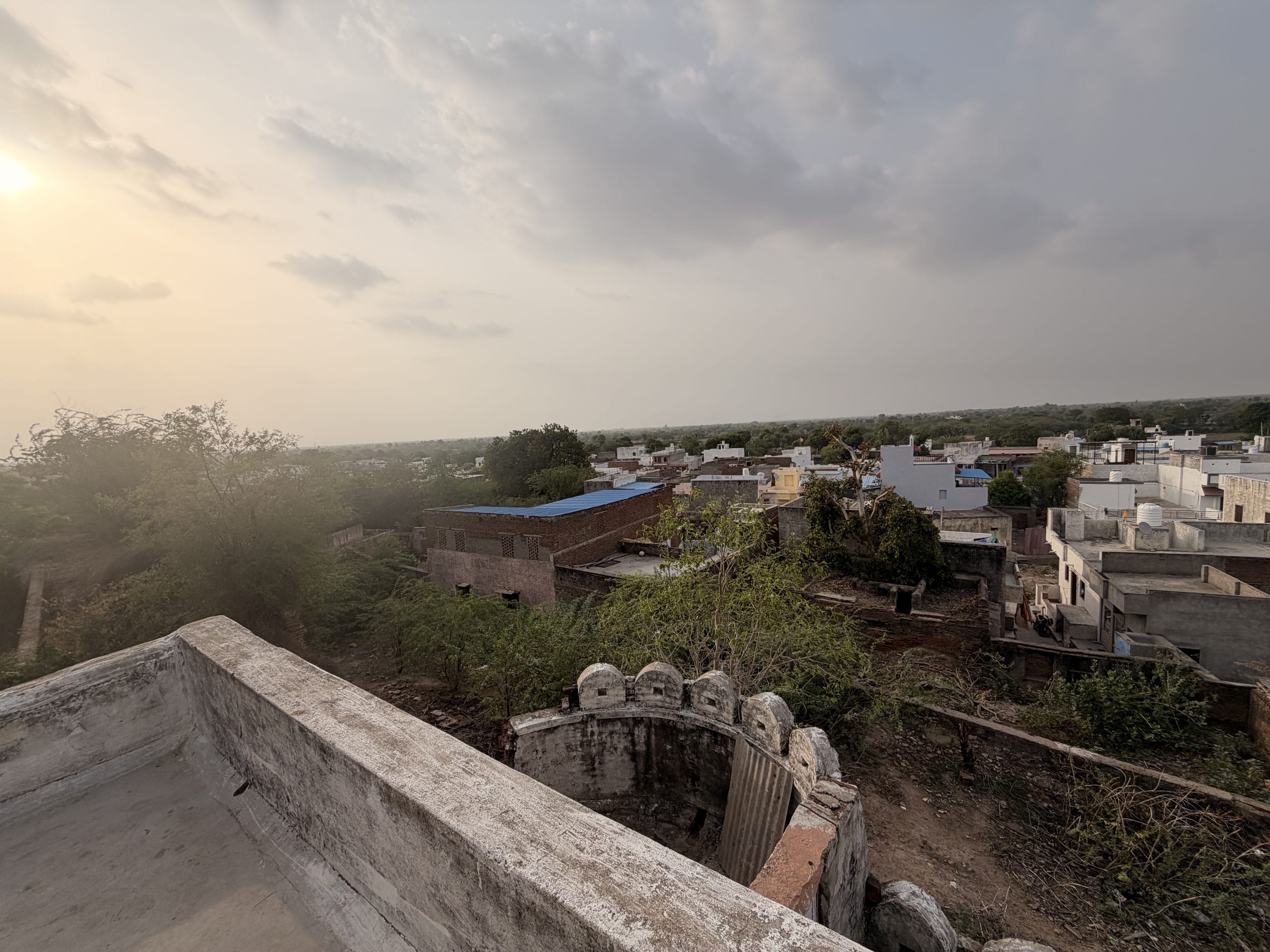
The palace was once built with two separate entrances: a mardana portion for the men of the family and a janana portion for the women, kept apart by design. Today, the family lives together in the former men’s quarters, while the women’s wing was converted into a 20-room heritage hotel more than a decade ago. The old stables remain, though the horses are gone. An empty swimming pool now occupies what was once their bathing area, still cluttered with the large cooking vessels that were used for feeding the wedding-sized funeral crowd. The hotel has remained shut since the Covid pandemic.
If Tejaswi’s succession broke with one tradition, other customs inside the palace have evolved too.
The older women of the household still observe ghoonghat, covering their faces in public as tradition dictates; the younger generation, including Tejaswi, does not. They meet visitors face-to-face and speak on camera without hesitation.
Even mourning has changed with the times.
Barely a month after Harishchandra Singh Jodha’s death, the family gathered for what they described as a 12-maasi—or, in some traditions, a 6-maasi—memorial prayer. Traditionally, such ceremonies, and the return to public life they signify, would come only after six or even twelve months of mourning, particularly for an unmarried daughter. This time, the timeline was compressed.
A turban on the head
Tejaswi is back to her routine now. On Monday, she will return to Class 7 in Pali, travelling 30km each way. Outside her home, near the pond, she turns and points towards the horizon, where the outline of a distant hill is barely visible.
“There’s a temple there,” she said. “You can’t really see it anymore because of the pollution and the cloud cover.”
Asked about her favourite part of the palace, she doesn’t mention the drawing room where visitors are received, or the hall where she was declared heir.
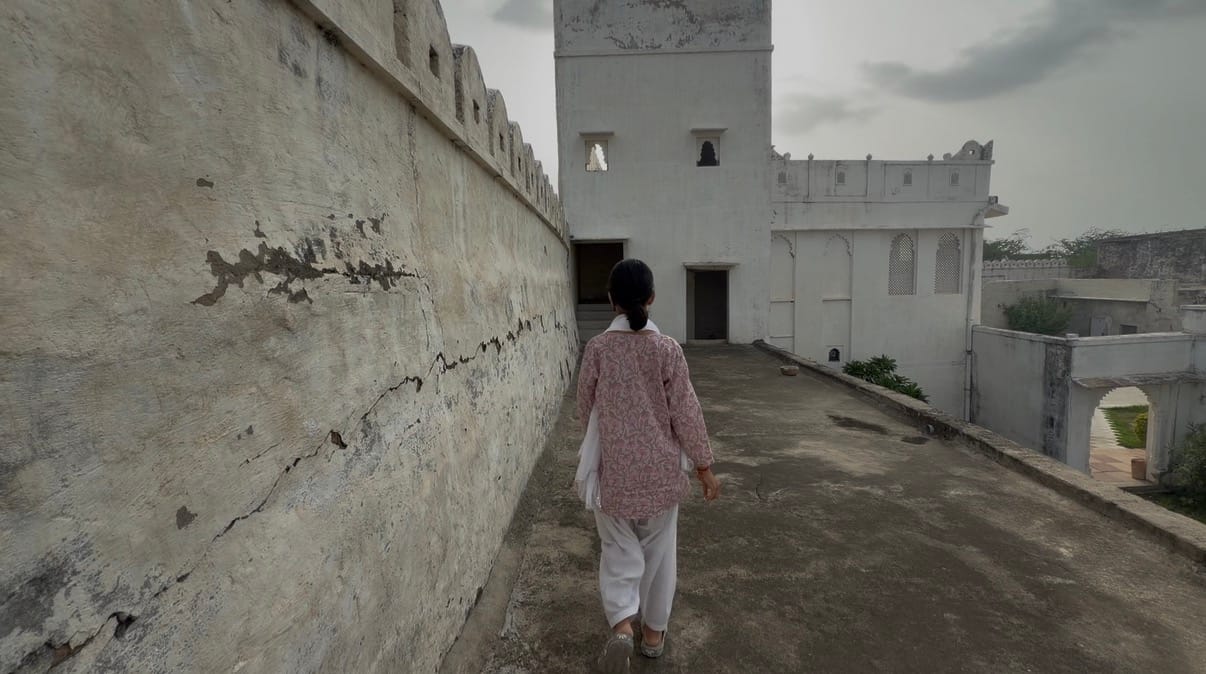
Instead, she points towards the oldest wing.
“The elders tell me not to go there because it’s so old,” she says, grinning. “But there’s a wall you can jump off onto the ground below, and there’s a neem tree there. When its fruit turns yellow, it’s very sweet.”
She is still too young for the responsibility of a kingdom. But for now, there is a turban in the palace that fits her head.
(Edited by Stella Dey)