



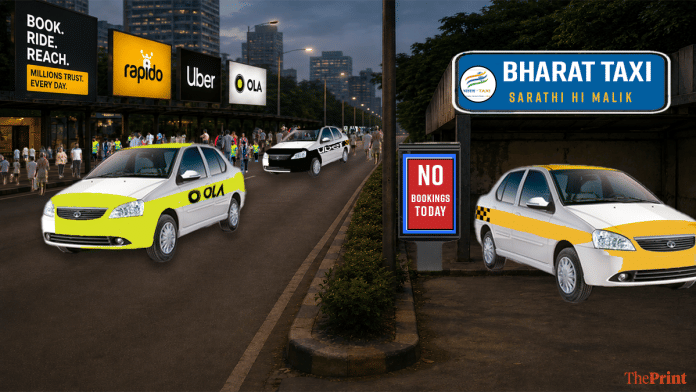
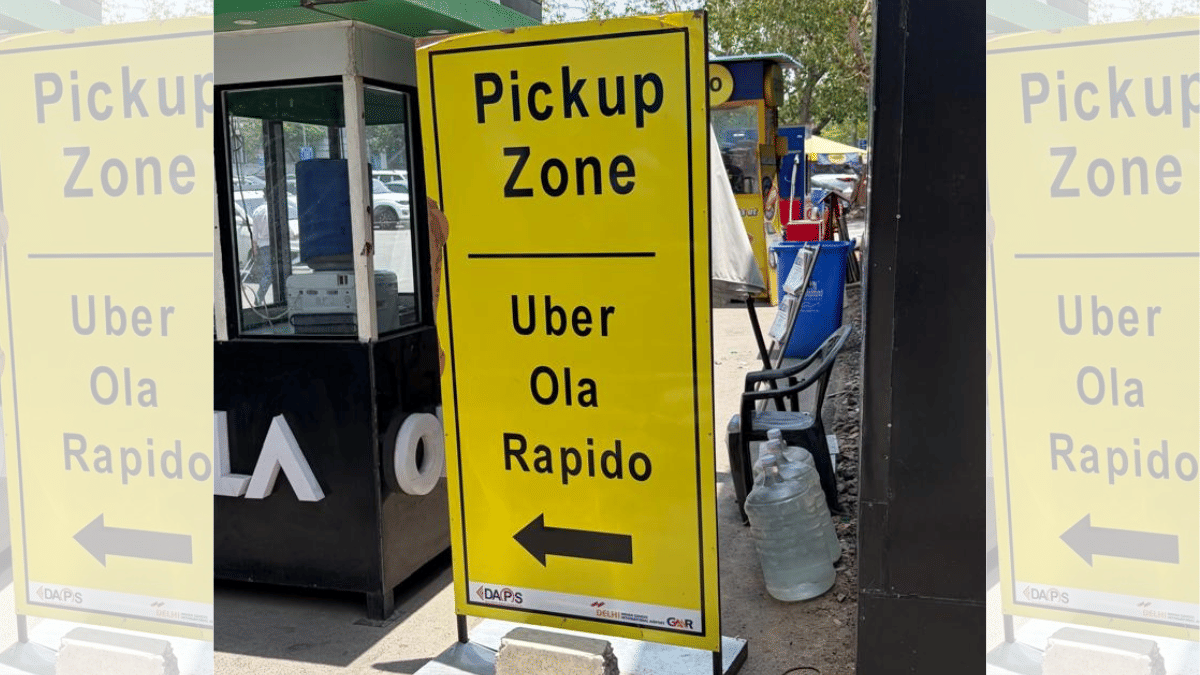
New Delhi: At the pick-up area outside Delhi airport’s Terminal 1, Rajneesh Kumar keeps multiple ride-hailing apps open on his phone, waiting for the next booking. Bharat Taxi, the first and only government-backed ride platform, is one of them.
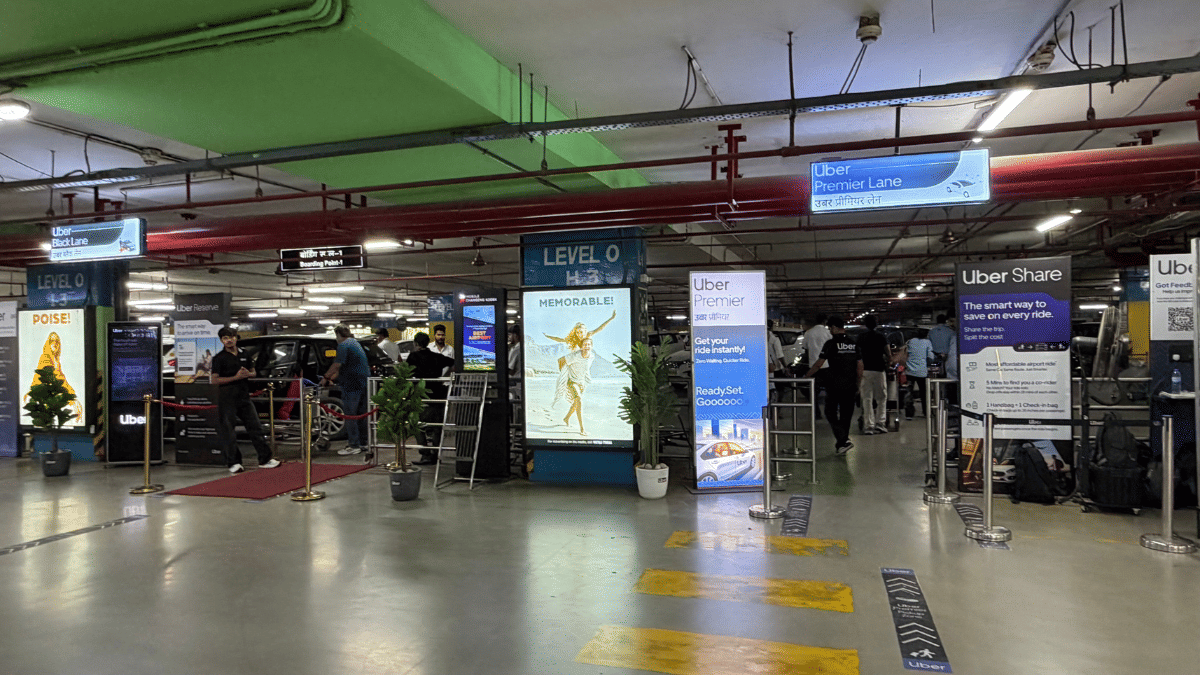
Most days, though, it is Uber, one of largest private ride hailing companies in India, where he finds his next customer. “I get around 15 ride requests from Uber in a day, but Bharat Taxi ride requests are just around 2-3 per day,” Kumar told ThePrint.
Like Kumar, many drivers switch between platforms to get the ride quickly. Although Kumar registered with Bharat Taxi soon after its launch in February, private cab aggregators like Uber, Ola and Rapido continue to account for most of his daily earnings.
Kumar’s experience underlines the challenge Bharat Taxi faces.
Registrations to rides journey
In the first five months of its existence,the platform has onboarded nearly seven lakh drivers, but turning those registrations into regular rides remains a big challenge.
Backed by the Ministry of Cooperation, Bharat Taxi was launched by Union Home and Cooperation Minister Amit Shah in February as a cooperative alternative to private ride-hailing companies.
The idea was to create a platform where drivers would not pay heavy commissions to cab aggregators, receive direct payments and eventually become owners by sharing the cooperative’s profits.
The services were initially launched in Delhi-NCR, but has since expanded to parts of Gujarat, Mumbai, Lucknow and Chandigarh. Currently, nearly 60 percent of its seven lakh registered drivers are from Delhi-NCR and Gujarat.
ThePrint spoke to nearly a dozen drivers and found that the debate in India’s ride-hailing market has already moved beyond commissions.
Drivers said they continue to prioritise private ride-hailing companies because these apps generate more bookings, offer better incentives and provide a more dependable source of daily income.
India’s ride-hailing market has also changed significantly over the past few years. Most private companies have shifted away from commission-based models to subscription-based plans letting drivers use the platform.
As a result, Bharat Taxi’s biggest challenge today is not persuading drivers to register on the platform but ensuring they use the platform, and passengers book enough rides for drivers to rely on it.
The volume vs fare debate
Most drivers acknowledged that Bharat Taxi is still a new entrant and will need time to stabilise and build its customer base. However, they said what determines which platform they remain active on are the ride frequency and earnings.
“At the end of the day, we want to earn more, so we would choose the ride or route that gives us the most money,” Kapil Pardal, a 45-year-old driver at Terminal 3 of Delhi airport, told ThePrint.
Despite Bharat Taxi’s zero commission and low subscription fee model, drivers said the net earnings depend more on fares, incentives and ride demand rather than on lower platform charges.
Multiple drivers ThePrint spoke to said that even after accounting for the platform subscription fee, they typically earn between Rs 14 and Rs 18 per km through private aggregators, compared with around Rs 10 to Rs 12 per km on Bharat Taxi.
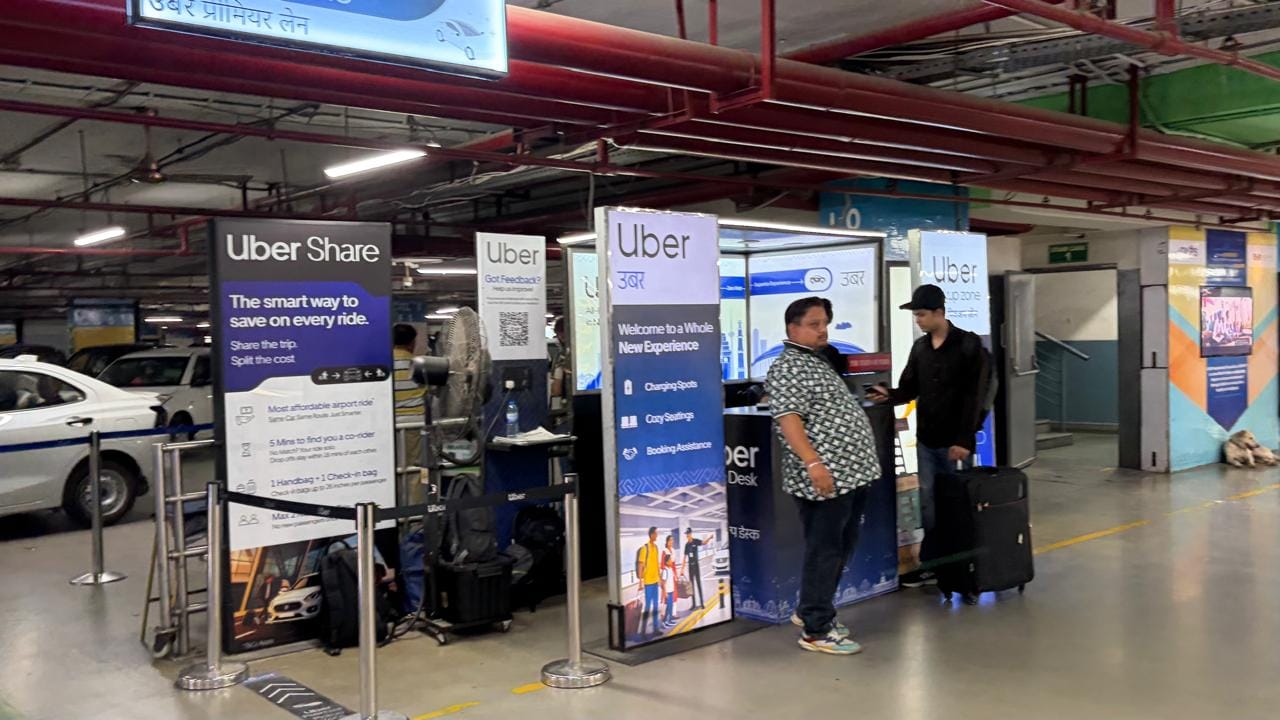
“Once Bharat Taxi starts offering better rates and incentives, we will shift from other platforms,” said Sudheer Sharma, a Delhi-based driver active on multiple platforms. “The only issue is lower volume and fare.”
Rahul Jambukiya, a Rajkot-based driver who registered with Bharat Taxi two weeks ago, said that although ride volumes remain low in the city, it is too early to judge cooperative taxi service as commercial operations began only last month in the state.
“Cab volumes are low at present, but once the cab network grows then bookings should improve in the next one to two years,” he said.
‘At the end of the day, we want to earn more. so, we choose the ride or route that gives us the most money’: says Kapil Pardal, a driver at Delhi airport.
Bharat Taxi officials maintained that the cab service is still in its early stages and
that comparisons with established players is not fair.
“We are relatively new to the market compared to many private companies, which have been around for years. Give us time and our volume will also increase,” a senior Bharat Taxi official told ThePrint on condition that he not be named.
However, the official disagreed with drivers’ assessment of earnings, and said that even on Bharat Taxi, drivers typically earn between Rs 14 and Rs 16 per kilometre.
“The base fare for a 4-km ride is nearly about Rs 100 for all firms, which comes out to be Rs 25 per km. So even for longer routes, a driver would end up earning anywhere between Rs 14 to Rs 16 per km,” the official said.
But officials acknowledged that balancing driver earnings with affordable fares remains one of Bharat Taxi’s biggest challenges.
‘We are relatively new to market compared to many private companies. Give us time and our volume will also increase,’ says senior Bharat Taxi official.
“It is a chicken and egg situation. If we charge higher fares then customers will not be happy, whereas drivers will be happy with higher fares,” the official said, adding Bharat Taxi fares have been fixed keeping in mind the interests of both commuters and drivers.
Subscription-based models
India’s ride-hailing market has evolved over the last few years, shaped by intense competition. For many years, commissions charged by private aggregators dominated the conversation among drivers. However, today most major players have shifted to SaaS (Software-as-a-Service) subscription model, that allow drivers to retain a larger share of the fare.
Under the SaaS subscription model, the drivers pay a flat daily or monthly fee to access the platform’s technology. Uber, for instance, charges Rs 139 plus 18 percent GST for a daily pass for four-wheelers, along with a nominal per-ride fee. It also offers multi-day earnings-based plans.
Rapido too follows a subscription-based model, allowing drivers to purchase plans linked to different earnings slabs.
Bharat Taxi, meanwhile, offers two options – a Rs 50 daily subscription for unlimited rides or a Rs 10 per ride fee for four-wheelers and Rs 5 for three wheelers.
‘It is chicken & egg situation. If we charge higher fares, then customers will not be happy, whereas drivers will be happy with higher fares,’ says Bharat Taxi official.
But drivers said lower platform charges alone are not enough. According to them, Bharat Taxi’s lower subscription cost cannot compensate for fewer ride requests and lower earnings from fares, making established platforms a more reliable and dependable source of daily income despite their relatively higher platform fees.
Responding to ThePrint queries, Rapido spokesperson called Bharat Taxi’s entry “a positive step forward for the range of mobility options available to the public”. The spokesperson added that Bharat Taxi’s adoption of a similar subscription-led model strengthens Rapido’s view that “subscription led models are highly relevant to the future of ride-hailing.”
ThePrint also reached out to Ola and Uber via e-mails and messages for comments but did not receive any response. The report will be updated as and when they respond.
Winning passengers remains a big task
While drivers measure Bharat Taxi’s utility for them by the number of rides they receive, passengers measure it differently: the ride fare. And their experiences on pricing have been mixed, with some finding the platform cheaper than rivals, while saying they could be higher too, depending on the time of booking.
Delhi-resident Prakal Gupta, who had booked a Bharat Taxi ride from Terminal 3 one June afternoon, said he found fares nearly 15 percent lower than Uber.
Similarly, Kanisha, a commuter from Amritsar who booked a Bharat Taxi at Terminal 3 of Delhi the same day as Gupta, also said Uber and Ola fares were around 10 to 15 percent higher than what Bharat Taxi offered.
But Mumbai-resident Sakshi Mehra, who works in a multinational company in Bandra, had a different experience. She told ThePrint over the phone that while Bharat Taxi fares are sometimes comparable with Uber’s, they can also be significantly higher during Mumbai’s monsoon, and peak hours.
“Most mornings, Bharat Taxi’s fare for a ride to my office in Goregaon is around 20 to 30 percent higher than Uber’s,” she said.
Bharat Taxi officials said the platform does not use surge pricing during peak hours, but fares may be higher in case of prolonged traffic congestion. Officials added that fares vary by city, booking time and destination, making it inaccurate to say the platform is always cheaper or costlier than rivals.
For many commuters, price is not the only consideration. Deepak Sharma, a businessman from Rewari (Haryana) said cab availability and waiting time are equally important.
“While I have heard about Bharat Taxi, I have not downloaded the app as I still don’t know how good their network and reliability is,” he said. “I mostly use Uber, as its services are available across India.”
Sharma said he would consider using Bharat Taxi if it offered attractive discounts and expanded its network.
‘While I’ve heard about Bharat Taxi, I’ve not downloaded the app as I still don’t know how good their network & reliability is,’ says a driver from Haryana’s Rewari.
No wallet, and lack of incentives
Other than attracting more passengers on to the platform, drivers said Bharat Taxi needs to strengthen its technology and driver support systems. One of the unanimous demands from the drivers was the introduction of a digital wallet, a feature already available on all private ride-hailing platforms.
“Bharat Taxi must open its own wallet if it wants to increase volume at the airport,” Pardal said. “A wallet enables automatic debit and credit of incentives, payments and parking charges.”
Unlike private platforms, drivers on Bharat Taxi currently pay expenses such as airport parking charges from their own pockets. They say a digital wallet would allow parking charges, tolls and incentives to be adjusted automatically through the app, reducing the need for cash payments.
Bharat Taxi officials said this feature is already under development. “It has been just a few months since our official launch. We are already working to bring a digital wallet to Bharat Taxi very soon,” the official said.
Drivers also said Bharat Taxi needs to offer more competitive incentives as rival platforms continue to use them to attract and retain drivers.
According to Sudheer Sharma, Uber is offering incentives ranging from Rs 250 (for completing eight rides during weekends) to Rs 500 (for completing 12 rides). He said Rapido and Ola also reward drivers for completing a minimum number of trips during the day.
Mukesh Kumar, a driver at Terminal 3 of Delhi airport, said Bharat Taxi initially offered Rs 100 per ride as an incentive, encouraging many drivers to accept more bookings. But the scheme lasted only a couple of months.
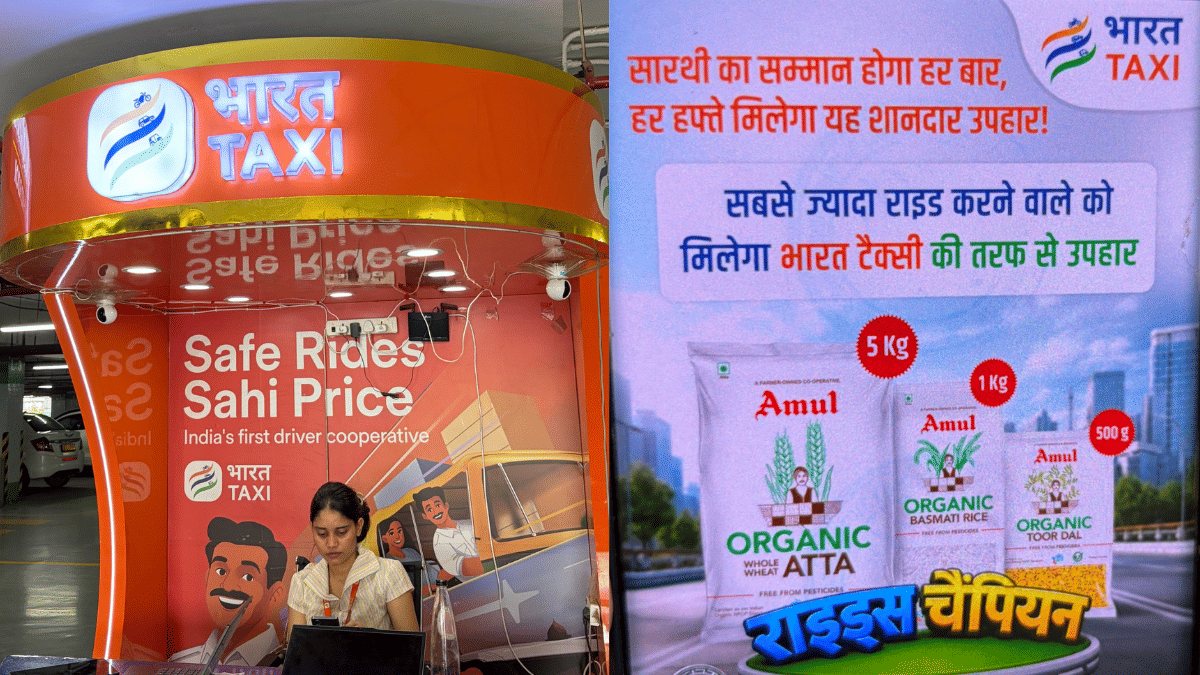
“Bharat Taxi is currently offering incentives in the form of free ‘atta (flour)’, rice and ‘daal (lentil)’ but we need cash incentives. We can buy these products on our own,” Kumar said. The eligible drivers can obtain the products from Amul retail outlets.
Bharat Taxi officials acknowledged that incentives do help increase ride volumes and retain drivers but argued that these are not financially sustainable.
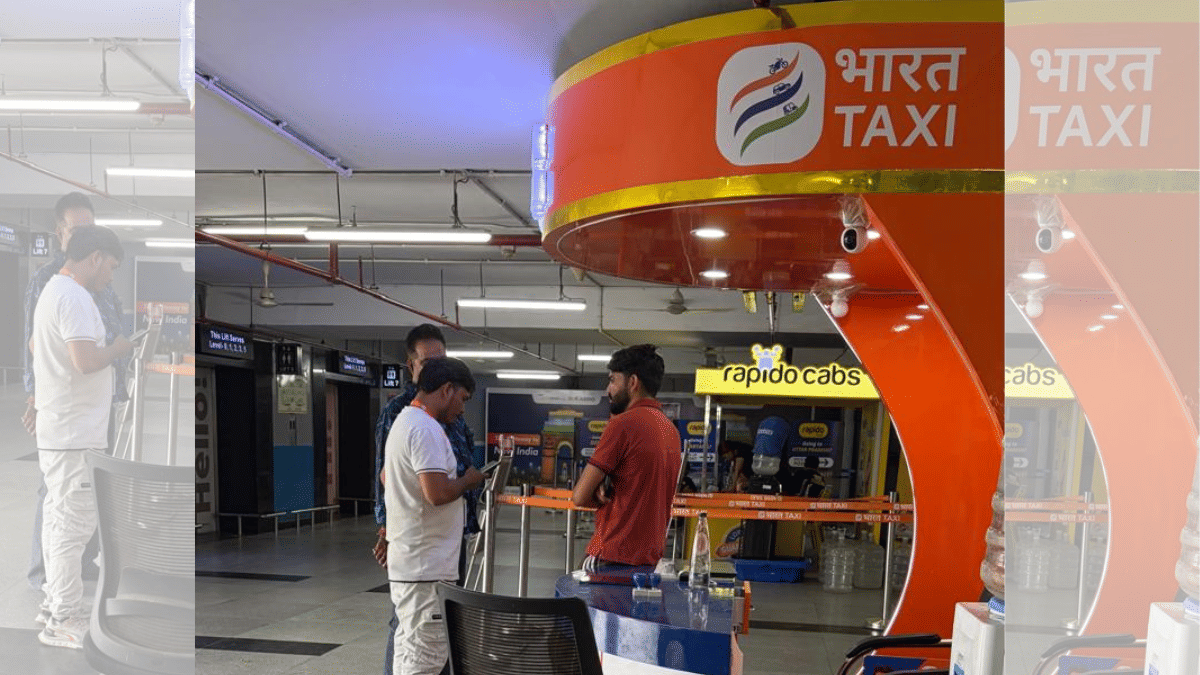
“These incentive offers are not permanent, it is just to attract or lure drivers,” the official said, adding that private companies are burning cash to maximise rides and eliminate competition – a strategy the cooperative does not intend to follow.
What lies ahead
Bharat Taxi operates under Sahakar Taxi Cooperative Limited, a multi-state cooperative society that was established in June 2025 with authorised share capital of Rs 300 crore.
Apart from its zero-commission model, Bharat Taxi offers drivers an insurance cover of Rs 5 lakh through IFFCO-Tokio and allows them to become members of the cooperative by purchasing up to five shares priced at Rs 100 each.
During the first three years, the cooperative plans to focus on expansion. Thereafter, it intends to retain 20 percent of its profits for operations and future growth while distributing the remaining 80 percent among its members.
Many drivers, though, are not aware about these benefits.
“Nearly 90 percent of drivers are not educated, so they do not understand all this. It is important that drivers are made aware of these benefits,” Pardal said.
He added that drivers instead rely on the government’s e-Shram portal for welfare schemes and healthcare benefits.
Bharat Taxi officials also acknowledged that awareness about the insurance cover and cooperative ownership model remains limited, and that they are working to address it. “We are undertaking awareness campaigns to educate ‘sarathis’ or drivers, about the benefits of the cooperative model,” the official said.
Alongside these efforts, Bharat Taxi plans to expand to 100 cities and towns in FY 2027, beginning with Ranchi, Patna, Bhubaneswar and Guwahati, followed by Bhopal, Indore, Nagpur and Kolkata.
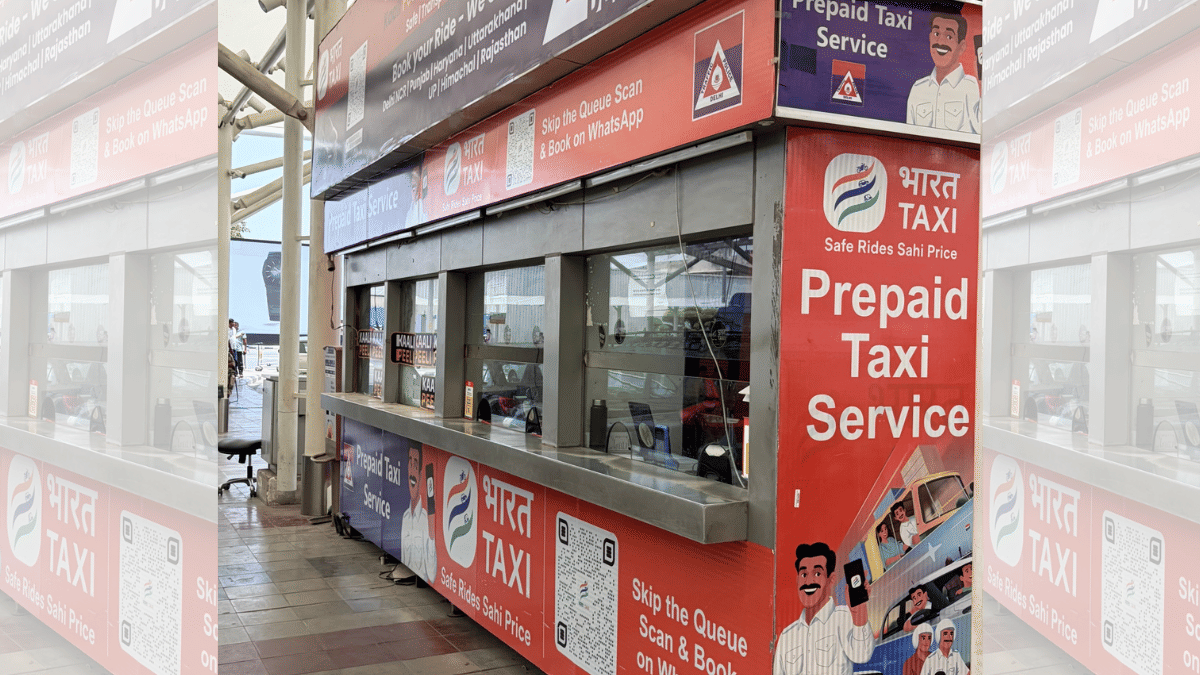
The cooperative also operates prepaid ‘kaali peeli’ taxi services at all three terminals of Delhi airport in collaboration with the Delhi Traffic Police, with similar services planned for the Mumbai airport.
Bharat Taxi has made a promising start by attracting lakhs of drivers. But its long-term success will depend on building a strong customer base that delivers regular rides. Until that happens, ride volume and earnings will determine where drivers work, not the cooperative model.
(Edited by Ajeet Tiwari)
Also Read: From Delhi NCR to nationwide: Bharat Taxi begins expansion push into new cities