



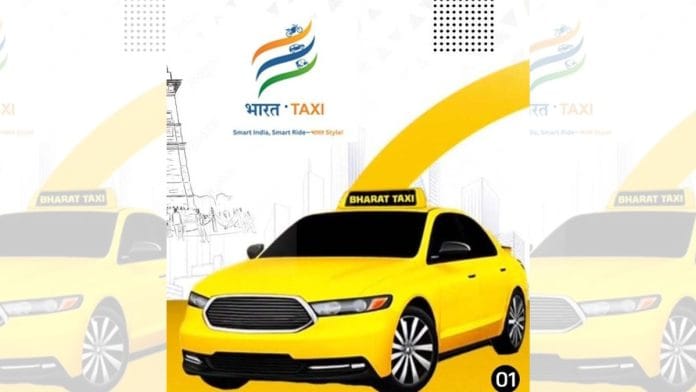
New Delhi: Bharat Taxi, a cooperative-backed ride-hailing service, is gearing up for its next phase of expansion after establishing a foothold in Delhi NCR and Gujarat.
The service is now set to enter Lucknow and Chandigarh by the end of April, followed by Jaipur in May 2026, marking a significant step in its plan to build a wider national presence.
“We are in an expansion phase with operations expected to commence in Lucknow, Chandigarh and Jaipur in the next month or so. After that, we will also be starting operations in Mumbai and Pune in two to three months’ time,” Rohit Gupta, vice chairman of Sahakar Taxi Cooperative Ltd, told ThePrint.
The company has already initiated pilot operations in Lucknow and Chandigarh, a crucial stage where the cooperative model is tested on multiple fronts.
This includes assessing operational feasibility, refining payment systems, onboarding drivers based on city size, and establishing partnerships with local institutions.
“Currently, the pilot phase is underway in Lucknow and Chandigarh, post which full-scale operations would start by the month-end,” Gupta added.
Replicating its Delhi NCR model, Bharat Taxi is also working on institutional tie-ups in new cities. In Lucknow, for instance, the company plans to collaborate with the traffic police and the Uttar Pradesh Metro Rail Corporation to strengthen safety and service delivery.
Since its official launch on 5 February 2026, Bharat Taxi has scaled up rapidly. The platform now claims over 29 lakh customers and more than 3 lakh registered drivers, clocking around 20,000 rides per day across Delhi NCR and Gujarat.
The Bharat Taxi service operates under Sahakar Taxi Cooperative Ltd, a multi-state cooperative society registered under the Multi-State Cooperative Societies Act, 2002. While the cooperative was set up in June 2025, operations began in February 2026.
Bharat Taxi also has a presence at Delhi airport, where it has already taken over pre-paid taxi operations for black-and-yellow cabs. The company also offers app-based booking services.
“We currently have two types of operations at Delhi airport, one is pre-paid taxi services, and the other is mobile application-based booking services,” Gupta said.
The company is now looking to deepen its airport presence by expanding app-based services to Terminal 1, which would allow taxis to enter the airport premises, use designated lanes for pick-ups and drop-offs, and access dedicated parking areas. This system is already operational at Terminal 3.
At present, Bharat Taxi operates in Delhi, Gurugram and Noida in the NCR region, as well as in Ahmedabad, Rajkot, Somnath and Dwarka in Gujarat. Its long-term ambition is to challenge private ride-hailing platforms by building a nationwide network by 2029.
Central to its pitch is a cooperative ownership model that seeks to differentiate itself from the conventional cab aggregators.
So far, private cab aggregators such as Uber and Ola have largely dominated the market. Bharat Taxi is seen as an alternative for drivers with other private players who sometimes complain about overexploitation and high commissions.
However, last year, both Ola and Uber gradually started shifting towards subscription-based models owing to changing market practices and pushback from drivers.
In a written reply in Parliament in March, Minister of Cooperation Amit Shah described Bharat Taxi platform as “a transition from the conventional ‘driver-partner’ model to a ‘Sarathi-owner’ model wherein drivers can become owner of the cooperative society, have representation in Board of Management and participate in profit sharing while having professional management to oversee operations.”
The company is also pushing women’s empowerment through its ‘Sarathi Didi’ initiative, aimed at bringing more women into the driver workforce. So far, nearly 5,200 women drivers have been onboarded, says Gupta.
On the business side, Bharat Taxi continues to operate on a zero-commission model, positioning itself as a driver-friendly alternative. While it initially did not levy any charges, the platform has now introduced a nominal subscription fee per ride to cover operational costs.
The company says that its pricing framework ensures transparency through periodic reviews and clear communication of fare structures to all stakeholders.
“Based on the feedback received from driver partners, they are happy with the transparency of fares,” Gupta said.
(Edited by Sugita Katyal)
Also Read: Centre-backed Bharat Taxi clocks 4 lakh+ customers, bets on cooperative model to take on Ola, Uber