



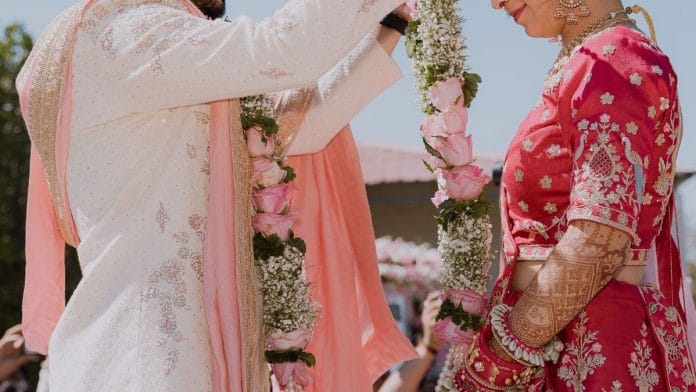
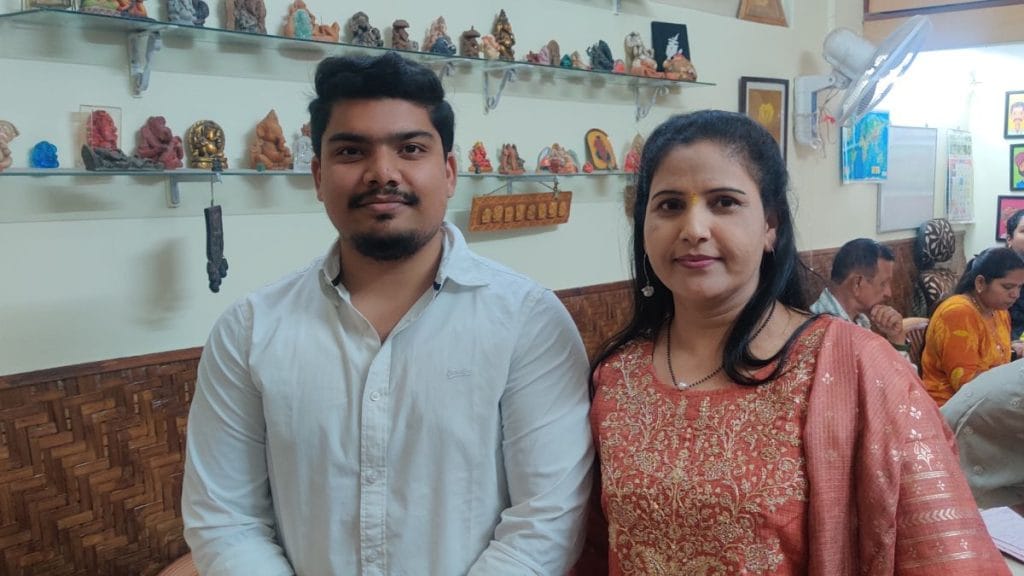
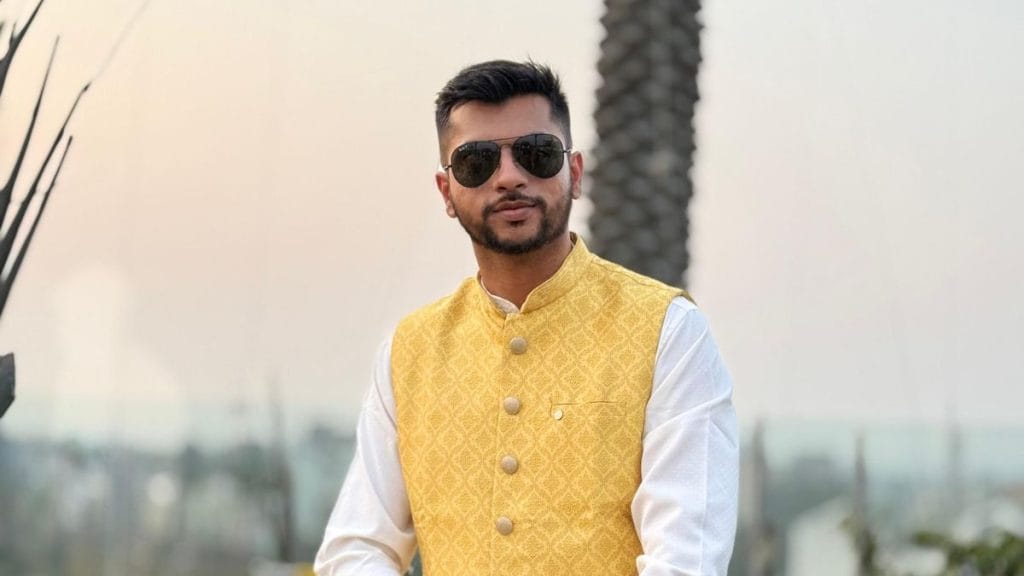
Pune/New Delhi: Karan Dhamale has never imagined meeting his future wife on a dating app. Or even a classroom, a cafe or a social gathering. At 25, the Pune-based engineer has no dramatic story of heartbreak or dating fatigue. His parents married for love and they never insisted that he follow tradition.
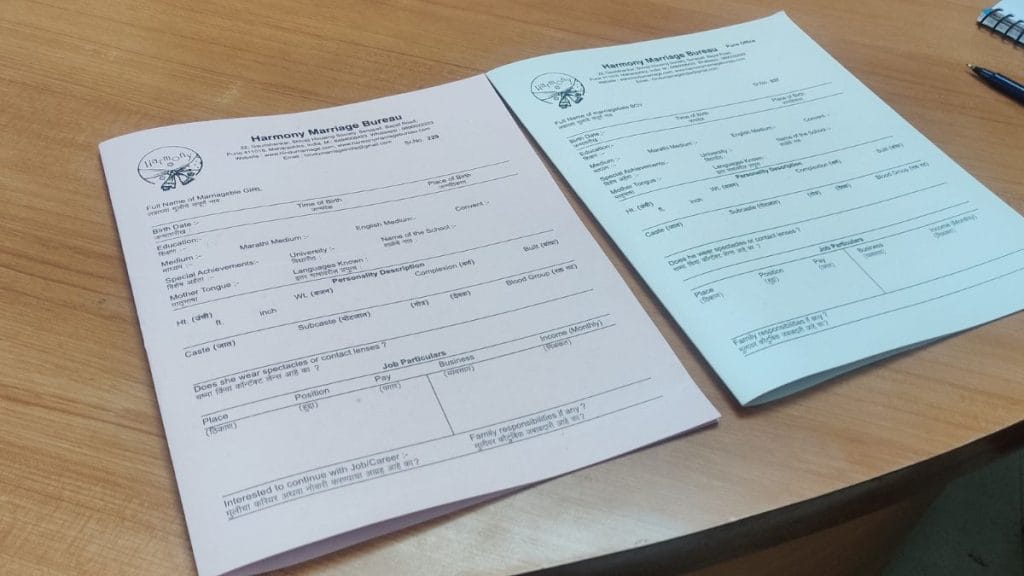
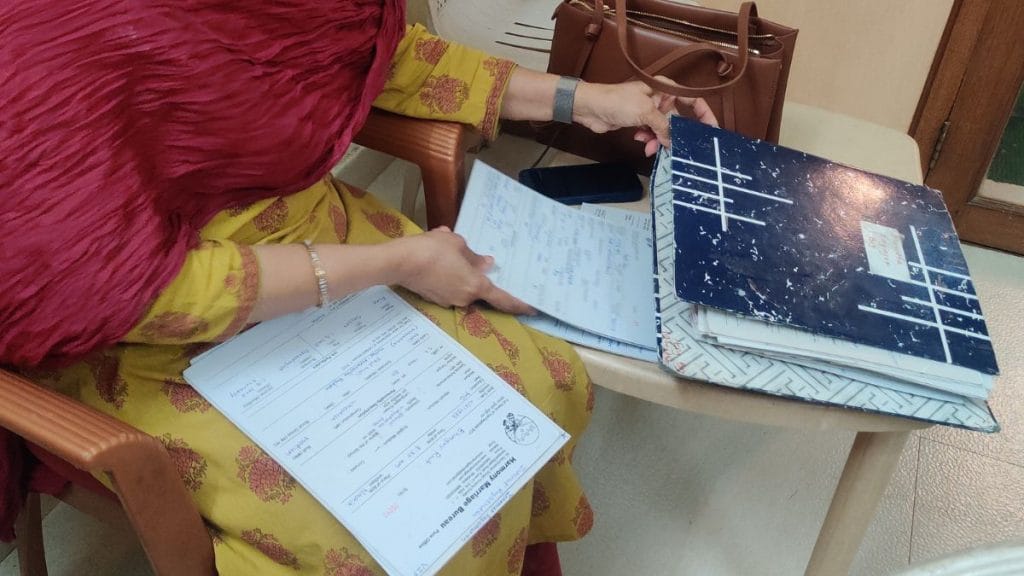
Yet on a rainy, weekday afternoon, Karan is seated inside a matchmaker’s office, filling out a multi-page form that asks everything from his blood group and hereditary illnesses to whether he drinks, smokes, or wants children.
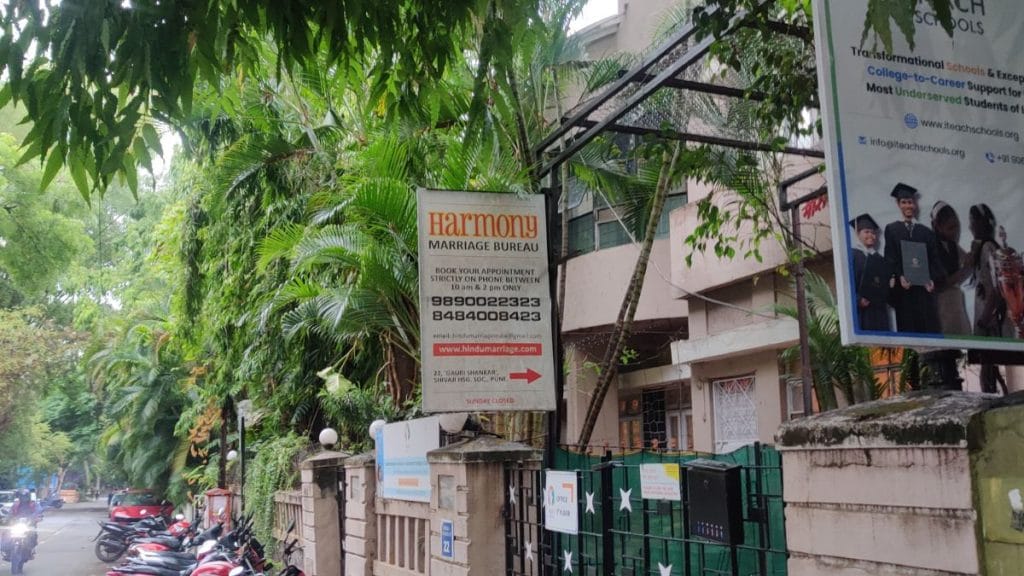
The Harmony Marriage Bureau in Pune’s Shivajinagar is just a 30-minute drive from Siya Goyal’s house – the 20-year-old whose arranged marriage took a lethal turn after her fiance Ketan Agarwal fell to his death from the Lohagad Fort last month.
In India’s wedding market, the generation raised on swipes, algorithms, infinite choice and instant delivery is increasingly flirting with one of the country’s oldest institutions — arranged marriage.
Even the rising fear and scandal of an alleged murder of an arranged fiancé by Siya Goyal in their Pune city isn’t deterring the young from the institution.
Caste or religion aren’t deal breakers for Karan. A woman a year or two older than him? That’s fine too. A bluestocking bride is not a bother either. The only non-negotiable is that she live with his family.
Rest, he says, his parents will figure out.
“I always knew my parents would find my wife,” he murmured and smiled, sitting inside Pune’s Harmony Marriage Bureau.
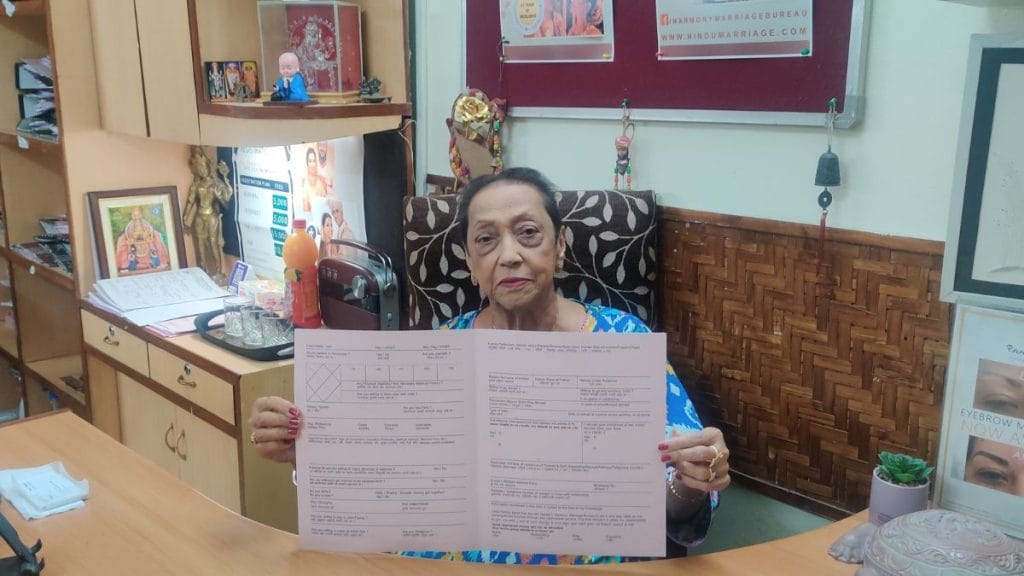
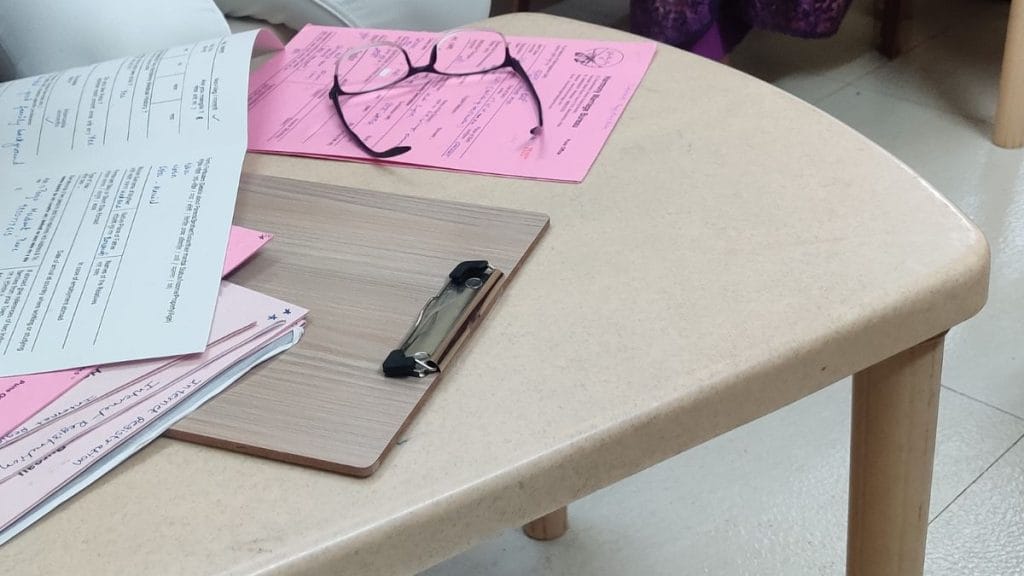
Across the room, pastel pink and powder blue forms wait in neat stacks. Once upon a time, they revolved around caste, horoscope and family lineage. Those questions remain. But today salaries share space with sports interests and diseases with dietary preferences. For Gen Z, modern arranged marriage has become part compatibility test and a whole lot of risk assessment.
In the era of Hinge, Bumble and Instagram, Karan’s decision might seem like a throwback. Yet inside the marriage bureau, he is hardly an anomaly. Every day, more and more young people in their 20s walk in, with and without their parents, to begin the search for an arranged marriage.
For generations in India, love was either conjured by the universe or set up by parents. Then, technology started playing matchmaker.
The 10-minute delivery age promised instant access to desire — from potato chips to potential partners. But the abundance of choice on the mobile screen has made freedom feel like fatigue and flying blind. The young are increasingly realising there is no quick-commerce delivery of commitment.
So, after years of swiping through endless profiles, ghosting, situationships and the pressure to curate perfect digital selves, many young Indians are increasingly turning towards a system they once seemed destined to reject and outsourcing the search to their parents.
Psychologists say the search is simply for certainty and a safety net in an increasingly uncertain world.
“When you search for a partner entirely on your own, you enter uncharted territory,” Dr Neetu Sarin, psychologist and psychoanalyst with the International Psychoanalytical Association, said. “Dating apps offer access to people, but they cannot offer the emotional infrastructure that families or communities often provide.”
But this decision to choose an arranged marriage doesn’t mean Gen Z has lowered its expectations. If anything, they have only become more exacting.
The checklist generation
By the time Yash Mahajan walked into Harmony Marriage Bureau, he already knew the person he was looking for. Not by name, of course, but by attributes.
An engineer who studied in New York and worked at a Fortune 500 company for over two years, Mahajan returned to India two months back to find a bride. The 27-year-old has planned with precision every milestone of his life. He wants to be “the fittest person at 40” in his family. His future wife should share that commitment, he is clear.
She should be ambitious enough to have a career of her own, but also value family. She shouldn’t smoke or drink and treat her “body like a temple”. She should be emotionally mature and spiritually inclined. Long-distance relationships are out of the question. And so are actors, models and flight attendants. Also, he wouldn’t want someone who has had too many previous relationships.
“Then what is this person learning? Just wasting time with person after person,” Mahajan said. “There is no takeaway.”
But if his family doesn’t approve of a match, he won’t pursue it.
“Their say is important,” he said. “Casual dating never appealed to me. Neither did dating apps. Not that I haven’t tried.”
In the US, Mahajan went on several dates but his experience has not been “the best”.
Mahajan recalls a date where they matched on Hinge, made some small talk before deciding to meet for a badminton game. During lunch, he realised there was no chemistry and understood that a loneliness problem brings people to dating apps rather than finding a genuine partner organically. This, paired with profile-based swiping felt like a waste of time to him.
“Everyone is pretending to be something else behind screens,” he said. “There is also no guarantee of authenticity in person unless you meet first. So I was done with the apps.”
Mahajan has come with his mother to the bureau. His father died sometime back — another reason why he returned home. He now works remotely in tech for an MNC and wants to start something of his own. His mother smiles as Mahajan talks about dating apps, live-in relationships, a girl he likes, and even sex. She isn’t uncomfortable; she nods, smiles but never interjects.
Mahajan says his disillusionment with dating apps and curated personas have made him wary now about choosing a partner.
“People lie on the forms, on the apps, on social media. Look at this person, she has not mentioned her weight on the form. Which means I already know she would not be into fitness,” Mahajan said as he flipped the form to check a prospective bride’s photo.
“See, told you,” he smirked.
So Mahajan knows how to figure it out.
“I can take her to treks, play racquet sports with her to check if she’s really into fitness in case she doesn’t tell me the truth,” he said. “It’s easy to catch these things.”
So what does love mean to a generation obsessed with the checklist?
“For me, 1+1 = 11 where the goal is to get hotter, healthier, and happier together,” Mahajan smiled.
‘Afraid of rejection’
Mahajan’s wishlist isn’t unusual anymore. At Harmony, prospective brides and grooms fill out forms that have evolved with time. The smoking and drinking section for women was added much later. So was willingness to have children and openness to living in a joint family. The forms even ask whether they like pets. There are sections on strengths and weaknesses, lifestyle and expectations from a partner. Compatibility has become about everyday habits as much as fundamental values.
Dr Sarin says this long checklist may be a response to the emotional burden of modern dating.
“A lot of young adults today aren’t simply afraid of rejection,” she said. “They’re afraid of making the wrong decision. In a culture where every choice feels permanent and every mistake feels catastrophic, people begin looking for someone else to share that responsibility. And so now they are turning to their parents for guidance.”
And the parents then turn to the trusted matchmakers. One of them is Nandini Suresh Dange of the Harmony Marriage Bureau, playing Cupid since 1992.
The bureau that learned Gen Z
82-year-old Nandini Dange has arranged 17,000 marriages but she did not have an arranged marriage herself.
In 1966, when her family tried to call off her engagement to Air Force officer Suresh Dange after her sister’s husband was killed in action in the 1965 India-Pakistan war, the young couple eloped instead. They changed four Army cars to avoid being trailed, got married in secret and simply informed the family. They accepted the union in a day and held a wedding reception the day after.
Nearly six decades later, Nandini has become an unlikely custodian of an institution she once chose to bypass.
Since opening Harmony, Dange says she has had a terrific success rate.
“Only four divorces in nearly four decades,” she said, proudly.
What has surprised her most in all these years is the age of the young kids now walking through her doors. Over 150 young couples, all in their twenties, married through her bureau in the last two-three months.
“Every day, two or three young people come,” she said. “The children are coming themselves because what parents like, children don’t like.”
Harmony no longer resembles the stereotypical marriage bureau where parents exchange horoscopes over tea. Around 70 per cent of enquiries now begin online before families ever visit the office. Once they do, prospective brides and grooms sit with forms.
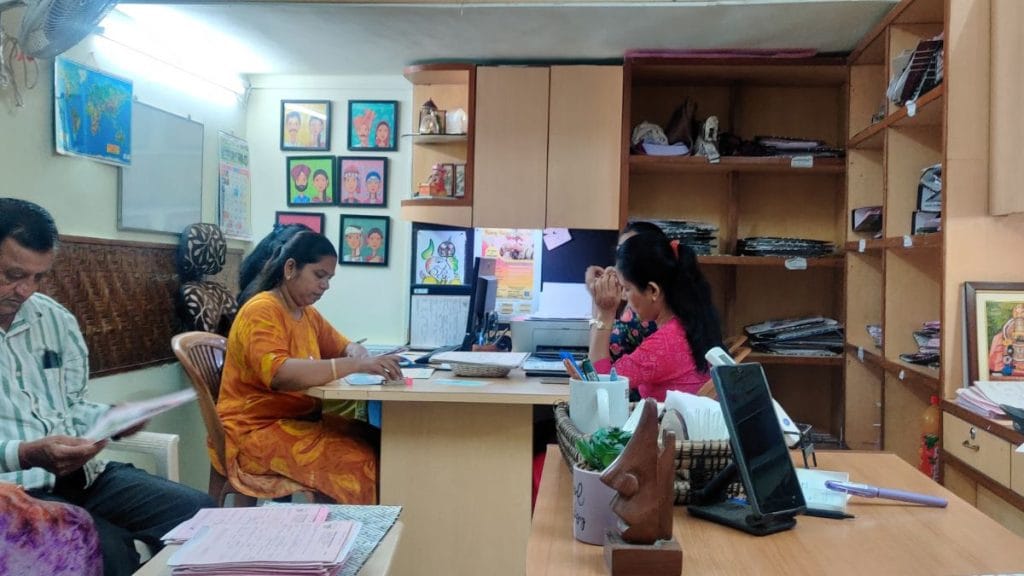
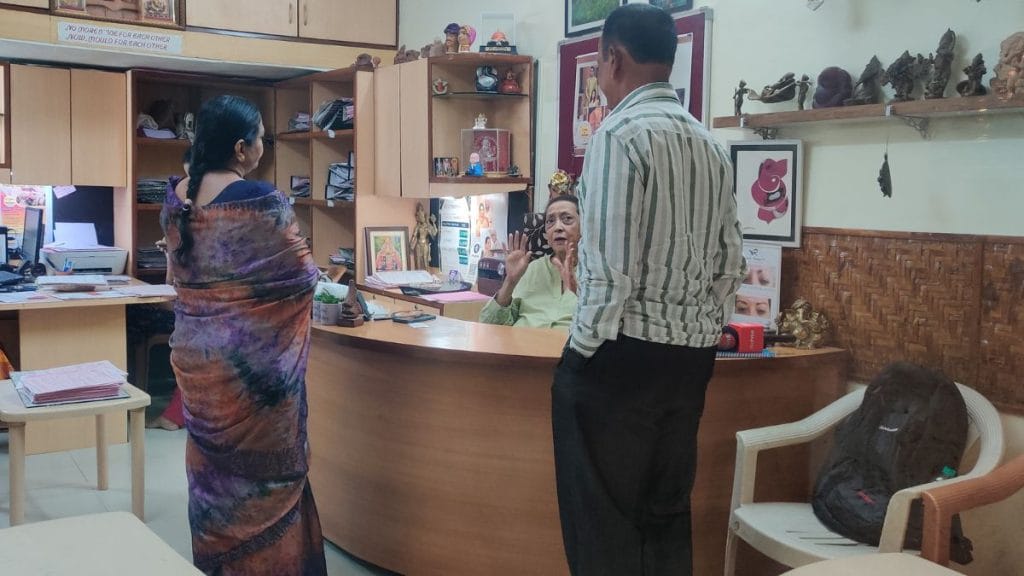
Piles are sent across; her team of four go through the forms and try to take the best call, send across matches. The four young women occupy a desk in the corner surrounded by caricatures of married couples from across India. They cater to all castes and religions, NRIs and VIPs.
One expectation, Nandini’s team says unitedly, that has remained unchanged over the years is “package”.
“Girls definitely look at the salary, the pay package. This has remained constant all these years, generation after generation,” they nod in unison.
But Nandini says girls have other expectations too and they are fair.
“The girls today are more educated than the boys in many business communities,” Dange said. “They’re earning as much, sometimes even more. So they want educated boys too. They are not settling.”
Trust, meanwhile, has become a service.
Also Read: How the Siya Goyal case has shaken Pune’s Marwaris
Background checks, private detectives
Families increasingly ask for background verification before proceeding. Harmony keeps contacts for private investigators who can verify previous marriages, relationships or other details if clients choose to pursue those checks.
“I only share the contact details if they want to hire an investigator,” Dange said. “We don’t personally provide that service.”
Dange, however, says she has occasionally warned families against going ahead if she hears troubling information about either side.
Her daughter-in-law, Sarika Dange, who also helps run the bureau, says the biggest hurdle for Gen Z isn’t finding a partner but surviving rejection.
“I’m not a counsellor; I’m a guide,” she said. “People have to leave their ego outside when they come here. It is a commitment.”
She recalls one prospective couple in their twenties who almost refused to meet because the woman was 5’2″ and the man was over six feet tall. Sarika thought they were a good match but couldn’t convince them to give it a shot.
“The height was a dealbreaker for them,” she said.
Eventually, their families wore them down for one date. They clicked instantly and within months got married.
“The first impression shouldn’t become the final decision,” Sarika said. “People have to meet and not hide behind screens.”
Love in the community
The first meeting is no longer the wedding. In many arranged marriages today, it is simply the introduction. What follows are coffee dates, long phone calls, difficult conversations about careers and children, and, ultimately, a choice.
For Sehar Kaur, 27, and Akashpreet Singh, 29, marrying outside their Sardar community was not even an option.
Both grew up knowing they would have an arranged marriage. They belong to Delhi’s close-knit Sikh community, where families often rely on a vichola — a traditional matchmaker — to make introductions. Neither had been in a relationship before. When the proposal came last year, it wasn’t the first one either family had considered.
They both met a few people before but it did not click.
The first meeting was exactly what one would expect: parents, tea and polite conversation. Nothing was decided.
The second was just the two of them on a date at a restaurant. Then another meeting. Soon, long phone calls that stretched late into the night.
Within four months, they were married.
Today, the couple live in a joint family in Delhi’s Greater Kailash. Akashpreet works remotely as a business analyst for a Texas-based company, while Sehar, who worked in medical HR before taking a break for the wedding, says the process never felt like surrendering her choice.
“We were looking to get married,” she said. “Our parents made the introduction. The decision was still ours.”
That distinction comes up repeatedly among young couples choosing arranged marriages. Parents are expected to make the first move — shortlisting families, making inquiries, checking backgrounds — but not necessarily the final decision. For some years now, arranged marriages have been upgraded into an acceptable concept of ‘arranged introductions’. That makes it more palatable for the youth to accept the institution. Many say that dating apps do the same – introduce a couple.
For Akashpreet, background mattered as much as personal chemistry.
The two families already knew of each other. Their fathers came from similar business backgrounds, shared similar financial values and had raised their children with comparable expectations around money, work and family.
“Those values clicked,” he said. “That’s what made us connect. That’s how I know she is the one.”
It was the conversations afterwards that convinced Sehar.
She remembers discussing children, careers, psychology and the life they hoped to build together. When she expressed uncertainty about having children immediately, Akashpreet didn’t dismiss it. He told her there was time and they would decide together.
“I discussed this with him on the second date. And his reaction was so understanding,” Sehar said. “So I just knew.”
Sehar and Akashpreet say a sense of accountability and commitment is something dating apps cannot replicate. Akashpreet thinks the problem is ego.
“The social media game is driven by ego,” he said. “Ghosting, always looking for someone better, always thinking another option is waiting. Just because they have a subscription, they keep swiping.”
Dr Sarin says that because of the plethora of options available, it is hard to resist.
“Commitment is like closing multiple tabs on a browser,” she said. “To choose one person is also to consciously let go of countless imagined possibilities. That act of letting go has become increasingly difficult.”
‘Never gave him the chance’
If young Indians are rediscovering arranged marriage, their parents are rediscovering their role in it. They no longer describe themselves as decision-makers so much as investigators, reference-checkers and facilitators, expected to do the due diligence before handing the choice back to their children.
That is exactly what brought Pushkar Jadhav’s parents to Harmony Marriage Bureau.
The search for the 30-year-old Texas-based engineer’s wife begins 13,000 kilometres away from him.
Pushkar Jadhav grew up knowing that when the time came, his parents would begin looking for a match. There was no dramatic family discussion, no ultimatum and no rebellion.
“We never even gave him the chance. Our culture is such,” Jaywant Jadhav, the father, said matter-of-factly, laughing. “We just started looking. Jokes aside, even he did not choose anyone in the US.”
The Jadhavs are looking for a Maharashtrian Maratha woman, preferably someone already settled in the United States. Beyond that, they insist they are flexible. The couple need not live with them when they come back to India after a few years. The prospective bride can pursue her own career.
What matters, they say, is honesty, shared values and a family that believes in the institution of marriage.
Their biggest complaint about modern relationships is modern photographs.
“People use filters,” Sanjivani Jadhav, the mother, said. “If she’s dark, she’s dark. If she’s fair, she’s fair. Just tell the truth.”
That concern surfaces repeatedly inside Harmony. Parents speak less about finding the “perfect” son- or daughter-in-law than about finding someone whose online persona matches real life. In an age of curated identities, the family’s role, they say, is not to choose a partner but to verify one.
“What problem is unsolvable?” Pushkar’s father asks. Marriage, he says, has never been about two individuals alone. The families, too, have to be invested.
“And every problem disappears after a child. The best solution is to have a child within two years of marriage. Everything becomes okay after that,” he said. “Then where is the time for fights?”
The matchmaker’s granddaughter
If anyone seemed destined for an arranged marriage, it would have been Khushi Dange.
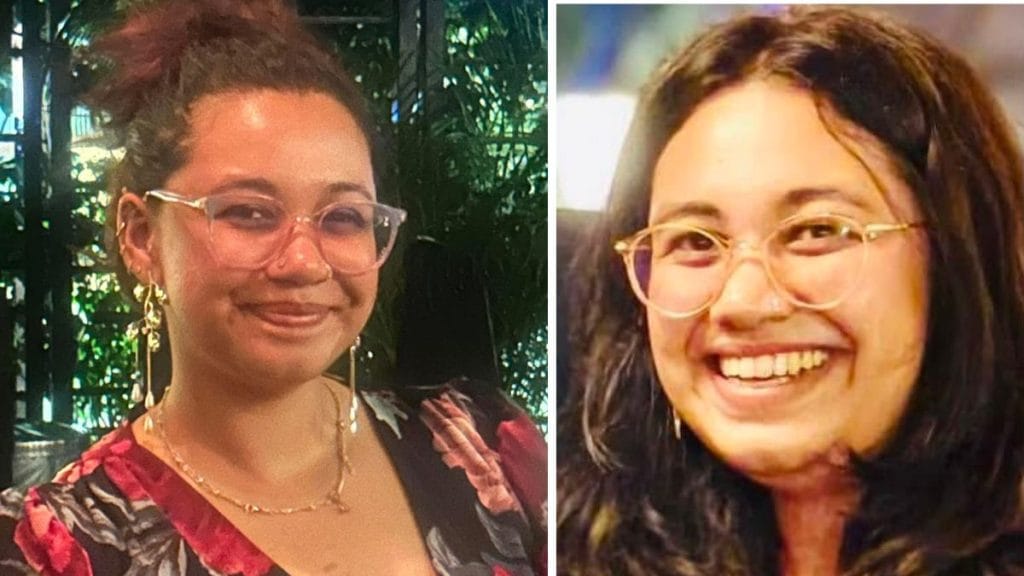
The 22-year-old jazz and blues singer has grown up inside Harmony Marriage Bureau. Her grandmother founded it. Her mother now helps run it. For as long as she can remember, strangers have walked into the office hoping to find a life partner.
Khushi wants no part of it. She wants real world love.
“I want to meet someone organically,” she said, laughing at the irony. “I had a very healthy upbringing surrounded by loving marriages and I want something authentic like that.”
She isn’t interested in dating apps either.
For her, the problem isn’t arranged marriage versus love marriage. It’s that relationships have increasingly become transactional.
“Gen Z is full of desires and pleasures,” she said. “We’re always looking for the next thing.”
She has her own checklist, though it looks very different from the ones stacked inside the bureau. Emotional intelligence matters more than looks. She wants someone who is intellectually curious, emotionally available and willing to build a life together. Her red flags are toxicity, disrespect, cheating and situationships.
“I don’t think apps show you who people really are. “It’s all fake and pretense,” she said. “And I’m sure I will find love out in the world, just not on apps or through a form.”