








Pune: A four-letter word has upended Pune’s close-knit Marwari community—Siya. Almost overnight, the name has come to embody a fear that the conservative community had long believed could never reach their doorstep.
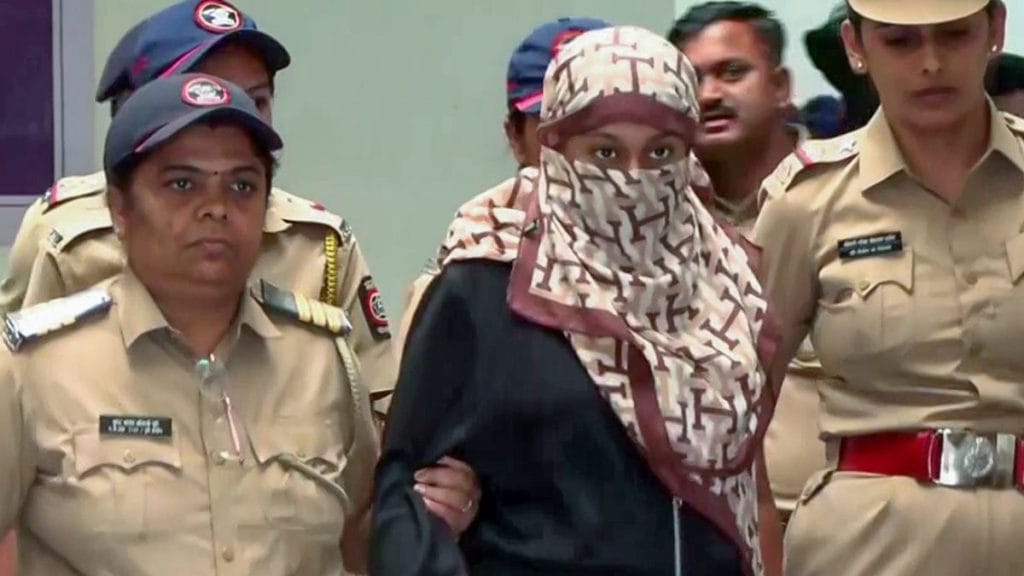
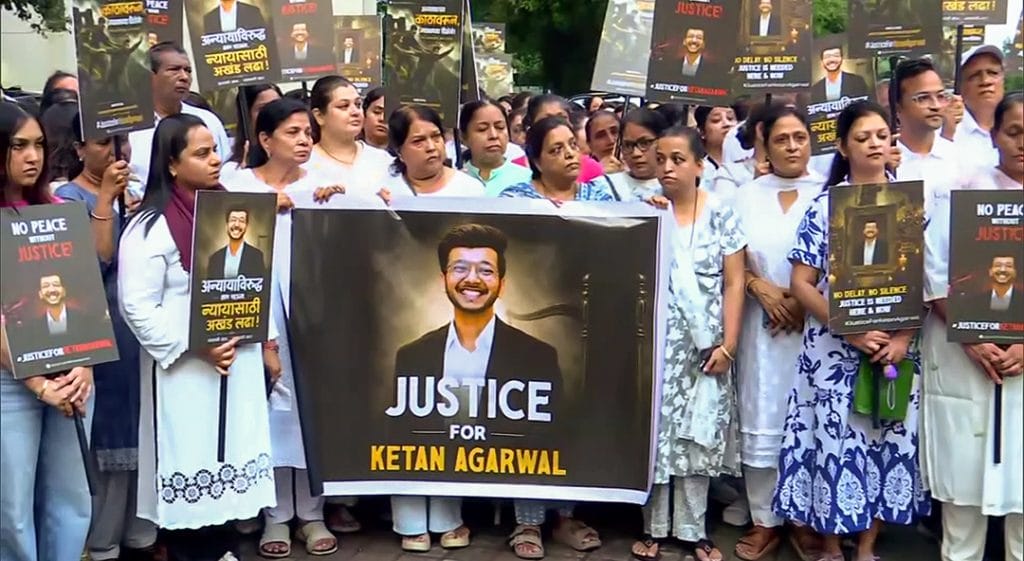
Since 18 June, when 26-year-old real estate heir Ketan Agarwal died after falling from Lohagad Fort, over 60km from Pune, and since police arrested his fiancée Siya Goyal and her friend Chetan Chaudhary five days later on charges of conspiring to kill him, the case has travelled well beyond the courtroom. It has settled into WhatsApp groups, where hundreds of messages, CCTV clips, police updates and speculative theories arrive by the hour.
“Did you see Siya Chetan’s Snapchat video?” “Siya was brought back home today by the police, I saw her.” “I think she will walk scot-free; it will be the guy who will get jail.”
Every person seems to have a new theory or another forwarded video to share.
The case has spilled across dinner tables in Koregaon Park and Kothrud, and in the drawing rooms of business families trying to make sense of a case many describe as “beyond imagination.”
It has also found its way into the pages of a weekly community supplement ‘Agra Bhushan’ circulated among Pune’s Agarwal Samaj. Last week’s edition ran the headline “Siya, ye tune kya kiya? (Siya, what did you do?)”

Pune is home to an estimated 50,000 to 55,000 Marwaris a community that has, by most accounts, assimilated seamlessly into the city—fluent in Marathi, embedded in its real estate and business circuits, respectful of the ground it stands on. But assimilation, several members of the community say, was never meant to touch the core: Who you marry, when, and on whose terms. The Marwari community’s arranged-marriage system is built as much on reputation as on compatibility, and this is the one inheritance nobody was willing to renegotiate, community elders say.
Spend an evening at Gangadham market near Siya Goyal’s home, where Jain and Marwari families gather most evenings for food, shopping and unhurried walks, conversations circle back to the case.
“How can a 19-year-old have such a criminal mindset? She could have just said no to the marriage,” said a man in his fifties, at a dosa stall. Siya turned 20 a day after the incident, on 19 June.
Media is stationed at all times outside the Goyal residence where curious onlookers stop and inquire about what has happened. The house is being renovated even in the aftermath of the cancelled wedding.
For all their wealth and stature in Pune, social commentators say many Marwari families remain bound by an unwritten code where saying no to parents carries a social cost. Their financial comfort has lulled them to submission—A Hum Saath Saath Hain consensus that has, in the aftermath of this case, hardened into something stricter with parents doubling down instead of loosening their grip.
Elders now speak of needing to “fortify” the institution of arranged marriage itself—tightening vetting, formalising background checks, and blood tests for brides and grooms to screen for HIV and other diseases. Families who once relied on introductions by trusted aunties and uncles at weddings are now floating the idea of private investigators. Marriage bureaus report anxious parents asking questions they never asked before.
Among the young, the register is different. At a bar in Kothrud, a young man in his twenties—an Agarwal—said the case has changed his outlook toward arranged marriage.
“I won’t have an arranged marriage after this case,” he told his friends, taking a sip of his drink. “I would rather stay single than draw the short straw.”
Author-columnist Chetan Bhagat argued in a recent op-ed that the real story isn’t Siya Goyal’s alleged guilt but the pattern behind it: Small and midsize business families that run their households the way they run their firms—top-down, resistant to dissent, obsessed with the social currency of a “compliant” child and a lavish wedding.
“Another reason many second-generation business heirs struggle to push back is that they inherit comfort before they earn independence. Financial dependence makes emotional independence much harder,” Bhagat wrote for Times of India on 30 June.

Also read: The Aggarwal crisis in India. They have everything but no one good to marry
System of trust under suspicion
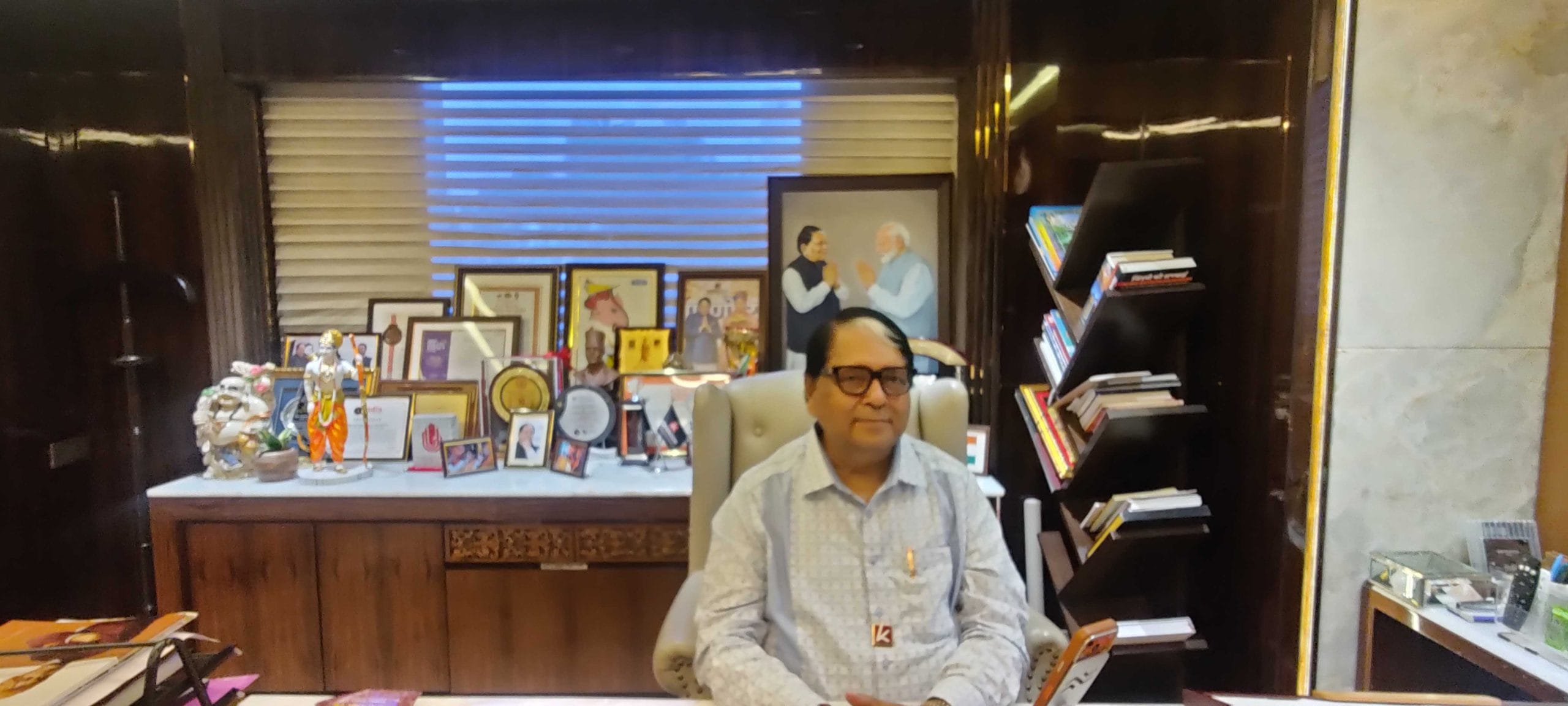
Krishna Kumar Goyal has watched Pune’s Marwari and Agarwal circles from close quarters for over four decades—as chairman of the real estate company Kohinoor Group and a man who has held office in nearly every Agarwal community body the city has. At 73, the president of the Agrawal Samaj Federation’s Pune chapter is, by his own words, the kind of elder people call when something in the community goes wrong.
Goyal has known the Agarwals for years. The family, he said, moved to Pune from Tuljapur nearly two decades ago and built a successful business. Three brothers worked under one roof. Ketan, educated abroad, was the archetypal Marwari son: Soft-spoken, disciplined and respectful of his parents.
Goyal watched the match get made from the sidelines. The introduction took place through Siya’s uncle. He vouched for their side as respectable, financially sound, and said: “Nothing wrong in getting married here.”
Ketan was disciplined and—in Goyal’s words—“not a boy who used to follow his own rules.” When the family suggested the match, Ketan agreed without resistance.
“If his parents believed this was the right match, he trusted their judgement,” Goyal said of Ketan.
Nothing during the engagement suggested otherwise, he said.
Siya visited the Agarwal home frequently, Goyal recalled from conversations with Ketan’s mother and sister, and was affectionate toward the family. She baked cakes for them from the home bakery she ran, participated in family gatherings and, by all outward appearances, embraced the relationship.
“She never made him feel she didn’t like him,” Goyal said. “There was never any indication that she was unhappy.”
What strikes Goyal now are the moments the family read as ordinary and now can’t stop replaying. The frequency of Siya’s phone calls to Chetan Chaudhary, which the family learnt from media reports—police records put them at over 2,000 calls—in the run-up to the wedding.
VIDEO | Maharashtra: Siya Goyal and Chetan Chaudhary brought before Vadgaon police station in Lonavala.
(Full video available on PTI Videos – https://t.co/n147TvrpG7) pic.twitter.com/x0IRTZE0r5
— Press Trust of India (@PTI_News) July 3, 2026
“When a girl talks so much on the phone in her own house, do the parents not notice?” he asked. “That’s where both families were careless. They weren’t paying attention to their children.”
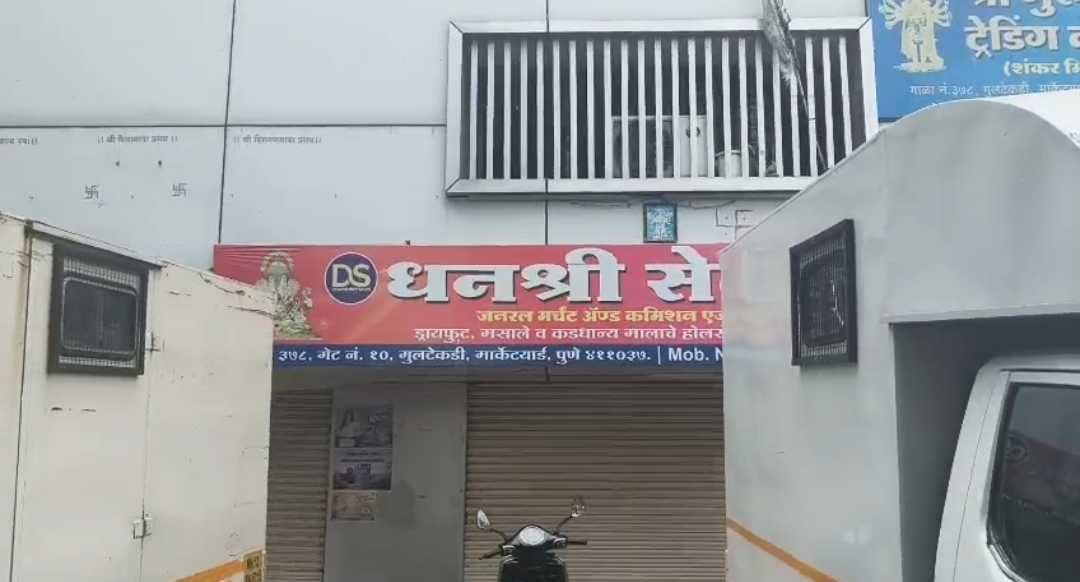
Chetan Chaudhury’s family’s rented grocery shop is right behind the Goyal family’s dry fruits and masala store in the market near their home.
Goyal also recalled how the case was initially treated as an accident, until Ketan’s sister, visiting Siya days after the funeral, pressed her with questions that didn’t add up. The family felt, Goyal said, “Siya didn’t seem aggrieved enough”.
“Siya was not crying enough, she seemed normal so that’s when Ketan’s sister had her doubts,” Goyal recalled.
That doubt led the family to the police, and eventually to CCTV footage that put a hoodie-wearing figure, Chetan according to police, at the fort in summer heat—the detail that made the “accident” theory impossible to sustain.
Goyal extends no sympathies for Siya.
“If she wanted to marry someone else, she could have said so,” Goyal said. “There would have been arguments. Families might have objected. But arguments end. Now her actions have broken the trust people had in the arranged marriage system itself.”
For Goyal, the case is less an aberration than a diagnosis. He traced it to the shrinking joint family—from eight- and-nine-member households in his own childhood down to nuclear units of two or three—and the erosion of the everyday social oversight that used to come with it: Uncles, aunts, grandparents who would ask where you’d been, who you were with, why you were late.
“Where are the grandparents now?” he said. “Everyone’s watching the same scenes on TV—grandfather, father, daughter—so where’s the shame between generations?”
That diagnosis produces a prescription he wants the community to take seriously: Fewer rushed engagements, more meetings between families before a match is settled—”ten meetings, not one or two”—and formal vetting, from blood-group compatibility to background checks through private investigators, before any marriage is finalised. He framed the measure as protective rather than punitive of the young.
Community meetings have been held about exercising caution in choosing brides and grooms.
“In the future, give them a choice,” he said. “You don’t have to force a son or daughter into any one decision. Leave some open space.”
Goyal also says love marriage is not a problem for the community anymore. They, too, have become “modern”. But there is a catch.
“As long as it’s within the vegetarian community. We don’t mind Jain or Gujaratis either. Just no Muslims, Christians, backward castes and non-vegetarians.”

‘Our parents know better’
Seven months ago, long before the Ketan Agarwal case, Jay, 29, and Kriti, 25, slipped into a marriage that looked almost textbook Marwari.
A relative noticed Kriti at a family function and the families were introduced. Backgrounds matched—both were business families, Jay’s is in real estate and Kriti’s in masalas and groceries—caste matched and status matched. Within three months, the wedding was fixed.
“So we got engaged soon and then married sooner,” Jay said with a laugh.
The couple met only a handful of times before the wedding, usually with parents or relatives around, though they spoke frequently over the phone. Neither questioned the process.
“I never looked for a relationship because I always knew I’d marry whoever my parents chose,” Jay said. “When I met Kriti, everything matched: same community, similar family, a known background. She was also comfortable living in a joint family. If she wants, she can even join the family business.”
Kriti’s journey was no different.
After graduating from college, she was weighing whether to work or join her family’s business when the proposal arrived.
“It seemed like a good match, a good life,” she said simply. “I had no checklist as such, just family should be good, boy should be good.”
The Siya Goyal case has not fundamentally altered how either of them sees arranged marriage. They are not concerned about people “changing” after marriage or not holding up their end of the bargain.
“That’s part of life,” Jay replied. “Marriage is survival. Our parents didn’t spend enough time with each other either. Fathers worked all day. Mothers ran the house. They still made it work. A marriage needs compromise and adjustment. Our parents know better and they showed us the way.”
For Kriti, the future is already mapped out. A child before she turns 30, two at most. Work, if it happens, can wait.
“Once children come, where is the time?” she said. “We have a comfortable life. If I want to work later, I can always join my father’s or my father-in-law’s business.”
The formula remains familiar. The questions around it, however, are changing.
Also read: Baniya-branded food is finally on the table. Being Bania, Baniya Kitchen, Baneeya Sa
Matchmaker’s role
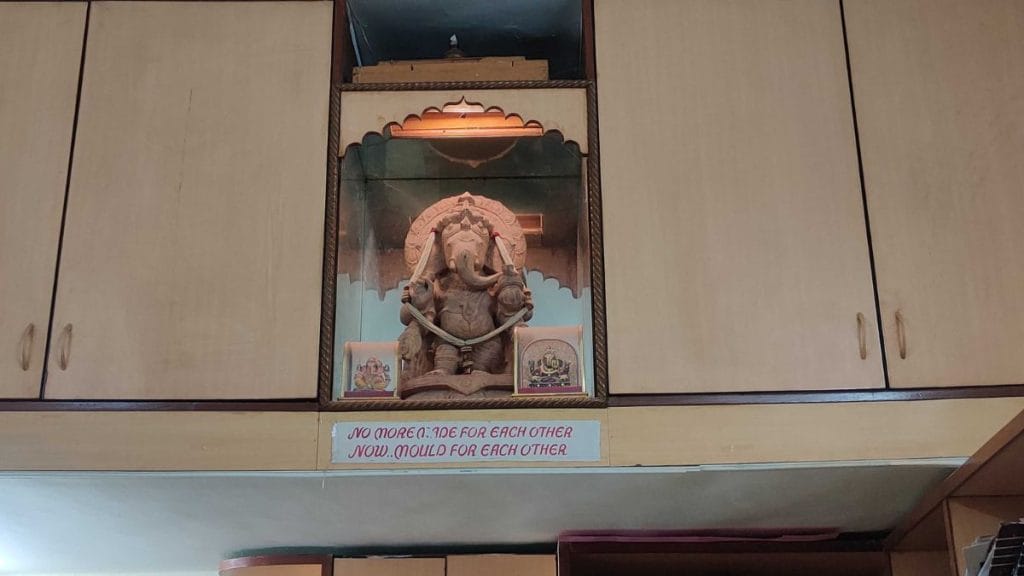
Harmony Marriage Bureau, tucked away in Pune’s Shivajinagar has run almost entirely on word-of-mouth referrals since 1992. Owner Nandini Suresh Dange, 82, has played matchmaker in 17,000 weddings.
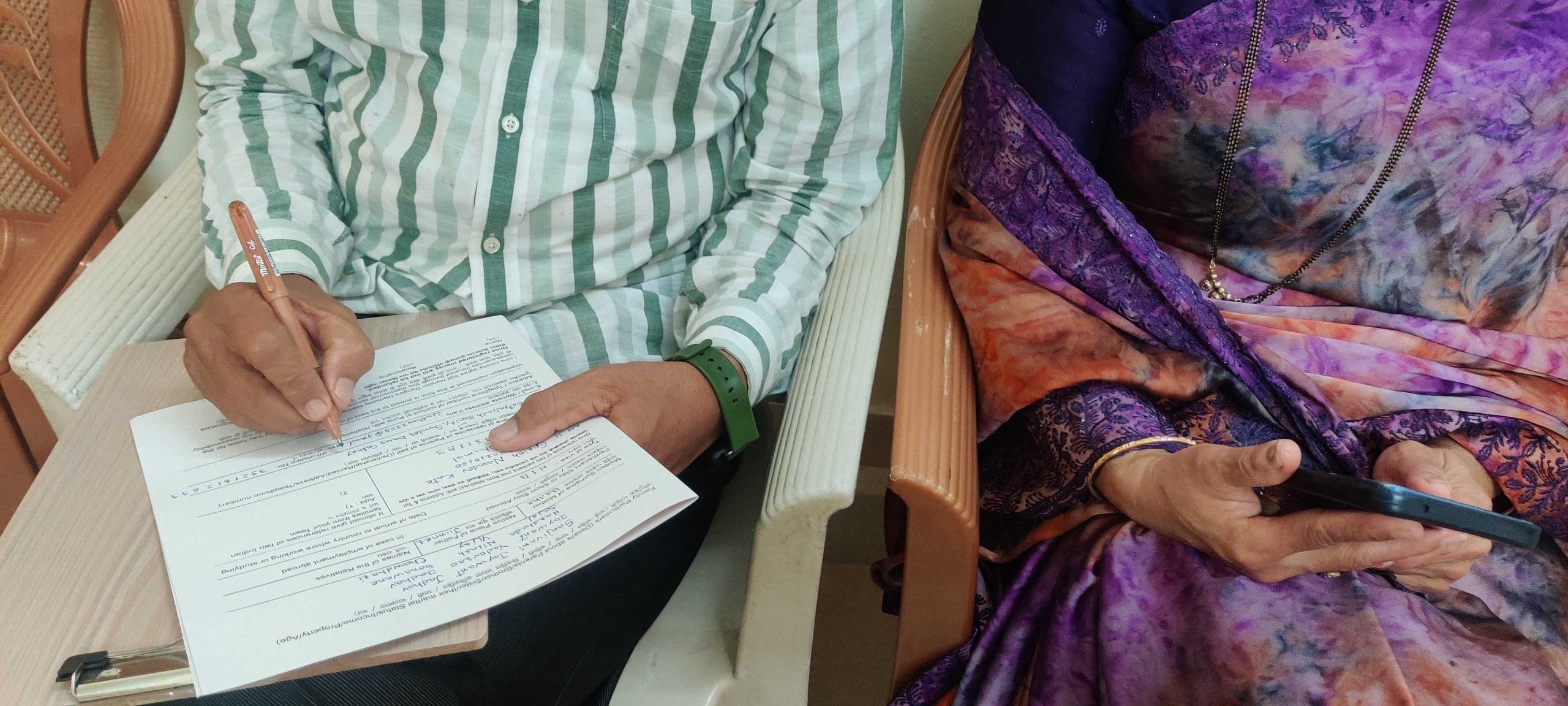
“The process hasn’t changed much,” she said. Families still browse profiles, exchange biodatas, speak over the phone before meeting, and, if both sides agree, move toward marriage.
What has changed, she said, is what people ask before saying yes.
“People have started asking about detective agencies,” Dange said. “I don’t charge for it. I simply give them the contact of someone who can verify whatever they want.”
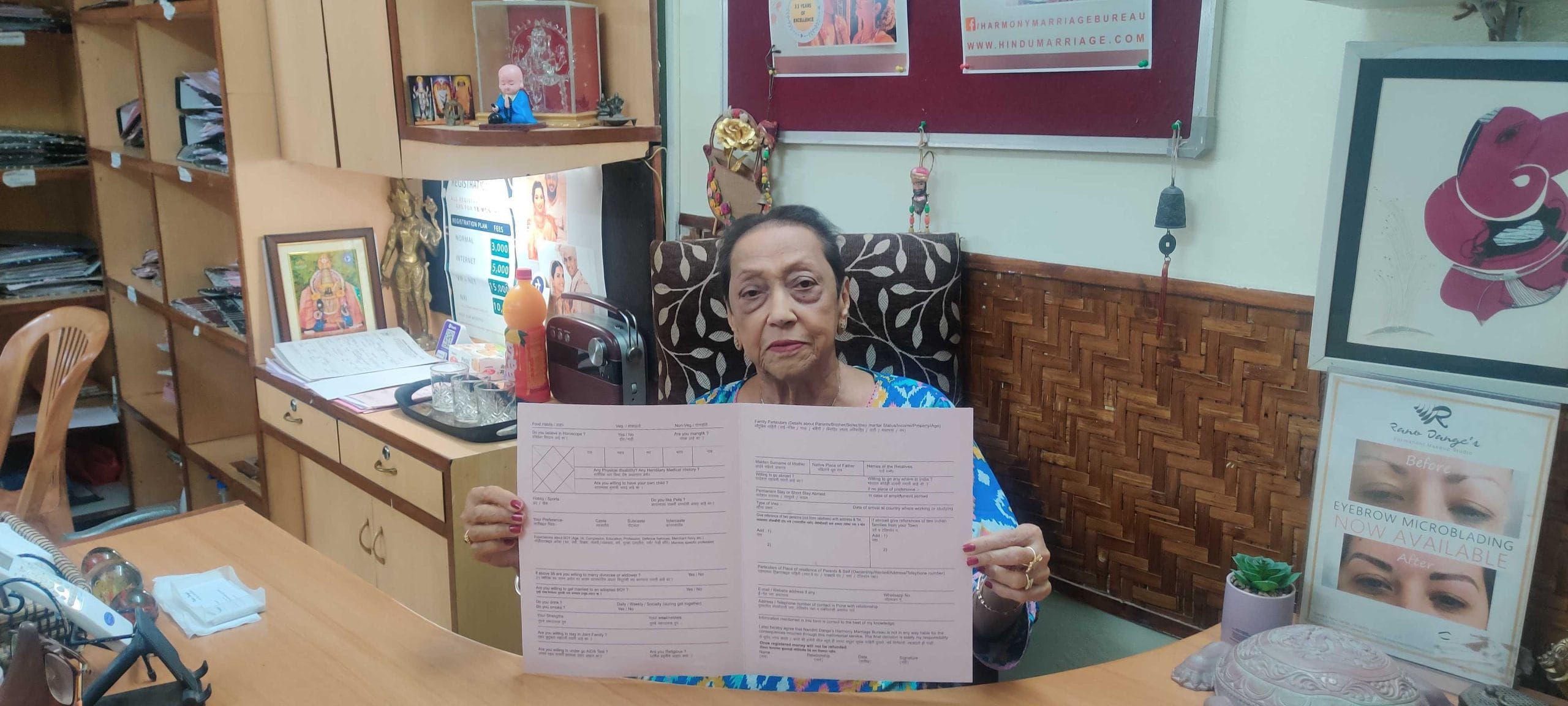
Other questions include—“Did the prospective bride or groom already have past relationships?” “Is there anything about their habits that the family doesn’t know?”
“If I hear something about a boy’s family or a girl’s family, I warn them not to proceed,” Dange said. “If I don’t like their attitude or expectations, I don’t even register them.”
She once warned a family about a boy’s attitude she didn’t like.
“The boy was so dark, and yet wanted a fair, beautiful bride, 1989 born but wanted 2000 born. One girl was interested but I did my part and expressed my apprehensions to her family,” she said.
She remembers one mother insisting her daughter’s future husband must own a Porsche or a Mercedes Maybach because she is ‘used to’ this lifestyle in the UK.
“I asked her, ‘Does your daughter sleep inside the car?'” Dange recalled, laughing. “Education, good values and mutual respect matter much more. I simply didn’t register her.”
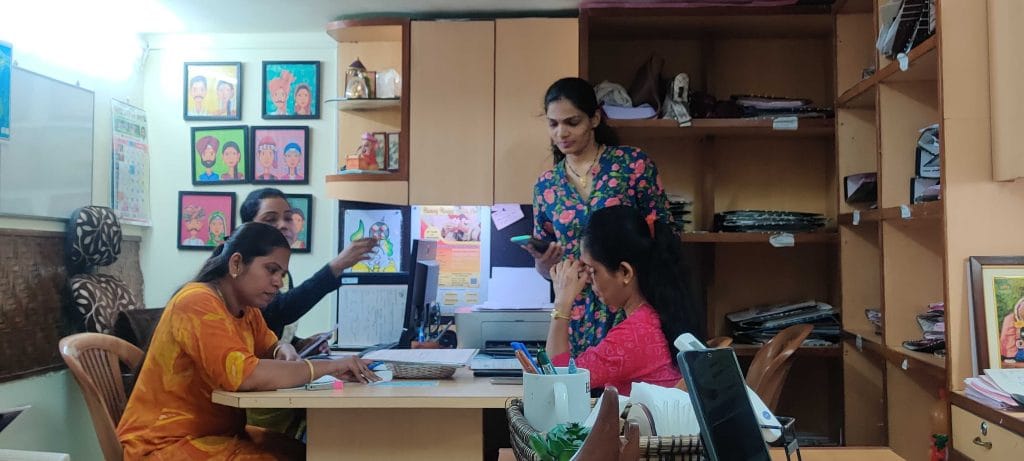
Even so, she believes the Pune case has exposed pressures that still exist within some business communities.
“Yes, in certain communities like Marwaris and Gujaratis there is pressure to marry young,” she said. “But if someone doesn’t want a marriage, they should say so.”
She also says that of the clients that come to her, women are more educated than the men. And the expectations of women have changed as well. That mismatch, she said, is delaying marriages.
“Girls are earning as much as, sometimes even more than, the boys.”
Business families continue to dominate her clientele, especially through a separate “VIP” registry reserved for industrialists, politicians and wealthy families. They still overwhelmingly seek partners from similar business backgrounds.
Orthodoxy, too, remains.
“Inter-religious marriages usually happen only if it’s a love marriage,” Dange said. “Otherwise families still want marriages within the community.”
But now tradition is negotiating with modernity.
Girls increasingly say they do not want to live in joint families, she said. Her bureau has recently added a question that would have seemed unnecessary a decade ago: “Do you want to have your own child?”
“The younger generation asks different questions now,” Dange said.
The Ketan Agarwal case, she says, has definitely upped checks but not dismantled the arranged marriage system.
“I think that girl (Siya) must be having a criminal mind. Her mindset is different. She is so young, why would she do something like this?” Dange said. “She could have just said no.”
Also read: It’s the Merchants of Marwar who gave a new meaning to being Hindu—before the British came
Exception, not the rule
Not everyone believes the lesson from the Ketan Agarwal case is that Marwari families need more detectives, more background checks or longer courtships.
A Marwari IAS officer, on condition of anonymity, argues that the panic sweeping the community risks obscuring a far older problem.
“If the Marwari community starts victimising itself, then what hope do the rest of us have?” he said. “This is one of India’s most successful communities. It’s like Elon Musk saying he has no money.”
Over the last century, he said, Marwaris transformed themselves from migrant trading families from Rajasthan and Haryana into one of India’s most prosperous business communities. They invested in education, built industries and integrated into cities like Pune without abandoning their close-knit social structures.
“Marwari community is a bit regressive, yes. But it’s the places they came out of. It’s more a geography problem than a community problem” he said. “Also, it’s more an Indian family problem than just Marwari.”
Across communities, he says, children continue to feel a greater obligation toward their parents than the other way around, unlike the West.
“There is enormous emotional pressure to marry. It’s like Stockholm syndrome. Threats, blackmails from parents. Saying ‘I don’t want to’ is rarely treated as a legitimate choice.”
The pressure, he said, falls disproportionately on women, though men are hardly immune.
He would know.
Despite being above marriageable age by Marwari standards, he has repeatedly resisted pressure to marry despite persistent nudges from his parents.
“They’ve stopped insisting now,” he said. “But they haven’t stopped reminding me.”
Part of his reluctance stems from his profession.
“If you’re an IAS officer and your marriage goes wrong, it becomes public. A complaint from a spouse becomes news. People change. There are no guarantees. Why should I take that risk?” he asked.
Unlike community elders, he does not believe the answer lies in tightening the arranged marriage process.
Fifty years ago, he said, people had far fewer choices.
“Today they do. Women are educated. Men are educated. And many choose to not get married anymore,” he said.
He rejects the notion that women in Marwari families are just passive participants.
He recalled a close friend, a CA topper, who willingly gave up her career after marrying into a wealthy business family.
“She had every opportunity to work,” he said. “She simply preferred that life. We shouldn’t assume every decision women make is forced,” he said.
Where he does see a problem is in unquestioning deference to elders.
“We clean our homes but dirty our streets,” he said. “We speak about equality outside but practise patriarchy inside.”
For him, the Siya Goyal case is less an indictment of arranged marriage than of a culture where disagreement is often mistaken for disobedience.
Yet he is equally wary of turning one crime into a verdict for an entire community.
“How do we know Siya wasn’t mentally unwell?” he asked. “This could just be an exceptional case.”
(Edited by Theres Sudeep)
After reading the IAS comment, it is certain that the young men and women of this community is under severe family pressure. Not just to keep the ‘izzat’ in their close knit community but also to keep their buisness running which relies on the community, not to mention the need of having an heir to their buisness. In such situations, one can not simply say No to a marriage proposal, be it a boy or girl. With No, comes the question, why you don’t want to marry, do you have an affair, what are your plans for future( for which they have to depend upon family money and name only, only being IAS can save you, not topping CA). These young lad just can’t say No either, or defend it, so saying Yes remains only option.
Dear Stela Dey, I wish you rewrite the Siya Goyal story once again after all facts and the truth have come out. Because this article is suffering from the same ills that the Marwari community is suffering from; it is full of assumptions, unwritten but unavoidable laws, but gives little importance to facts. Siya was forced to travel by her own brother as reported by the cab driver. Which brother does that to her sister? Probably he had his own interests, a close relation to a family far richer than them.
Wonderfully written.
This article covers almost all angles and goes in depth of the matter.
People should not marry at a young age of 19. They should have married after 25 when they would have been mature.
whatever – thank God there is no Muslim involved in this story – or thank Siya for that, she stayed within the community boundaries on that count.