





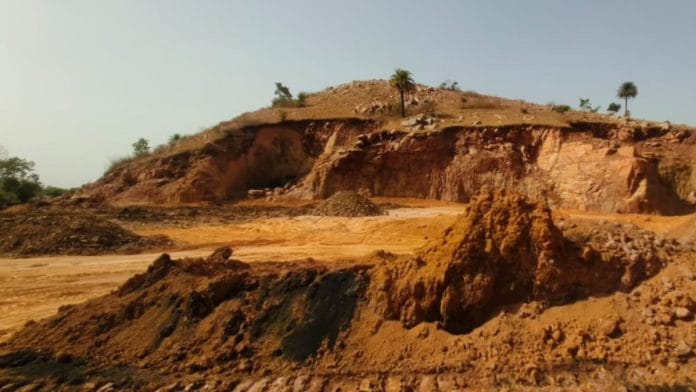


Badi Sadri: Under the harsh summer sun in Rajasthan’s Badi Sadri town, a protest movement over the dumping of industrial waste by Hindustan Zinc has continued for more than a month.
An indefinite hunger strike by six residents ended on 11 June after Chittorgarh Collector Manju Chaudhary met the protesters and assured them that the waste would be removed. But the wider agitation shows no signs of ending.
“They have been removing the waste for the past 10-15 days, but the pace is very slow. During a meeting on 18 June, held in the presence of Hindustan Zinc officials, the Collector had said that at least 200 dumpers would be deployed every day. However, that target was met only for a day or two. On most days, a maximum of around 100 dumpers have been used, and sometimes only 10-12 dumpers,” said Vimal Nagori, a resident of Badi Sadri.
Thousands of tonnes of industrial waste known as Jarofix — the material generated during the extraction of zinc — have been dumped by Hindustan Zinc Ltd across agricultural and residential areas in Rajasthan’s Chittorgarh district. Residents say the dumping continued for months and fear monsoon rains could contaminate groundwater.
According to villagers, activists, farmers, former public representatives and retired professionals, the dumping was carried out under the cover of a railway project connecting Badi Sadri with Madhya Pradesh. The 49-50 km railway line had permission to use Jarofix under specific conditions, but villagers say the material was dumped into deep excavated pits, spread across agricultural land and left in open areas close to residential neighbourhoods.
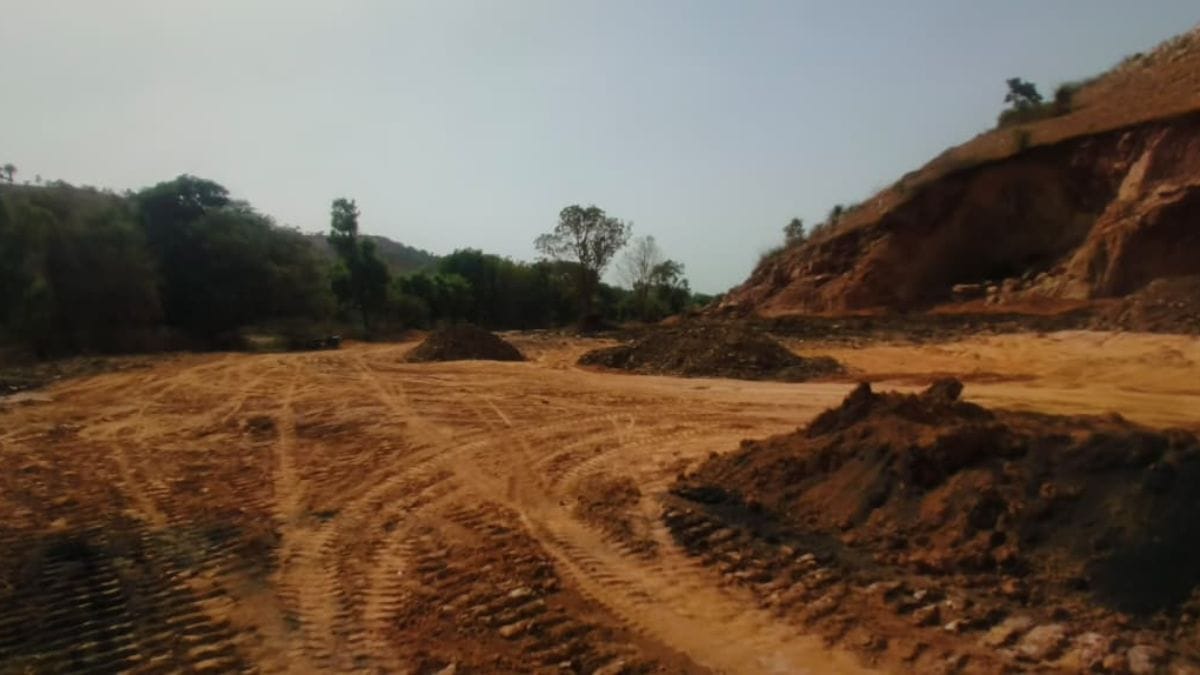
Jarofix is generally used only beneath concrete structures where there is little risk of seepage. It can be used under railway tracks if sealed beneath cement concrete, but not on open land. Residents allege that the Jarofix laid beneath the railway tracks was not covered by the required concrete protection.
Protesters argue that the dumping points to a larger failure involving contractors, oversight agencies and public authorities, and are demanding a CBI investigation.
Station House Officer Bhawani Singh told ThePrint that the investigation was still underway.
“It is not correct to say that Jarofix was dumped on farmers’ fields. It was dumped on hilly land. And it is difficult to believe that the landowners would not have known if it were being dumped there. Everyone was aware,” he said.
Former local representatives, however, allege that multiple government agencies failed to act despite the scale of the operation.
“Neither the police nor the mining department acted, despite an estimated 10 lakh tonnes of material being excavated and removed. No proper investigation has been conducted, and only a weak, bailable case has been registered. No arrests have been made. Had the correct FIR been filed, it would have been a non-bailable case. Instead, the entire matter is being covered,” said Mustafa, 55, former chairman of Badi Sadri, who served until 2023. “Politicians might be involved in this. That’s why it is being suppressed.”
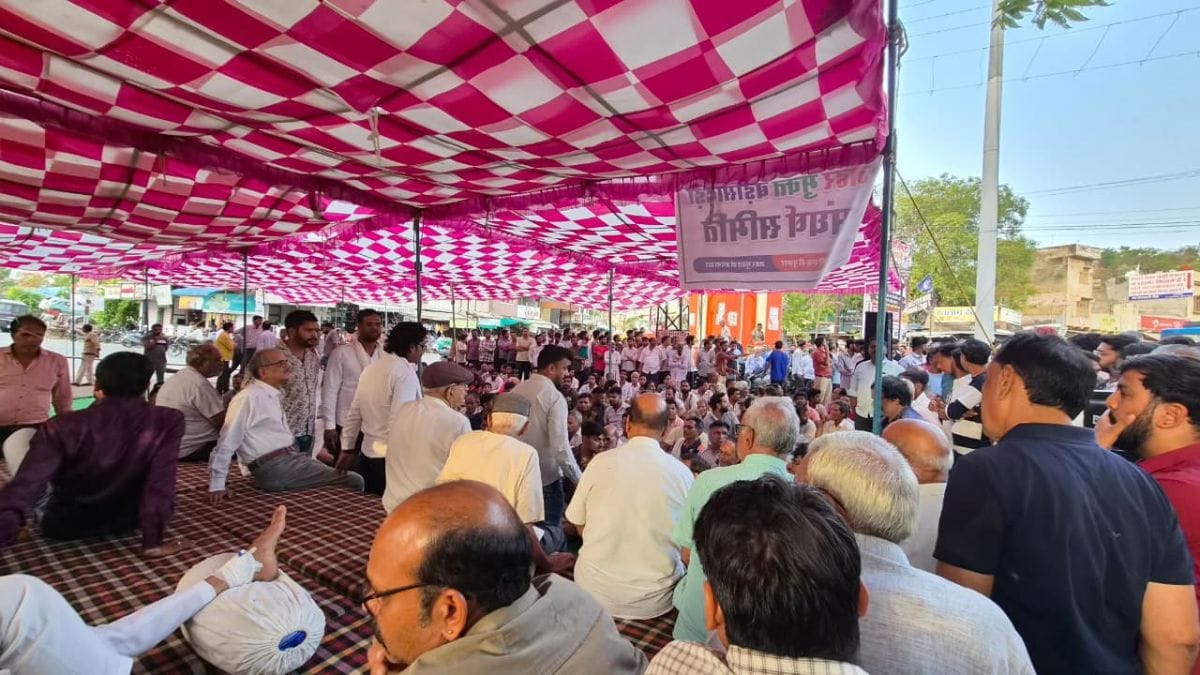
The protest has also begun yielding some administrative action.
On the 35th day of the protest, members of the Poison-Free Badi Sadri Struggle Committee met officials of the mining department in Nimbahera, demanding action over illegal mining in the Shikarwadi and Shikarpura areas. The committee alleged that large-scale illegal extraction of gravel caused significant revenue losses and that industrial waste was later dumped to conceal the excavation.
Following the meeting, the department initiated proceedings to impose penalties worth Rs 18.48 crore on the offenders, including former officials and landholders. Protest leaders described it as the first significant breakthrough in the movement.
“There should be action against everyone involved in this. The railway contractor is also responsible, so why not file an FIR against him? This is not a minor issue–it is a crime and should be treated as one,” said Chandra Prakash Joshi, BJP MP from Chittorgarh. “The railway work had already been completed, so how did the Pollution Control Board grant permission for dumping at the site? Strict action should be taken to ensure that something like this never happens again.”
ThePrint reached out to Hindustan Zinc on 11 June, seeking its response to allegations concerning the dumping of Jarofix in and around Badi Sadri in Rajasthan’s Chittorgarh district. No response had been received at the time of publication.
Allegations of Jarofix dumping
For nearly two years, multiple dumpers and trailers moved through the area every day. Few people questioned their presence. But the assumption changed last month.
Residents say they discovered that material linked to Hindustan Zinc was being dumped not only near the railway corridor but also across open land, excavated plots and hilly areas surrounding the town.
“It was not just one place,” said Nihal Amita, 31, a resident. “In some locations it covered five bighas, in others twenty or forty bighas. We later learned that similar dumping had happened at several sites around the area.”
One location that particularly alarmed residents was the grounds of Adarsh Vidya Niketan School. Local people say suspicions first emerged when people who came into contact with the dust began experiencing skin irritation.
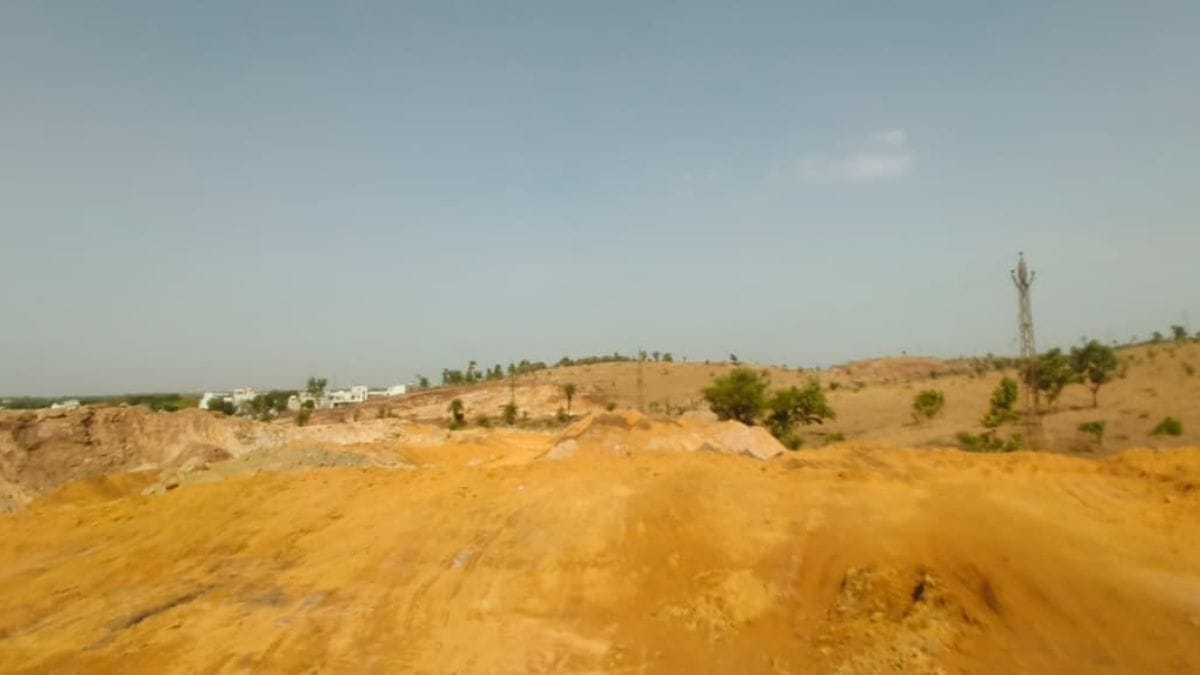
As the word spread, residents claim they learned that the material contained hazardous substances associated with zinc processing waste.
“Seven goats died after drinking water that had collected in a pit near one of the dumping sites. That was when people began looking more closely at what had been dumped there,” said Amita.
By 24 May 2026, concerns had turned into organised action. Residents submitted a complaint to the Sub-Divisional Magistrate (SDM), demanding that the material be removed. But no significant action was taken.
Two days later, hundreds of people gathered at Ghanta Ghar on the outskirts of Badi Sadri for a public meeting. A signed memorandum was submitted to the authorities, again demanding the removal of the waste.
Frustration continued to grow. On 30 May, residents organised a town-wide shutdown. Markets remained closed as traders, farmers and others joined the protest. The demonstration drew the attention of BJP MLA Gautam Kumar Dak, who addressed the gathering and promised action. But according to the protesters, the promised deadline came and went with little visible progress.
“After six days, barely any work had been done,” Amita said. “Maybe two or five per cent of the waste was removed at most.”
Protesters approached the district collector twice and were assured that the waste would be removed, but it was only on 11 June that Chaudhary visited the site.
“The visit took place on the condition that no one would ask questions and no one carrying a microphone would come near her,” said a resident.
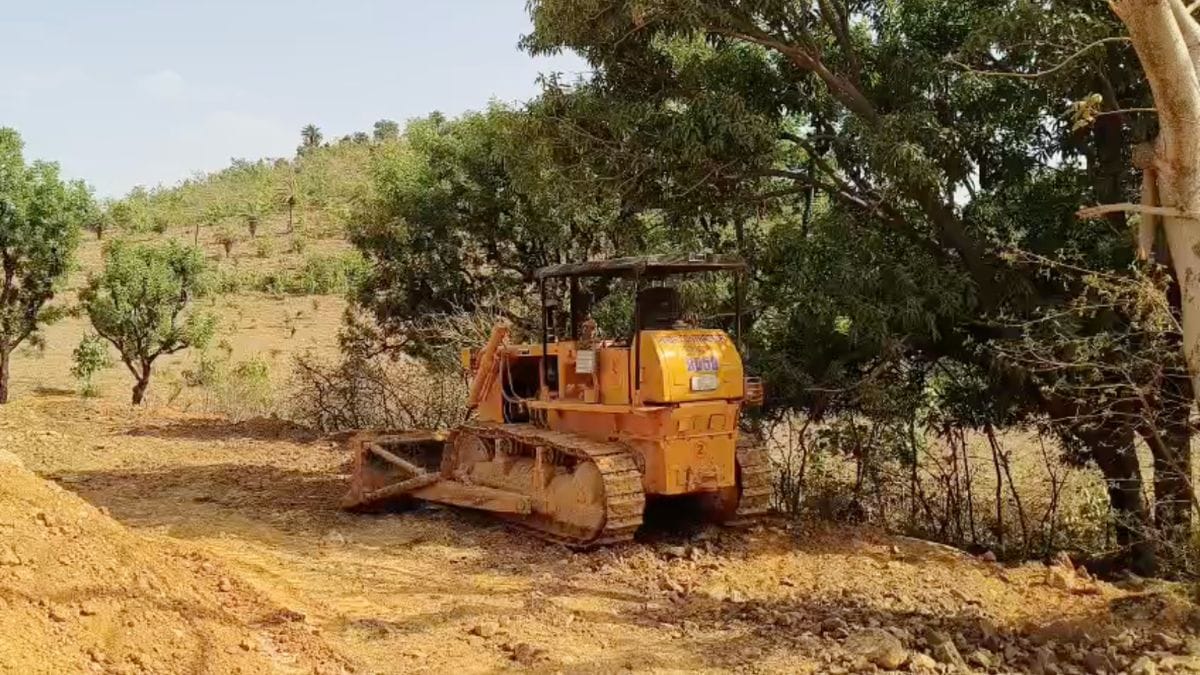
How people were persuaded
Among those joining the protest is Jagdish Dhakar (54), a farmer from Bheelya Khera village. He recalled how some villagers were persuaded to allow the waste material onto their land.
According to him, many did not know what was being brought into the area. They were allegedly told by a Hindustan Zinc contractor that the material being dumped was harmless and could improve the quality of their fields.
“The contractor told us that it was good soil and that there were no chemicals in it,” said Dhakar. “He said it was like potash fertiliser, something farmers already use.”
He said he farms soybeans and groundnuts and allowed two or three dumpers of the waste because he believed what he had been told. Today, he fears the consequences.
“Now the land will be ruined,” he said.
According to the protesters, similar conversations took place across several villages. Dhakar said many villagers were approached by a contractor associated with the railway project, whom they trusted. Mustafa alleged that the railway contractor and the Hindustan Zinc contractor were working together.
Vinod Kanthaliya, the current acting chairman of the village, said he continues in the role as no new elections have been held since his term ended. He reiterated Dhakar’s concerns.
“People were told that the material was potash fertiliser. These are simple, trusting villagers. Not only were they misled, but they were also actually charged money on the pretext that their pits were being filled with fertiliser,” he said. “This is a very big scam.”
Kanthaliya’s son Vishal is one of the people named in the complaint filed by Ranjeet Singh Jhala at Badi Sadri police station on 26 May, along with Ravinder Kumar Yadav, a resident of Neem Ka Thana in Sikar district, and Devlal, Bharat, and Raju Dhakar from Bali Ka Kheda village.
Kanthaliya defended his son, alleging that he is being made a scapegoat.
“The big people involved will never come forward, and they will never be caught. Instead, they are targeting the smaller fish. My son has done nothing wrong. He is being framed, and he will get bail,” he said.
Official clearance vs ground reality
An official permission letter issued by the Rajasthan State Pollution Control Board authorised Hindustan Zinc Limited to use up to 10 lakh metric tonnes of Jarofix waste in the construction of a railway embankment in Chittorgarh. However, the approval came with strict environmental conditions designed to prevent contamination and ensure regulatory oversight.
The letter makes clear that the waste was not meant to be dumped indiscriminately. The material was to be used only within the approved railway stretch and under prescribed safeguards, including encapsulation within layers of soil rather than being left exposed.
“It was informed by Shri Suresh Singh Rawat (village resident) that the work of waste management on the railway line is carried out by contractor Shri Ravi Yadav. A telephonic conversation was made with Shri Ravi Yadav, and in the conversation it was stated by him that this Jarofix waste is being brought from the plant of M/s Hindustan Zinc Limited located at Village Dariba, Tehsil Railmagra, District Rajsamand,” the report states.
But what happened on the ground, however, is now the subject of intense dispute.
“The 10 lakh metric tonnes of waste ended up being dumped across different sites in the area because, by the time permission for its use was granted, most of the railway construction had already been completed,” alleged Amita.
Now people have begun discussing who may have benefited financially.
Residents allege that some landowners with excavated plots and hillside land were paid as much as Rs 40,000 for each dumper that passed through their land, with some reportedly letting in more than 200 truckloads.
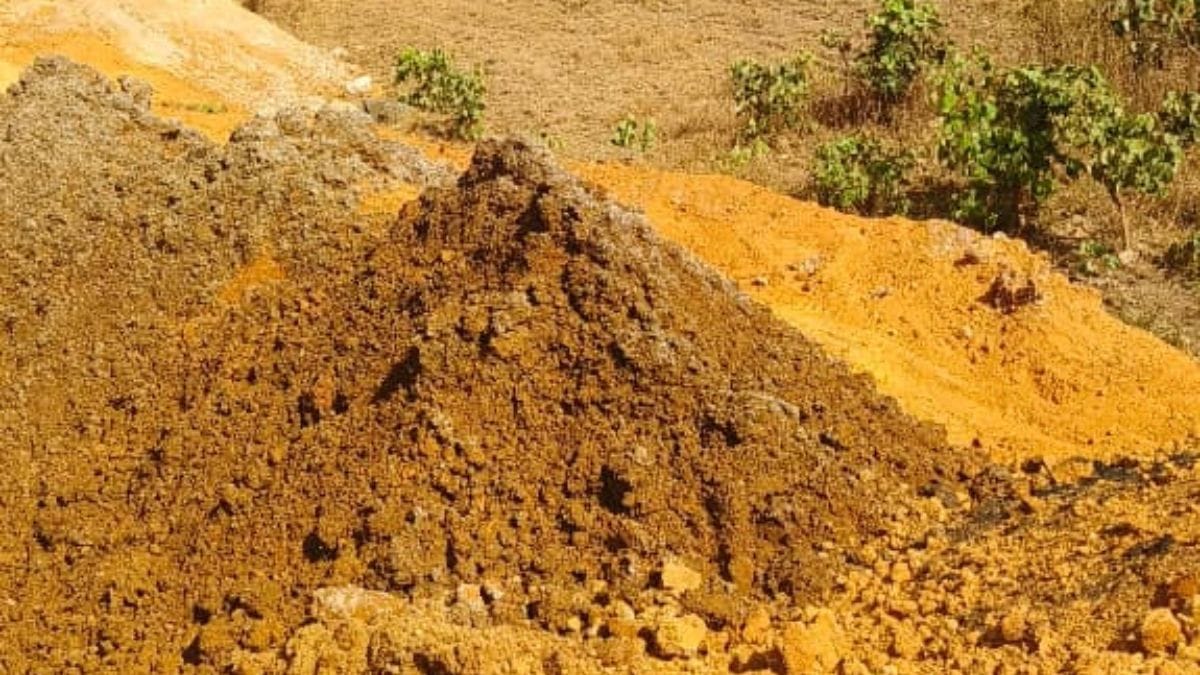
“Two or three people operating here are like a mafia,” said one resident. “They bought the land, illegally excavated soil and sold it to the railway. Then they were left with pits nearly 50 feet deep, which were later filled with Jarofix.”
While SHO Singh said the investigation so far has not revealed any evidence that money exchanged hands, these claims have become a major source of anger among protesters.
Mustafa and Kanthaliya raised questions about the approval timeline for the railway project and the pollution control authorities’ sanction.
“On 16 April, a train ran there. And the pollution control is issuing an NOC on the 16th to dispose of the chemical waste there. So the work of the railway was already done,” Mustafa said.
(Edited by Prashant Dixit)