





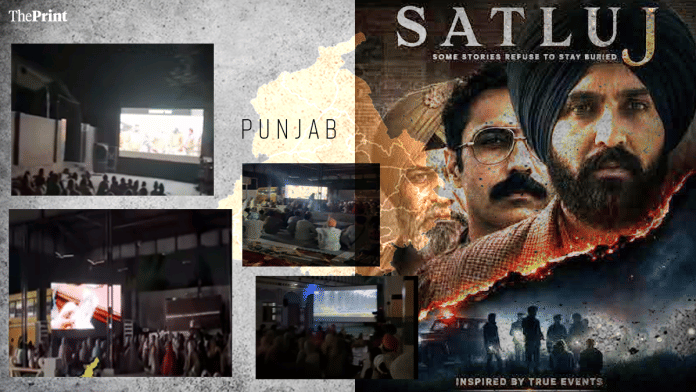


Chandigarh: As dusk settles over Punjab’s hinterland, the loudspeaker at the local gurdwara gives out a call. Not for a religious congregation or village meeting, but a film screening. By 7pm, people begin arriving, leaving their shoes outside, covering their heads before entering the gurdwara premises or taking their seats in the village sath (community area).
Children sit in the front rows, elderly men occupy plastic chairs at the back, women settle down in groups, and volunteers move around serving glasses of Rooh Afza. Large industrial coolers are deployed to provide relief. Playing on the giant LED screen is Satluj, the Diljit Dosanjh-starrer film based on the life of human rights activist Jaswant Singh Khalra.
The film, having reached audiences on the OTT platform Zee5 after a wait of four years and taken down within two days of its release, has now found second life in Punjab’s villages.
Dozens of screenings have been reported from Moga, Sangrur, Patiala, Hoshiarpur, Rajpura, Gurdaspur, Barnala, Bathinda, Amritsar, Ludhiana and other districts of Punjab. Volunteers, sports clubs, gurdwara committees, local volunteers and NRIs are pooling money for LED walls, projectors, sound systems, and refreshments for the screening, it is learnt.
The trend, which started from a community screening in village 6H Patrora in Anupgarh tehsil in Rajasthan’s Sri Ganganagar district—even Dosanjh took note of it—now appears to have spread to Punjab’s villages.
Over the past few days, screenings have been held in villages across Punjab including Sarai Majra in Rajpura, Balian in Barnala, Chak Sarain in Jalalabad, Mehraj in Patti, Rajoana in Ludhiana, Khehra Sultan in Gurdaspur, Hathur in Ludhiana, Nangli in Amritsar, Manawan in Moga, Kishanpur (Bakshiwala) in Patiala, Lehal Kalan in Sangrur, Wareh in Moga, Bharowal in Hoshiarpur, Sangheri in Sangrur, Smalsar in Moga, and Thikriwala in Barnala.
In Moga town, the film was in fact screened in the main market area.
But the screenings have no single organiser. In some villages, sports clubs have pooled resources to arrange LED walls and sound systems. Elsewhere, volunteers associated with local gurdwaras have coordinated the screenings. In several places, residents say the entire cost was borne by a local family or Punjabis settled abroad who wanted the film to be watched after it was taken down from OTT.
“The response to the community shoring of the film is huge,” said Prabh Deol, who helped screen the film at his banquet hall in Balian at the request of local villagers.
Several Punjabi bloggers are also promoting the screenings on Facebook and Instagram. Each evening, social media posts announcing fresh screenings appear from different villages, while videos shared online show packed audiences watching the film.
Sultandeep Singh, who runs a fitness academy, ran announcements about the screening of the film in his village in Udhowal Kalan in Ludhiana.
Aman, a resident of Raikot, Ludhiana, who rents out LCD walls and sound systems, said he has bookings to show the film for the next several days in multiple villages across Punjab. “We are hired to screen the film in some villages nearby. But with each day the demand is increasing. We are charging only the amount required to pay for transportation of the screen and the sound system, and for the labour,” he told ThePrint.
Moreover, the complete film is available on multiple Facebook pages and in parts on Instagram. Copies downloaded during the brief period when Satluj was available online have been circulated privately and are now being used for the community screenings.
Hours after the film was taken off the OTT platform, Dosanjh himself had encouraged fans to watch the film from downloaded links.
In villages where screenings are being held, announcements are often made through the loudspeaker installed at the local gurdwara. The screenings typically begin after 6 pm, once local villagers have returned from work in the fields or their shops.
In villages where the screenings are held inside gurdwara complexes, attendees remove their shoes and cover their heads before entering.
In Chak Sarai near Jalalabad, organisers distributed Rooh Afza to the audience. Elsewhere, villagers contributed refreshments or arranged drinking water, while volunteers helped set up chairs, audio equipment and coolers. Families attended together, turning what would ordinarily have been an individual streaming experience into a shared public event.
The extraordinary public response marks yet another chapter in the long and troubled journey of a film that only recently emerged out of a protracted four-year battle with the Central Board of Film Certification (CBFC).
Protracted battle with CBFC
Directed by Honey Trehan and starring Diljit Dosanjh as Jaswant Singh Khalra, Satluj narrates the story of the human rights activist who documented alleged illegal cremations and disappearances of Sikh youth during Punjab’s militancy years.
Khalra was abducted from outside his Amritsar residence in September 1995 and later murdered. Years later, six Punjab Police personnel were convicted in connection with his abduction and murder.
Trehan has said work on the film began several years ago, with shooting commencing in 2022. According to him, his team wrapped up the project by the end of that year but the film remained stalled because of certification issues. The filmmakers have maintained that CBFC sought extensive changes—including alterations to the title and even Khalra’s name—which they were unwilling to accept, resulting in a prolonged delay in the film’s release.
Originally announced as Punjab ‘95, a reference to the year Khalra was abducted and killed, the film eventually reached audiences under the title Satluj. Yet among many supporters on social media, it continues to be referred to as Punjab ‘95.
Throughout the prolonged delay, Dosanjh continued to speak publicly about the film, often describing it as a story that deserved to reach audiences. Trehan recounted that the actor agreed to be part of the project almost immediately after reading the script and stood by it through years of uncertainty. In interviews after the film’s release, Trehan said the makers were firm on preserving the integrity of the story despite the prolonged certification battle.
When the film finally premiered on ZEE5 earlier this month, it did so quietly, without the fanfare that usually accompanies a major release. But within two days, it was no longer available for streaming in India, with the platform saying it had taken the decision “in light of current developments” and was exploring legal options.
The move ignited a debate about Punjab Police’s role during the peak of militancy. While one side focused on the competence and bravery of police personnel who brought an end to decades of violence and terrorism, highlighting that the film projected an exaggerated view, others said the story of “25,000” extra-judicial killings during that period needed to be told.
Politicians across party lines, Sikh organisations, civil rights activists and members of the film fraternity questioned the decision to remove a film that had already been granted CBFC certification. Many argued that audiences should have been allowed to watch the film and form their own opinion.
Among the strongest reactions came from the Secretariat of Sri Akal Takht Sahib.
In a statement issued Monday, Jathedar Giani Kuldeep Singh Gargaj termed it an attempt to suppress freedom of expression and prevent the truth from reaching people. Referring to Khalra’s work in documenting alleged extra-judicial killings and illegal cremations during Punjab’s militancy years, Gargaj said Khalra had painstakingly collected records that exposed one of the gravest human rights violations of the period. He said that while democracies across the world emphasise freedom of expression and protection of human rights, preventing the story from reaching audiences was “unconstitutional and unjust”.
The controversy has also prompted a fresh review by the central government. After representations from Punjab BJP leaders, including state BJP chief Kewal Singh Dhillon, the Centre has constituted a three-member committee to examine the circumstances surrounding the film’s removal from the streaming platform.
ਜਦੋਂ ਹੀ "ਸਤਲੁਜ" ਫਿਲਮ ਦਾ ਮਾਮਲਾ ਮੇਰੇ ਧਿਆਨ ਵਿੱਚ ਆਇਆ, ਤਾਂ ਮੈਂ ਸੁਚਨਾ ਪ੍ਰਸਾਰਨ ਮੰਤਰੀ ਸ੍ਰੀ ਅਸ਼ਵਨੀ ਵੈਸ਼ਨਵ ਜੀ ਨਾਲ ਗੱਲ ਕੀਤੀ ਅਤੇ ਇਹ ਮਾਮਲਾ ਉਹਨਾਂ ਦੇ ਧਿਆਨ ਵਿੱਚ ਲਿਆਂਦਾ। ਇਹ ਬਹੁਤ ਹੀ ਸੰਵੇਦਨਸ਼ੀਲ ਮੁੱਦਾ ਹੈ, ਜਿਸ ਨਾਲ ਪੰਜਾਬ ਦੇ ਲੋਕਾਂ ਦੀਆਂ ਭਾਵਨਾਵਾਂ ਜੁੜੀਆਂ ਹੋਈਆਂ ਹਨ। ਮੈਂ ਧੰਨਵਾਦ ਕਰਦਾਂ ਮਾਨਯੋਗ ਮੰਤਰੀ ਜੀ ਦਾ,… pic.twitter.com/SBF315U2Ku
— Kewal Singh Dhillon (@KewalDhillonPB) July 7, 2026
Separately, the issue is also being examined under provisions of the Information Technology Rules, raising the possibility that the decision could be revisited.
(Edited by Amrtansh Arora)
Also Read: Now, Pakistanis want Maryam Nawaz to screen Diljit Dosanjh’s Satluj