





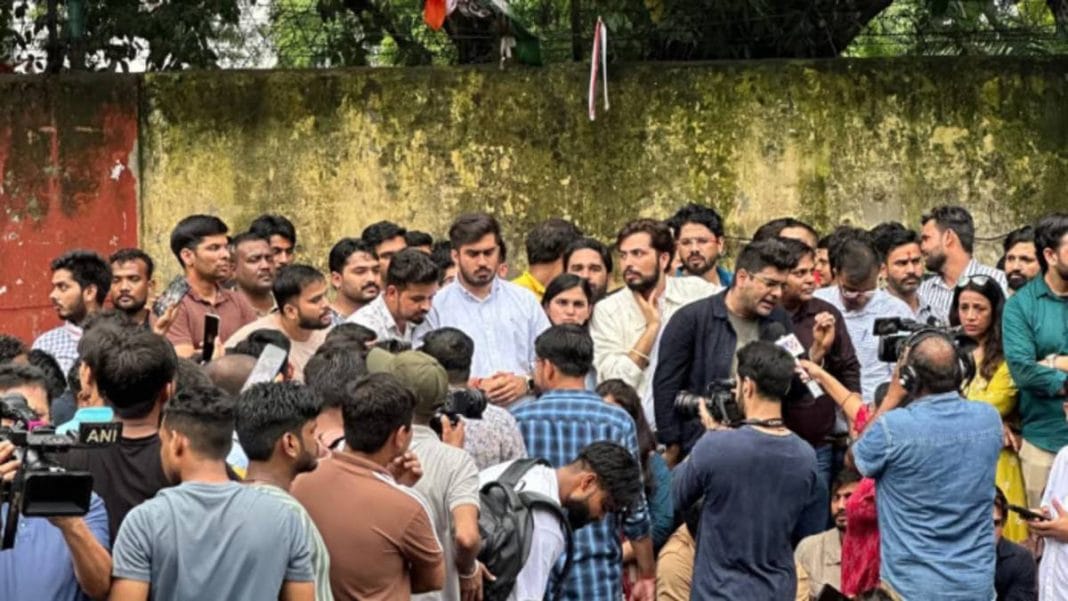


Last year, we all got news about the protest over mismanagement in the conduct of the SSC (Staff Selection Commission) exam, which has jeopardised the lives of hundreds of thousands of youth waiting for years for that one opportunity.
The authorities were alleged to be complicit in the fiasco resulting from giving the responsibility for conducting the exam to a third party (Eduquity), different from the TCS that used to conduct the exam till now.
The issues that have been highlighted in this case include wrong question papers, unfair allotment of centres, last minute shuffling of exam centres, and failure to upload the admit card on the portals on time. Unfortunately, the mismanagement in conduct of exams and paper leaks is neither new nor uncommon in India.
In 2024, ahead of the results of the Lok Sabha elections, the nation was shocked by allegations of irregularities in the NEET-UG exam, which decides the fate of hundreds of thousands of students all over India.
In fact, over the last few years, around 41 exam papers were reported to have been leaked in states like Uttar Pradesh, Bihar, Rajasthan, etc. An estimated 14 million aspirants have been impacted by this and around 1 lakh posts are yet to be filled.
Even though the NTA (National Testing Agency) announced re-examination of 1,563 students who received grace marks in the 2024 NEET-UG exam, frequent cancellation and then conduct of re-examinations is a colossal and unnecessary waste of resources for the nation.
If that was not enough, another major exam, UGC NET, got cancelled in 2024 because of similar reasons, which has raised questions about the direction we are heading, and the future we are envisaging for the youth of our country.
The sad part is that the authorities have done little to address the grievances of students. The courts are burdened by Public Interest Litigations filed in such matters, but by the time the court pronounces a judgement in such cases, precious years of the job-seeking youth of the country are already lost.
Exam cancellations & administrative crises
The exam crisis is causing deep resentment among students and aspirants, and now the voice of disapproval has become louder.
In 2021, the UP government received criticism for the cancellation of 17 exams, but the problem continued. Subsequently, the 2024 UPPSC exam for RO and ARO (Review Officer/Assistant Review Officer) was cancelled over allegations of paper leak.
Rajasthan too has witnessed cancellation of government recruitment exams. The Telangana Public Service Commission’s Group-1 Mains exam was under controversy while in Assam, there was a huge row due to alleged leak of Class 10 board exam paper.
In 2021, papers of the General Departmental Competitive Examination (GDCE) of the Western Railways were reportedly leaked. The list goes on and on.
Injustice to youth
India has a sizable youth population, which can be a major asset for the nation’s development and a major determinant of our workforce. But, over the last few years, the youth have been visibly distressed owing to the failure of the government to check the corruption in recruitment exams, which could have been the entry point to government service.
In the absence of a transparent policy to conduct exams and ensure timely recruitment, millions of youth find themselves helpless. The nation finds itself embarrassed because of the alarming rate of paper leaks, cancellation of examinations and irregularities in the same.
Such scams adversely impact the global projection of India as a country for the youth, with about 50 percent population below the age of 25. It will be a great disservice to the nation if we are not able to address the needs of such a large section of society.
The issue of unemployment is part of the election manifesto of all political parties, so the government should also prioritise the systematic conduct of examinations, and use the invaluable human resources to their optimum potential.
This crisis is particularly stressful for the youth coming from small towns and rural areas, as well as aspirants from lower-middle and middle classes, for whom the exams are a means to attain economic stability and upward social mobility.
Many students prepare for these exams for years, spending their last penny, and living in penury to secure employment, but the failure of the administration to conduct these exams properly propels them and their families into emotional and financial distress.
Private enterprises can secure skilled labour at a low cost, as there is an army of educated and unemployed youth desperate for jobs. Currently, a significant proportion of the youth is either unemployed or employed in under-paying jobs.
For students, the cancellation of exams means a disruption of the academic calendar, as the schedule of the school and university falls into disarray. For research scholars, it means delay in securing funds and scholarships to further their research.
Moreover, the crisis underlines the failure of the entire administration apparatus, and the failure of the central government to look after the interests of the youth.
The failure of the government to take cognisance of the needs of students can have deeper repercussions for society, ranging from drug abuse to violence to unlawful activities, leading to a snowball effect, which will be detrimental for the socio-political stability of the nation.
Santosh Kumar is a PhD student, Department of History, University of Delhi. Views are personal.
Also Read: Delhi’s jhuggis are right next to gas pipelines. They still cannot get a connection