



Welcome to The First Metro. I am Manasi Phadke, a thoroughbred Mumbaikar and once every fortnight, I try to bring to you a glimpse of India through Mumbai-tinted glasses. Trust me, the hues seem different.
Mumbai has seen its fair share of boardroom battles and corporate feuds—companies with high stakes fighting with each other, tussles over inheritance and power, ego clashes, the old generation versus the new, and so on.
The battle between Dhirubhai Ambani and Nusli Wadia, for one, has been among the fiercest. It also had an alleged assassination plot. Then there was the very public sparring between Dhirubhai’s two sons over distribution of businesses, part of his legacy; the squabble within India’s largest law firm—Amarchand & Mangaldas & Suresh A. Shroff & Co.—between brothers Cyril and Shardul Shroff that led to its split; and the theatrical dispute between father Vijaypat Singhania and son Gautam Singhania of the Raymond Group.
In between all of this, over the years, there was also the L&T thriller, the several attempts to allegedly take control of the country’s largest engineering and construction conglomerate—from Dubai-based businessman Manu Chhabria, then from the Ambanis who had started stacking up their stake in L&T ironically to protect it from slipping into Chhabria’s control, and then the Birla Group. The Birla Group eventually got its coveted cement business, but sold its 15 percent stake in L&T to the company’s new employees welfare trust.
All of these stories have been popcorn-worthy. They grabbed headlines while they were unraveling and avid readers followed every detail. But none of them, perhaps, have managed to evoke the same emotion among ordinary Mumbaikars like me as the boardroom battles of the Tatas, especially the one that’s ongoing.
It’s tough to exactly put this sentiment into words. It’s probably intrigue, with a touch of familiarity. Like the battle’s much closer to home than others.
Tata features in the everyday life of Mumbai citizens far too often, in far too many places. It’s a corporate group, but people experience it in the city almost like its civic infrastructure. Whether it’s art, sport, health, education, power, or hospitality—everyone in Mumbai has had a bit of Tata in their lives, one way or another.
Here’s my Tata experience as an average Mumbaikar. Back when I was with The Indian Express in 2014, I was getting ready one September fine morning and preparing to rush for my meeting at our newsroom in Nariman Point, and the ceiling fan suddenly slowed down to a grinding halt. While the day initially seemed bearable, it gradually became oppressive. The power had gone out in our entire building. We never lose power in Mumbai. I was sure it was going to be a five-minute snag and that the ceiling fan would start whirring again any moment.
Five minutes later, the electricity was still not back. But my phone was inundated with messages about a major power outage in the city that eventually lasted about 15 hours in some localities. That was the biggest story of the day in Mumbai, a city which hardy ever experiences power cuts.
That was the first time I learnt why Mumbai has uninterrupted power supply.
In 1981, Tata Power had set up an ‘islanding system’ to intentionally isolate Mumbai’s power network during large external grid disturbances, allowing distribution companies to continue supply. The islanding system couldn’t protect Mumbai this time because the glitch was inside the city’s local generation network. A 500 MW electricity generation unit of Tata Power Company in Trombay had tripped. Many parts of Mumbai, including large commercial areas such as Bandra Kurla Complex, Parel and Dadar, were affected.
There were a couple of more such incidents later which showed that Mumbai’s power demand had vastly shot up and that islanding was possible only for some portion of it, mostly for essential services. As a result, since then Tata Power’s islanding design has gone through several upgrades, along with other companies in the power supply space—Adani Electricity, Maharashtra State Electricity Distribution Company and the Brihanmumbai Electric Supply & Transport (BEST) undertaking.
As a child, I used to really look forward to the annual visit by my father’s friend from London, but not particularly because I loved meeting him. I don’t remember him all that well, except for a small absurd detail that he would wake up at 4 am, exercise and shower at 5 am. The seven-year-old me thought the man was nuts (the 39-year-old me has major respect for him).
The thing is, he would stay at the Taj Mahal Palace Hotel, and every year, when he would come to meet my father, he would bring with him a selection of pastries from the Taj bakery for me. I would spend the next couple of days devouring them, on a constant sugar high. The lemon tart was my favourite.
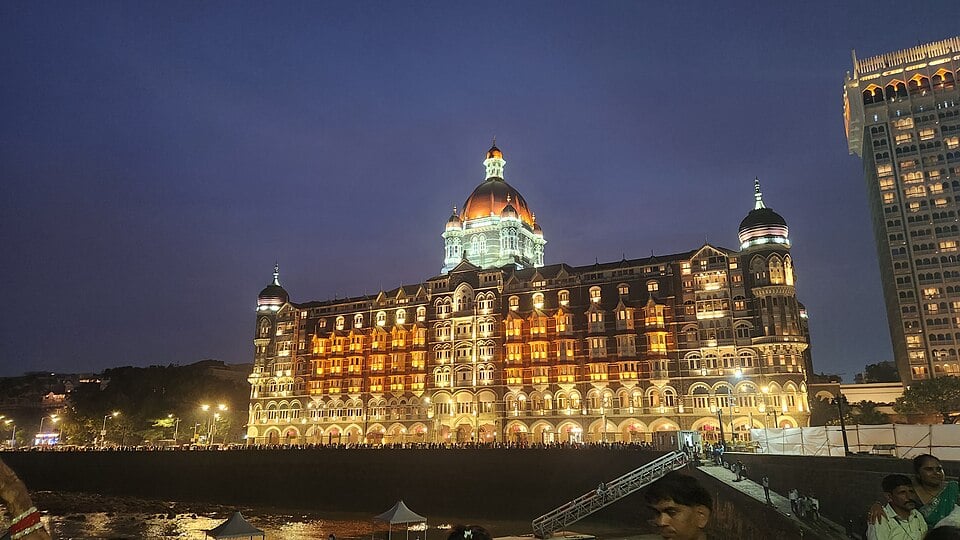
The Taj Mahal Palace Hotel has also been a key venue in my journalistic career. I have had some of my most interesting meetings here, and attended some of the most interesting conferences. I especially remember a day in January 2018, when Israeli Prime Minister Benjamin Netanyahu was in Mumbai, but the city’s focus was on another VIP—Moshe Holtzberg, or Baby Moshe, who had lost his parents, directors of the Chabad House that was one of the targets of the November 2008 terror attacks. Baby Moshe was the youngest survivor then, and had returned to Mumbai for the first time since the tragedy.
There was an India-Israel event at the Taj, and all of us journalists had gathered there. I was hoping to catch a glimpse of Moshe, who was also staying at the hotel. I happened to look up from the ground floor of the palace wing, and there he was, standing outside the breakfast area, looking down the grand staircase. I caught his eye and we exchanged a polite smile, after which he very shyly walked away inside.
Throughout my childhood years, I had often heard about how my mother had earned a Tata Trusts scholarship for higher education, when she was in college. The expectation was that history must repeat itself. Like mother, like daughter. I didn’t get it though. I gave a very bad interview, perhaps the worst one of my life. My mother’s education had a bit more of the Tatas. She also studied at the Indian Institute of Science.
Then there’s the beautiful National Centre for Performing Arts, the brainchild of J.R.D. Tata and Dr Jamshed Bhabha. Every time I went there, I dreamt of a day when I would be on one of the hallowed stages of the grand, resplendent establishment. My cousin brother beat me to it. He was studying at the University of Pennsylvania and was a member of their famous a cappella band ‘Penn Masala’. They were touring India and performed at the main Jamshed Bhabha theatre.
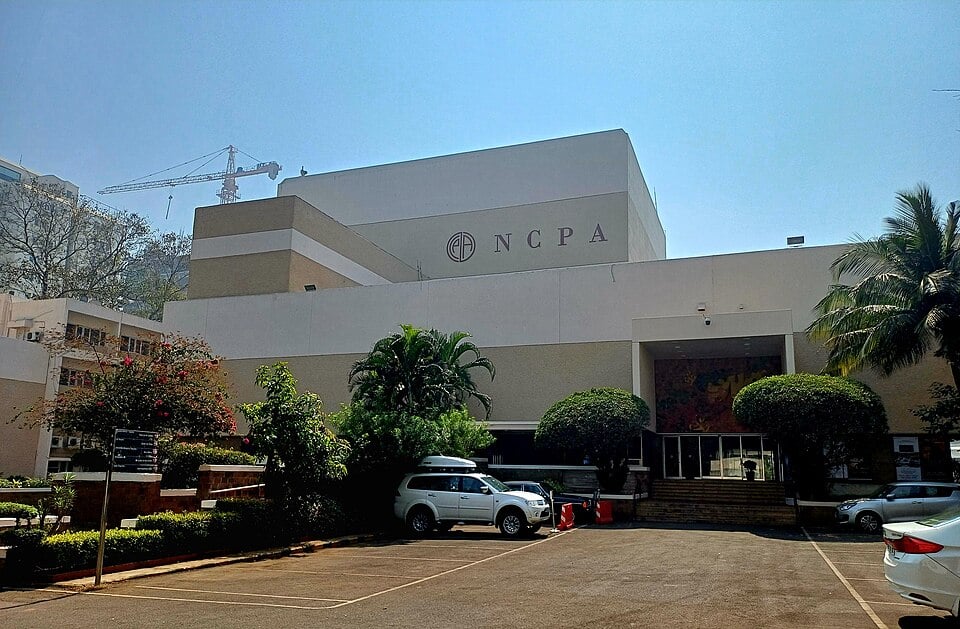
Eventually, I also got my time in the sun. I went on to perform a group Kathak performance, and a group modern contemporary dance performance at the Godrej dance theatre of the NCPA, and years later, received a journalism award at the Tata theatre. I also have very fond memories of learning from Kathak stalwarts Pandit Birju Maharaj ji and Aditi Mangaldas at NCPA.
Now years later, I often take my daughter there for several of their enriching performances. A particularly interesting one was about introducing Mozart to little children.
The Tata Group and Tata Consultancy Services have been title sponsors for the Mumbai marathon held in January every year since 2018. The whole city pours out to either run or cheer for those running.
Then, there’s TISS—the Tata Institute of Social Sciences—tucked away in a very green corner of Mumbai, near the BARC hill. The campus has always carried a very libertarian atmosphere, even after the ownership of the institution changed hands from the Tata Trusts to the Union government in 2023, and the administration and some of the faculty started increasingly clashing with students.
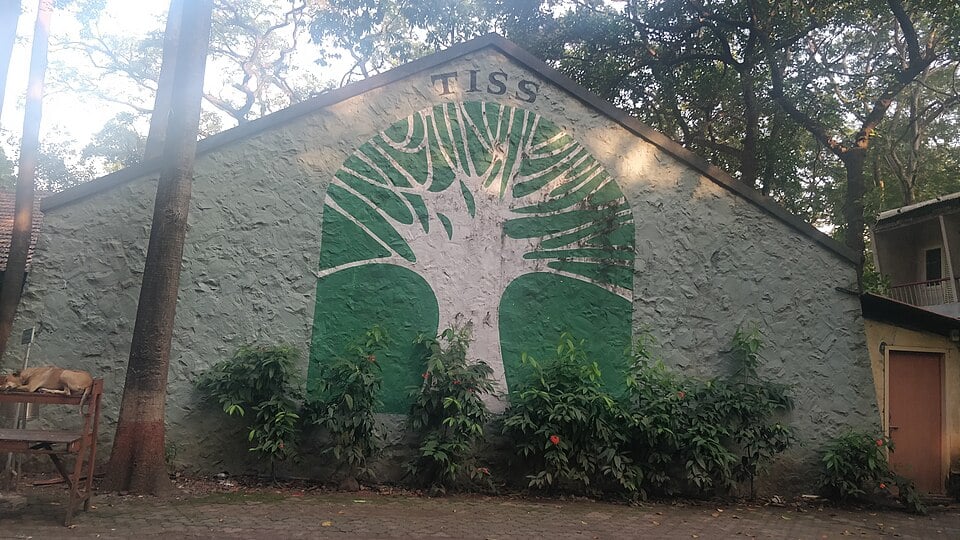
My colleague Purva Chitnis wrote a deep dive in 2024 on how these clashes had led to multiple controversies, and how TISS came to be just a shadow of its former self after the change in ownership.
The report began with an anecdote that perfectly encapsulates what TISS has always stood for. About a decade ago, a faculty member was discussing the Uniform Civil Code with her students, and asked them to write an essay on it. One student argued passionately in favour of the UCC. Having been a lawyer and an activist with her own set of experience and perspective, the teacher didn’t exactly agree with her student’s point of view, but gave him a very good grade. He had presented his argument with excellent clarity of thought, insightful background and a sharp perspective. And that deserved appreciation.
The institute has also often closely worked with the Mumbai civic body to study local urban problems, social problems and find solutions.
There are also institutions like the Tata Institute of Fundamental Research, Tata Memorial Hospital, and the Tata Trusts Small Animal Hospital, where my friend had once taken a rescue cat who had been run over by a motorcycle and was hanging on for dear life. The care given to the cat was top-notch. His injuries were too severe though, and he unfortunately couldn’t make it.
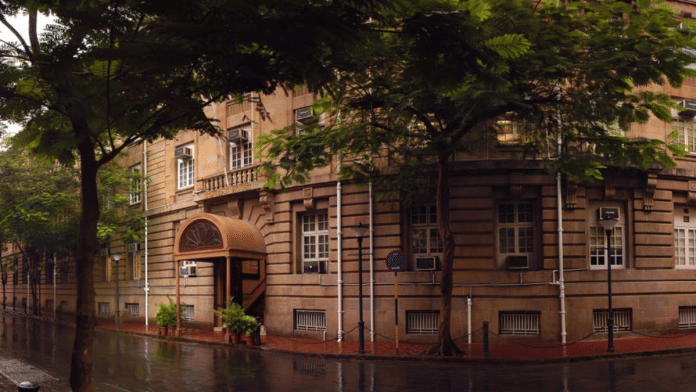
And then there’s the crown jewel of the Tata brand—the Bombay House—standing amid the chaos that the bylanes of Mumbai’s Fort neighbourhood house since 1924. Under Tata Sons Chairman N. Chandrasekaran’s leadership, the Bombay House went through its first comprehensive renovation between 2017 and 2018.
The building was designed by Scottish architect George Wittet in the Edwardian neo-classical style. In the refurbishment exercise, the heritage aspects of the building, the beautiful Malad stone facade were retained as they were. But, step inside and it’s a completely different world. The office is modern, chic, and plush but functional. Not lavish.
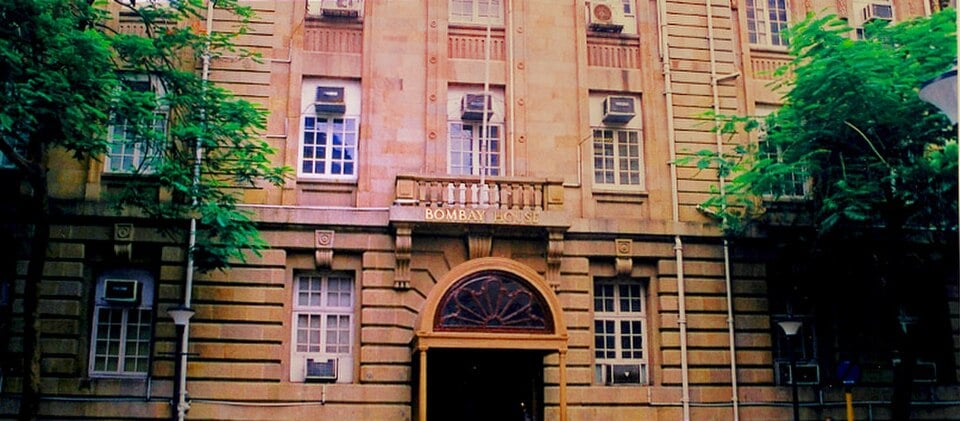
It was always the headquarters of a conglomerate where stray dogs could walk in for some food, water and shelter.
And so when Ratan Tata, who was still chairman of Tata Trusts before his death, was informed about the proposed renovation of Bombay House, his first question was: “When you say renovate, do you mean vacate? Where will the dogs go?”
The canines were taken care of during the renovation process, and once the building was ready, they also had their own special place—a separate kennel with space to jump around, rest, eat, and have a few sips of water.
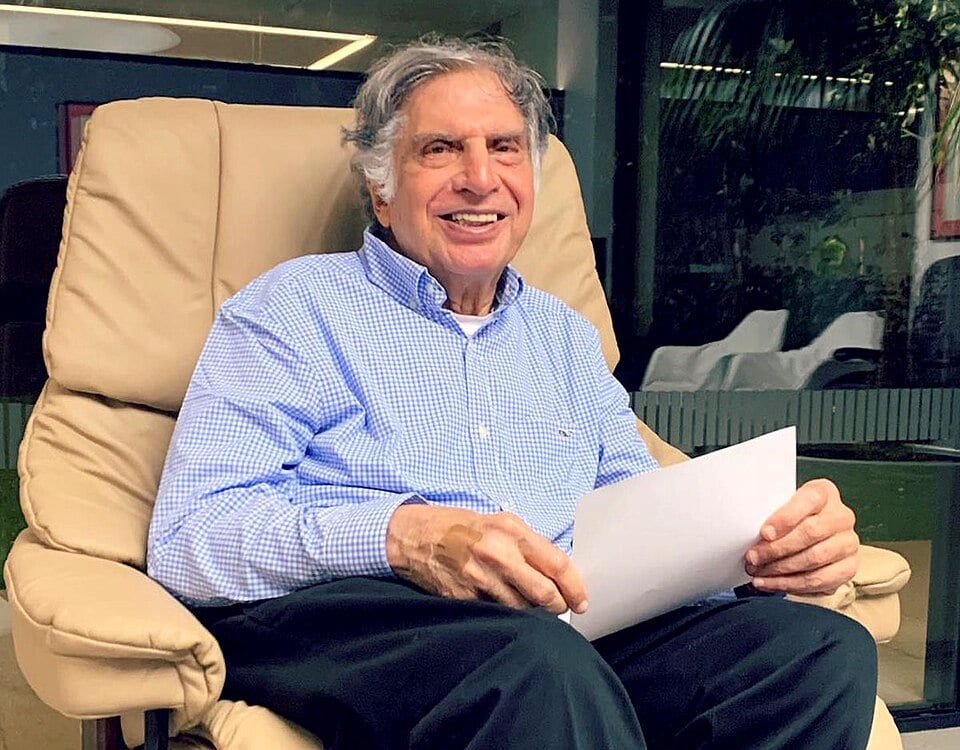
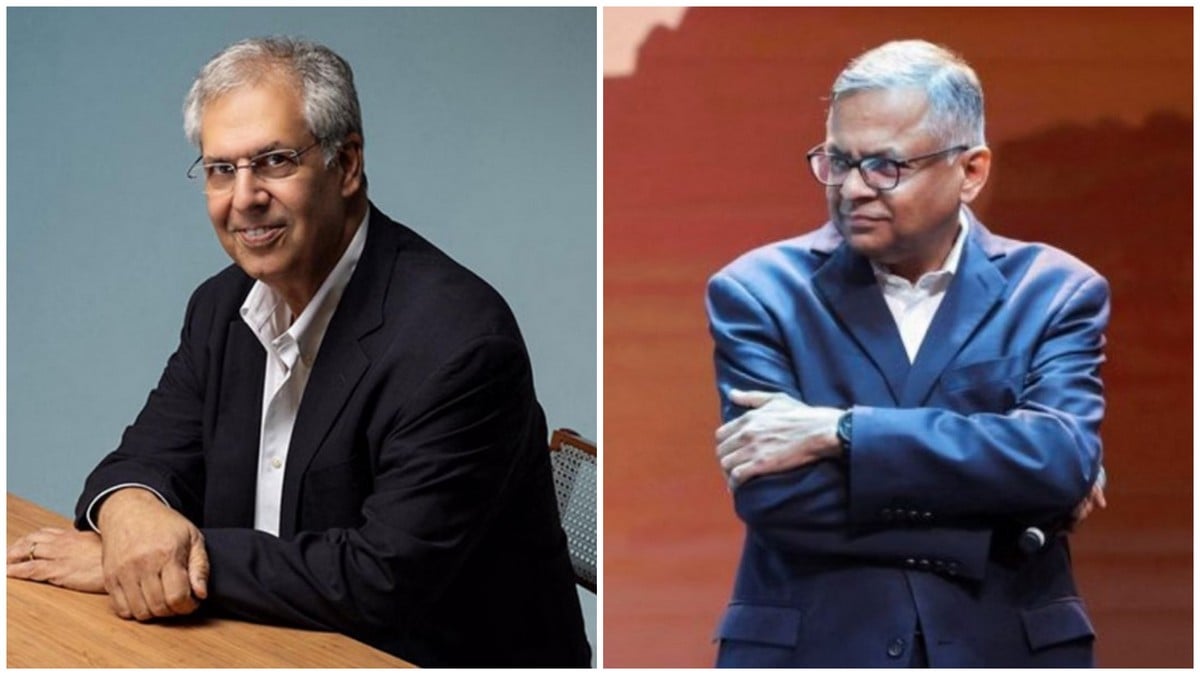
This very Bombay House is now ground zero of the Tata conflict. Noel Tata, current chairman of Tata Trusts and a director on Tata Sons board, is pitted against the rest of the holding company’s board on two major issues. One, the board’s decision to grant another term to Chandrasekaran, which Noel Tata had voted against. And second, the decision to list Tata Sons after RBI’s directions to the company to do so, which again, Noel had voted against.
The feud is being projected as a lot of things depending on which side one is on—professionals trying to outsmart the first family of a company (though the Tatas have never been a classic family first company); the legacy of the Tata business with philanthropy at its core being in danger if the holding company lists (an argument that deserves delving a bit deeper into, and understanding pros and cons of listing); and lastly, the relationship of the Tatas with Mumbai being symbolic of the relationship of the Parsis in Mumbai, and in the current war, there are players who are attempting to change that.
A Parsi, Noel Tata, Ratan Tata’s half-brother, who has had his fair share of differences with him, is directly pitted against non-Parsis—Chandrasekaran, and Venu Srinivasan, the vice chairman of Tata Trusts and the other director from the trust on the board of Tata Sons. Srinivasan has been pro-Chandra and pro-listing.
But, this Parsis versus non-Parsis argument is simultaneously true, and not true.
The chairman of Tata Sons was always a Parsi till Chandrasekaran came in. Or was brought in, to be more factual. He was the first non-Parsi chairman, with no relation to the Tatas through either blood or marriage, and it was Ratan Tata who had appointed him in 2017, sending a clear message that the Tatas are not just a Parsi community group.
Speaking to shareholders at a Tata Chemicals annual general meeting in 2010, Ratan Tata had said, “The Tata Group is an Indian Group, and we should not be looking at it as a Parsi group. The successor should be the right person and not anti-Parsi or pro-Parsi.”
I will be writing a longer piece on the Tata boardroom battle, where I can peel the layers off all these arguments and talk about who stands where.
Whatever happens inside the boardroom, it may not alter Mumbai’s existing relationship with the brands and institutions the Tatas have historically built. When I take my daughter to Taj, or watch plays with her at NCPA, she is already inheriting some of that Tata story. What happens in the boardroom may impact how she and others in her generation eventually perceive that story.
Also Read: The long and winding road to Goa
Thanks, Ms Manasi Phadke, for this article with your personal touch.. Not only Mumbaikars, but almost everyone in India has had a bit of Tata in him or her– one way or the other. Many families own their uplift to at least one Sir Dorabji Tata Scholar in the family or one Tata employee in the family. Tata salt, Tata Power, Tata Play etc… etc..