






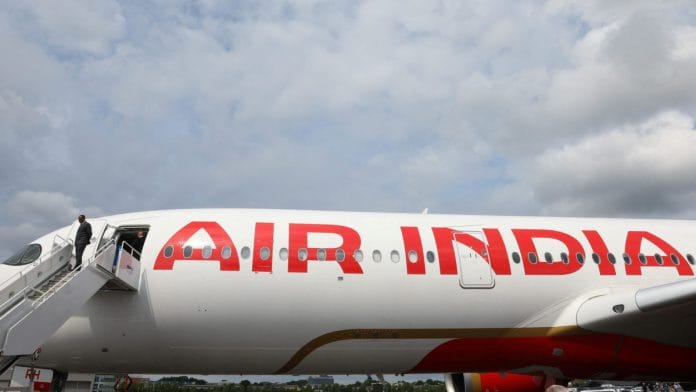

The general view is that the Tatas have made a hash of Air India. But it’s not a view I accept. Yes, there may or may not have been hash in the system of the commander piloting the flight from Phuket, where cannabis is legal and available on every street corner, but I am not sure we can treat that as a metaphor for the airline itself.
I speak as someone who takes at least a hundred flights on Air India every year (out of choice) and, from my perspective as a passenger, I have seen how much better the airline has got over the past few years.
While mine is not the conventional view, if you look at the complaints on social media, you will notice that there are fewer passenger complaints about Air India’s in-flight service, the quality of its food, delays and cancellations, or ground handling at most (though by no means all) airports.
The complaints that we hear most often now are about the condition of some of the long-haul aircraft. These are justified: defective seats have been sold to passengers; the in-flight entertainment system often does not work, tray tables can be wonky, and so on.
I know that Air India has tried to replace or refurbish those aircraft but has been stymied by delays in aircraft deliveries and a backlog at companies that make airline seats. But honestly, if a passenger has paid something like a lakh of rupees (and these days, much more), it’s not his or her problem that an airline has excuses for not having been able to add new planes to the fleet or buy new seats. Take a parallel: if you go to a Taj hotel (also Tata-owned) and find that the bed in your room collapses or that the bathroom sink is brown from years of wear and tear, you will not be satisfied if they explain that they have had difficulty refurbishing or maintaining the room.
That’s pretty much how passengers feel about the older Air India planes. It’s been long enough since the Tatas took over, they say. Surely they could have fixed all this by now?
It’s a valid point, but it will still take another year for the fleet to be refreshed and renewed, at which stage, hopefully, these problems will be largely resolved.
Also read: Air India has a problem. It should be much better run now without the political meddling
A string of troubles
But what all of the Tatas’ best efforts cannot change is luck. And Air India has been so unlucky that I sometimes wonder if it is jinxed.
There is, first of all, the human problem. The Tatas first chose a veteran executive from Turkey to run the airline and announced his name. The central government refused to approve the appointment. Desperate for a new candidate after the unexpected rejection of their prospective chief executive, they turned to their partners at Singapore Airlines, who sent Campbell Wilson, who had run a low-cost subsidiary of Singapore Airlines before. He was not the ideal choice.
Wilson’s solution was to spend billions on ordering lots of new planes. He talked about this incessantly in every interview. This was premature: the two big aircraft companies later announced that there would be long delays in delivering the aircraft Wilson kept bragging about.
Then came the Ahmedabad crash, which was either due to mechanical failures (or so the pilots say) or pilot error, as Boeing, which made the aircraft, has suggested.
Neither explanation reflects well on Air India or the civil aviation ministry, and one year later, we still don’t have a complete report assigning responsibility for the crash.
Then there was Pakistan’s ban on Indian airlines flying over its airspace. This meant that Air India flights had to take circuitous routes. More hours in the air required higher fuel consumption. As fuel is the major expense on most flights, this played havoc with Air India’s cost calculations. Suddenly, as losses mounted, Air India’s expansion plans began to seem wildly unrealistic.
Next came the war in Iran. This led to more diversions, longer flights, greater fuel consumption and therefore even greater losses.
It got worse: because of the war, oil prices went up. Because of the government’s mismanagement of the economy, the rupee kept collapsing. As many of Air India’s costs were in foreign currency, the losses reached ruinous levels.
Also read: When an RTI application with Air India revealed a govt double standard
High and low
That’s where things were until a few days ago, when passengers and cabin crew were injured after an aircraft dropped precipitously and suddenly while flying back to India from Phuket. Initially, Air India said it was turbulence. This sounded possible: in 2024, a similar turbulence incident on a Singapore Airlines aircraft led to a sudden drop in altitude and injuries to passengers.
But as more details emerge, the real cause of the incident seems to be different. A drug test apparently found marijuana in the system of the commander. As far as I know, such tests can detect hash and marijuana, but a) they can’t tell exactly when the drug was consumed and b) they can sometimes yield a positive result even when there are some medicines in the system and not marijuana.
However, there are also reports that the cabin crew complained about the behaviour of the pilot, which sounds like it may be consistent with the use of recreational drugs.
There is also the worrying suggestion that there was a mechanical failure in the aircraft (problems with the hydraulic system). It may well be that even if the pilot was high, the problems would have occurred anyway.
None of this offers much comfort to passengers.
After several months of uncertainty following Wilson’s understandable decision to step down, the Tatas have finally announced that Air India will get a new CEO: Tewolde Gebremariam. He is well respected in the industry, so that should help. But the positive impact of the appointment could be balanced out by the decision of Natarajan Chandrasekaran not to accept a new term as chairman of Tata. Despite the bad luck that Air India has faced, Chandrasekaran has been supportive of the airline and is a hugely popular and massively revered figure at Air India.
Ironically, Chandrasekaran was often criticised within the group for backing Air India at a time when losses mounted because of higher fuel costs, though it is not clear what anyone else would or could have done.
Chandrasekaran’s exit announcement has left many people at Air India feeling insecure about the future, the last thing the airline needs at the moment. The feeling at Air India is that the Tata takeover was a consequence of Ratan Tata’s desire to revive an airline originally founded by JRD Tata.
The world of the Tatas is complicated. Ratan and his half-brother Noel are the sons of Naval Tata, JRD’s distant cousin. JRD and Naval were not on good terms, and Naval did not necessarily share JRD’s vision for the group. Despite this, Ratan became very close to JRD and was emotionally committed to his dreams and vision. Chandrasekaran was handpicked by Ratan to lead the Tatas and shared his vision.
It’s not clear who will succeed Chandrasekaran and whether the new chairman will believe in the JRD-Ratan vision of the Tata Group. That could be crucial for Air India.
The problems faced by Air India demonstrate how difficult it is to run an airline in India. Most have closed down and the ones that remain don’t have it easy. SpiceJet is in trouble, and even if someone like Gautam Adani buys it, the challenges will remain. IndiGo has generally fared well, but its mass cancellations last December led to chaos and the sacking of the managing director. Singapore Airlines ran the curiously underwhelming Vistara, which simply could not reach the levels of Jet Airways. But even Jet Airways collapsed for a variety of reasons.
That the Tatas have chosen to invest thousands of crores in Air India says something about the group’s commitment to JRD’s vision. While nobody can make any predictions about fate and luck, there is every reason to believe that Air India will ride out this storm. But for that to happen, the post-Ratan-Chandrasekaran management will have to stay committed to the dream of a world-class Indian carrier.
But will it?
Vir Sanghvi is a print and television journalist and talk show host. He tweets @virsanghvi. Views are personal.
(Edited by Prashant Dixit)
Luck is the last thing one needs to blame for Tatas’ woes on Air India. First, they bought a shambolic airline that had a long track record of financial losses and lousy aircraft and service. Second, the June Ahmedabad crash and the recent Phuket incident show that safety has not improved one bit. Losses are only mounting, and this was true well before the Iran war. I have personally travelled both domestic and international – and the planes really suck. My Melbourne – Delhi flight was a disaster of unmitigated proportions. None of this can be blamed on luck
On a lighter note, childhood memory. When we did something truly unwise, mother would ask, Aap ko yeh karne ke liye Doctor ne kaha thaa.
I have a simpler view. They had no business buying Air India. Which the minister has acknowledged they were on the verge of shutting down of no sucker turned up. 2. Collateral damage is Singapore Airlines, which has lost $ 800 million due to its 25% stake, with more pain to follow. 3. For Tatas, managerial bandwidth is incredibly precious. It should not be wasted responding to a million aggrieved passengers on social media. Tata Motors needs to transition to electric vehicles. Artificial Intelligence. TCS itself preparing for the changes that AI will bring to its business model, as of the other iconic company Infosys which has lost half its market cap in the last five years. 4. Thoughts also go to Corus, a steel manufacturer from Europe which Tatas bought at the height of the commodities boom using a lot of borrowed money.
Wish all the best to Air India – I am one of its die-hard fans since decades – may it flourish forever.