





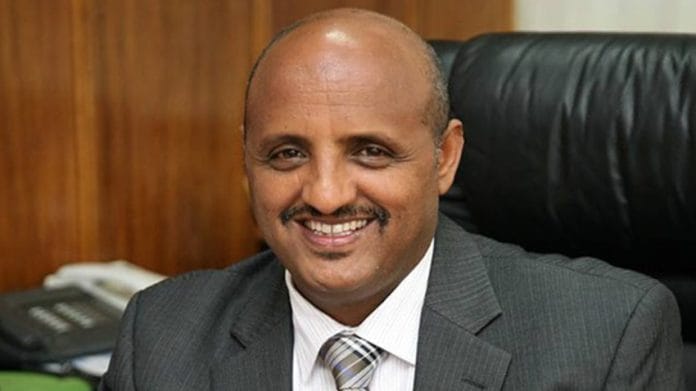


New Delhi: For more than a decade, Tewolde Gebremariam transformed Ethiopian Airlines from a regional carrier into Africa’s largest and one of the world’s most profitable airline groups. Now, Air India is banking on the Ethiopian aviation veteran to pull off another turnaround.
The Tata Group-owned airline on Wednesday appointed Gebremariam as its chief executive officer and managing director, replacing Campbell Wilson. The appointment comes at a critical stage for the airline, which is pursuing an ambitious expansion plan while grappling with operational challenges, regulatory scrutiny and the aftermath of last year’s fatal crash.
Gebremariam is no outsider to the industry, having spent nearly four decades in aviation. He joined Ethiopian Airlines in 1985 as a traffic officer in Addis Ababa and steadily climbed through the organisation, working across cargo, sales, commercial operations and overseas management. During the 1990s, he also served as the airline’s regional director for India and South Asia, giving him first-hand experience of one of the world’s fastest-growing aviation markets.
His rise continued through senior leadership positions. After heading marketing and sales in 2004 and serving as chief operating officer from 2006, he became group CEO in January 2011. Over the next 11 years, he oversaw one of the aviation industry’s most remarkable growth stories before stepping down in 2022 due to health reasons.
Before Air India’s announcement, Gebremariam had reportedly emerged as a preferred candidate to lead Pakistan International Airlines after its planned privatisation.
Why Tata Group wants Gebremariam to helm Air India
Under Gebremariam’s leadership, Ethiopian Airlines evolved from a regional operator into Africa’s largest airline group. Revenue grew from about $1 billion to nearly $5 billion, while the fleet expanded from 30 to more than 130 aircraft. Passenger traffic quadrupled, and the airline dramatically expanded its international network, turning Addis Ababa into a major hub connecting Africa with Europe, Asia, the Middle East and North America.
His strategy went beyond adding aircraft and destinations. Ethiopian invested heavily in aircraft maintenance and repair facilities, pilot training, aviation education, cargo operations and airport infrastructure, creating an integrated aviation ecosystem that reduced dependence on outside providers. The airline also modernised its fleet, becoming one of the first African carriers to operate aircraft such as the Boeing 787 Dreamliner and Airbus A350.
The airline remained profitable through multiple global disruptions, including the Ebola outbreak, the Boeing 737 MAX grounding and the Covid-19 pandemic. His tenure also included one of aviation’s darkest moments—the 2019 Ethiopian Airlines 737 MAX crash that killed 157 people. The airline, however, gradually recovered post-crash and continued expanding its operations. His leadership earned him several industry honours, including the International Civil Aviation Organization’s Award for Excellence in Aviation and CAPA’s Airline Executive of the Year award.
For Air India, those credentials explain the choice. Tata Group Chairman N. Chandrasekaran said that the airline needs a leader experienced in building profitable operations, developing global hubs and managing complex airline businesses. Those are precisely the capabilities Tata hopes will help Air India improve operational reliability, strengthen international connectivity and move towards sustained profitability.
(Edited by Aakriti Handa)