



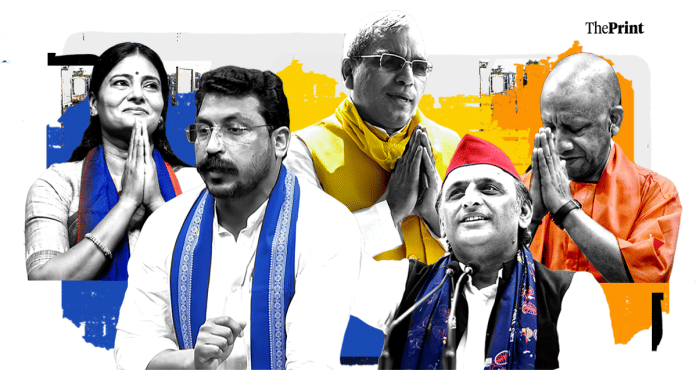
Lucknow: A white kurta-pyjama has long been a staple of politicians across the spectrum, not only as a way to stand out, but also deliver a message without saying a word. But in Uttar Pradesh, that white kurta is no longer enough to make a political statement.
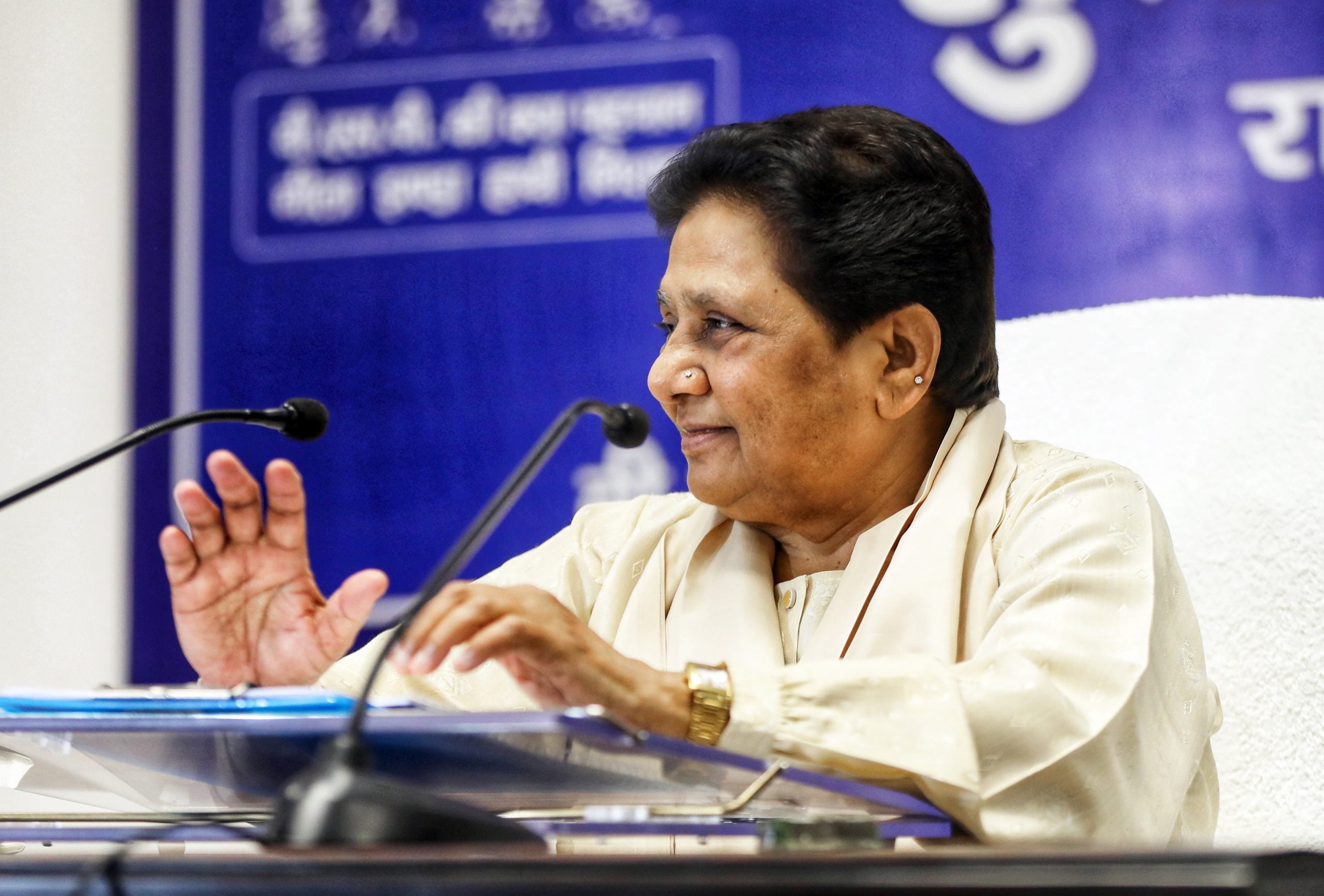
Every party has a colour associated with it, and many of them have adopted a shade of blue—traditionally associated with the Mayawati-led Bahujan Samaj Party—with the prominent exception of the BJP, and the Congress.
And as assembly elections come closer, the colours are becoming a talking point, with each party using its distinct colour identity to convey a political message.
Take the case of Samajwadi Party, for example.
In recent days, SP chief Akhilesh Yadav has been seen wearing a blue scarf (gamchha) alongside his trademark red cap. The party’s campaign ‘Rath‘ (chariot, which is a customised bus) has also incorporated blue alongside red, reflecting a broader shift in its political messaging. The move is seen as part of Akhilesh’s strategy to reach out to Dalit voters.
In its attempt to widen its voter base beyond the traditional Muslim-Yadav (M-Y) bloc, the SP has increasingly emphasised its PDA (Pichhda, Dalit, Alpsankhyak) formula, seeking to garner support of among backward classes, dalits and minorities.
The party’s student wing has also adopted a blue dress code recently. Its leaders will now wear blue T-shirts to go with their red caps.
According to a leader close to Akhilesh Yadav, the party chief has been paying close attention to colour choices as part of the SP’s broader emphasis on social justice, and played a key role in incorporating blue alongside the signature red.
The ruling BJP has long been associated with its saffron colour. The colour is so closely linked to Chief Minister Yogi Adityanath that even the towel draped over his chair is typically saffron. ThePrint has learnt that the state officials are also often instructed to ensure that a saffron towel is placed on his chair when he visits district offices for meetings.
Colour of alliance
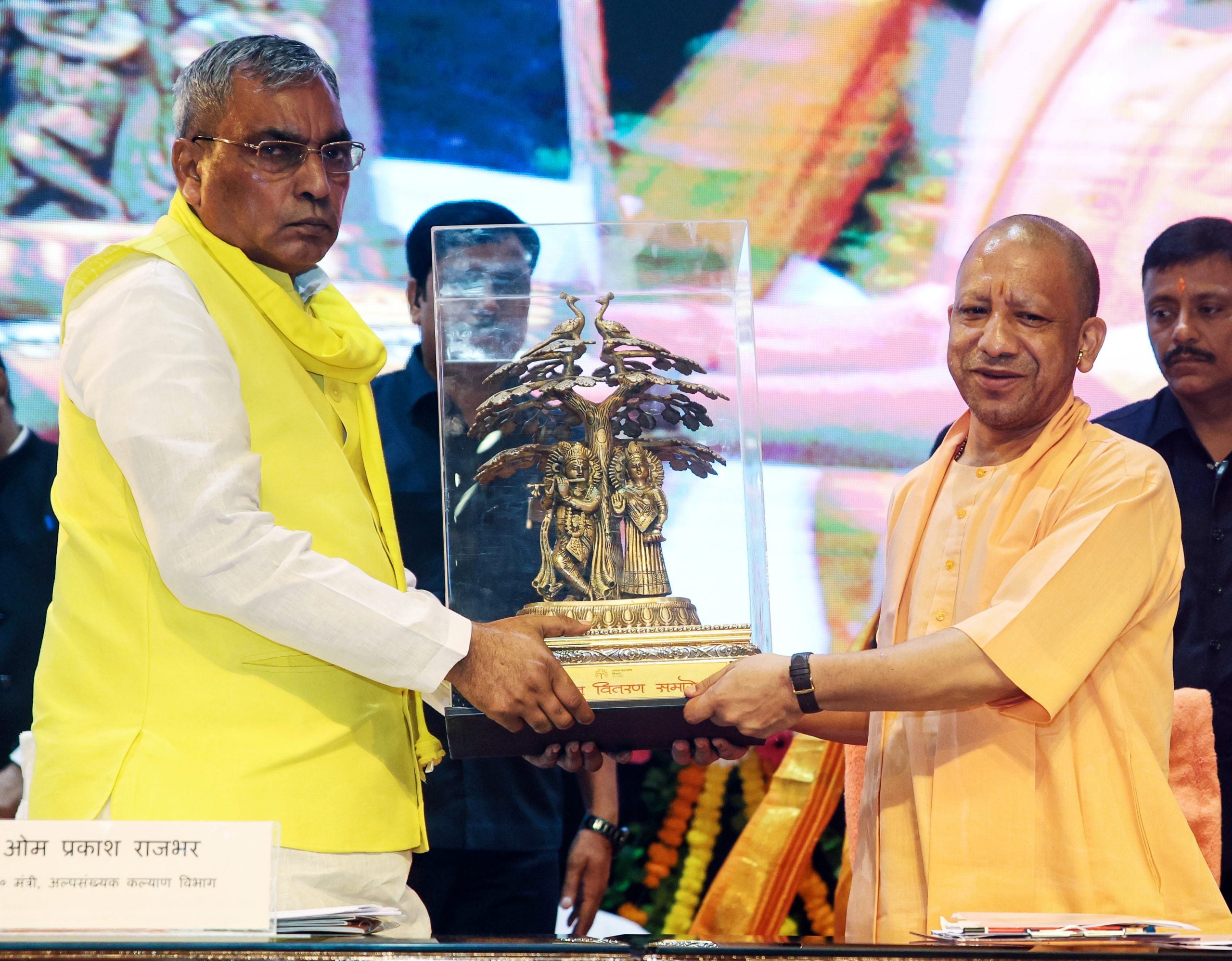
Among BJP allies, the Om Prakash Rajbhar-led Suheldev Bharatiya Samaj Party (SBSP) is identified with its yellow. Rajbhar himself frequently wears a yellow scarf, while his party’s flag is also yellow.
Arun Rajbhar, the party’s spokesperson and son of Om Prakash Rajbhar, said the colour had a historical and cultural significance for the community.
“We are descendants of Maharaja Suheldev, and his descendants are known as ‘Peetambar-dhari‘. They traditionally wear yellow clothes. You must have seen our leaders wearing yellow T-shirts on several occasions as well,” he said.
Another BJP ally, Sanjay Nishad’s Nishad Party, has adopted the red cap. Nishad, who likes to describe himself as the “political godfather of fishermen”, associates the red colour with revolution.
He says he wants to bring about a revolution within his community through politics, raising awareness and encouraging people to fight for their rights.
The Jayant Chaudhary-led Rashtriya Lok Dal (RLD), another key BJP ally, has a strong association with green. Green features prominently on its flag. RLD functionaries said the colour reflects the party’s identity as a farmers’ outfit, drawing inspiration from the green of agricultural fields. The party’s election symbol is hand pump.
Jayant himself prefers to wear a green scarf (Gamchha) during his rallies and visits in Western Uttar Pradesh, where the party has traditionally been strong.
BJP ally Apna Dal (S), led by Union minister Anupriya Patel, uses orange and blue in its colour scheme. Blue, in particular, reflects the party’s emphasis on social justice.
Blue has traditionally been most prominently associated with the Bahujan Samaj Party (BSP), which uses the colour extensively on its posters and banners.
However, its use is no longer limited to the BSP. The Azad Samaj Party led by Bhim Army founder Chandrashekhar Azad, also prominently uses blue, with Azad frequently seen wearing a dark blue scarf.
Professor Kaviraj, a political expert specialising on Uttar Pradesh, said colours had become an integral part of the state’s political landscape.
“UP politics is dominated by a variety of colours. You will find every colour here. However, in the current political climate, blue is increasingly visible everywhere. It is no longer restricted to the BSP’s posters and banners. Every party is trying to incorporate it in its own way because all parties have their eyes on Dalit votes,” he said.
“In Uttar Pradesh, a white kurta-pyjama alone is no longer enough to make a political statement,” he added.
(Edited by Ajeet Tiwari)