





If the words of Finance Minister Nirmala Sitharaman are anything to go by, the India-US trade deal is all but over. It has been stalled, with officials from both sides withdrawing to their cosy hotel rooms, leaving the negotiations inconclusive.
India-US trade negotiations have hit a ‘plateau’, as Sitharaman said that further mutual concessions are now very difficult due to tariff disputes and trade imbalances. The US Trade Representative, Jamieson Greer, has also said, “I don’t think there is something imminent,” although, according to him, negotiators have identified the remaining sticking points.
Confirming the pause in the negotiations, the Reserve Bank of India (RBI) Governor has cautioned about the negative impact of the failure to conclude a trade deal with the US, especially on some prime sectors, unless we can draw advantage out of recent Free Trade Agreements (FTAs) with some countries and improve diversification of export markets. Easier said than done.
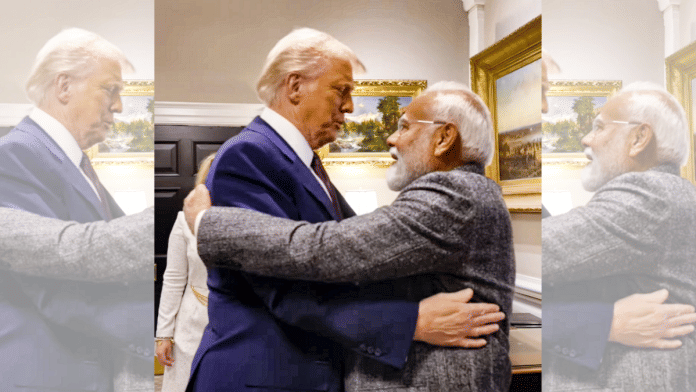
In February 2025, after the meeting of Prime Minister Narendra Modi and US President Donald Trump, the White House issued a statement, confirming the agreement between the ‘leaders of sovereign and vibrant democracies that value freedom, the rule of law, human rights, and pluralism’, and reaffirmed the strength of the India-US Comprehensive Global Strategic Partnership, anchored in mutual trust, shared interests, goodwill and robust engagement of their citizens.
Besides launching a new initiative, the “US-India COMPACT (Catalyzing Opportunities for Military Partnership, Accelerated Commerce & Technology) for the 21st Century”, it was also decided to work out plans to negotiate the first tranche of a mutually beneficial, multi-sector Bilateral Trade Agreement (BTA) by fall of 2025 to set a bold new goal for bilateral trade – “Mission 500” – aiming to more than double total bilateral trade to $500 billion by 2030.
Subsequently, when Modi hosted US Vice President JD Vance in New Delhi in April 2025, the two leaders officially finalised the Terms of Reference, creating a formal roadmap for the Bilateral Trade Agreement (BTA). The US expected the trade deal to include increased market access, reduction in tariffs and non-tariff barriers, and a robust set of additional commitments to ensure long-term benefits.
Also read: China Plus One strategy has failed. India couldn’t catch up, say Chinese commentators
US demands & what India is refusing to concede
Instead of long-term bilateral trade benefits, Trump began to look at his voter base, pushing for greater access for American agricultural products like tree nuts, fruits, soybean oil and animal feed, a truly major component in trade for the US. India drew a red line for produce like wheat, rice, maize, some spices and dairy products, as even a small quantity of imports of these will majorly affect millions of small and marginal farmers, a very sensitive and vocal vote bank in political terms.
Considering the recent bonhomie between the US and China, India has every reason to be apprehensive about wider US market access for goods like textiles, gems and readymade jewellery. While Indian negotiators prefer greater policy autonomy, the US considers these as non-tariff barriers and wants them dismantled.
Instead of paving the way for a final India-US trade agreement, the 6 February interim framework fell short of its promises. The US did eliminate an extra 25 per cent tariff on Indian goods, but the core deal—a mutual tariff reduction to 18 per cent—was swiftly undone by US court action and a subsequent change in the tariff regime.
Furthermore, the US moved to a different tariff regime, including a 10 per cent baseline tariff, while keeping existing product-specific/sectoral tariffs in place. Then, in July, the US imposed a new 10 per cent additional tariff on Indian goods, following an official investigation into imports made with forced labour.
For several Indian exporters, tariff uncertainty is what is posing a serious trade settlement issue. The negotiations will have to find a way to lock in tariffs, separate agriculture and the Russian oil issue from trade talks, narrow down differences and finalise the FTA/BTA on broad agreeable points.
Unrestricted opening into India’s agricultural market and totally disengaging from Russian oil purchases are probably two of the important non-negotiable demands of the US negotiators. In response to India’s agreement on these demands, the US could be willing to grant concessions like easier tariff treatment for Indian exports, provide a more structured and predictable tariff in place of punishing tariff threats, preferential treatment for Indian textiles, footwear, engineering goods, chemicals and other export products and a well-defined trade dispute mechanism.
So, everything that should be part of a negotiated settlement is being treated as give-and-take as well as demands and favours.
Far from a structured tariff regime, Trump, with an agenda to undermine the India-Russia partnership, is using the newly enacted Lindsey O Graham Sanctioning Russia Act as a sword of Damocles over the trade talks. Against the backdrop of the newly minted ‘America-China Bhai Bhai’, Washington’s clear goal is to use this new legislative weapon to target and fracture the long-standing New Delhi-Moscow ties.
Former US President John F Kennedy had famously said in his Inaugural Address on 20 January 1961, “Let us never negotiate out of fear. But let us never fear to negotiate”. New Delhi should remind the negotiators in the White House that they are not afraid to negotiate a trade deal with the US, but will never negotiate out of fear or favour.
Seshadri Chari is the former editor of ‘Organiser’. He tweets @seshadrichari. Views are personal.
(Edited by Saptak Datta)
Incompetence of the Modi government is in full display. Negotiating since two years and still not able to conclude. Meanwhile foreign investors are exiting our market everyday. Unless Modi shows the courage to bring back up the land reforms and farm laws we will end up stuck as low income country. Our Agricultural products should compete in global market.