



Top officials in the US and India signaled that negotiations over a trade deal have reached an impasse that’s making it difficult to clinch an agreement.
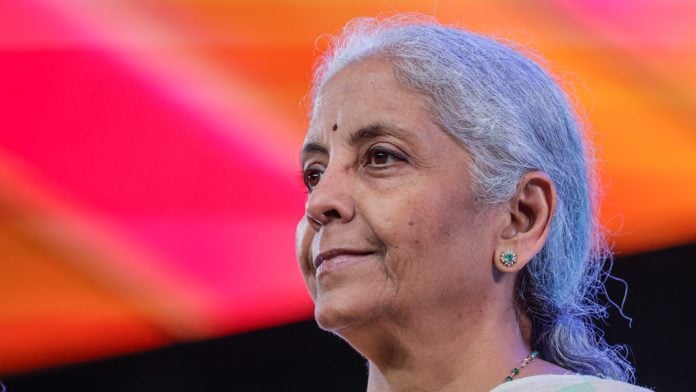
Indian Finance Minister Nirmala Sitharaman said Monday that talks have “reached a plateau” beyond which a compromise would be difficult. That followed comments from United State Trade Representative Jamieson Greer on Friday that a trade deal was in its final stages, but not “imminent.”
The two sides agreed to an interim deal earlier this year and have been locked in negotiations ever since. Indian officials have sought assurances from the US that the country would have a favorable tariff rate over its peers and that it wouldn’t face additional penalties once the trade deal is signed.
Speaking at the Munich Security Conference on Monday, Sitharaman said trade negotiations have been difficult and rigorous, and “we would like to believe that both sides have reached a plateau beyond which giving or taking might be very, very difficult.”
“Maybe if there are rooms to operate from, both sides would do it,” she said.
The talks have been complicated by new US legislation giving President Donald Trump the ability to impose tariffs of as much as 100% on the top buyers of Russian oil and gas. India, a major importer of Russian energy, has warned that such measures could hurt bilateral ties with the US and disrupt global energy markets.
US-India ties have come under strain in the past 18 months, with Trump imposing punitive tariffs on India for buying Russian oil, before removing them. The US leader has repeatedly claimed he’d helped mediate a ceasefire to end a brief armed conflict between India and Pakistan in May 2025. New Delhi has consistently rejected Trump’s version of events.
Trump and Indian Prime Minister Narendra Modi held their first phone call since June last week, discussing trade and energy, as well as defense and critical minerals.
‘Lonelier Power’
India’s External Affairs Minister Subrahmanyam Jaishankar on Sunday warned that the US was becoming increasingly isolated in the new global order.
“Nobody would disagree with the fact that the landscape today is primarily marked by a radical repositioning of the United States,” he said at the Munich Security Conference. “A repositioning which is a posture of choice, and where it has deliberately become a lonelier power.”
Rising competition between the US and China have also led to the “weaponization of any leverage that any country has,” he said.
Indian Commerce and Industry Minister Piyush Goyal held what he described as “productive talks” with Greer in Milwaukee on the sidelines of the Group of 20 trade ministers’ meeting last week.
Greer said on Friday officials were working to iron out their disputes.
“I would characterize and say we are in the short strokes,” Greer said. The two sides have identified the “universe of items that are sticking points, and we are working diligently toward them,” he said.
Disclaimer: This report is auto generated from the Bloomberg news service. ThePrint holds no responsibility for its content.