






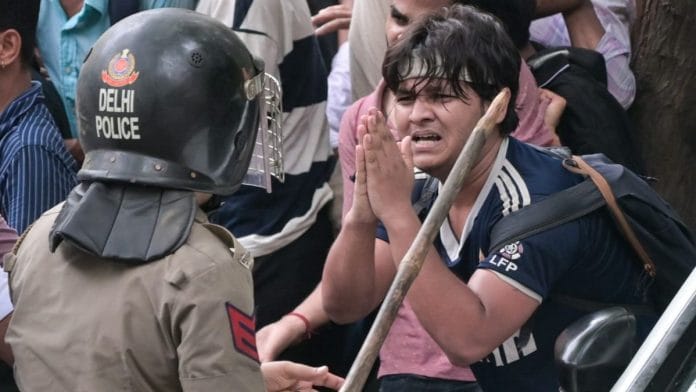


The Delhi police allegedly used facial recognition and profiling equipment at Jantar Mantar. By turning their devices on the crowd, they were able to capture the faces of hundreds of people who either had criminal records or were facing criminal charges. Now that these people have been identified, the police will investigate them further
Obviously there are many questions to be asked here about the right to privacy, about whether the same equipment is used at BJP rallies, about how the cops define criminals and, if the criterion is the existence of cases filed against individuals, wouldn’t this device be far more useful at the entrance to our legislatures?
But I’ll leave those ethical issues for another time because my concern this week is with technology and the police. We know already that intelligence and law enforcement organisations are experienced in the use of Pegasus and other intrusive tech software and devices. Facial recognition devices sound new, but who knows? Perhaps the cops have been using them all along.
So here is the obvious question. If the police are now so tech-savvy, how come nobody told them that most people now use something called a camera phone? And that these phones allow people to take videos of police misconduct and to upload them to the internet instantly? And that there is also something called YouTube, which allows millions of horrified people to watch gangs of policemen clubbing unarmed students into states of unconsciousness?
It’s strange that the cops have no idea of the power of the camera phone. These phones have now shown India how its policemen actually function. And how much they enjoy assaulting young people, hitting children with lathis and arrogantly slapping women in public.
Police brutality is not new. For years we have read how ‘demonstrators clashed with police’ or how ‘police cleared the area’. The narrative is nearly always sympathetic to the police, portraying them as servants of the people who were forced to restore order on our behalf. Even when demonstrators complain about how brutally they were assaulted, we tend to take the line that “they asked for it by demonstrating.”
The police know that the media and public are usually on their side, so they don’t worry too much about being brutal. And they know the Indian middle class well enough to recognise that violence against farmers, minorities or poor people in general does not cause us sleepless nights. So, there is one rule for the poor and another for the middle class.
It also helps the police that much of the media is nearly always supportive. Partly, it is the middle-class bias, and partly it is that reporters have to go back to the same cops for stories day after day—so they try not to antagonise their sources. And yes, proprietors like maintaining good relations with the police.
So why did the police get it so wrong and club middle-class children in the heads at the Jantar Mantar protests?
Also read: Delhi Police firing at protesters shows crowd-control doctrine hasn’t changed since British rule
The moment it changed
If you are looking for the point when the protests turned into a national movement it was not when the Cockroach Janata Party called for Dharmendra Pradhan’s resignation. It was not when Sonam Wangchuk started a hunger strike. It was when the police were told by the government to use force to shut the protests down. From that point the police stopped being protectors of citizens and upholders of the rule of law and were transformed into the government’s stormtroopers.
Even the visuals carried by mainstream media were fairly damaging to the ruling establishment. Policemen forcibly abducting Sonam Wangchuk when he was fasting. Battalions of police lifting Rahul Gandhi away from his protest as blood flowed down his nose. Policemen charging with sticks into students as they tried to demonstrate near parliament.
So were the statements made by government spokespersons. Rahul had to be taken into custody because his presence near the Prime Minister’s house represented a security threat. Really? After so many protesters have demonstrated in that area over the years? When the protests after the 2012 Delhi bus gang rape reached Sonia Gandhi’s residence, for instance, she actually walked out to meet demonstrators so they could deliver their protests in person. Nobody said they were security threats or worried that they were plotting to assassinate her.
The brutality was sought to be justified by the claim that police had no choice but to beat up students marching to parliament because marching to parliament was banned. Who banned it? Well, the police themselves. The angry government ordered the ban.
All this was enough to fuel public anger. But the first sparks turned into full blown conflagrations after the phone videos began to be posted. A bunch of policemen hitting a protester on the head with sticks. A cop sticking his lathi into the space between a woman’s thighs. A senior officer slapping a woman in the face. Students who had been injured by pellets fired from a police weapon. And more.
For the educated middle class this was particularly shocking—the students the police were brutally assaulting could have been their own children. ‘Breaking up a protest’ was a familiar enough newspaper cliche. But now they were seeing what it really meant. And the victims were people like them.
But even by the standards of the Delhi police, the brutality was shocking. Pellet guns have been used before in Kashmir and other areas that the government regards as ‘disturbed’. But to use them in the centre of Delhi against unarmed students? And to then lie so blatantly about it? The Delhi police actually issued a denial saying that no pellet guns were used at a time when people were being treated in hospitals for pellet gun injuries!
The police expected to get away with this lie on the grounds that the guns had been used by a paramilitary force and not Delhi Police officers. But the paramilitary may have expected this. They had got a Deputy Commissioner of the Delhi police to authorise the use of guns. When Vijaita Singh of The Hindu exposed the police’s lies they had no explanation.
To date the police have not explained the presence of burly men in plainclothes who carried sticks and clubs with nails on the outside. These men worked with Delhi police personnel to assault the students. Were they goondas for hire? Or were they just policemen in plainclothes? If it was the latter then that carried its own message: take the uniform away from a policeman and it becomes impossible to tell a goonda apart from a cop.
Also read: Modi govt has finally learned that common sense works better than arrogance
A stop-at-nothing crackdown
There was more. It had long been suspected that the police were sending agent provocateurs to disrupt the protests. Avdhesh Kumar of Newslaundry tracked the antecedents of a truck full of stones parked near the protests. It turned out that the truck had been seized by the Delhi police a few days before. The Delhi Police issued an unconvincing denial but nobody bought their story.
It’s worth remembering that over a decade ago Delhi saw huge protests—by young people over the 2012 Delhi bus gang rape and earlier by people of all age groups as part of the India Against Corruption movement. There were some criticisms of the police then too. But there was nothing remotely like this level of violence and no pellet guns were used and no agents provocateurs were deployed by the police.
How did the same police force turn into the government’s personal Gestapo?
The short answer is that the police do what the government tells them to do. If senior officers do not follow blatantly illegal orders, they are transferred. Nobody feels sorry for them. The mainstream media ignore the circumstances of their transfers and focus on glorifying the new appointees.
What happened here seems pretty obvious. The police commissioner was transferred. A new guy got the job and was told to launch a stop-at-nothing crackdown. At that stage, the government‘s strategy was to hold firm and crush the protests. It would not even consider firing Dharmendra Pradhan. The brutality was part of that strategy.
When the brutality failed, and when camera phone videos of the violence unleashed against students spread all over India the government was forced to abandon that strategy, to negotiate with protesters and to fire Pradhan.
Now, after things quieten down it will launch a low-key crackdown on the individuals involved in the protests as part of its revenge.
Will that work? I don’t think so. Brutality failed this time. And vengeance will fare no better. It isn’t just the technology that’s changing. India itself is changing. And it’s changing faster than these guys realise.
Vir Sanghvi is a print and television journalist and talk show host. He tweets @virsanghvi. Views are personal.
(Edited by Theres Sudeep)
It’s a shame for a nation that has stood for Democratic Values. Vir Sanghvi is right in calling the police the ” Gestapo of the Government “. Isn’t this act of the mighty state, attacking its own children , who were peacefully protesting for their rights, a flagrant breach of fundamental rights?
What about the vandals who caused injuries to numerous police officers? Should they be punished or not?