




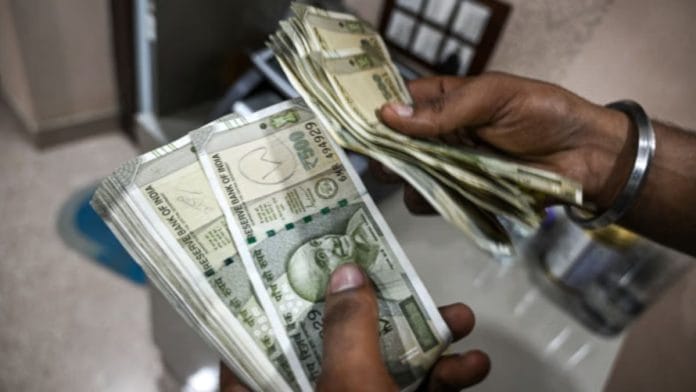

Should the RBI defend the rupee? There are arguments on both sides. But perhaps the more important question is, can RBI defend the rupee and at what cost? Sometimes, it’s easy to forget that the Rupee-Dollar exchange rate is a price. It is like the price of anything else, determined by the forces of demand and supply.
When the demand for dollar goes up (in the event of higher imports or capital outflows), the exchange rate will depreciate and vice versa. Any intervention must weigh whether it can help alter the equation.
This is a tough moment for India. The West Asia conflict has sent the prices of oil soaring. Oil is India’s biggest import. A substantial rise in the cost of oil increases the demand for dollars—the payments are made largely in the US currency. India’s second largest import is gold. The price of gold is soaring, too.
Hence, there is added pressure on the import side and even greater demand for dollars. Simultaneously, there is an exodus of foreign capital, largely foreign portfolio investment, from Indian markets. This is for a variety of reasons—other markets like America, Taiwan, Korea look much more attractive because of the AI potential of their companies; India has taxation issues; the market may have been overvalued a year ago.
But the outflow also has a self-fulfilling dimension. If one set of outflows leads to a depreciation of the rupee, then it ends up accelerating another set of outflows because investors do not wish to incur further losses on account of the local currency losing value.
One reason for the need for RBI intervention stems from this. If the Central Bank can stabilise the value of the Rupee by doing a counter trade in the market — by selling dollars when others are buying — it can perhaps halt the further outflow of portfolio investment or at least bring some semblance of confidence in investors about the value of the rupee. The second reason is that the demand for oil and gold is quite insensitive to price. Therefore, the real impact of currency depreciation may end up being on inflation.
Also read: How budgets made investing in India unaffordable for middle-class savers
Impossible Trinity of macroeconomics
Oil prices feed through the entire economy because of transportation costs — EVs are a very tiny minority of vehicles in India. As an inflation-targeting institution, the RBI may wish to avoid that. The third reason may be less to do with economics and more with politics — a stronger rupee is often seen as a matter of national pride. But let us assume that the RBI is not concerned with politics.
For now, RBI is intervening in markets by selling dollars from its reserves. But its reserves are not unlimited. And the foreign exchange trading market has more firepower than the RBI. This is at best a short-term stabilisation measure, not a fundamental alteration of the trend.
Over a longer period, RBI will face the Impossible Trinity of macroeconomics, which says that a country cannot have free capital flows, an independent monetary policy and a fixed exchange rate at the same time. Only two of the three are possible. Most sophisticated economies allow free capital flows and maintain independence in setting interest rates. It is the exchange rate which is allowed to be flexible. Ideally, India should follow the same approach.
Of course, India doesn’t have full capital account convertibility, but foreign investors are allowed to repatriate dollars, and Indians also have an annual allowance under the Liberalised Remittance Scheme (LRS). It would not be wise to put any curbs. It will incur a huge cost by hurting policy credibility and killing inward flows in the future.
The RBI could give up its current interest rate position and hike rates, encouraging foreign capital to profit from that. But that hike may need to be significant and would incur a cost on growth. That leaves the exchange rate. There is no option but to let it depreciate unless one of the first two options is exercised. But letting the exchange rate fall is adding an inflation risk to the economy.
In an ideal world, the West Asia conflict will end sooner rather than later and ease oil prices. But in case it lasts longer, there will be a tough choice for RBI: either compromise on growth by raising rates or take a risk on higher inflation by letting the Rupee decline.
This is why central banking isn’t for the faint of heart, especially in a crisis. But after the dust has settled, the government can help alter India’s almost chronic over-demand and under-supply of dollars by increasing the competitiveness of exports, making India more attractive for FDI and unleashing the potential of the country’s domestic oil and gold production.
The author is the Chief Economist at Vedanta. He tweets @nayyardhiraj. Views are personal.
(Edited by Saptak Datta)