



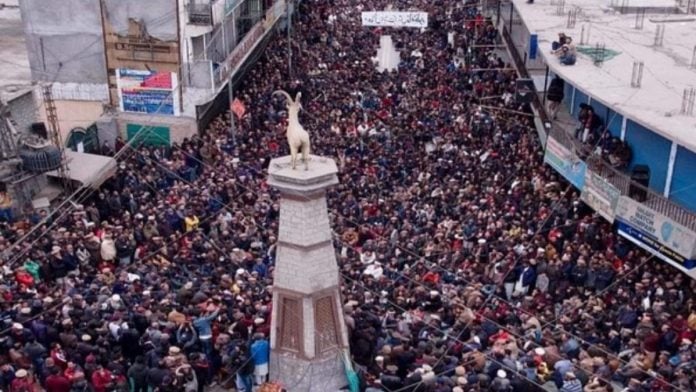
The recent protests in Rawalakot, Muzaffarabad and other parts of Pakistan-occupied Jammu and Kashmir over electoral reforms and civil rights expose a striking irony. While Pakistan champions the right to self-determination for the people of Jammu and Kashmir before the international community, those living in the territories under its own administration are struggling for meaningful political representation, accountable governance and fundamental rights.
Perhaps it is to prevent such protests from spreading to Gilgit-Baltistan in PoK that steps to grant it provisional status as Pakistan’s fifth province have gained momentum. Some commentators have even drawn parallels with India’s abrogation of Article 370 in August 2019.
The analogy, however, is fundamentally misplaced, as the two situations are entirely different in their historical, legal, political and constitutional foundations.
Also read: India says the Indus Waters Treaty is in abeyance. Here’s the legal case for it
Gilgit-Baltistan is a territory of J&K, not Pakistan
India has consistently asserted its sovereignty over the whole of Jammu and Kashmir on the basis of the former princely state’s legal accession to it. Pakistan’s stand, marked by contradictions, rests principally on its challenge to the validity of that accession rather than any independent legal instrument conferring title on it.
The reasons are not difficult to guess. If Pakistan had simply annexed all the areas it was administering in J&K after 1949, its case before the UN for a plebiscite would have lost legitimacy. Keen to drum up international support for its claim and eyeing the part of Kashmir administered by India, Pakistan was obliged to maintain a degree of political separation between its own territory and the parts of J&K it administered. It therefore designated the entire State as ‘disputed territory’.
However, even while doing so, instead of treating the entire region within its control as one unit, Pakistan divided it into two distinct administrative entities — Azad Jammu & Kashmir (AJK) and the Northern Areas. While AJK had its own capital, a full-fledged government and later an interim constitution (1974), the Northern Areas were directly controlled by the Government of Pakistan through the Ministry of Kashmir Affairs and Frontier Regions.
The term Federally Administered Northern Areas (FANA) was coined for Gilgit-Baltistan in 1970 when it was brought under the Northern Areas Council administered by the Federal Government of Pakistan. Though Pakistan initially depicted Azad Kashmir and the Northern Areas as distinct from West Pakistan on all its maps, it gradually started the process of separating the Northern Areas from J&K with the obvious objective of shrinking the size of the disputed region on its side by confining it to just AJK. The intent to appropriate parts of the Northern Areas was visible in maps and postage stamps printed in Pakistan as early as 1955 in which Gilgit Agency was separated from the ‘disputed’ region of Northern Areas.
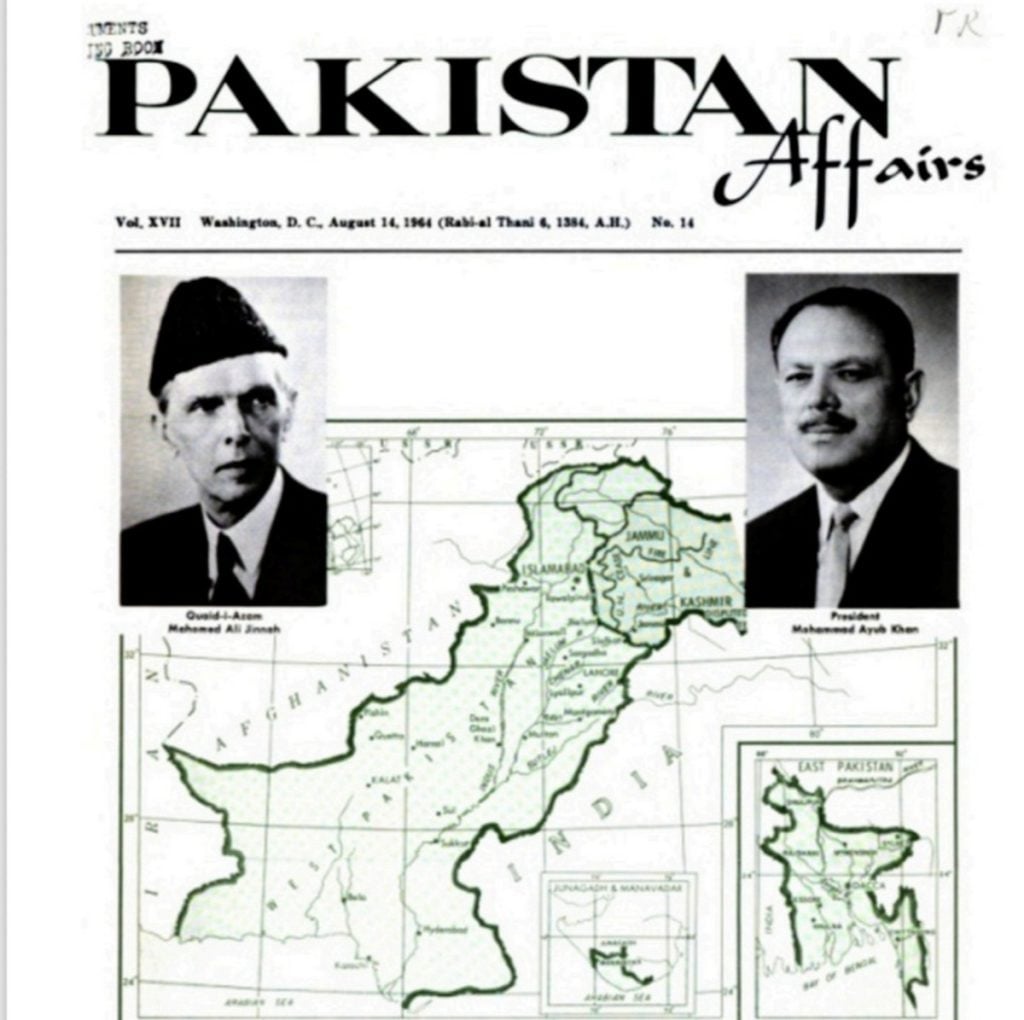
The cartographic dissection of J&K was followed by political and administrative steps confirming that Pakistan considered the Northern Areas a separate jurisdictional entity. These included the abolition of princely rule in Hunza and its merger with the Northern Areas (1974), the imposition of martial law for the first time in the Northern Areas, including Gilgit and Baltistan, even though it was not formally extended to AJK (1977), and the grant of observer status to representatives from the Northern Areas in the Majlis-i-Shura constituted under martial law (1982).
Although these steps were being taken, the fiction of autonomy for the region was maintained and Pakistan never asserted sovereignty over any part of J&K, as reflected in its 1963 boundary agreement with China. Nor did Pakistan make the Northern Areas a part of its territory in the 1973 Constitution. Significantly, Article 257 of Pakistan’s Constitution treated the question of accession of Jammu and Kashmir as unresolved and made any future constitutional relationship with it contingent upon the wishes of its people. It did not proceed on the premise that Jammu and Kashmir, or any part thereof, had already acceded to Pakistan.
Against this background of constitutional ambiguity, the legal status of the Northern Areas came before the AJK High Court in 1990. In its 1993 judgment, the court held that the Northern Areas (Gilgit-Baltistan) were not a part of Pakistan and that permitting their detachment from the rest of AJK and integration into any province of Pakistan would be tantamount to a negation of Pakistan’s stance at home and in the Security Council. It further observed that the AJK government represented the whole of Jammu and Kashmir and directed it to assume administrative control over the Northern Areas.
The AJK Supreme Court, however, in its 14 September 1994 ruling on the government’s appeal, held that the “Northern Areas are part of the state of Jammu and Kashmir — but not of Azad Kashmir” as defined in the Azad Kashmir Interim Constitution Act, 1974. “Therefore, the [AJK] government need not take administrative control of these areas.”
In 1999, the Supreme Court of Pakistan held that Pakistan exercised de facto and de jure administrative control over the Northern Areas and that the people of the region were citizens of Pakistan for all intents and purposes. Thereafter, in a 2019 judgment, it agreed with the Sartaj Aziz Committee’s recommendation that GB be accorded provisional and special status as a province of Pakistan pending the final settlement of the J&K dispute, without affecting Pakistan’s “principled stand” on Kashmir.
Pakistan’s ‘principled position’ on J&K
Pakistan’s “principled position” on Jammu and Kashmir appears to rest on foundations that are difficult to reconcile with its own historical conduct.
While professing to uphold the right of the people of Jammu and Kashmir to determine their political future, Pakistan has simultaneously given itself the authority to divide, administer and negotiate over portions of it. The principle of self-determination is conveniently invoked by Pakistan as a restraint upon India’s sovereignty, but not as a restraint upon itself. The principle appears to apply with considerable force to those parts of Jammu and Kashmir outside Pakistan’s control, but with remarkably little to those within it.
(a) Misconceptions about UN Resolutions and the promised plebiscite
Pakistan maintains that the future of the whole of J&K must be determined through the exercise of the right of self-determination by its people. It continues to invoke decades-old United Nations resolutions as though they embodied an unconditional and unfulfilled promise of a plebiscite. What Pakistan conveniently overlooks, however, is that the plebiscite envisaged under those resolutions was expressly conditional upon the prior implementation of the prescribed ceasefire and truce arrangements.
Before proposing a plebiscite in the State, Resolution 47 of 21 April 1948 of the Security Council called upon Pakistan to use its best endeavors to secure the withdrawal of tribesmen and Pakistani nationals who had entered the State for the purpose of fighting, and to prevent any intrusion into the State of such elements and any furnishing of material aid to those fighting in the State. Consequent upon the establishment of such withdrawal to the satisfaction of the Commission set up in accordance with the Council’s Resolution 39 (United Nations Commission for India and Pakistan, UNCIP) and confirmation that arrangements for the cessation of the fighting had become effective, India was to put into operation, in consultation with the Commission, a plan for withdrawing its own forces from Jammu & Kashmir and reducing them progressively to the minimum strength required for the support of the civil power in the maintenance of law and order.
Notably, the Government of India was permitted to maintain a limited military presence in Jammu and Kashmir, and the plebiscite was to be conducted by a UN-nominated administrator only after Pakistan had completely withdrawn and a ceasefire was implemented.
Similarly, Part II(A) of the UNCIP resolution of 13 August 1948 recorded that “as the presence of troops of Pakistan in the territory of the State of Jammu and Kashmir constitutes a material change in the situation since it was represented by the Government of Pakistan before the Security council, the Government of Pakistan agrees to withdraw its troops from that State”. Pakistan was also enjoined to use its best endeavours to secure the withdrawal of tribesmen and Pakistani nationals not normally resident and who had entered J&K for the purpose of fighting. Pending a final solution, the territory evacuated by Pakistani troops was to be administered by the local authorities under the supervision of the Commission. Only upon the Commission notifying India about (a) the withdrawal of the tribesmen and Pakistani nationals, thereby terminating the situation which India had represented to the Security Council as having occasioned the presence of its troops, and (b) the start of the withdrawal of Pakistani forces from Jammu & Kashmir was the Government of India required to begin withdrawing the bulk of its forces from there in stages to be agreed with the Commission. Pending the acceptance of the conditions for a final settlement of the situation in Jammu and Kashmir, the Indian Government was permitted to maintain, within the lines existing at the moment of the ceasefire, the minimum strength of its forces considered necessary, in agreement with the Commission, to assist the local authorities in the observance of law and order.
The subsequent UNCIP resolution of 5 January 1949 expressly stipulated that a plebiscite would be held only after the ceasefire and truce arrangements had been implemented. Clearly, the steps required to be followed for a plebiscite under the Security Council and UNCIP resolutions were sequential and consequential. Instead of complying with the explicitly laid out directives and withdrawing all its forces, Pakistan insisted on their simultaneous and synchronised withdrawal along with the bulk of the Indian forces.
This, being contrary to the resolutions, was unacceptable to India. Since Pakistan never fulfilled its withdrawal obligations and remains present in J&K today, the conditions precedent to the proposed plebiscite were never realised. Thereafter, several rounds of United Nations mediation and negotiations took place but they failed to overcome the impasse arising from Pakistan’s initial and continued non-compliance.
(b) Pakistan’s own democratic record
Pakistan’s professed commitment to self-determination also stood in sharp contrast to its own democratic record and stance toward the right of self-determination of its own citizens. It took more than twenty-three years after independence to hold its first direct nationwide general elections, in December 1970, nearly fifteen years after its first Constitution came into force. Although provincial elections had been held earlier, the people of Pakistan had not until then been able to elect their national representatives through a direct nationwide vote based on adult franchise.
(c) Misrepresentation before the UN and concealment of facts from the people
While Pakistan was advocating before the United Nations the right of the people of J&K to determine their political future, it was simultaneously consolidating its own administrative authority over the territories whose political future it maintained had yet to be determined. In April 1949, even as the United Nations was engaged in mediation to resolve the dispute, Pakistan entered into the Karachi Agreement with representatives of the Azad Jammu and Kashmir government and the All Jammu and Kashmir Muslim Conference without ascertaining the wishes of the people, whether by way of a plebiscite or otherwise.
Under this agreement, Pakistan assumed control over defence, foreign affairs, negotiations with UNCIP, arrangements concerning the plebiscite, and the affairs of Gilgit and Ladakh under the Political Agent at Gilgit. The existence of this agreement was not disclosed either before the UN or the people and came to light only decades later, when it was reproduced in proceedings before the Azad Jammu and Kashmir High Court in 1993.
The question naturally arises whether Pakistan’s representations before the United Nations would have been viewed in the same light had the full extent of these arrangements been disclosed and scrutinised at the time.
(d) Parting with territory of J&K without any right to do so
In 1963, Pakistan entered into a boundary agreement with China and parted with territory forming part of J&K, again without ascertaining the wishes of the people. Although the agreement was described as provisional and contemplated renegotiation following a final settlement of the Kashmir dispute, Pakistan nevertheless purported to determine the disposition of territory over which it never enjoyed or even claimed any sovereignty.
Also read: Pakistan wants freedom for Kashmiris. Why can’t PoK have the same freedom?
Pakistan’s status in J&K: A belligerent occupier
The invasion of Jammu & Kashmir started from the Pakistani side around 22 October 1947, when armed tribesmen and other Pakistani nationals entered the territory with a view to marching toward its capital and overthrowing the government in place.
Subsequently, then Pakistani foreign minister Zafrullah Khan admitted to the presence of Pakistan’s regular forces in the State from May 1948, providing compelling evidence that Pakistan had committed an act of aggression by entering and occupying the State, when viewed against the principles of International Law subsequently articulated in the United Nations General Assembly, in its Definition of Aggression adopted under Resolution 3314 (XXIX) of 14 December 1974. Significantly, Article 5(3) of that definition categorically declares that “No territorial acquisition or special advantage resulting from aggression is or shall be recognized as lawful.”
Since Pakistan not only occupied these areas but also established de facto administrative control over them, its position in the territories of Jammu and Kashmir under its control is that of a belligerent occupier. The passage of time cannot transform such occupation into lawful ownership or give it a measure of sovereignty which the original occupation never conferred. Nor can the original defect of title be cured by unilateral annexation, constitutional incorporation, legislative enactment or any subsequent exercise of sovereign authority. To hold otherwise would permit an unlawful occupation to become the very source of the legal title which it lacked at its inception.
Also read: Kashmir Instrument of Accession signed on 26 Oct. Maniben diary shows Menon conflated events
Article 370: Why Pakistan’s Gilgit-Baltistan parallel is misplaced
Article 370 was introduced almost two years after the accession of Jammu and Kashmir to India. It neither effected that accession nor conferred legal validity upon it but only regulated the application of the Indian Constitution to Jammu and Kashmir. Therefore, the perception that it was an obstacle to Jammu and Kashmir’s complete integration with India — and that its abrogation in 2019 removed that obstacle — is misconceived.
When the Indian Constitution was being framed, no Constituent Assembly had yet been established in Jammu and Kashmir, nor had any representative constitutional process taken root through which the wishes of the people could be ascertained. A transitional mechanism was therefore necessary to accommodate the Government of India’s political commitment while permitting J&K’s constitutional relationship with the Union to develop pending the establishment of its representative institutions. This mechanism was provided by Article 370, which was envisaged as a temporary provision.
On 25 November 1949, Yuvraj Karan Singh, acting as regent of Jammu and Kashmir, issued a proclamation declaring that the Constitution of India, insofar as it applied to Jammu and Kashmir, would govern its constitutional relationship with the Union and would supersede all existing provisions inconsistent with it.
The Constituent Assembly of Jammu and Kashmir was constituted following elections in 1951. It was convened on 31 October 1951 and proceeded to deliberate upon J&K’s constitutional future and its relationship with India. In February 1954, it ratified J&K’s accession to India and on 17 November 1956 adopted the Constitution of Jammu and Kashmir, Section 3 of which unequivocally declared: “The State of Jammu and Kashmir is and shall be an integral part of the Union of India.” The Constitution of Jammu and Kashmir came fully into force on 26 January 1957, and elections to the first Legislative Assembly under that Constitution followed in 1957.
These developments marked the establishment of a representative constitutional framework within which J&K’s political institutions operated and its electorate participated, thereby providing a means for the expression of popular will. Therefore, the constitutional vacuum that had necessitated Article 370 had been substantially filled and the constitutional bridge it was intended to provide had been substantially crossed.
The mechanism for extending the application of the Indian Constitution to Jammu and Kashmir, subject to the consultation or concurrence of the J&K government as the case required, was contained within the article itself. As the application of the Indian Constitution was progressively extended over the years, much of the substantive constitutional distinction associated with Article 370 had already been eroded, reducing it increasingly to a constitutional shell. Its eventual abrogation therefore did not fundamentally alter Jammu and Kashmir’s constitutional position as an integral part of the Indian Union, a status that had already been established long before.
Although the interim measures contemplated by Pakistan to address the political aspirations of the inhabitants of Gilgit-Baltistan and secure their fundamental rights may be welcome, Pakistan cannot draw any parallel between India’s abrogation of Article 370 and its proposed incorporation of GB into its federation, provisionally or otherwise. While the former altered an existing constitutional relationship, the latter concerns the proposed constitutional incorporation of territory over which Pakistan possesses no lawful sovereign title, Jammu and Kashmir having legally acceded to India. To equate the two is to confuse constitutional reorganisation with territorial annexation and to overlook the fundamentally different legal premises upon which they rest.
Amit Krishankant Paul is a lawyer, independent researcher and author. Views are personal.
(Edited by Asavari Singh)