


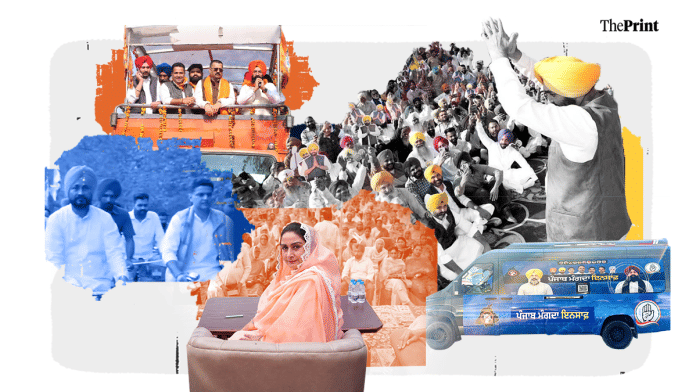
Chandigarh: For Punjab opposition parties that are yet to announce their door-to-door campaigners for next year’s polls, state roads and highways have turned into a political stage, with cycle rallies, roadshows, religious yatras and bus processions in full swing.
While the Congress and BJP are already visible on the streets with their Jawani Sambhal Cycle Yatra and Samrasta Sankalp Yatra respectively, the Shiromani Akali Dal (SAD) had planned a statewide bus yatra which was postponed in wake of the impending tie-up with the BJP (which was formally announced Tuesday). The ruling Aam Aadmi Party (AAP) on the other hand is focusing on door-to-door campaigns and localised gatherings with candidates and ticket hopefuls. AAP has already announced candidates for 71 of Punjab’s 117 assembly constituencies.
Tuesday’s announcement of the BJP-SAD alliance has added another dimension to these campaigns. With the two parties now set to contest the 2027 elections together after a six-year separation, the proposed statewide bus yatra is likely to be a combined affair. Beginning from Sri Damdama Sahib in Talwandi Sabo, the bus campaign planned to cover all 117 assembly constituencies in three phases. The first phase was to run from 10 to 22 November, while subsequent phases were expected to begin from Sri Anandpur Sahib and Sri Akal Takht Sahib in Amritsar.
“The objective is not necessarily to seek votes for individual candidates at this stage, but to ensure that the parties remain visible in political conversation, demonstrate organisational strength and build a perception of growing political momentum,” Dr Kanwalpreet Kaur, a political science professor at Chandigarh’s DAV College, told ThePrint.
Also Read: Bibi Jagir Kaur’s return to Akali Dal: Why she needs the Badals, and why the Badals need her
Congress takes the cycle route
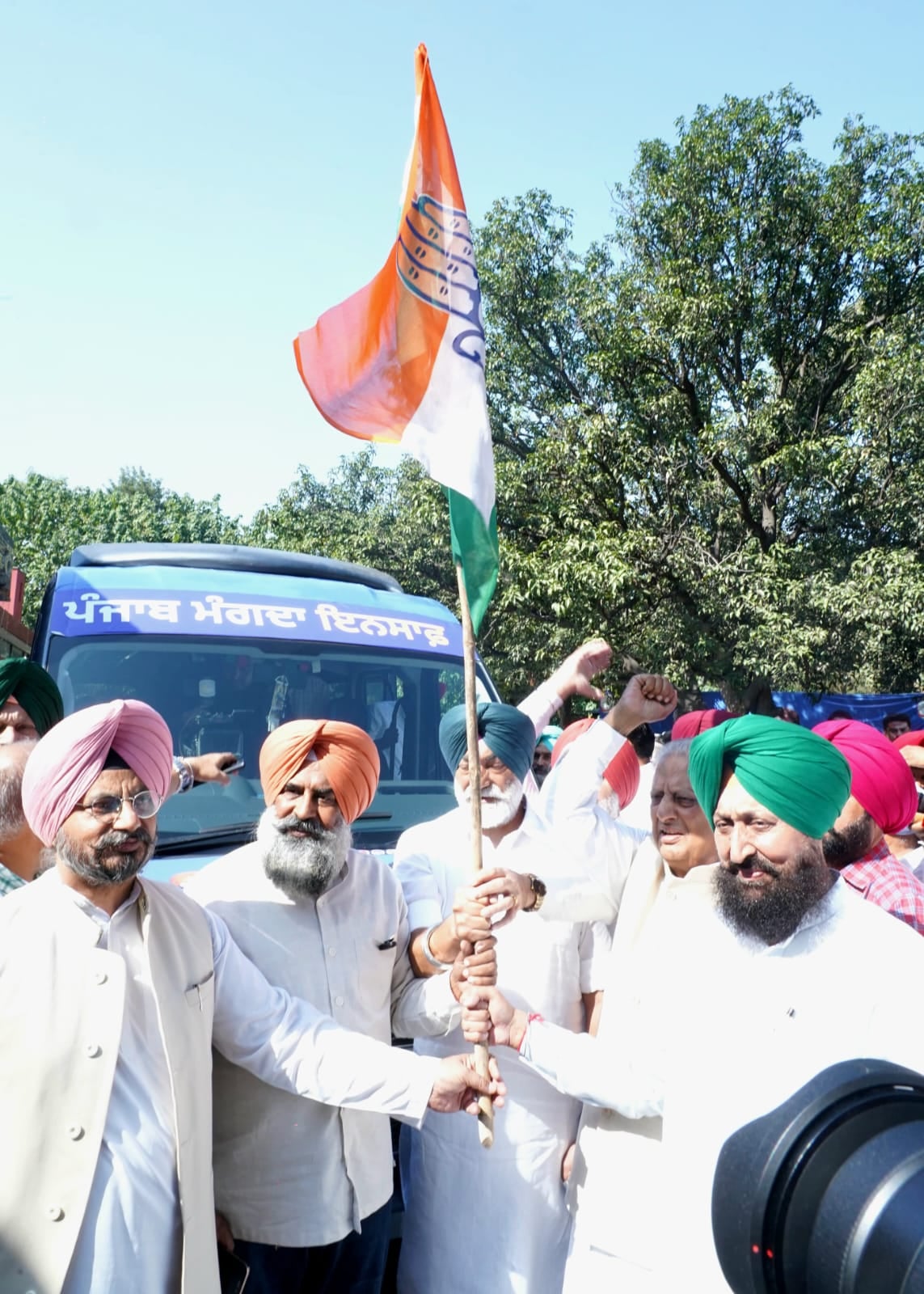
The Congress first launched the ‘Punjab Mangda Insaaf’ yatra on a bus on 4 November in the wake of Rahul Gandhi’s ‘Insaaf’ rally in Sangrur. But it was Congress’s Jawani Sambhal Cycle Yatra, led by former chief minister and Jalandhar MP Charanjit Singh Channi, that became the party’s most visible recent campaign.
Launched from Chamkaur Sahib on 12 November in the presence of Punjab Congress in-charge Sachin Pilot, state president Pargat Singh and Leader of Opposition Partap Singh Bajwa, the first phase covered approximately 625 km across 27 constituencies before concluding at Khanna on 19 November. Around 2,000 bicycles were distributed for the campaign.
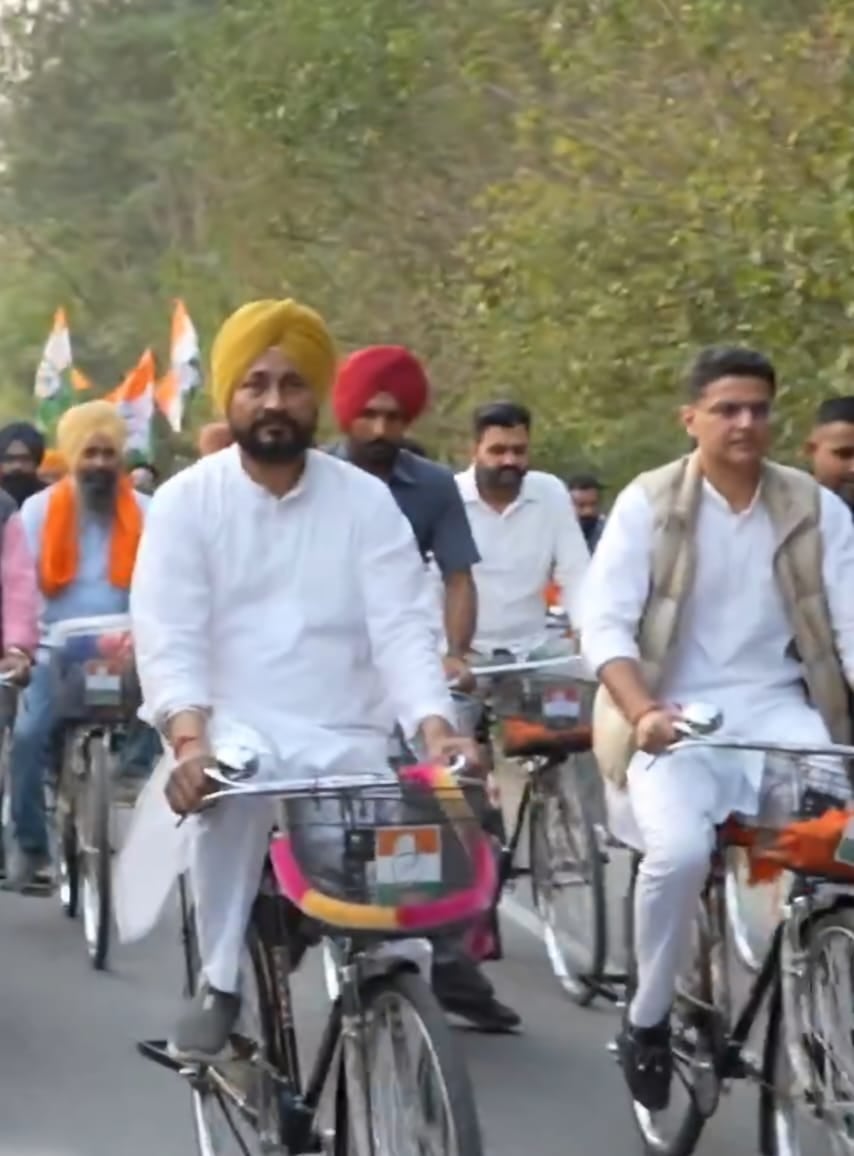
The focus was on the drug menace, unemployment and the future of Punjab’s youth. But the yatra also provided the Congress leadership an opportunity to demonstrate its organisational presence and attack the AAP government on issues of governance.
The yatra, however, also brought the Congress’s internal differences into public view. Former state Congress president and Ludhiana MP Amarinder Singh Raja Warring initially stayed away and subsequently announced his own ‘Insaaf March’ in the city on foot. He eventually joined Channi’s cycle yatra at Beeja village and cycled nearly 14 km with him to Khanna, where the campaign concluded with a public rally. Pargat Singh came on a bus for his leg of the campaign.
Former Punjab BJP president Sunil Jakhar took a dig at the Congress leaders taking out their own personal yatras. “Yesterday’s yatra belonged to Pargat Singh and Partap Singh Bajwa, while today’s yatra belongs to Channi ji. Several leaders have taken out bus rallies, while Channi ji has opted for a cycle rally. There are leaders planning to take out yatras in Defender vehicles worth Rs 2-Rs 2.5 crore each. I believe this is not a yatra but a show of strength by their own party. They do not talk about Punjab’s issues at all.”
“After years of kursi politics, the Congress has rediscovered sadak politics,” said Dr Harjeshwar Singh of the department of history at SGGS College. “The response to Channi was encouraging in semi urban areas like Samrala, Khanna, Ludhiana, Kotkapura, Amargarh and Faridkot. But in rural constituencies, the response was subdued.”
Dr Singh further said: “Warring’s march on the other hand was pitched for an urban audience. He was absent when Channi passed through Ludhiana, only to appear at Beeja on the final day to ride 14 km with him. A perfect Bollywood climax — estranged brothers riding together into the sunset.”
BJP’s Samrasta Sankalp Yatra
The BJP, has held not one but two yatras to make its presence felt.
In September, it undertook the Nasha Mukt Punjab Yatra, covering all 117 assembly constituencies and culminating in a rally addressed by Union Home Minister Amit Shah in Jalandhar. The yatra received a mixed response.
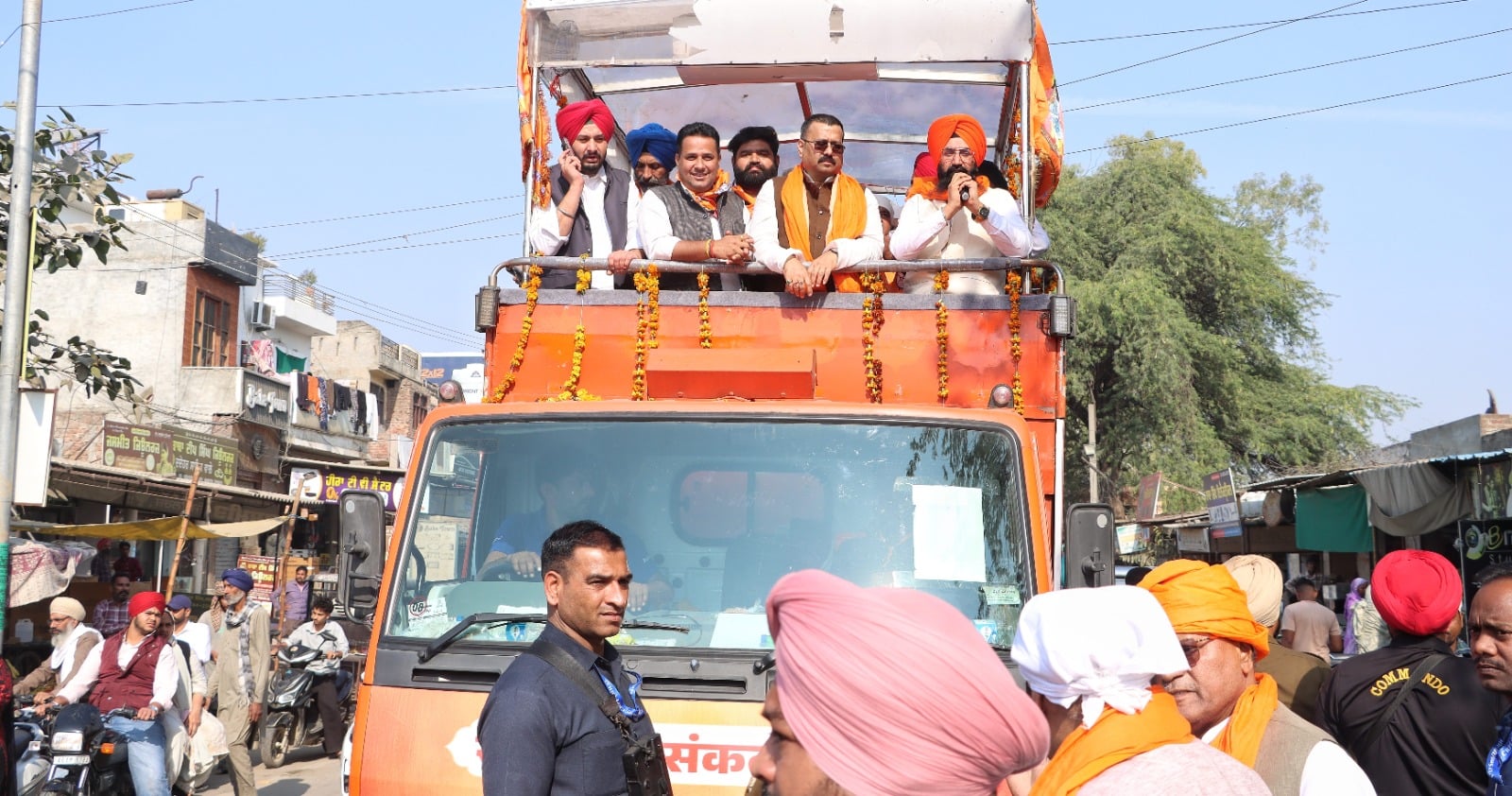
Its latest initiative, the Samrasta Sankalp Yatra, was flagged off by BJP national president Nitin Nabin near Dera Sachkhand Ballan in Jalandhar on 18 November. The nationwide 2,558-km yatra, organised to mark the 650th Prakash Purab of Guru Ravidas, has a Punjab leg covering approximately 700 km across 17 districts.
The route takes the procession through Jalandhar, Hoshiarpur, Pathankot, Gurdaspur, Amritsar, Tarn Taran, Ferozepur, Bathinda, Sangrur, Ludhiana, Ropar and Mohali before it proceeds towards Chandigarh.
The choice of Dera Sachkhand Ballan as the starting point is significant. Punjab has a Scheduled Caste population of nearly 32 percent as per 2011 Census data, and the dera has considerable influence among the Ravidassia community, particularly in the Doaba region. In Amritsar, the procession was welcomed at the Central Temple of Shri Guru Ravidas Ji in Hall Bazaar, where a religious diwan was organised.
“The emerging pattern suggests that Punjab’s election campaign is entering a phase in which political parties are competing as much for public visibility as for electoral support. This is going to remain till the candidates are announced, which is when the campaigning will shift to the micro level and individual candidates will take over,” said DAV College’s Dr Kaur, quoted earlier.
Akalis’ proposed yatra yet to hit the road
The SAD’s proposed statewide Punjab Bachao Yatra under Sukhbir Badal has been postponed twice.
The first phase was originally scheduled to begin from Takht Damdama Sahib in Talwandi Sabo on 10 November and cover 14 assembly constituencies by 22 November. It was subsequently rescheduled to 16 November before being cancelled again, with no fresh date announced.
With the much-awaited announcement of its tie-up with the BJP now made, the two parties are likely to announce joint programmes.
On the ground, the SAD has not announced its candidates, but it has asked its halka in-charges (or constituency in-charges) to not waste time and start door-to-door campaigns.
Sukhbir also simultaneously launched a statewide campaign from Gidderbaha on 6 October to collect public suggestions for the party’s 2027 manifesto. In Jalandhar, the SAD claimed to have distributed 25,000 feedback forms across four assembly constituencies.
Meanwhile, Lok Sabha MP Harsimrat Kaur Badal’s Maawan-Dhiyan Insaaf Yatra has been holding meetings with women across Punjab, focusing on the drug problem and women’s safety.
AAP moves towards constituency-level campaigning
The AAP’s move to declare candidates is reaping dividends. The party released its first list of 40 candidates on 31 October and followed it with another list of 31 on 12 November, taking the total to 71. This has allowed the candidates to hit the ground running, well ahead of the others.
In September, the party launched the Mann De Munaffe campaign, under which MLAs and party workers were assigned households to distribute the government’s four-and-a-half-year report card.
The exercise covered constituencies including Guru Har Sahai, Ferozepur Rural, Rupnagar, Ludhiana North, Amloh, Shahkot, Balachaur and Kharar. The party’s messaging has centred on free electricity, Aam Aadmi Clinics, monthly grant of Rs 1,000 to women, employment initiatives and welfare schemes.
The AAP has also announced a statewide organisational exercise involving 2.68 lakh booth committee members across 25,332 polling booths. The aim is to establish contact with voters at the polling-booth level while highlighting the government’s achievements.
The party is now preparing for its 26 November Khushhaal Punjab Maha Rally in Moga, where Punjab Chief Minister Bhagwant Mann and AAP national convenor Arvind Kejriwal are expected to address the gathering. The event is being projected as the formal launch of the party’s campaign for polls.
(Edited by Gitanjali Das)
Also Read: Lotus Pocus: Why BJP is emerging as preferred destination for turncoats before Punjab polls