






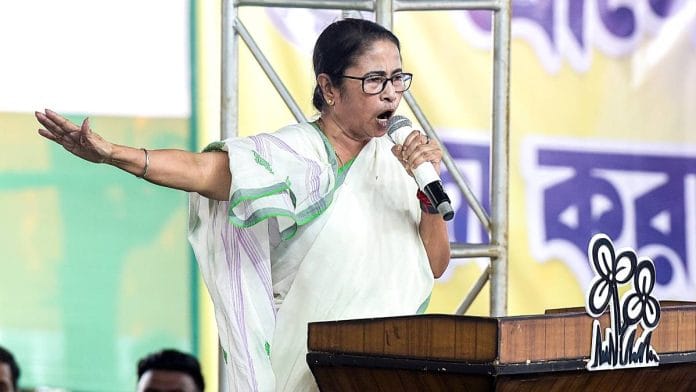


Mamata Banerjee stood as a political anomaly for years, standing defiantly outside the mould that has long constrained women in Indian politics. She did not inherit a legacy, nor did she rely on the careful calibration of femininity that many women leaders are expected to perform. She was combative, street-smart, and singularly powerful. In a political landscape that often reduces women to tokens or dynasts, Banerjee carved out a space that felt almost insurgent.
She belonged to a rare league alongside J Jayalalithaa, Mayawati and Sheila Dikshit — women who dominated politics and were almost revered in their states. But over time, with Jayalalithaa and Dikshit’s death and as Mayawati’s influence waned, Banerjee became the last of that generation still standing. She was, in many ways, the final emblem of the fiercely independent and openly defiant kind of female political power in India.
Yet, what made Banerjee exceptional also masked a contradiction that came sharply into focus in the last few years. While her politics projected empowerment, her responses to violence against women often undercut that very claim. She always toed the line between image and instinct, showing limits of what might be called symbolic feminism.
Banerjee, in her three terms, rolled out a suite of welfare schemes aimed at women with programmes like Kanyashree, Rupashree, and Lakshmir Bhandar, designed to incentivise education, one-time grants for marriages, and provide monthly financial aid. She fields a lot of women in polls — 55 this time. These politically astute and electorally effective policies and decisions positioned her as a leader invested in women’s upliftment, particularly among the poor and marginalised.
But welfare, however expansive, cannot substitute for a consistent moral and political stance on women’s autonomy and safety.
Language of ‘protection’
That contradiction became impossible to ignore over the years. During the 2012 Park Street rape case, Banerjee famously dismissed the incident as a “fabricated” story. She also questioned whether the 2022 Hanskhali rape — in which a 14-year-old girl was allegedly assaulted and died — was “really rape” or a “love affair”. More recently, in the wake of brutal sexual violence cases, her responses have often veered into victim-blaming — questioning why a woman was out at a certain hour, or framing the issue in ways that seemed to shift responsibility away from perpetrators and onto survivors. And then came the systemic failure in the RG Kar rape case.
To be fair, even Sheila Dikshit handled the 2012 Nirbhaya gangrape protests poorly.
Banerjee’s offhand remarks over the years have sent a chilling message about disbelief and denial at the highest level of power, however maternal her intent.
These comments exposed the fault line in Banerjee’s brand of leadership. For all her defiance of patriarchal norms in her personal political journey, her articulation of women’s rights has often echoed the very structures she once seemed to resist. The language of protection — frequently invoked in her defence — slips too easily into the language of control. It has always been less about expanding women’s freedoms and more about regulating them.
This constitutes the core of symbolic feminism: the presence of a powerful woman at the top, the proliferation of women-centric schemes, the optics of empowerment — without a corresponding transformation in how power responds to women’s lived realities.
Symbolic feminism thrives on visibility. It offers representation, but not necessarily accountability. It allows for a leader to embody “women’s empowerment” while sidestepping the harder, messier work of confronting systemic misogyny, especially when it implicates institutions under her control.
Also Read: Don’t dismiss Vijay’s victory as irrational. It’s Tamil people’s emotional investment
Didi leaves a vacuum
Banerjee’s political persona — Didi, the protective elder sister — has long been central to her appeal. But this tag has somehow infantilised even as it reassures. It suggests care, but not necessarily equality. And when that care is selectively applied — or worse, withheld — it becomes a flimsy construct.
Mamata Banerjee’s Bengal election debacle had many factors. Anti-incumbency, widespread corruption, organisational fatigue, and shifting voter priorities all played a role. But the erosion of moral authority, especially on women’s issues, has undoubtedly contributed to the unravelling of her not-so-carefully cultivated image.
However, her loss of credibility and her defeat in the polls leaves behind a vacuum.
India today has fewer mass women leaders than it did a decade ago. The generation that included Amma, Behenji and Didi is fading, with no clear successors who command similar grassroots authority and national visibility. The political field now just has marginal women players or political puppets like Delhi CM Rekha Gupta.
The danger, then, is twofold. First, the decline of leaders like Banerjee shows a larger indictment of women’s political authority. Second, that symbolic feminism continues to be mistaken for substantive change.
Banerjee’s rise showed that a woman could seize and wield power on her own terms. Her fall amplifies a harder truth: that power without consistent principles can hollow out the very ideals it claims to represent.
All women leaders of India have failed differently. But more often than not, they are allowed to succeed symbolically, and judged too late on substance.
(Views are personal)