



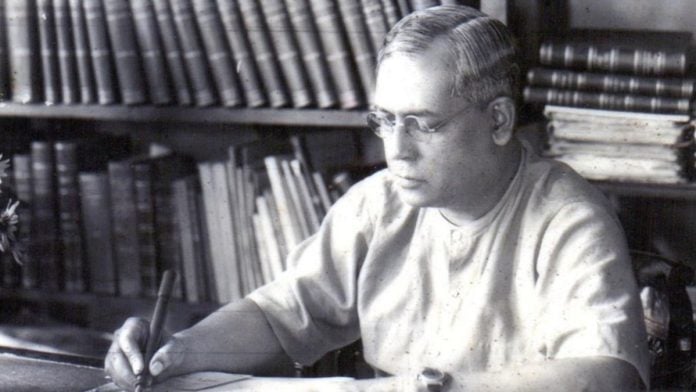
Tracing West Bengal’s Hindutva past has acquired renewed relevance with the BJP’s coming to power in the state, not least because examining its historical trajectories is also essential to understanding its contemporary manifestations. Despite differences over how exactly to characterise this past, there is broad agreement that sections of Bengal’s bhadraloks—literally ‘gentlefolk’, referring here to the predominantly upper-caste, educated Bengali elite—have long played an important role in nurturing Hindu nationalist ideas.
Such discussions, however, have largely remained confined to the colonial period, with comparatively little attention paid to postcolonial developments. This neglect owes, in part, to Bengal’s reputation as a bulwark against sectarian politics. Turning to archival records to address this gap not only brings forgotten episodes to light but also reveals unexpected historical encounters involving prominent figures, including former West Bengal chief minister and veteran Communist leader Jyoti Basu.
In the course of this exploration, Ramesh Chandra Majumdar also emerges as a significant figure. His participation in events organised by an RSS-backed platform raises questions about his engagement with the wider Sangh Parivar ecosystem.
Majumdar was among India’s most renowned and controversial historians. His stature rests on his seminal contributions to the study of Indian history, while the controversy surrounding him stems from accusations that he advanced a communal interpretation of the past, situating his work within the tradition of the nationalist school of Indian historiography. Yet even many of his critics have acknowledged his commitment to the historian’s craft, recognising that, despite his ideological sympathies, he did not subordinate his scholarship to the demands of Hindutva propagandists.
This article, however, does not seek to revisit that debate. Nor does it examine Majumdar’s scholarly contributions or his well-known disagreements with the government and fellow historians over what he regarded as the biases and shortcomings of Indian historiography. Instead, drawing primarily on archival material from Swastika, a Bengali Hindu nationalist weekly published since 1948, alongside other publications and relevant sources, it examines a largely overlooked aspect of his public life: his association with the Sangh Parivar, comprising the RSS and its affiliated organisations.
Majumdar’s association with the Hindu Right dates back to his involvement with the Hindu Mahasabha. As historian Irfan Habib has noted, he was ‘certainly’ a member of the Mahasabha. His relationship with the RSS, however, appears to have been of a different nature.
The available evidence does not suggest that he was ever a formal member; rather, it points to a relationship closer to that of a patron and sympathiser than an insider. His engagement with the Sangh Parivar began through the Bharatiya Jana Sangh (BJS), which brought him into closer contact with the RSS and its other affiliated organisations, as the following sections demonstrate.
Keshav Rao Dixit and Ajit Biswas, two veteran swayamsevaks from Bengal, record in their writings that Majumdar presided over the closing ceremony of an RSS winter camp held in Bengal in 1960—the only documented instance of his participation in a core RSS programme. His regard for the organisation is also evident in a statement published in the 2001 New Year issue of Swastika: “The RSS is a remarkable example of service to the nation, undertaken with new enthusiasm, dedication and sincerity in India’s political, social and other spheres.”
Majumdar’s BJS link
Among the relatively well-known aspects of Majumdar’s life was his cordial relationship with Shyama Prasad Mukherjee, founder of the RSS’s then political wing, the BJS. Majumdar appears to have held Mukherjee in high regard and shared some of the concerns that informed the latter’s political outlook.
Less widely recognised, however, is the fact that he contested the 1951-52 West Bengal Legislative Assembly election as a BJS candidate from Kolkata’s then Tollygunge North constituency, securing fifth place with 1,783 votes. This suggests that his engagement with Hindu nationalist politics, at least at one stage, extended beyond intellectual affinity.
A glimpse into his views on the political conditions of Bengal during that period can be found in his suggestions concerning the general elections in West Bengal, as reported in the 1 August 1949 issue of The Indian Express:
Ramesh Chandra Majumdar, well-known historian and former Vice-Chancellor of Dacca University, today suggested a four-point criteria for the selection of candidates in the forthcoming general elections in West Bengal. He said that a candidate should be such as would try to set up an anti-corruption tribunal and, if necessary, give it powers to penalise blackmarkers on reasonable grounds of suspicion. He should also wholeheartedly move for the transfer of Coach-Behar and the Bengali-speaking tracts of Bihar into West Bengal; try his best for the rehabilitation of the East Bengal refugees and try to establish the legitimate position of the Bengalees in the Central Government.
Majumdar said the present-day ministry of the province was responsible for most of the wants and miseries from which the people were suffering. In the forthcoming election in West Bengal, Majumdar said, Congress should select as its nominees only the fittest persons, irrespective of any party ties or connection. Unless this was done, they would not be able to inspire confidence in the people.
Although Majumdar did not continue in electoral politics thereafter, his ties with the BJS do not appear to have been completely severed, as reflected in his decision to preside over a programme organised by the party to mark the 18th ‘Shyama Prasad Sacrifice Day’ at Kolkata’s University Institute Hall on 23 June 1971. A brief excerpt from the speech he delivered on that occasion was published in the 28 June 1971 issue of Swastika, where he criticised Nehru and his politics while offering a favourable assessment of Mukherjee. In translation, it reads:
In a country where there is a lack of independent-minded people, democracy cannot survive. Democracy has not yet been established in India. The reason is that there are no people in the country willing to criticise the actions of the government and speak unpleasant truths. It was for this reason that Nehru practised authoritarianism in the name of democracy.
(Sardar Vallabhbhai) Patel and Syama Prasad were the two fearless critics of Nehru. After both of them passed away, Nehru came to enjoy unquestioned dominance in Indian politics. Despite his many virtues, Nehru had one major flaw—intolerance toward differing opinions. Whatever he considered good, he tried to impose upon the country.
Syama Prasad single-handedly struggled against his arbitrariness. For that reason, in the present time of adversity, his words come repeatedly to mind. After his death, no leadership emerged in Bengal. Whether in foreign policy, internal order, or the economic situation, the policies of the Indian government have failed completely in every respect.
Today, India is the most condemned and weakest country in the world. In this grave condition of the nation, we must work to establish the ideals of Syama Prasad. Only then can the country attain deliverance.
Also read: Politicians may fade. We’ll always need engineers and scientists, said Nehru to students
Vivekananda centenary celebration and Rock Memorial committee
It was during the 1960s that Majumdar’s association with the Sangh Parivar ecosystem deepened significantly. At its 1960s meeting, the Akhil Bharatiya Pratinidhi Sabha (ABPS), the RSS’s highest decision-making body, resolved to organise nationwide celebrations marking the birth centenary of Swami Vivekananda.
Committees were subsequently constituted throughout the country, including separate executive and advisory committees in West Bengal. Owing perhaps to both his earlier connections with the Sangh Parivar and his deep admiration for Vivekananda, Majumdar became a founding member of the Advisory Committee, with Swami Tripurananda of the Ramakrishna Mission serving as secretary and Kalidas Basu of the RSS as general secretary.
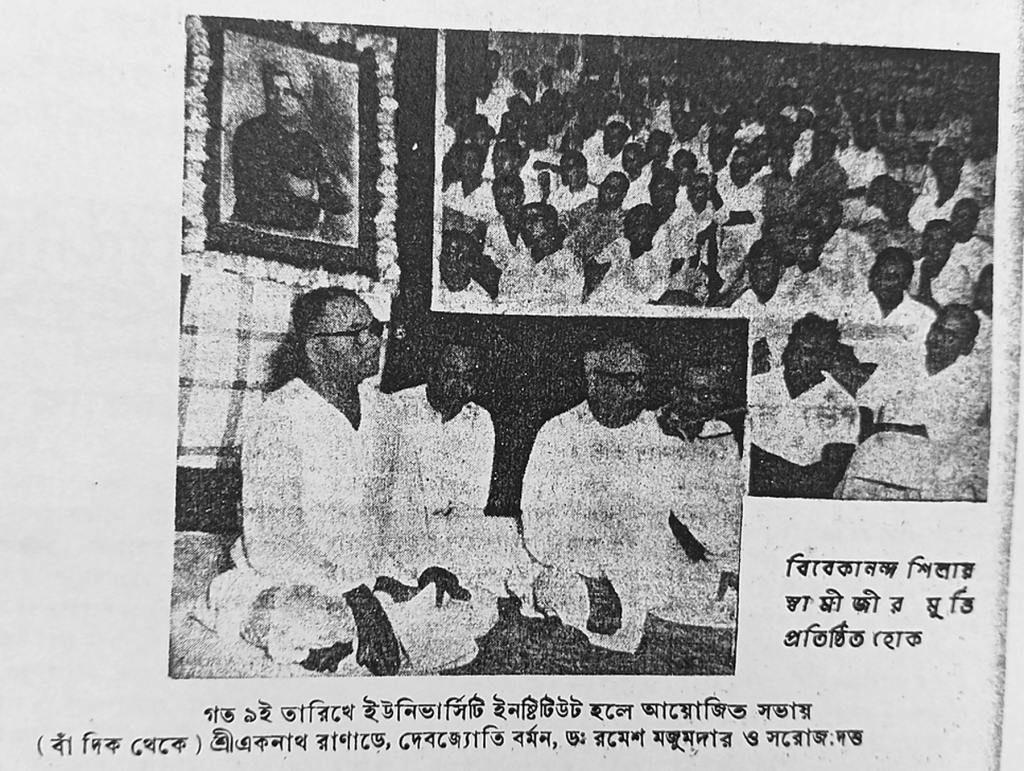
In West Bengal, the RSS organised an 80-day centenary celebration beginning on 17 January 1963. On the following day, Majumdar presided over a discussion on the “Life and Philosophy of Swami Vivekananda” at Kolkata’s University Institute Hall, where he also delivered an address. According to a report published in the 28 January 1963 issue of Swastika, he remarked that ‘Swamiji cast new light on the theory and practice of religion. He explained the fundamental differences between Hinduism and the various religions of the world, and demonstrated the superiority of Hinduism.’
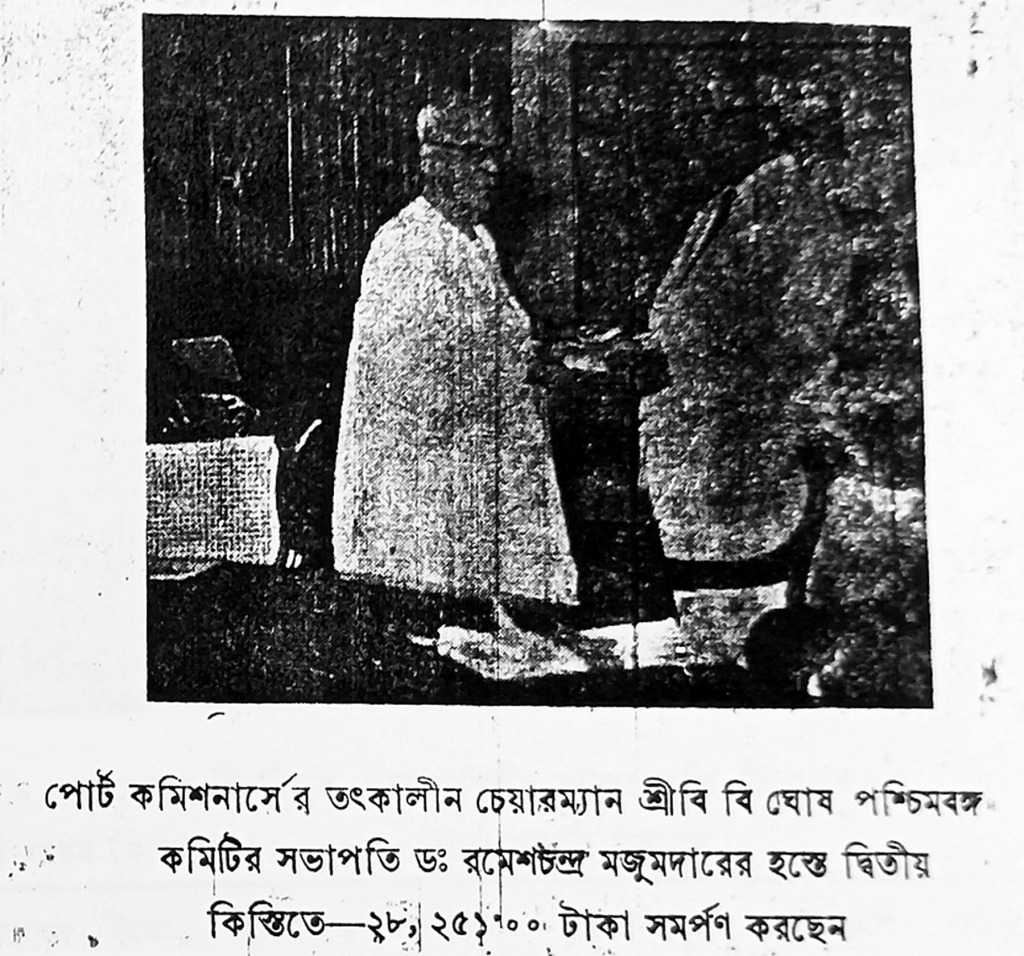
The idea of erecting a memorial to Vivekananda at Kanyakumari was mooted in 1962, during the centenary celebrations. A local committee sought permission to install his statue on the rock, while an All India Committee was subsequently formed to take the project forward. In 1963, the RSS passed a resolution supporting the construction of a grand memorial at Kanyakumari.
Under the leadership of the senior RSS functionary Eknath Ranade, a nationwide movement subsequently emerged around the project, accompanied by the formation of a central committee and provincial committees. In September 1963, Majumdar chaired a programme at Calcutta’s University Institute Hall on behalf of the Bengal Memorial Committee, where he and other speakers criticised the government’s lack of cooperation with the initiative.
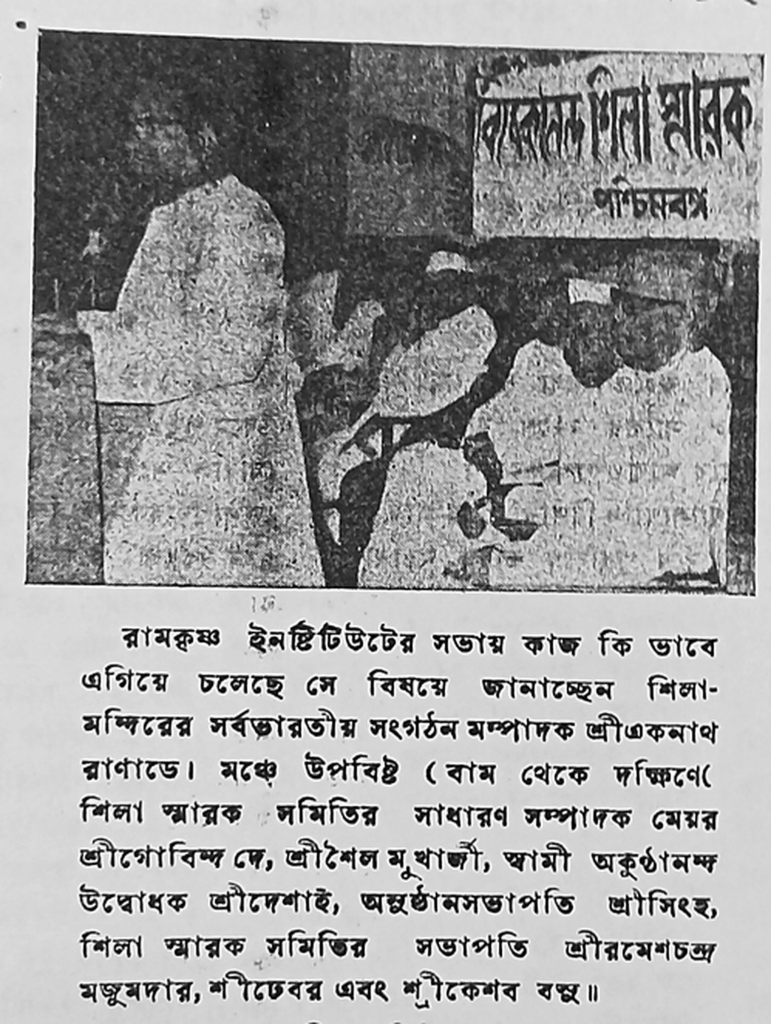
The movement gained momentum in 1968 with the launch of a renewed fundraising campaign. At its first session, held on 17 January 1968 at Sangeet Bhawan of Rabindra Bharati University in Kolkata, Majumdar presided over the proceedings. He was also present at a subsequent programme held on 10 March 1968 at the Golpark Ramakrishna Mission Institute, where the campaign was formally launched.
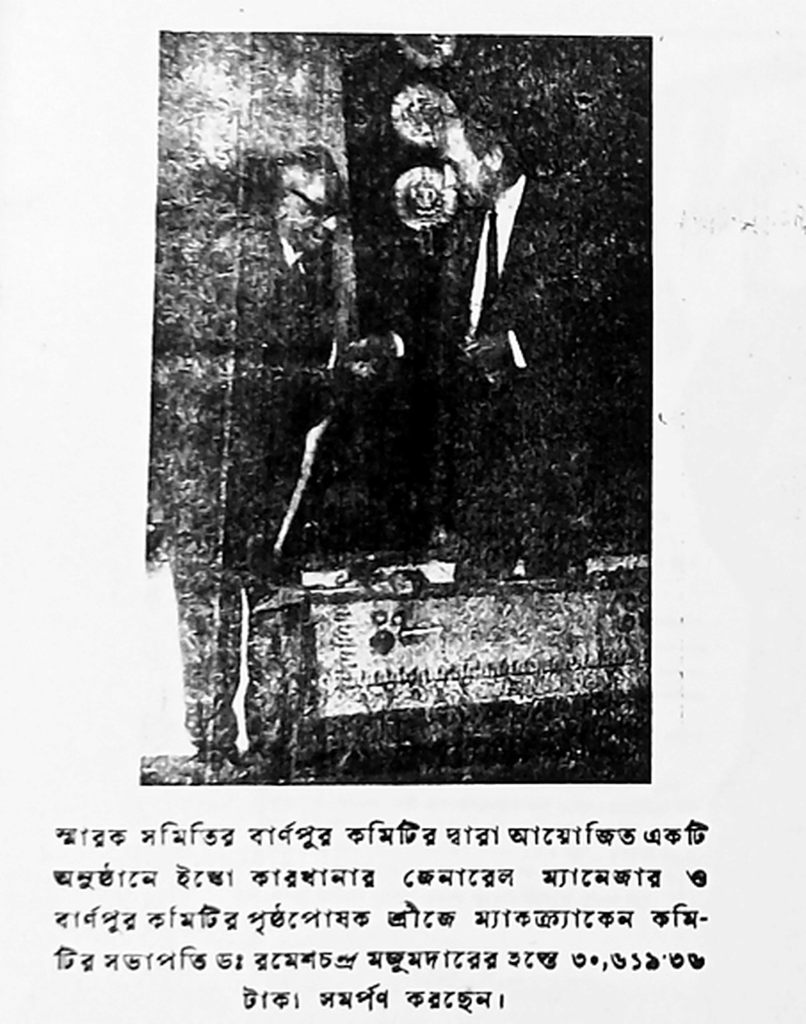
As president of the Memorial Committee, he spoke alongside several prominent figures, including Morarji Desai. Although the movement gradually acquired a national character that extended beyond the Sangh Parivar’s organisational boundaries, scholars such as Gwilym Beckerlegge, Pralay Kanungo, and Arkotong Longkumer, among others, have shown that it nevertheless contributed to the wider Hindu nationalist project, particularly through the establishment of the Vivekananda Kendra.
Also read: Sonia Gandhi memoir is radical for what she refuses, not for what it reveals
Akhil Bharatiya Vidyarthi Parishad
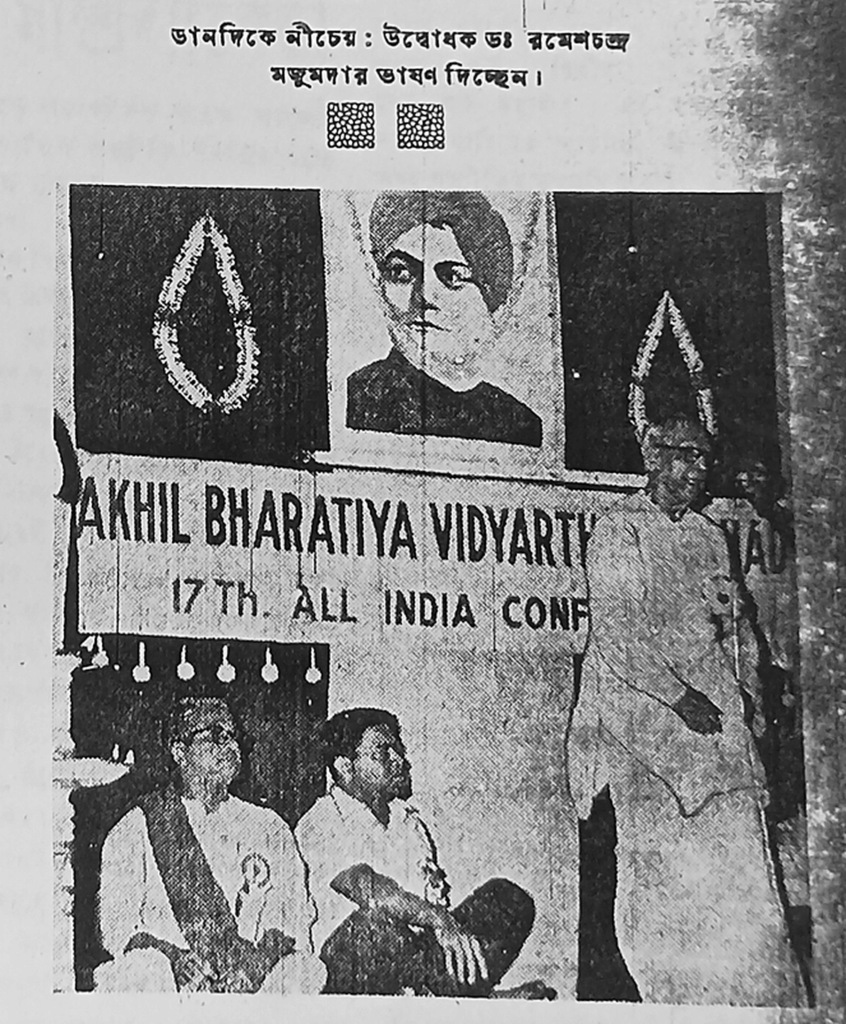
Amid his involvement with the Vivekananda Rock Memorial Committee, Majumdar also appeared at a programme organised by the Akhil Bharatiya Vidyarthi Parishad (ABVP), the student wing of the RSS. In 1969, the ABVP held its three-day 17th All India Conference in West Bengal.
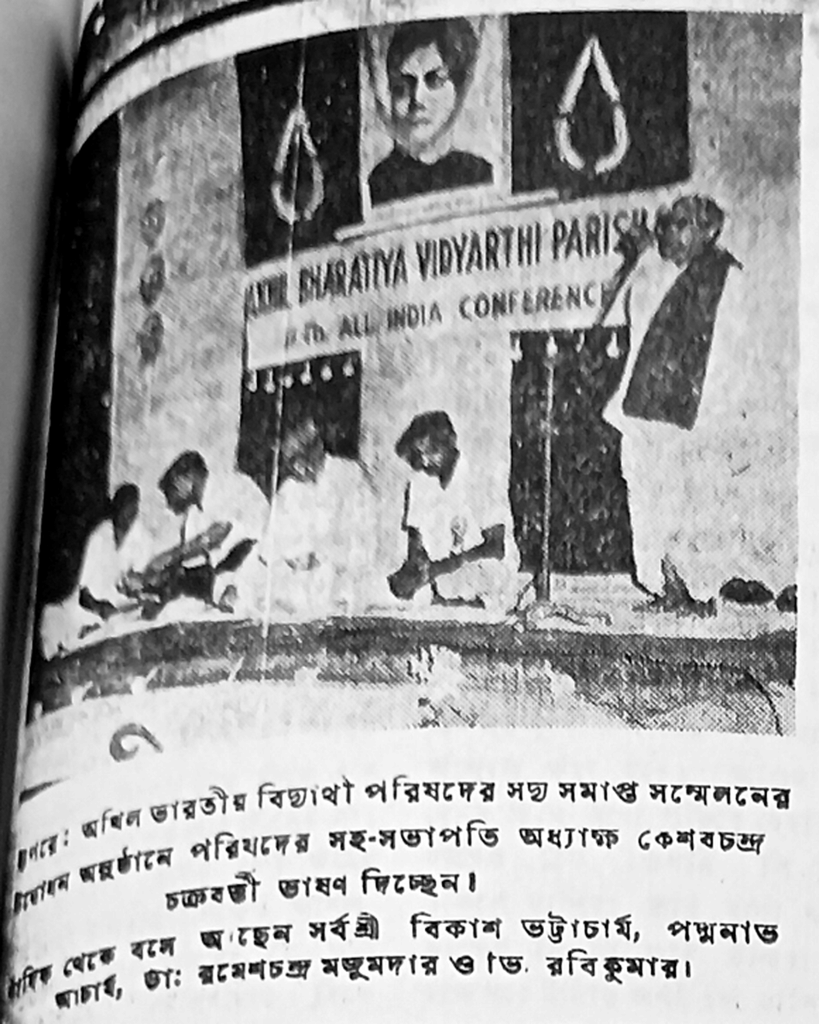
Majumdar inaugurated the opening session of the conference at Muhammad Ali Park in central Kolkata on 31 October and delivered an address. The following remarks from that speech, published in the 10 November 1969 issue of Swastika, resonate with several themes promoted by the ABVP, including patriotism, self-sacrifice, and cultural regeneration:
Today the country is passing through a grave crisis. Without realising the seriousness of this crisis, the rulers are now occupied with struggles among themselves for the capture of power.
The people of the country are bewildered by the slogans of political parties. Therefore, instead of waiting to see what the government will do, the student and youth community must confront this crisis with a vow of boundless patience, self-sacrifice, and patriotism.
As a result of two world wars and the agony of Partition, our mentality has changed; our own culture and all the values of our way of life have been lost, while no new values have yet emerged. Even so, we must not become disturbed. If we break down and surrender, we shall, like many other countries, be swept away in the current of destruction. What is needed is dedication to work, firmness, and unwavering patriotism.
Also read: Nehru’s India had a youth problem. This 1958 essay explained why
Yogakshema—Sangh Parivar-backed body in Bengal
One of the lesser-known Sangh Parivar-backed bodies in West Bengal, Yogakshema was established in 1970 by a group of senior RSS workers. The organisation had two major objectives: nationalist intellectual engagement and social service.
To disseminate its ideological message—particularly among the affluent classes—it regularly organised lectures and discussion programmes featuring prominent public figures, alongside promoting the ethos of seva (service).
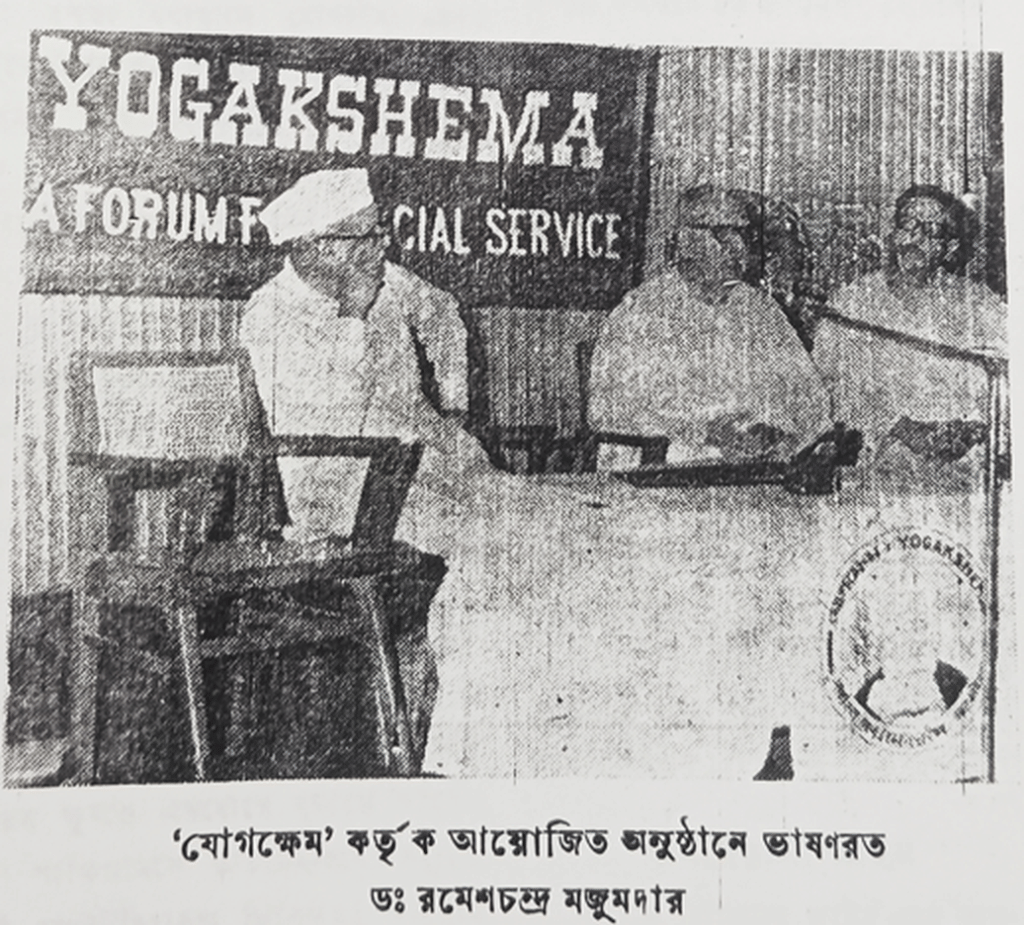
At one such programme, held on 8 April 1973, Majumdar delivered a lecture that was subsequently reported in the 23 April 1973 issue of Swastika. Centred on the theme of ‘national integration’, the speech exemplifies some of the ideas that have often led Majumdar’s interpretations to be regarded as communal. A translation follows:
For the sake of national integration, both the people and the government must make earnest efforts. It must be remembered that we are Indians first, and only afterwards Bengalis, Biharis, Tamils, Hindus, Muslims, and so on. This is the fundamental principle of national integration. Our very existence depends upon an awareness of this principle. Speaking at a meeting organised on 8 April by Yogakshema, a social service organisation, the eminent historian Majumdar made the above remarks.
Majumdar explained how the principle of religious, cultural, and political integration developed in the history of India over the past two and a half thousand years. He stated that until the end of the Hindu period there had been no obstacle to religious integration.
However, with the advent of Islam, serious impediments to this process began to emerge. The famous traveller Al-Biruni came to India nearly a thousand years ago in the company of Muslim rulers. He left behind certain observations which show how, at every step, Muslims differed from Hindus.
Nearly a thousand years later, almost the same views were repeated word for word by a student of Cambridge University named Rahmat Ali. He was the first originator of the idea of Pakistan. After studying Indian Urdu literature of the 19th century and the first half of the 20th century, linguist Suniti Kumar Chatterji remarked that reading this literature creates the impression that its authors were not natives of India but inhabitants of West Asia.
Even the trees, plants, and animals referred to in these writings are not Indian, but belong to countries such as Persia, Iraq, and Turkey. This situation continued until India attained independence. It was from this clear opposition in religious and cultural life that, in the course of time, the Partition of India on the basis of religion took place, and Pakistan was created.
As a result of this Partition, a rather amusing situation arose. The inhabitants of Pakistan began to identify themselves as Muslims, while the people of the remaining part of India began to identify themselves as Indians. Thus, it came to pass that one could no longer find anyone identifying himself as a Hindu.
Even when we turn to the question of political integration, the picture is not a very bright one. A study of our history shows that it was only during the reign of Ashoka that most of India came under a single ruler. After his death, his empire disintegrated. During the Gupta period, northern India was, by and large, politically united, but almost the whole of southern India remained beyond the sphere of influence of the Gupta rulers. Under Aurangzeb, the whole of India came under a single rule, but this lasted for only ten years. Immediately after his death, the Mughal Empire broke apart. It may be said that it was only under British rule that nearly the whole of India remained under a single government for a long period of one hundred and fifty years. The tradition of political integration has not yet taken root in India.
It is true that the Muslim rulers introduced into India a foreign culture and a proselytising religion. But the conduct of the Hindu rulers towards one another does not suggest that any spirit of integration had developed among them. With one or two exceptions, it is found that the marauding armies of one province did not refrain from attacking their co-religionists in another province.
The country’s leading thinkers, too, did not attach much importance to the idea of national integration. At present, we are celebrating the bicentenary of Raja Rammohan Roy. At a time when one Indian province after another was passing into British hands, he called upon the people of the country to offer prayers in temples and thank God. Raja Rammohan Roy believed that God had sent British power to save India from Muslim rule, since the Muslim rulers had brought about the decline of Hindu society. Rabindranath Tagore’s grandfather, Prince Dwarkanath Tagore, also held a thousand years of Muslim rule responsible for the degeneration of Hindu society.
During the British period, the ideal of an Indian nationalism transcending religious and regional divisions gradually became increasingly popular. Lala Lajpat Rai and other nationalist leaders delivered speeches in support of Indian nationalism. In order to free India through a struggle against the British, Mahatma Gandhi sought to build a united front with the Muslims. With this objective, he established close relations with Muslim leaders such as Mohammad Ali and Shaukat Ali. Yet, despite this, Mohammad Ali made his famous statement: “Even a wicked Muslim is better than a Hindu saint.”
After independence, we sought to incorporate the principle of national integration into the Constitution of India. The Constitution grants every Indian the right to seek employment anywhere in the country, irrespective of the region to which he or she belongs. National integration can become an effective principle only when there exists genuine political integration. In other words, there must be a strong central authority which, like the head of a joint family, performs its duties in a completely impartial manner. It is expected that the Central Government of India will impartially harmonise and reconcile the conflicting interests of different parts of the country. If it fails to discharge even this minimum responsibility, the ideal of national integration will be seriously undermined.
When Bengali-speaking people in Assam came under severe attack in 1960, the extreme neglect and inaction displayed by the Central Government dealt a serious blow to the principle of national integration. Had the Central Government intervened at that time and promptly imposed President’s Rule, the wrongdoers would have realised that wrongdoing would inevitably be punished. Citizens throughout the country would have understood that they could live securely under the vigilant protection of the Central Government. Because this proper course of action was not taken, riots broke out again in Assam in 1972. This malady has now spread to Andhra Pradesh as well. The leaders of Tamil Nadu occasionally threaten to pursue the path of autonomy or secession. Their statements should not be dismissed lightly.
Pandit Nehru once said that the communal riots in Jabalpur were equivalent to driving a nail into the coffin of national integration. Disputing this statement of Nehru, Dr Majumdar argued that it was, in fact, the conduct of the Central Government towards the events in Assam in 1960 that drove the final nail into the coffin of national integration. If both the government and the people fail to remain vigilant in safeguarding national integration and do not take appropriate measures at the appropriate time, the day is not far off when various constituent units of the Indian Union will demand full autonomy or complete separation. As a result, the vision of a strong, united, progressive, and prosperous India will be placed in jeopardy.
Also read: Kashmir’s rulers always wanted to control its mosques. The latest sermon row is no exception
An ‘inconvenient’ Hindu nationalist?
The events of Majumdar’s life, alongside aspects of his scholarship, point to a clear affinity with Hindu nationalism. He was among sections of Bengal’s bhadralok whose involvement, in various ways, helped nurture and lend legitimacy to the growth of Hindutva in the region.
The question, therefore, is not simply whether Majumdar was a committed Hindu nationalist, but whether he can be equated with contemporary Hindu nationalists.
Despite working within a nationalist historiographical framework, Majumdar did not subordinate his scholarship to the demands of manufactured historical narratives, a commitment to the evidence that even his critics have acknowledged. This distinguishes his scholarly practice from a contemporary political climate in which historical claims are increasingly shaped by ideological imperatives, while dissenting interpretations are readily dismissed as anti-national.
Making this distinction is important, not to place Majumdar beyond critical scrutiny, but to recognise how Hindu nationalists of his kind can themselves become inconvenient to contemporary proponents of Hindutva. Their commitment to source-based scholarship can challenge, and sometimes directly contradict, claims advanced within the Hindutva camp, complicating attempts to appropriate their intellectual legacies selectively.
For example, some of Majumdar’s historical observations concerning beef consumption, caste hierarchies and other aspects of ancient Indian society sit uneasily with dominant Hindutva narratives.
A comparable case is that of Jadunath Sarkar, another nationalist historian, whose portrayal of Sambhaji, the eldest son of Chhatrapati Shivaji Maharaj, became a point of contention among his Hindu nationalist admirers amid the controversies that followed the release of a Bollywood film on his life.
Such instances are not confined to historians; figures from other fields, too, add to this list. Revisiting the neglected pages of history, therefore, helps illuminate both the capital that has enabled Hindutva’s growth and the potential contradictions that complicate its project.
Sufal Bepari is a PhD Scholar in the Department of Political Science at Vidyasagar
University, Midnapore, West Bengal, India. He can be reached at dr.sufalbepari@gmail.com. Views are personal.
(Edited by Saptak Datta)