




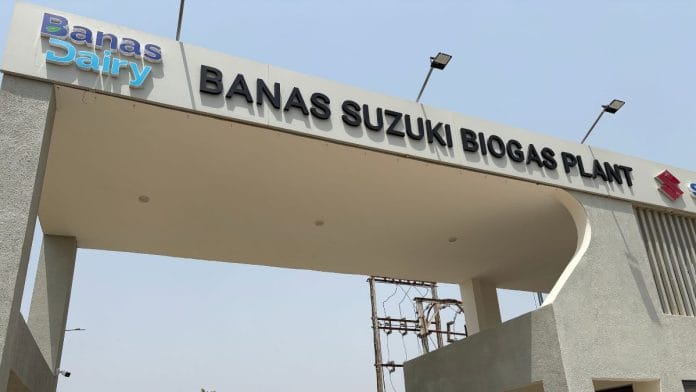

I recently found myself surrounded by tons of cow dung in the small town of Bhukhala in Banaskantha District, north Gujarat. Tractors filled with three to four tonnes of the stuff rolled through the gates of the area’s only industrial facility. Strangely enough, this was a place I’d wanted to visit since Suzuki Motor Corporation Chairman, Toshihiro Suzuki, spoke about the facility during the Japan Mobility Show last year.
Because this cow dung, after being mixed with water and sent into a giant tank, is ‘digested’ to produce methane, or as you might know it, natural gas. In this case, to be exactly precise, biomethane. After being purified, this gas is stored and much of it is sold to vehicles at a Bio-CNG dispensing station right outside the facility.
This plant, built for Rs 45 crore, operates under a tripartite agreement between Banas Dairy, the local district Dairy Union, the National Dairy Development Board (NDDB) and Suzuki Motor Corporation through their wholly-owned subsidiary Suzuki Research and Development India (SRDI). SRDI invested Rs 45 crore on building the plant, NDDB provided the technology and operational expertise and Banas Dairy provided the land and will eventually take over operations. Profits, if any, are shared between SRDI and Banas Dairy.
Every day, 100 tonnes of cow dung are brought to the plant. This produces between 1.5 and 1.8 tonnes of natural gas, and every day, 350-400 vehicles fill their tanks with gas. In fact, the Bio-CNG is sold at a substantial discount to regular natural gas at Rs 75 per kilogram. Natural gas is priced between Rs 80-83 across Gujarat.
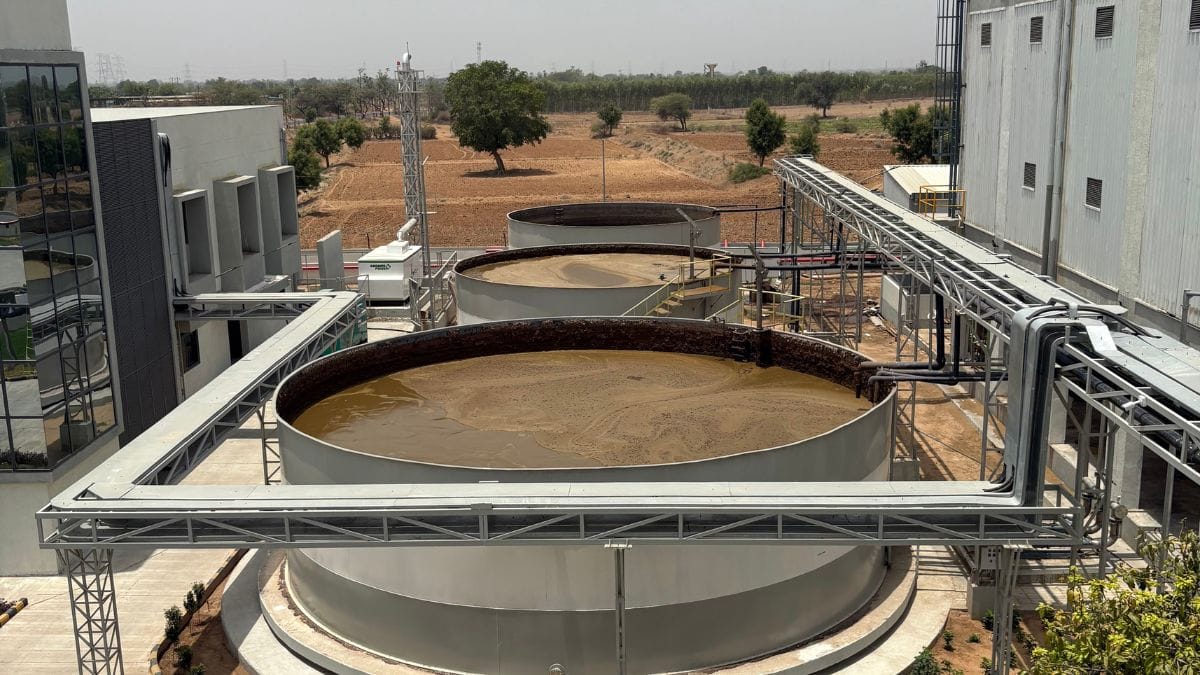
That is not all, the ‘expended’ cow dung goes through three stages of solid separation before being dried into organic fertiliser. Some of the slurry water is collected in a lagoon and sold back to farmers as enriched organic water for their fields. The remaining solid material is mixed with phosphates from Udaipur to create a phosphate-rich organic fertiliser, which is significantly better than plain, dried cow dung. Officials told me that 80 per cent of revenues for the plant currently comes from the sale of this enhanced fertiliser and slurry water.
But there is more to this story. While 100 tonnes of cow dung a day may seem like a lot, the average milch cow produces between 10 and 15 kilograms of it daily. The tractors that go on rounds to collect cow dung twice a day only collect cow dung from around 35 dairy collectives, which comprise around 500 dairy farmers. Banas Dairy, which is the largest and richest district dairy Union in Gujarat, has 19,000 collectives and procures over one crore litres of milk on good days.
The potential, therefore, is massive. This is only one of two operational plants in the Banaskantha district, with a third coming up.
But of course, it is not as if there are no issues. Capital costs are high and margins are slim, especially considering that farmers get paid a rupee per kilogram of the stuff. Scaling up is a possibility, but there’s another challenge: while many Indians know that cow dung has energy potential, it does not have the greatest ‘gasification’ potential. Municipal solid waste (MSW) and the ‘black mass’ from sugarcane refining have higher potential for that. India’s largest waste-to-gas plant, in Indore, processes over 500 tons of municipal waste daily, making 15-17 tons of biomethane.
The costs go up more because of the extensive purification required. The raw gas that comes out of the digester is only 45 per cent methane. The rest contains moisture and carbon dioxide, and crucially, a large amount of hydrogen sulphide or H2S—the gas that smells like rotten eggs. H2S is not only smelly but also corrosive, especially for internal combustion engines.
So the raw gas has to be purified to over 95 per cent before it is sold. That is higher than the amount of methane in the natural gas from wells where some longer hydrocarbons such as ethane, propane, and butane are also present. While the production of slurry and the digestion process are relatively low-energy, the purification plant currently operates through diesel generators. That said, the process is still hugely net energy positive.
Also read: Automotive influencer warns people against buying EVs. His grouse lies with charging ports
Why India is betting on Bio-CNG
So if it is expensive, why go down this route? Sceptics might argue that it is a way to earn brownie points by enhancing the ‘cow economy’. There is more to this. The government of India, through the Ministry of Petroleum and Natural Gas (MoPNG), has mandated that India’s natural gas supply, whether it is for transportation, piped natural gas at homes, or even industrial use, should have five percent biomethane by 2030.
A MoPNG official told me that MSW is not an option in many cities because of entrenched ‘garbage mafias’, and the sugar industry is moving to produce BioCNG from their byproducts. A majority of BioCNG plants in India operate by using fast-growing Napier grass and other vegetation. The advantage of cow dung (and MSW) is actually their carbon benefits.
The fact is that cow dung left to dry in the open releases methane into the atmosphere anyway. And methane, by itself, has a huge impact on global warming—with 28-30 times more warming effect than carbon dioxide. This is why many oil and natural gas wells flare excess methane: burning it into carbon dioxide is still significantly less harmful than venting pure methane directly into the atmosphere.
Ergo, the game is about carbon neutrality and carbon credits. This plant, along with several more SMC-NDDB plants coming up across Gujarat with other dairy unions, some using Japanese technology and looking to capture both carbon dioxide and sulphur, will potentially generate a large amount of carbon credits for Suzuki Motor Corporation. It will also help India meet its net-zero goals by 2070. Bio-CNG is a completely different story from bio-ethanol in India’s overall biofuels game plan. But this also means slightly cheaper gas to run vehicles.
Kushan Mitra is an automotive journalist based in New Delhi. He tweets @kushanmitra. Views are personal.
(Edited by Ratan Priya)