



New Delhi: The National Investigation Agency (NIA) had its task cut out in the probe into the Pahalgam terror attack. The remoteness of the location and the absence of evidence such as CCTV footage added to the complexity of the case.
It was only after examination of more than 1,113 witnesses, including more than 500 inhabitants of nearby ‘dhoks’ (hutments of nomadic herders) that the first vital piece of information emerged.
A local man had seen three armed men—who turned out to be the terrorists—entering the ‘dhok’ of ponywallah Parvaiz Ahmad Jothar on 21 April, 2025 (a day before the massacre) and had seen him along with his uncle Bashir Ahmad Jothar.
The next day, he allegedly saw the trio along with Parvaiz and Bashir at the Baisaran meadows in the afternoon.
That aside, the man went on to give several leads to the anti-counter terrorism agency. In his testimony, he said the terrorists spotted him and was spared only because he could recite the Kalma as ordered by them.
Such revelations went on to become the base of the NIA’s chargesheet against the Pakistan-based chief of the terror outfit, The Resistance Front, and others in the high-profile case.
The NIA officially took over the Pahalgam terror attack probe on 27 April last year, following orders from the Ministry of Home Affairs (MHA). It went on to lodge the chargesheet on 15 December.
‘Rs 3,000 as reward’
On the fateful evening of 21st April, Bashir was at his brother’s dhok when his sister told him to check on two children, including a 10-month-old baby, at his nephew’s dhok.
Midway, the ponywallah was checking on his horse in the jungle when he allegedly saw the three armed men emerge from behind the trees. “They sought arrangements for a safe place for shelter and food in the name of Allah,” the chargesheet mentioned.
Bashir, according to the NIA, brought the three terrorists to the dhok of nephew Parvaiz, who was present with his wife and the infant. Parvaiz offered water to the trio as they asked for it, saying that they were very tired and thirsty after traveling a long distance.
When the terrorists told him that he would get ‘sawaab’ (reward) for offering water to those fighting the cause of Allah and waging jihad for the freedom of Kashmiri Muslims, Parvaiz told investigators that he understood that they were ‘mujahids’.
Additionally, their Urdu with a Punjabi tilt made Parvaiz realise they were not local Kashmiris. On their instructions, Parvaiz hid all three of them under blankets and bedding at his dhok and asked his wife to prepare tea
After the refreshments, one of the terrorists asked them to prepare dinner, following which Parvaiz’s wife prepared a dish made of rice and tomatoes. The terrorists, according to the chargesheet, left at around 10 p.m. after staying for nearly five hours.
Before departing, they packed 10 rotis in a torn cloth and some vegetables in a polythene bag. They also took along spices and utensils along with blankets and a tarpaulin sheet. For all the efforts, the terrorists handed Rs 3,000 to Parvaiz, Bashir told the investigators.
The DNA samples collected from these blankets and the tarpaulin sheet recovered from Baisaran matched with the DNA sample of Bashir, according to the NIA’s chargesheet, confirming the sequence of events leading to the terrorist attack.
Both Parvaiz and Bashir carried on with their routine of taking tourists on their ponies the next day, despite spotting the terrorists near Baisaran. They waited for tourists till 1 p.m and returned downhill to the town.
“Despite seeing the same terrorists again the next day in Baisaran, Parvaiz (A-6) remained silent. This sustained omission satisfies the element of ‘concealment’ envisaged under Section 19 of the Unlawful Activities (Prevention) Act,” the NIA submitted in the chargesheet.
The agency arrested the two ponywallahs in June last year.
Three months after the attack, Union Home Minister Amit Shah informed Parliament that the three terrorists—Faisal Jatt alias Suleman Shah, Habeeb Tahir alias Jibran, and Hamza Afghani—were silenced in an encounter at Dachigam forest on the outskirts of Srinagar.
Bashir and Parvaiz, the chargesheet said, were taken to a mortuary, where they confirmed that the terrorists they sheltered were those killed in Operation Mahadev.
Pahalgam terror attack: The missing jigsaw
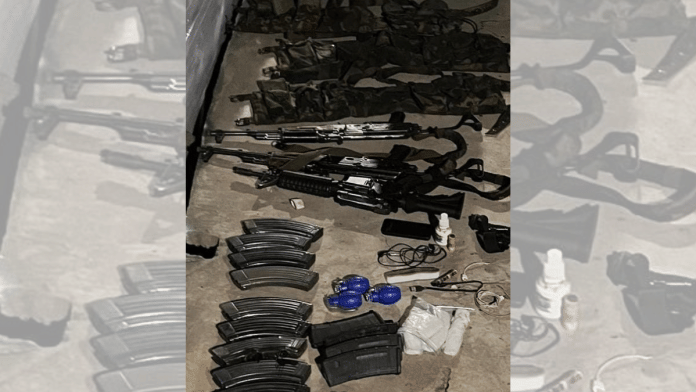
From the Baisaran meadows, a forensic team recovered 38 empty cartridges that, in addition to establishing the scale of firing at the tourist site, also went on to solve a big puzzle for the NIA.
The two AK-47 rifles and one M-4 carbine, which were found from the slain terrorists, were sent for analysis to the Chandigarh forensic laboratory. Its report confirmed that the cartridges recovered from Baisaran were fired from the same weapons seized in Operation Mahadev.
The report prepared by the Chandigarh lab in June last year also confirmed that the cartridges recovered from Baisaran and those from the tunnel at Gagangir in Ganderbal district were fired from the same weapon. “Hence, based on the evidence, it is concluded that the M-4 carbine involved in both the cases is connected and has commonality,” the NIA submits in its chargesheet.
This finding raised suspicion about the module’s involvement in other terrorist attacks in the last few years, prompting the anti-terrorim agency to send samples collected from other sites such as from the Poonch-Rajouri sector in Jammu and Kashmir.
Another forensic report, prepared in November last year, confirmed that the M-4 carbine was also used in an ambush against the Army and Air Force personnel in December 2023 and May 2024.
Additionally, its imprint was found in the attack on a passenger bus in Reasi district in June 2024. Nine pilgrims were killed and over 40 injured in this episode. Similarly, the American origin weapon was also used in the killing of seven people, including six construction workers, at Ganderbal in October that year.
(Edited by Tony Rai)