








Are China and Pakistan still all-weather and ironclad friends? Chinese online discourse is beginning to question just how ‘ironclad’ the friendship really is.
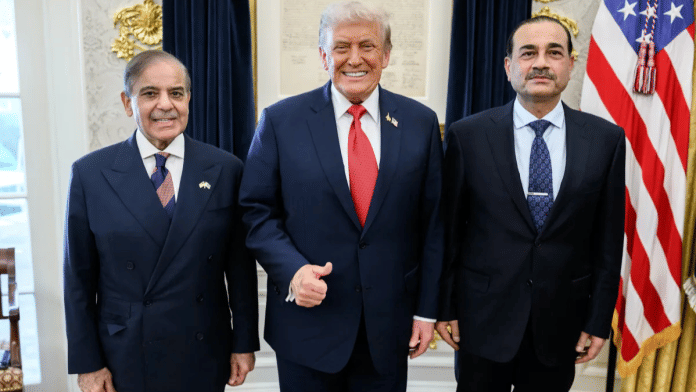
Chinese commentary is paying growing attention to Pakistan’s renewed engagement with the United States, with some commentators accusing Islamabad of deliberately balancing between Beijing and Washington.
One commentator contrasts China’s deepening commitment to Pakistan with Washington’s renewed interest. China has invested tens of billions of dollars in the China-Pakistan Economic Corridor (CPEC) 2.0, with the focus shifting toward industrial parks and green energy, while Gwadar Port is expected to move from a strategic concept toward generating real cash flow. At the same time, after years of relative distance, the US has once again included Pakistan among its security partners.
According to a Baijiahao commentary, Pakistan sees China’s need for Gwadar and CPEC, which provide a land route to the Indian Ocean, as a source of leverage. Islamabad, in this reading, is using its strategic importance to both Beijing and Washington to extract benefits from each. Beijing may be unhappy with closer US-Pakistan ties, but ultimately has little choice but to continue cooperating with Islamabad.
The commentary presents Pakistan’s diplomacy as attempts at calculated hedging, with its geography and connectivity projects giving Islamabad bargaining power with both major powers. It also acknowledges that the relationship is not entirely one-sided. CPEC and Gwadar serve important Chinese interests, particularly in linking western China to external markets and diversifying energy and trade routes, but Pakistan is also deeply dependent on these projects and that leverage is overestimated.
While the above commentary focuses on Pakistan’s leverage with China, another Chinese commentary highlights its dependence on the US. It points to decades of US-Pakistan military cooperation, including Pakistan’s reliance on US-supplied F-16s and American support for their upgrades and maintenance. It also highlights wider economic and institutional ties, including US security and economic assistance and Pakistan’s links with US-led international financial institutions.
Zhang Jiegen, Executive Director of the Pakistan Study Center at the Institute of International Studies at Fudan University, argues that the initiative in US-Pakistan relations has historically been in Washington’s hands. The two countries move closer when the US has a need for Pakistan, he suggests. Once that need is met or American policy changes, Pakistan could become a pawn to be abandoned.
Also read: China does not tolerate even a seminar on Tibet in Nepal. It comes at a cost to Kathmandu
What should China do?
Jin Canrong, professor and vice dean of the School of International Relations at Renmin University, emphasises that China has consistently maintained a friendly attitude toward Pakistan, particularly when India-Pakistan tensions rise and Beijing steps in to help. This, he argues, has made Pakistan closely tied to China. But the US, he says, has always worked behind the scenes to prevent Pakistan from becoming fully pro-China. For Jin, this is a warning that China should not be too trusting of Pakistan’s strategic choices.
The response in Chinese commentary is largely focused on how China should remain pragmatic, rather than overinterpreting Pakistan’s outreach to the US as a strategic shift. The argument goes that China should prioritise making CPEC and Gwadar commercially viable, while also pressing Pakistan to share risks and strengthen security, making the engagement more transactional. It further suggests that Beijing should reduce overdependence on any single corridor by diversifying its access to the Indian Ocean through alternatives such as Kyaukpyu and Hambantota. In this view, expanding strategic options would reduce China’s vulnerability to fluctuations in Pakistan’s foreign policy.
A commentary on Sohu takes a more positive view of Pakistan’s balancing strategy. It argues that Pakistan’s diplomacy is becoming more diverse as Islamabad attempts to maintain a balance between the US and China. Although Pakistan-US cooperation is gradually deepening, China remains deeply intertwined with Pakistan in security, economy, and energy. Pakistan, the commentary suggests, may be becoming a bridge in the China-US rivalry rather than simply an adversary. From this perspective, Pakistan’s multipolar approach could also be useful to China in its competition with the US.
Another commentary argues that China’s position in Pakistan remains irreplaceable because the US neither plans nor has the capacity to invest as much as China in infrastructure and the broader industrial chain.
The overall tone of the Chinese debate is cautious rather than alarmist. Few commentators see renewed US-Pakistan ties as a fundamental threat to China-Pakistan relations, but there is clear unease about their implications for China. US-Pakistan ties are viewed as tactical and driven by immediate regional security interests, while China-Pakistan relations rest on a broader and lasting economic, strategic, and political foundation. A recurring concern is whether Washington could be using its renewed engagement with Islamabad to counter Beijing.
Less attention, however, is given to the military dimension of China-Pakistan ties, particularly the extent of Chinese defence cooperation and weapons access in Pakistan, and what this could mean as US-Pakistan military ties evolve.
Sana Hashmi, PhD, is a fellow at the Taiwan-Asia Exchange Foundation. She tweets @sanahashm1. Views are personal.
(Edited by Aamaan Alam Khan)