






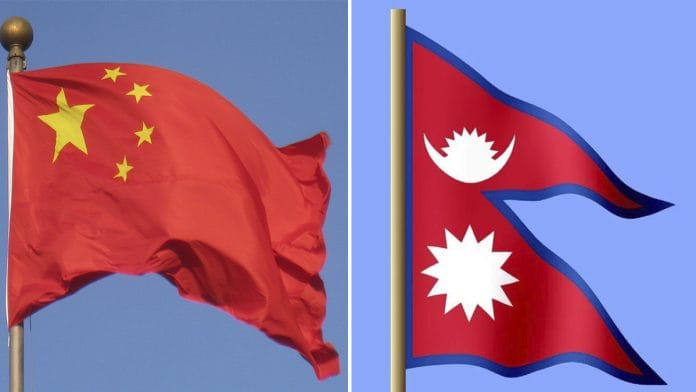


How often do foreign missions take an interest in influencing what discourse a host country’s public universities can have? Rarely, but they do. This time in Nepal.
As the birthplace of the Buddha and a centre of Buddhist philosophy, Nepal’s Kathmandu University was to co-host a week-long conference on Tibetan studies, from 23 to 29 August. Three weeks prior to the conference, the organisers were verbally instructed by government officials in Nepal “not to proceed with convening”, which media later reported as cancelled and then confirmed as moved online. Jointly hosted by the International Association for Tibetan Studies (IATS) — a key association on Tibetan studies founded in 1979 with a stated purpose to study “Tibet from all disciplinary perspectives such as history, religion, linguistics, and art, to cite just four prominent” — and Kathmandu University, it is the 17th convening of the association.
Media reports clearly point to one key reason for the decision — China. The Chinese mission reportedly raised “concerns” with officials in Nepal over the proposed IATS conference in Kathmandu. Some of the scholars travelling from different parts of the world, including Taiwan, have shared frustration over the decision. Sharing a screenshot of the email sent by the organisers, which read, “Kathmandu University has been instructed by the Government of Nepal not to proceed with convening the 17th Seminar of IATS,” one participant from Taiwan expressed dismay at the last-minute change.
While international media has covered the incident at length, questioning such a move in Nepal, participants have condemned it, including those travelling with an expensive itinerary for an intellectually stimulating experience. However, one needs to read it in its entirety to understand how it reflects China’s Nepal policy.
Tibet as a security concern
This is not the first but one of many such protests reportedly lodged by China in Nepal with matters concerning Tibet, and Kathmandu has acted under pressure. Over the seven decades of China’s diplomatic ties with Nepal, Tibet has remained a core security concern for Beijing in Kathmandu. In the 1960s, after Communist China’s takeover of Tibet, thousands of Tibetans escaped to neighbouring Nepal and made it a home in refuge, whereas the majority moved to India to be with the Tibetan government in exile.
Cultural affiliation was a key factor in such a mass exodus from Tibet to Nepal. While the movement continued smoothly for two decades, political pressure began to build on the monarchy and the government in the 1990s. The number of refugees crossing the Himalayas to reach Nepal declined following Beijing’s pressure on Kathmandu in the 1990s.
Meanwhile, following the first democratically elected government led by Maoists in 2008 — a year that marked a major uprising in Lhasa in the face of the Beijing Olympics — the movement of Tibetans in Nepal also became more controlled, as any support for a Tibetan uprising in Nepal was deemed a security matter threatening Chinese interests.
In its 2008 report, The Wall Street Journal reported the arrest of 8,350 Tibetans in Nepal following alleged pressure from China.
While the majority of Tibetan refugees moved to the United States, Canada, and other countries, the remaining ones in Nepal have assimilated into local communities, yet the Chinese fears remain. If not united, elements of ‘Free Tibet’ still hold a sentimental value among the Tibetan community in Nepal, which often finds more fire among the youth.
At the same time, events like a seminar on Tibetan studies would, no wonder, be deemed a threat, considering there were participants from countries across the world with free speech, and it could also become a space for support for any Tibetan cause.
Worth recalling, throughout China’s seven decades of diplomatic history with Nepal, every joint communique, treaty, and MoU has included a strong request from Beijing for Kathmandu to reiterate “firm support on Taiwan, Tibet-related and other issues involving China’s core interests.”
In 2019, during the historic visit of Chinese President Xi Jinping, the Joint Statement stated, “Tibet Affairs are China’s internal affairs, and the determination on not allowing any anti-China activities on its soil.”
Therefore, despite its border with Nepal being marked by the high Himalayan mountain ranges, China closely monitors Tibetan-related activities in Nepal, as even a limited spillover of political movements and protests could influence Tibet and may be detrimental to its domestic stability.
Also read: Chinese commentary frames the Mecca pact as a ‘money, gun and nuclear’ combination
Gen Z movement caused more worries for China
The formation of a new government in Nepal in February 2026, following the elections and the Gen Z movement, also coincided with China’s appointment of a new envoy to Kathmandu. Among the very first meetings the new Ambassador Zhang Maoming held was with the newly appointed Nepal Home Minister, Sudan Gurung, during which he reportedly raised concerns about Tibet-related activities in Nepal.
Also, with a new Gen Z-led leadership, fears that Tibet-related activities will become more prominent are growing in Beijing, as the former is more independent and less predictable, and may not align with past governments’ tight control over Tibetan activism or with refugees voicing their desire for freedom.
What is even more interesting is that when a Gen Z-led movement shaped Nepal’s new political future, China was sceptical of the new Gen Z-led administration’s approach to Tibet-related concerns. Even Gen Z leader Sudan Gurung’s appointment as the Home Minister came under scrutiny on social media, with allegations of his association with Tibet-linked movements, prompting him to lodge strong objections and call it a deliberate misinformation campaign by some sections. This episode showed how Tibet-linked issues could disrupt domestic turf, with broader implications for regional geopolitics.
To conclude, since the establishment of diplomatic ties between Nepal and China in 1955, Beijing has been clear on what it wants from Nepal — Tibet, Taiwan or the One-China Policy — but the challenge has been with Kathmandu, which for the longest time has missed seeing a long-term policy assessment of China as it complies with Beijing’s sensitivities. If Nepal is key to China’s domestic stability in Tibet, why does Kathmandu not see Tibet as the greatest leverage and bargaining chip in engaging with China?
A one-sided approach has often come at a high cost for Nepal — free speech, social cohesion, and human rights. The government’s close scrutiny of even academic or cultural events related to Tibet — such as seminars and conferences — reflects Kathmandu’s growing sensitivity to Beijing’s concerns, but this approach has also narrowed the open political and intellectual space that Nepal has historically provided.
Rishi Gupta is a commentator on global strategic affairs. The opinions expressed in this article are those of the author alone and do not reflect the views of the author’s current or past affiliations in any form.
(Edited by Aamaan Alam Khan)