



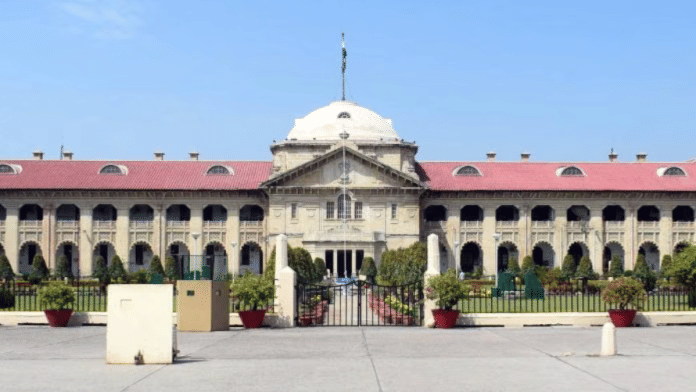
New Delhi: Underlining for tax authorities that administrative delays cannot reset statutory deadlines, the Lucknow Bench of the Allahabad High Court has quashed an order issued by Chennai’s Interim Board for Settlement against M/s B.L. Agro Industries on 30 October 2023.
The story began on 4 October 2018, when income tax officials raided Bareilly-based B.L. Agro’s offices and flagged financial transactions across its sister firms. Notices were subsequently issued for assessment years 2009-10 through 2018-19. Seeking to resolve the tax dispute quickly without years of litigation, the company opted to settle through the official Income Tax Settlement Commission.
Then came an unexpected twist. In February 2021, Parliament abolished the Settlement Commission overnight. Left in legal limbo, B.L. Agro petitioned the high court, which granted them permission to submit a fresh settlement application on 23 March 2021.
The government created specialised ‘interim boards’, and crucially, the law attached a strict 18-month clock: once a case was assigned to an interim board, the authorities had 18 months from the end of that month to reach a decision.
On 1 November 2021, B.L. Agro’s case was officially assigned to the Delhi Interim Board. The Delhi team got to work, issuing orders in March 2022 demanding detailed investigative reports from tax officers. Under the 18-month rule, the clock was ticking down to a deadline of 30 May 2023, or potentially 30 September 2023, referring to an extension or specific calculation used by the authorities, rendering the 30 October order passed later void.
Before the Delhi board could finish, central tax authorities reassigned B.L. Agro’s file on 13 June 2022, transferring it from Delhi to an interim board in Chennai.
After months of no work and the statutory deadline passing on 30 October 2023, the Chennai board handed down an order rejecting B.L. Agro’s settlement. B.L. Agro petitioned the high court, arguing that the late decision was legally dead on arrival.
What high court said
The income tax department claimed that when the file was transferred to Chennai on 13 June 2022, the 18-month timer restarted from scratch. According to their math, they had until 31 December 2023, making their October decision perfectly valid.
A division bench of Justices Shekhar B. Saraf and Abdhesh Kumar Chaudhary pointed out that if passing a file between offices could restart the clock, officials could extend deadlines indefinitely simply by shuffling papers across state lines. The judges called this reasoning “fallacious”, holding that “the period prescribed… cannot be extended once the interim board takes cognisance of the interim application pending before it”.
Relying on established Supreme Court precedent, the bench ruled that the 18-month deadline is mandatory, not a flexible suggestion. Any order passed after the clock expires is a complete nullity.
Allowing the writ petition, the high court in August 2026 formally quashed both the rejection order dated 30 October 2023, and the subsequent rectification dismissal dated 15 December 2023. The bench clarified that it addressed only the limitation issue and “have not ventured into the issue as to whether the proceedings would abate or not as well as consequences of abatement”, ensuring that principles of res judicata would not apply to those unadjudicated aspects.
M/s Mahesh Kumar & Co., a prominent chartered accountant with a practice based in Connaught Place, New Delhi, and the petitioner’s authorised representative who pursued this matter before the high court, explained that the decision constitutes a significant precedent on the strict application of limitation law to settlement of taxpayer disputes and of not allowing delay, inaction or administrative measures by revenue authorities to validate time-barred orders to the detriment of taxpayers.
(Edited by Nardeep Singh Dahiya)