


New Delhi: Social media content creators, reel-makers and other similar individuals carrying cameras and microphones cannot be equated with bona fide journalists and benefit from the guidelines that Delhi Police issued for mediapersons carrying proper identity cards during the October protests against Chief Election Commissioner Gyanesh Kumar, the Delhi Police Commissioner has told the Supreme Court.
An affidavit filed by Joint Commissioner of Police Surender Kumar, on behalf of the police chief has also clarified that the absence of Press Information Bureau (PIB) accreditation would not, by itself, disqualify a person from being recognised as a journalist. An identity card issued by a journalist’s employer or media organisation is also an acceptable form of identification, it said.
The affidavit comes in response to a batch of petitions, alleging the Delhi Police manhandled, harassed and detained journalists covering the protests against Chief Election Commissioner Gyanesh Kumar in Delhi. The organisations that filed the petitions include the Network of Women in Media, India (NWMI), Free Speech Collective, Delhi Union of Journalists and Kerala Union of Working Journalists.
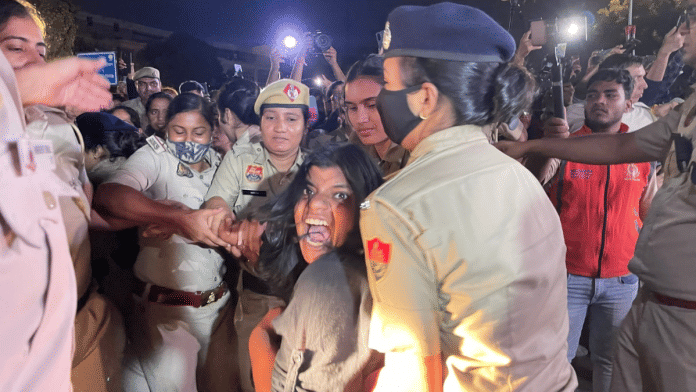
Making a sharp distinction between what it described as professional journalists and content creators, the affidavit defended the Delhi Police actions against allegedly unruly protestors, claiming that the confusion created by reel-makers and social media influencers led to inadvertent removal of journalists during crowd-control operations.
Allegations of sexual harassment of women journalists during the 3 October protest were denied as they remain uncorroborated. The affidavit referred to one of the petitions that cited four complaints by women journalists, and said while three of them declined to participate in the enquiry, the allegations by the fourth were not substantiated from the surveillance camera recordings of the protest spot where the alleged incident took place.
Adequate measures, it said, were taken to handle women protestors and none of them were removed from the site and transported in a police vehicle without a woman police officer. To manage the women protestors, 3,747 women police personnel were deployed during the day shift and 664 during the night shift.
The affidavit maintained, however, that the involvement of male personnel in crowd-control operations involving women could not, by itself, be construed as misconduct, particularly when immediate intervention was required and decisions had to be taken in a matter of seconds during the protests.
The Delhi Police also denied detention of any journalist, providing responses to each instance cited in different petitions. The affidavit further rejected the charge that the police had seized equipment of media personnel.
The police argued that individuals participating in the protests were creating YouTube reels and other social media content while carrying cameras and microphones, making it difficult for the force deployed at the protest sites to identify journalists.
Referring to the Supreme Court’s 11 October order, which said lawyers, journalists and other professionals should not be stopped from discharging their professional duties, the affidavit claimed this direction was mean to protect bona fide journalists and not intended to exempt reel-makers, social media influencers or unruly elements from complying with lawful police directions. The petitioners have alleged that the police violated this order a day later by detaining several mediapersons.
The Delhi Police denied deliberately obstructing , detaining or manhandling journalists, covering the protests, as it spoke about the practical problems the police personnel deployed faced in distinguishing professional journalists in the crowd.
To enforce its concern, the Delhi Police affidavit cited the video of an individual, who described herself as a student and journalist, but later reportedly admitted that she was not yet a journalist, although she possessed a press card.
‘Advisory was facilitative’
Defending its 5 October guidelines for journalists covering protests, the affidavit submitted they were to facilitate identification of bona fide media personnel and ensure their safety. It had asked journalists to carry identity cards issued by their respective media organisations or valid accreditation cards issued by the Press Information Bureau (PIB) or the Directorate of Information and Publicity (DIP). It also required them to keep their identification prominently displayed, avoid obstructing police operations and maintain a reasonable and safe distance during tense situations.
This advisory was facilitative and was not intended to impose any restriction on the right of citizens to gather information, record and disseminate it, the affidavit said.
It said the Press Council of India’s guidelines of 15 October for journalists covering protests and demonstrations were substantially similar to their advisory. Through them, the council had advised journalists to maintain neutrality, display identification, follow lawful police instructions and keep a safe distance from confrontations.
Removal of journalists, if any, was inadvertent and resulted from mistaken identity or crowd-control requirements, contended the affidavit, rejecting the accusation that journalists were forcibly removed from the protest sites.
While handling the large gatherings, it said, repeated attempts to breach barricades and preventive measures were made. Individuals had also obstructed movement of the police team. In such a scenario it as not possible each time to identify journalists in the group. However, whenever a journalist established their identity, such a person was immediately released, in case of their detention.
The affidavit cited specific incidents to support the steps that the Delhi Police took to either release journalists or let them cover.
For example, they said, on R.K. Ashram Marg, the police said individuals obstructing personnel were removed for verification. Some journalists were inadvertently caught up in the operation but were released once their identities were established. It cited a video recorded by journalist Sreenivasan Jain in support of its version.
Regarding Peek TV journalists, who were reportedly forcibly removed from Connaught Place on 11 October, despite displaying press identification, were later permitted to continue their work following the intervention of a Deputy Commissioner of Police, who also expressed regret for the commotion.
On the allegations that a journalist from The Hindu was detained, the affidavit said she was released after police personnel recognised her professional identity and before the police vehicle carrying protesters departed. Similarly, three journalists of the Indian Express were released 45 minutes after they were detained.
With regard to Paranjoy Guha Thakurta, the affidavit submitted he was not taken to any police station and, as per his own statement, he was released half a kilometre away from the protest site after being driven around for approximately 20 minutes.
As for journalist Ryan Thomas of The Caravan, who alleged that he was assaulted and injured while covering the 11 October demonstrations, the police said he was not detained or taken to a holding facility but was merely removed from the protest site during crowd-control operations.
The affidavit referred to the Central Media Accreditation Guidelines, 2022, to argue that professional journalism is identifiable through objective criteria. It even relied on the Occupational Safety, Health and Working Conditions Code, 2020, which defines a working journalist as someone whose principal avocation is journalism and who is employed in, or in relation to, a newspaper, electronic media or digital media establishment.
Sexual harassment allegations
The affidavit also gives a status report on the allegations of sexual harassment by women journalists during the demonstrations near Jantar Mantar. According to the document the four complaints received at the Parliament Street police station were transferred to the crime branch for an independent enquiry.
While two complainants joined the inquiry initially they later expressed unwillingness to pursue their complaints or seek further police action. A third complainant did not join the inquiry despite notices and attempts to contact her. She and her advocate subsequently conveyed that she did not wish to pursue the complaint.
The police said an examination of surveillance footage and video recordings did not reveal the specific acts of sexual harassment alleged in these complaints. The footage showed that two of the complainants had been removed by a woman police officer. The three complaints were consequently closed.
Regarding the fourth complaint, the police said surveillance recordings, video footage and statements of witnesses were examined, but no prima facie case warranting registration of a report was found. In this case, the complainant has approached the judicial magistrate at Patiala House Courts under the Criminal Procedure Code and by an order of 3 November, the court has sought an action taken report from the police. The order also asks the police to preserve surveillance footage and other digital evidence, including body-camera recordings. This matter would now be heard on 1 December, the affidavit disclosed.
Information was also provided regarding a First Information Report registered against a woman journalist under the Scheduled Castes and Scheduled Tribes (Prevention of Atrocities) Act. This case too has been transferred to the Crime Branch. However, on the directions of the Supreme Court, no coercive action has been taken against the journalist so far.
Categorically denying allegations of seizure of cameras, mobile phones or other equipment belonging to journalists during the protests, the affidavit cited police records of the New Delhi district.
The Delhi Police had, however, recovered articles from other individuals such as unclaimed mobile phones, which were seized in the exercise of statutory powers under the Bharatiya Nagarik Suraksha Sanhita 2023 and the Delhi Police Act.
The affidavit also said that the police have preserved footage and other relevant recordings concerning the incidents at the respective police stations and the Police Headquarters following an order by the Commissioner of Police to all districts and units. It assured respect for press freedom and Delhi Police’s commitment to preserving and not interfering with the media’s constitutional right to gather, record and disseminate information.
(Edited by Nardeep Singh Dahiya)