


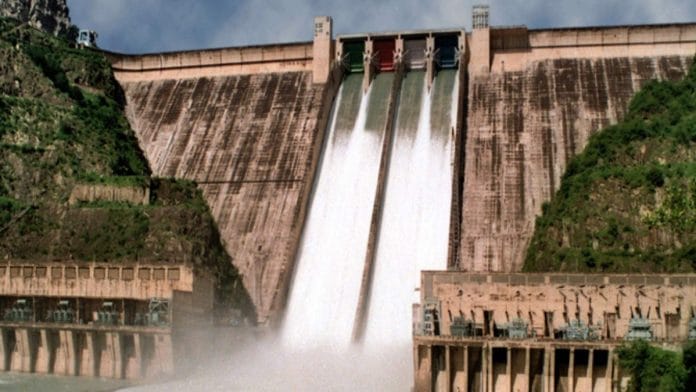
Shimla: Himachal Pradesh could save around ₹300 crore annually on electricity purchases following Friday’s landmark Supreme Court verdict on its share of power from Bhakra Beas Management Board (BBMB) projects. The estimate is based on the nearly 598 million units (MU) of electricity the state is to receive each year during the lean months, valued at an average rate of ₹5.12 per unit at which Himachal Pradesh State Electricity Board Ltd (HPSEBL) tied up short-term power purchases for the winter of 2024-25.
The actual financial benefit could be higher, depending on the market price of electricity when the power is received. The state government has put the potential annual benefit at ₹600 crore to ₹800 crore. But this is the estimated market value of the additional electricity, not necessarily the amount HPSEBL will save or earn. The final saving will depend on how much of the power replaces purchases, the cost of receiving it and whether any surplus can be sold.
In its 6 November judgment in State of Himachal Pradesh v. Union of India, the Supreme Court directed that Himachal receive 11,973 MU of electricity over 20 lean seasons from Haryana and Punjab. This works out to approximately 598 MU a year, to be supplied between October and March. The ruling settles a long-running dispute over Himachal’s share of power from BBMB projects, including the Bhakra-Nangal and Beas projects.
The court arrived at the figure after accounting for Himachal’s outstanding capital-cost liability. It recognised historical energy arrears of 13,066 MU but also determined that Himachal owed ₹420.77 crore towards the capital cost attributable to Punjab and Haryana. The court directed that this amount be adjusted against the state’s electricity entitlement at ₹3.85 per unit, reducing the energy due by approximately 1,093 MU.
The remaining 11,973 MU is to be supplied over 20 lean seasons, at roughly 598 MU annually. The arrangement does not mean Himachal will receive free electricity. The state will have to pay the BBMB charges determined for each year in which it receives power. The capital-cost adjustment settles one part of the dispute through an adjustment in energy; it does not remove the state’s obligation to pay the applicable annual charges.
Cold calculation
The most immediate financial benefit is likely to come from reducing the amount of electricity Himachal has to purchase in winter. The state’s power demand rises in the lean months, when river flows decline and hydropower generation falls. This is also the period when Himachal has to arrange electricity from outside sources to meet the needs of consumers.
The Himachal Pradesh Electricity Regulatory Commission estimated a winter power deficit of 2,076 MU between October 2024 and March 2025. The additional 598 MU a year from BBMB would be equivalent to about 29 per cent of that estimated deficit. It will not eliminate the state’s winter shortage, but it could reduce the volume of power HPSEBL needs to procure from the market.
The regulatory commission’s figures give an indication of what those purchases can cost. For the winter of 2024-25, HPSEBL tied up 1,122 MU of short-term power through traders at an estimated cost of around ₹575 crore. The average rate worked out to ₹5.12 per unit at the seller’s state transmission utility periphery.
The month-wise procurement figures show that HPSEBL arranged 122.94 MU in October at ₹5 per unit, costing around ₹61.47 crore. In November, it tied up 158.96 MU at ₹5.03 per unit for about ₹79.96 crore. The volume rose to 217.94 MU in December, at ₹5.05 per unit, costing ₹110.06 crore. In January, the utility arranged 214.30 MU at an estimated cost of ₹109.85 crore. The regulatory order, however, prints the January rate as ₹3.40 per unit, a figure that does not match the reported quantity and cost, which imply a rate of approximately ₹5.13. This discrepancy needs clarification from HPERC or HPSEBL.
In February, HPSEBL tied up 193.56 MU at ₹5.23 per unit for ₹101.23 crore, while in March it arranged another 214.30 MU at the same rate, costing ₹112.98 crore. Together, the purchases amounted to 1,122 MU and an estimated ₹575 crore.
At the average rate of ₹5.12 per unit, the 598 MU annual BBMB allocation would have a gross replacement value of about ₹306 crore. If the entire allocation is available when the state needs it and displaces purchases at a similar rate, HPSEBL could avoid spending roughly that amount on short-term procurement.
These are estimated short-term procurement rates at the seller’s transmission periphery. They should not be read as the final delivered cost of electricity to Himachal, which can include transmission and other charges. Nor do they establish the price at which every unit would have been purchased in the absence of the BBMB allocation. They nevertheless provide a useful benchmark for understanding the scale of the potential saving.
Can Himachal sell the power?
The other possibility is that Himachal could sell some of the additional electricity when it does not need it. But the seasonal pattern of the state’s power demand suggests that the main use of the BBMB allocation is likely to be meeting its own winter requirements, rather than generating a large new stream of revenue through outside sales.
The 598 MU is to be supplied during the lean season, precisely when Himachal faces a power deficit. The state’s estimated winter shortfall of 2,076 MU is considerably higher than the annual BBMB allocation. This makes it likely that much of the electricity will be absorbed by local demand or used to reduce purchases. There may still be periods when supply exceeds demand, depending on the timing of deliveries, generation and consumption. Any such surplus could potentially be sold or used in power-banking arrangements.
But selling power is not the same as avoiding a purchase. A sale would bring in revenue at the rate secured in the market, while avoiding a purchase saves HPSEBL the cost of procuring electricity it would otherwise have needed. The financial value of either option depends on the timing of the supply and the prevailing market price. The court’s annual allocation does not, by itself, guarantee that Himachal will have surplus electricity available for sale.
HPSEBL’s own figures show that the state already operates through a mix of purchases, sales and banking arrangements. In 2023-24, it purchased 984.80 MU through the Indian Energy Exchange and PXIL at a reported cost of ₹598.66 crore, an average of about ₹6.08 per unit. It also sold 531.83 MU outside the state, earning around ₹258.28 crore, at an average realisation of approximately ₹4.86 per unit. These figures illustrate that the value of electricity depends on when it is bought or sold; a higher market price cannot simply be assumed for every unit received from BBMB.
Banking is another option, but it is different from a straightforward sale. Under such arrangements, a utility can send surplus electricity to another state or utility during periods of excess supply and receive electricity back when it needs it, often with an agreed premium or adjustment. It can help manage seasonal shortages, but it does not mean the state has earned cash revenue from the electricity it supplied.
Why estimates vary
The state government’s estimate of the benefit has been higher than the ₹306 crore benchmark. Advocate General Anup Kumar Rattan has indicated that the annual value could be around ₹600 crore to ₹800 crore, depending on the rate at which the power is valued. At ₹10 per unit, 598 MU is worth nearly ₹598 crore. At ₹13.50 per unit, the same quantity would be worth about ₹807 crore.
“Those calculations show the market value of the electricity at different assumed prices. They do not establish how much money HPSEBL will actually save. For that, the relevant comparison is not simply the highest rate being paid by another state or quoted in the market. It is the cost HPSEBL would have incurred to meet its own demand at the time the BBMB power is supplied, less the charges and costs associated with receiving that power,” said an HPSEBL official.
The difference matters because electricity prices can vary sharply across months and even across hours. If Himachal receives power when it would otherwise have bought electricity at ₹5 per unit, the saving will be very different from a situation in which it displaces a purchase at ₹10 or more. If the power arrives when the state has no corresponding demand, its value will depend on whether it can be sold, banked or used later.
A benefit spread over 20 years
The 20-season schedule also means Himachal will not receive the entire historical energy entitlement at once. The benefit will be spread over two decades, at approximately 598 MU each year. At a constant rate of ₹5.12 per unit, the gross value of that annual supply would be about ₹306 crore, or roughly ₹6,120 crore over 20 years.
Electricity prices will change, as will Himachal’s demand, generation and procurement requirements. The annual BBMB charges and the costs of transmission and delivery must also be accounted for before arriving at a net figure. It would therefore be misleading to describe the ₹6,120 crore as a guaranteed saving over the life of the arrangement.
The verdict gives Himachal a more dependable source of electricity during the months when it is most exposed to shortages and costly purchases. For now, the most defensible estimate is that 598 MU of annual BBMB power could replace around ₹300 crore worth of short-term purchases at the average rate HPSEBL tied up for the winter of 2024-25. The saving could be higher if the power displaces more expensive purchases, but it will be lower after the applicable charges and other costs are taken into account.
Retired electrical engineer R.L. Justa told ThePrint, “The Supreme Court verdict is therefore less a windfall from selling surplus electricity and more an opportunity for Himachal to reduce the cost of meeting its winter power demand. How much of that opportunity turns into an actual financial gain will become clear only when the state begins receiving the power and HPSEBL’s procurement costs can be compared against the charges it pays for the BBMB supply.”
(Edited by Nardeep Singh Dahiya)
Also Read: The Chester Hills ‘benami’ land row & how it’s exposed a rift in Himachal Pradesh bureaucracy