







New Delhi: “The ghats of Banaras belong to everybody,” says Mohammad Awwal. For a 28-year-old who had to spend 63 days in jail for organising an Iftaar gathering on a boat in the Ganga with his friends, Awwal speaks with a remarkable sense of calm.
“This is my city, this is where we grew up. My city belongs to me. Banaras sabka hai (Banaras belongs to everybody),” he tells ThePrint after being granted bail by the Allahabad High Court.
But beneath that calm, Awwal carries a question that he and 13 others jailed alongside him are asking. “Who will return the 63 days we lost?”
Mohammad Ahmed, who was also among the people imprisoned following the 16 March incident, tells ThePrint, “All we did was have an Iftaar party, and we were jailed on false charges. We are grateful that we had faith and managed to secure bail.”
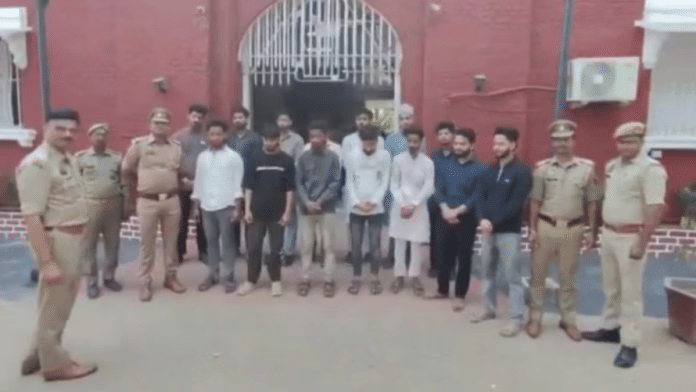
The 14 youths from the city were jailed on the basis of a complaint filed by BJP Varanasi Yuva Morcha chief Rajat Jaiswal who claimed they consumed “chicken biryani” in a boat off the Panchganga Ghat and threw the leftovers in the river which hurt the religious sentiments of Hindus.
According to Awwal, they organised the Iftaar on the boat, and ate fruits and food. One of their friends recorded a reel, and posted it on Instagram, which went viral, reaching Rajat Jaiswal too.
In the video, the group of lifejacket-wearing men could be seen having the party while boating in the Ganga.
Jaiswal told ThePrint in March, “I saw the video, where members of Muslim community had written that the Iftaari was taking place outside Alamgir Mosque, however it was Bindu Madhav ka Dharara, a temple. They ate non-vegetarian food, and threw the remains in Ganga.”
On his part, Awwal now says, “We did nothing wrong. We visited the ghat, like we have done in the past. But some people said we hurt their sentiments. All I can say is that we did not hurt any sentiments. We have participated in all festivals with our Hindu brothers, and so have they…we have lived together for decades.”
What police said
When the complaint was first filed, a police officer had told ThePrint then they immediately deployed teams, considering the “seriousness” of the matter.
“In the video, a container with chicken biryani was being used, and leftovers were allegedly thrown into the river,” he had said. “We immediately deployed our teams to different places, considering the seriousness of the matter.”
A case was registered at Kotwali Police Station in Kashi. “We arrested a total of 14 people as of now, and appropriate action will be taken against them,” the police officer had said.
The arrested youths ended up spending more than two months in the Varanasi District Jail.
“In those 63 days,” Mohammad Ahmed tells ThePrint over the phone, “all I did was pray.”
“I had hope though, one day we would secure bail… and I know, I have support of my people—the Hindu and Muslim brothers of Banaras…we have committed no crime.”
‘Visited ghats since childhood’
For Mohammad Awwal, the Ganga and its famous ghats have been his second home. “Everybody from Banaras visits the Ganga ghat. People walk around with their families and friends. My friends and I have visited Ganga ghats since childhood. So that day, we decided to celebrate Iftaar on a boat. This had never been such a big issue, until now.”
On what happened that day, he says they did “nothing wrong”.
“We visited the ghat, like we have done in the past. But some people said we hurt their sentiments. All I can say is we did not hurt anyone’s sentiments. We have participated in all festivals with our Hindu brothers, and so have they…we have lived together since more than decades.”
Awwal says his family lived in fear after they learnt a complaint was submitted.
“We felt no arrest will be made for such a thing. But, the next morning, police came knocking at our door. We had to surrender. None of my friends believed something like this could have happened. But then, it did.”
The jail life
In the jail, Awwal recalls, he would sit aimlessly for hours, trying to figure out when he would be released. “It is a lonely place, the way the case was going, I thought will we even secure a bail? Have we done something wrong? I was scared, terrified…the only thing we had was hope.”
He says all the allegations against him and his friends were false. “The case was created with complete falsehood. The way it was presented in the news, none of that happened. In the past, we have celebrated Iftaari at the ghat, and have eaten fruits. Only this time, we got biryani.”
Awwal was represented in the court by Parvez Iqbal Ansari. Citing from the case diary, Ansari tells ThePrint, “They claimed that bones were thrown inside the river. They even cast a net to dig up the bones, but found nothing.”
He adds there was no proof of them dumping chicken bones in the river. “All one can see is people having biryani. Nothing else.”
The 26-year-old Mohammad Ahmad, who owns a saree shop, was imprisoned for more than 60 days. “As I entered the jail, it was a sombre space. I felt scared, fearful. Will I be able to secure bail? What if I am here for a long time? What if I don’t get to meet my family? Will my life end here?”
Away from his family, Ahmad says, he tried to adjust.
“I met those who were in prison for more than 5-10 years. My daily routine completely changed. I wasn’t making Banarasi sarees anymore, I was sitting with criminals and hearing their stories.”
“There were murderers, rapists, and robbers, while some people told me they haven’t even committed the crime. Many people have been imprisoned without trial. It made me realise how many people are unheard. They don’t know when their court dates will come, or if they even have a lawyer.”
Ahmad recounts that in prison, their day started at 6 am, and the jail authorities would give them tasks. “Every day, there was a new task. Cleaning vegetables, chopping them, helping cook them, dry sweeping and wet mopping the prison premises.”
The prisoners would then go back to their barracks between 12 pm to 3 pm. And then they would come out to interact with each other. At 6 pm, they would be locked again. Dinner would be served at 8 pm.
Ahmad says, “We have read news on how rapists have managed to secure bail…others commit such crimes where they defraud people and still secure bail. Was ours even a crime? We were sent to prison because of sheer hatred for Muslims.”
‘Would never disrespect our Hindu brothers’
He missed his family during his time in jail. “Every day, I would pray for my return. I was locked up in a case that was built on incorrect facts. We would never disrespect our Hindu brothers. Banaras is a city deeply rooted with Hindu and Muslim traditions, and we have lived together for more than decades. We have celebrated Iftaar and Diwali together. And, this one incident will not stop us from celebrating our festivals together. Nobody can break us.”
In the bail order issued on 15 May, the Allahabad High Court said throwing non-vegetarian food into the Ganga “could rightly be said to hurt religious sentiments of the Hindu community”.
However, it granted the bail, saying, “Taking note of the entire facts and circumstances of the case, the lack of criminal antecedents of the applicants, the period of detention already undergone and also the apology expressed, as recorded above, prima facie a case for bail is made out.”
Awwal, meanwhile, says for people, the ghats of Banaras are a tourist spot. “People offer prayers, boat around the Ganga river, and eat the local food. This is routine for people from Banaras.”
He works as a Banarasi saree weaver at a local shop, and so do many others who were arrested along with him.
After he was granted the bail, Awwal says he went out for a walk to the same ghats where they had gathered for the Iftaar. “I was not scared to walk. This is my city, this is where we grew up. My city belongs to me.”
(Edited by Ajeet Tiwari)