



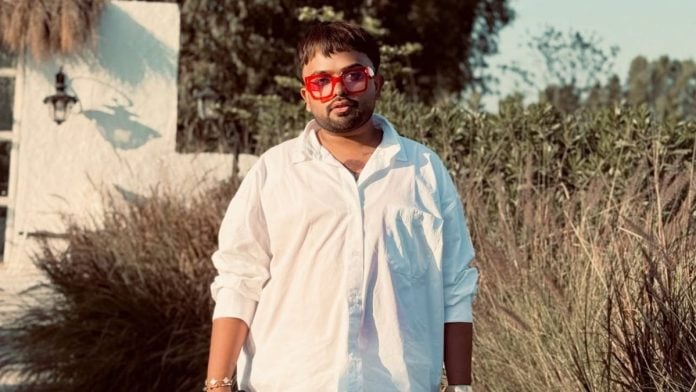
Amritsar: Retired Punjab policeman Bhupendra Singh sat in a neighbour’s house in Amritsar, his hands trembling as he scrolled through videos of his son on his phone. For years, he had told Madhusudan “Mad” Sandhu that there was nothing wrong with the way he lived. But his 28-year-old son had heard something very different from the people around him: warnings about his clothes, his videos, his sexuality and the ‘bad’ influence he was supposedly having on Punjab’s youth. Then, on 3 October, two men shot the queer make-up artist dead.
“They could not tolerate that he had gone ahead in life. People were jealous of his progress,” Singh told ThePrint. “My son was different. He always wanted to do something different. But being different did not mean he was wrong. People misunderstood him.”
Sandhu, one of Punjab’s most recognisable openly gay makeup artists and influencers, was shot dead Saturday on Loharka Road in Amritsar while he waited to collect his SUV from a carwash. His career was flourishing, and according to his family, his next step was Bigg Boss. Police are pursuing several leads and are yet to establish a motive behind the murder.
His family says the threats had run for years, including a recent one from a Nihang leader, and that Sandhu had asked police for protection a few months before his death. Fear had begun to shrink his public life. He stopped making Reels for almost a year after a threat and his family moved to a more secure neighbourhood in the city three years back.
For three years, Singh watched his son adjust his life around those threats. Last week, he watched those threats become a murder.
Punjab’s self-appointed cultural custodians have increasingly moved from objecting to social media content to policing the people who make it. Last year, a woman influencer was killed after being accused of posting “immoral” content; young couples and content creators have been confronted over their clothes and public behaviour; and LGBTQ people have faced objections to their visibility in a state where a Pride parade in Amritsar was cancelled last year after opposition from Sikh organisations.
The language is often the same: protect Punjab’s culture, save its youth, stop “bad influence”. And Sandhu — openly queer, visibly feminine and followed by more than 2.3 lakh people — had become an especially conspicuous target of that anxiety, even after the Supreme Court decriminalised homosexuality eight years back.
Sandhu found fame on TikTok a decade ago, ran a unisex salon where he trained women for free, and had also appeared in Punjabi films.
His clothes, videos and the way he presented himself had long drawn mockery and abuse online. After his death, that hostility has given way to something closer to a collective reckoning. Friends, followers and members of the LGBTQIA+ community have filled social media with tributes, calling him a figure who “will be forever remembered in LGBTQIA+ history” and demanding answers over his killing.
Sandhu’s house was full of mourners on Monday evening. Now, his father is trying to make sense of his son’s life that he once worried would tarnish his reputation.
“I am not doing anything wrong. I am entertaining people. I am making them happy,” an emotional Singh recounted his son telling him when he was a boy who danced at school functions, sometimes in women’s clothes. He struggled for years to accept that answer, but many around him did not.
TikTok fame to social work
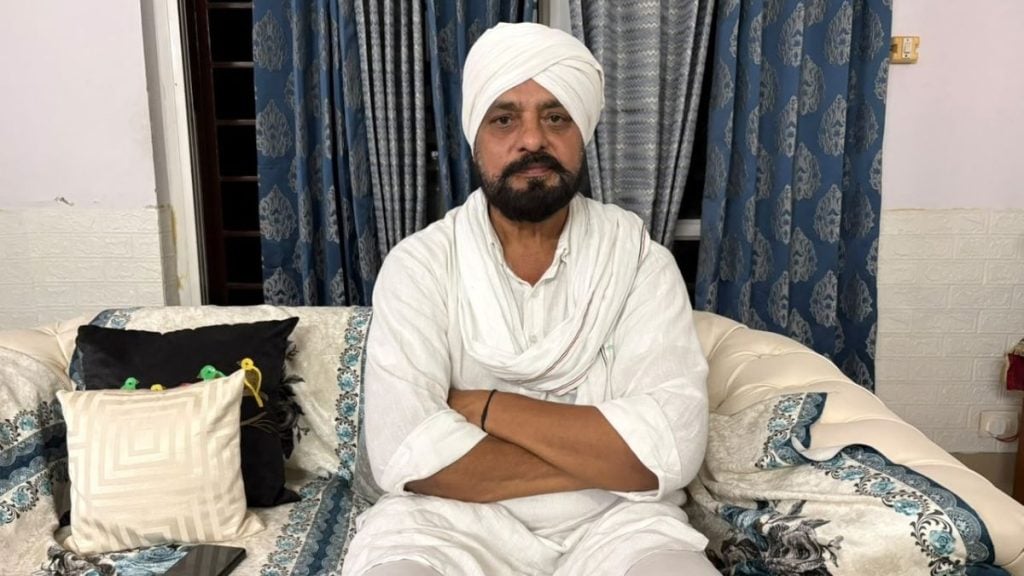
For Sandhu’s father, the story begins long before the shooting.
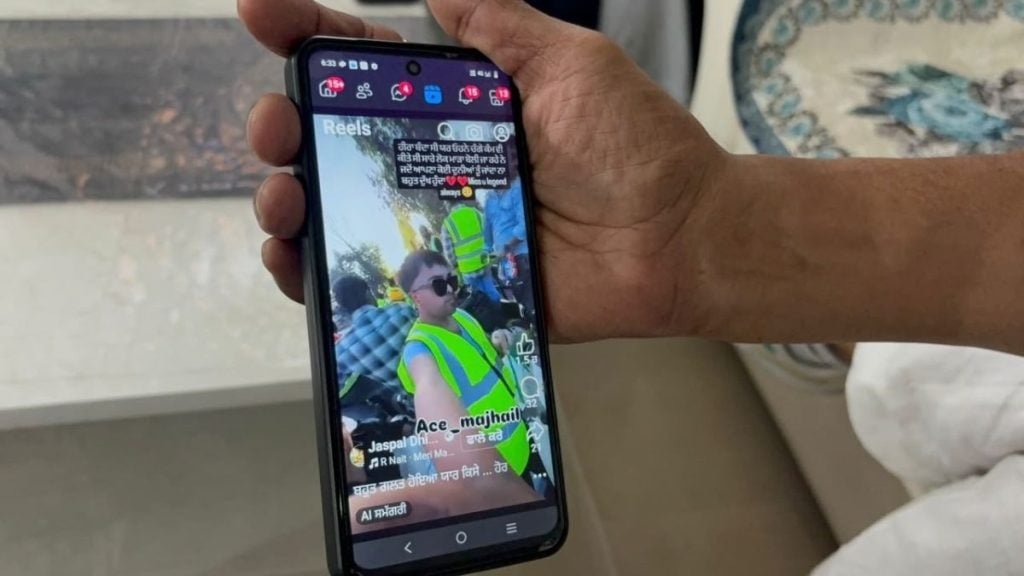
While scrolling through his son’s Instagram, Singh got emotional looking at his content — the makeup work he had turned into a career, the people he had helped, the things he had bought for his family with the money he earned.
One video showed Sandhu helping people during the 2025 Punjab floods. During the floods, his father said, he distributed supplies and helped people at relief camps. His father moved from one clip to the next, stopping now and then to point out something about his son.
Sandhu donated blood. He taught makeup to girls from underprivileged families. He went to the gurdwara regularly and, before leaving for work each day, would stop there to bow his head, his father said.
“He was good at everything,” Singh said. “Whenever he achieved something, he would come home with a certificate. He was a different kind of person. He used to do whatever he wanted.”
Sadhu started making TikTok videos in 2016, and his following quickly grew. His father would ask how many people had watched his latest video, watching with the same curiosity with which he had watched his son’s popularity climb.
When TikTok was banned in India in 2020, Sandhu had to find another way to turn his talent into a living. Makeup became that route. Clients started coming to their home for appointments, and soon he turned it into a full-fledged profession.
“He started earning when he was young, but he hardly ever asked our parents for money. Whatever he earned, he would spend on the family. He bought clothes and shoes for me, suits for our mother, and whatever else we needed,” Sandhu’s 23-year-old brother said as he lowered his head and struggled to hold back tears.
Who killed Sandhu and why?
No one yet knows who killed Sandhu or why. Within hours of his death, competing social-media posts claimed responsibility for the shooting, but police have not authenticated any of them.
The most public threat came in July, when Nihang Jathedar Manpreet Singh Khalsa questioned him over his clothes and social-media content. Khalsa warned on Instagram Sandhu that such content could affect “Punjab’s culture” and its youth.
After Sandhu was killed, a Facebook post attributed to gangster Goldy Dhillon claimed responsibility for the killing and accused Sandhu of “spoiling” the younger generation. A second post, attributed to Dhillon and his associate Jagga Tarn Taran, also claimed responsibility.
Then, a Spain-based alleged gangster, Lucky Johal, disputed Dhillon’s claim and said he was responsible for Sandhu’s killing. Johal subsequently warned another influencer, Arupreet, accusing him of making content similar to Sandhu’s.
But none of this has been established as fact yet. Police are still verifying the social media claims, CCTV footage and other evidence to identify the shooters.
Police Commissioner Harmanbir Singh Gill said investigators had obtained significant leads regarding the shooters and were confident of making arrests.
The claims have also brought the idea of moral vigilantism into sharper focus.
Sociologist Paramjeet Singh Judge, retired dean and professor of sociology at Guru Nanak Dev University, Amritsar, cautions against seeing the killing as part of an organised campaign before the killers and their motive are known.
“You don’t need a herd or somebody, some organisation. One young boy decides that there is something wrong going on, and they carry out the activity,” he said.
Yet the atmosphere in which such violence can take shape cannot be separated from the case, he argued. Religious discourses, songs and social-media posts repeatedly warn that Punjab’s youth is deteriorating, creating a vocabulary in which people’s clothes, sexuality, language or online presence can be presented as evidence of that decline.
“I don’t think there is some underground group intent upon moralising Punjabis. There are so many religious discourses and narratives about how our youth is deteriorating. You see it in songs and on social media,” Judge said. “But one has to understand why certain people are selected and attacked. In many cases like this, there is some personal angle.”
Over the past 18 months, queer people, influencers and young couples in Punjab have faced threats, public objections and, in some cases, direct action over how they dress, behave or present themselves.
In June, social-media influencer Kanchan Kumari, better known as Kamal Kaur Bhabhi, was killed in Bathinda. Police arrested Nihang leader Amritpal Singh Mehron, who had objected to her Instagram content, describing it as “immoral” and “vulgar”.
The incidents continued into 2026. In July, members of a Nihang faction raided a park in Ludhiana and confronted young couples and content creators over their clothes. Around the same time, influencer Ranjit Kaur’s home was raided, and she was forced to apologise for her romantic content with male co-actors.
Outrage followed every incident. After Sandhu’s killing, the grief quickly turned into anger over what he faced while he was alive.
In one Reel, a queer creator reacts to Sandhu’s killing by turning the camera on himself. As a voice in the background tells them to “stop walking like a girl”, give up nail paint, and grow a moustache, they try to erase each part of themselves — rubbing off the nail paint, wiping off lipstick and darkening the faint moustache with a kajal pencil. The reel ends with “RIP Mad Sandhu” on the screen.
Also Read: Punjab’s culture thekedaars have found their easiest targets—Influencers
The life Sandhu was building
In Amritsar, many knew Sandhu first through the videos in which he wore shorts and suits, danced and spoke openly to his followers.
There was another side to his career that was less visible in the city.
In 2018, Sandhu spent about a year in Mumbai, according to his father, where he worked in the beauty and fashion industry and around some of its well-known names, including Salman Khan and Farah Khan.
His Instagram posts from the time show him attending Lakmé Fashion Week in Mumbai. He frequently attended makeup competitions in Amritsar as a jury member.
“He designed a life he loved,” Sandhu captioned a picture in 2018.
Another showed him posing with a model wearing an outfit he had designed for New York Fashion Week under the Indian category.
His plans were only getting bigger.
Sandhu made his acting debut with the Punjabi film Oye Bhole Oye (2024), and then found more work in the industry. According to his father, he was in talks for several projects including reality television show Bigg Boss as a wildcard contestant later this month. He was due to leave for Mumbai on 20 October to take part in the show, he added.
“He was about to achieve more,” Singh said. “He had so many dreams.”
Despite his other work, one part of his life remained more visible to the outside world — the clothes, dancing, makeup and the videos.
The family moved homes to Dream City, a more affluent neighbourhood lined with large bungalows set behind high gates with gun-wielding private security guards.
But that did not prevent his killing or change the mindset of Punjab’s moral guardians.
“I have seen children being influenced by people like Madhu Sandhu — the way they dance, the clothes they wear, the way they behave. I have nothing against him living his life the way he wants,” said a cab driver in Amritsar. “But Punjab will never accept people like him. People here will always have a problem with them, and this is what happens to people who live so openly.”
(Edited by Stela Dey)
Nihang Sikhs are a threat to the safety and security of the average Indian citizen. The Union government must ban them or declare them a terrorist organisation.
With a Nihang Sikh around, nobody feels safe.