





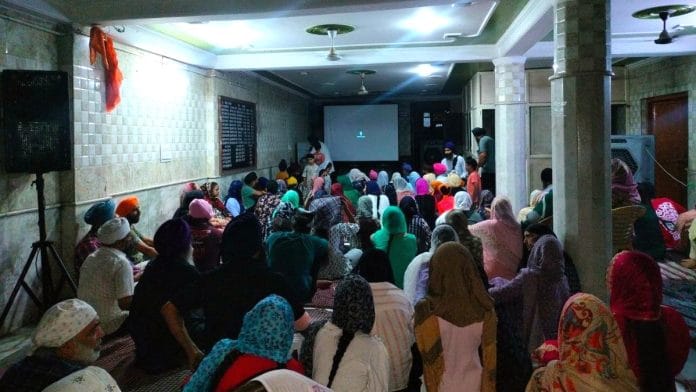

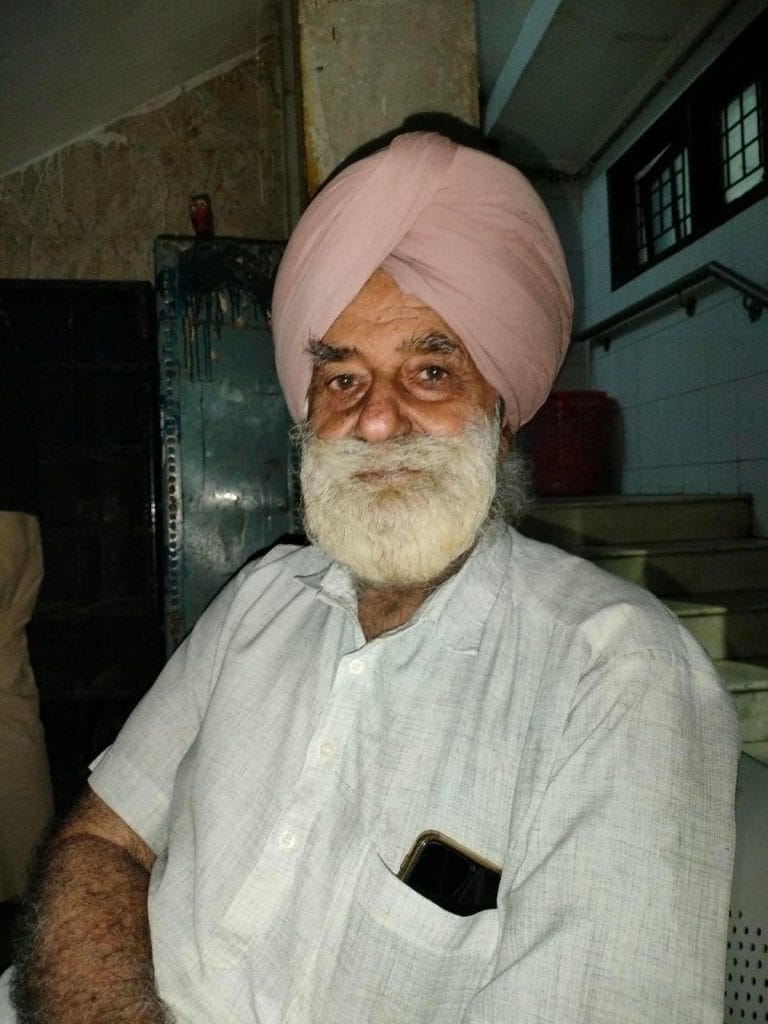
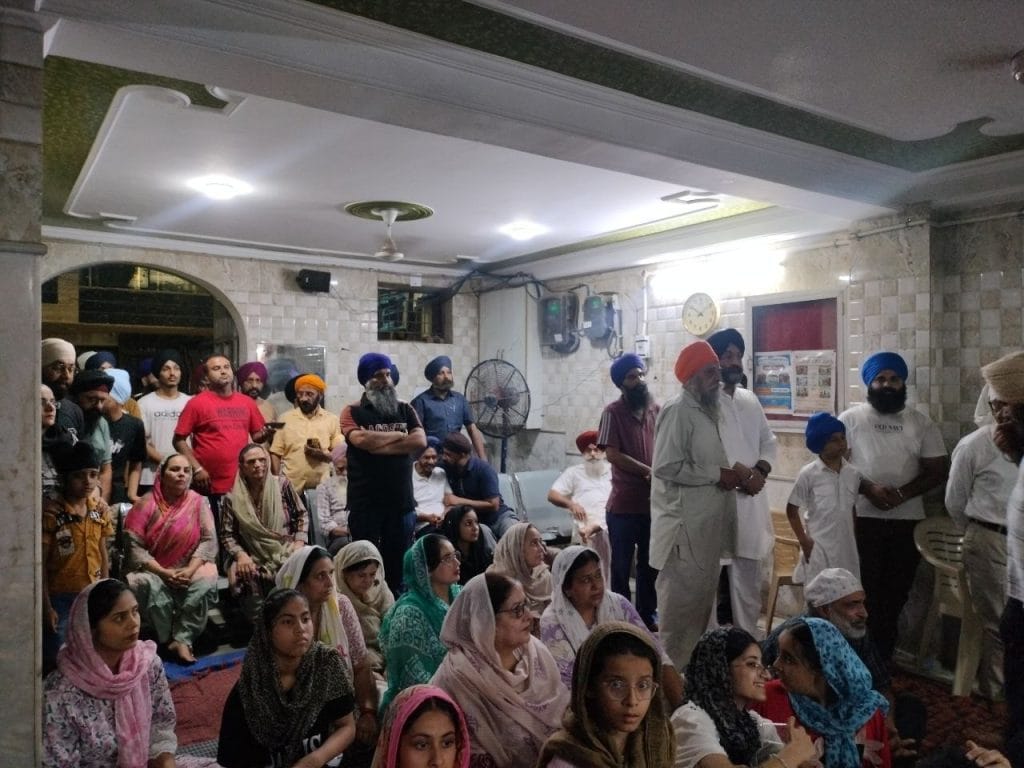
New Delhi: Fresh bandages from a recent surgery were still wrapped around 78-year-old Karnel Singh’s abdomen, and he could not sit for long. Yet he was the first to arrive at the langar hall of Gurudwara Dashmesh Darbar in Shastri Nagar for the screening of Honey Trehan’s Satluj on Saturday. He had heard about it in the community WhatsApp group. Soon, more than 150 people had packed the hall.
The encounter sequences left him in tears. “I was not in Punjab, but my relatives were. They have seen it,” said Karnel Singh, who came to Delhi during the communal unrest in Punjab in 1966, before Haryana was carved out of the state.
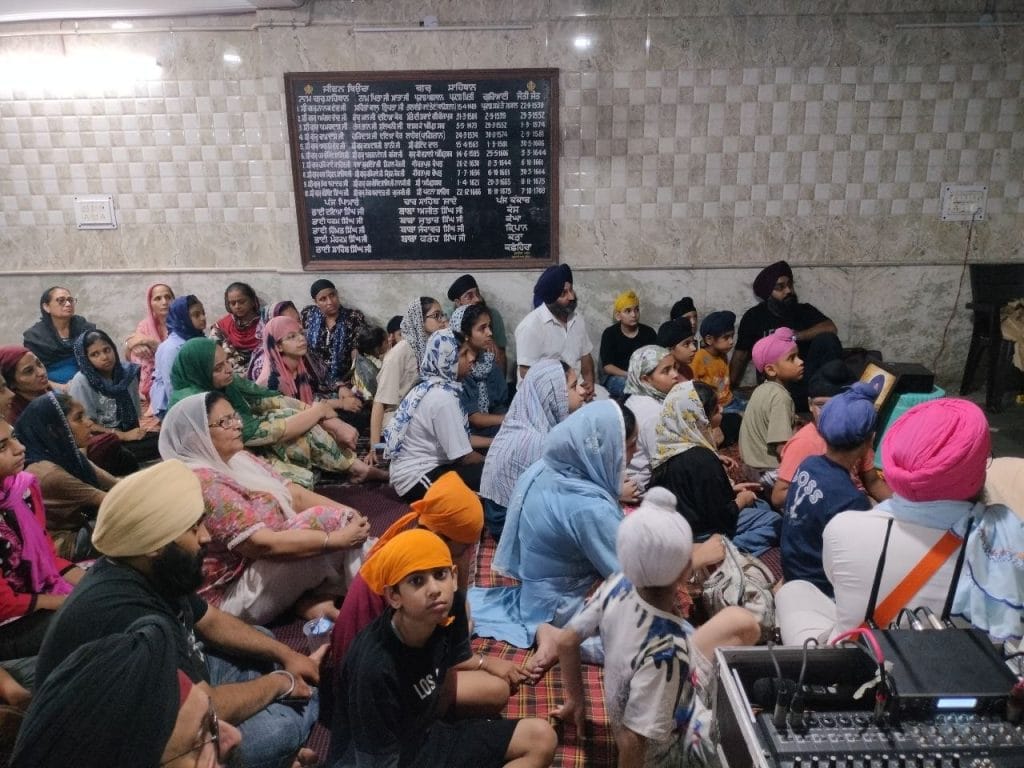
In the sweltering morning heat, with only ceiling fans whirring overhead, men, women, and children settled onto mats spread across the floor. Latecomers stood at the back or in the aisles to watch the Diljit Dosanjh-starrer, based on the life of Jaswant Singh Khalra, who was killed in 1995 for exposing the Punjab Police’s secret cremations of thousands of Sikhs during anti-militancy operations.
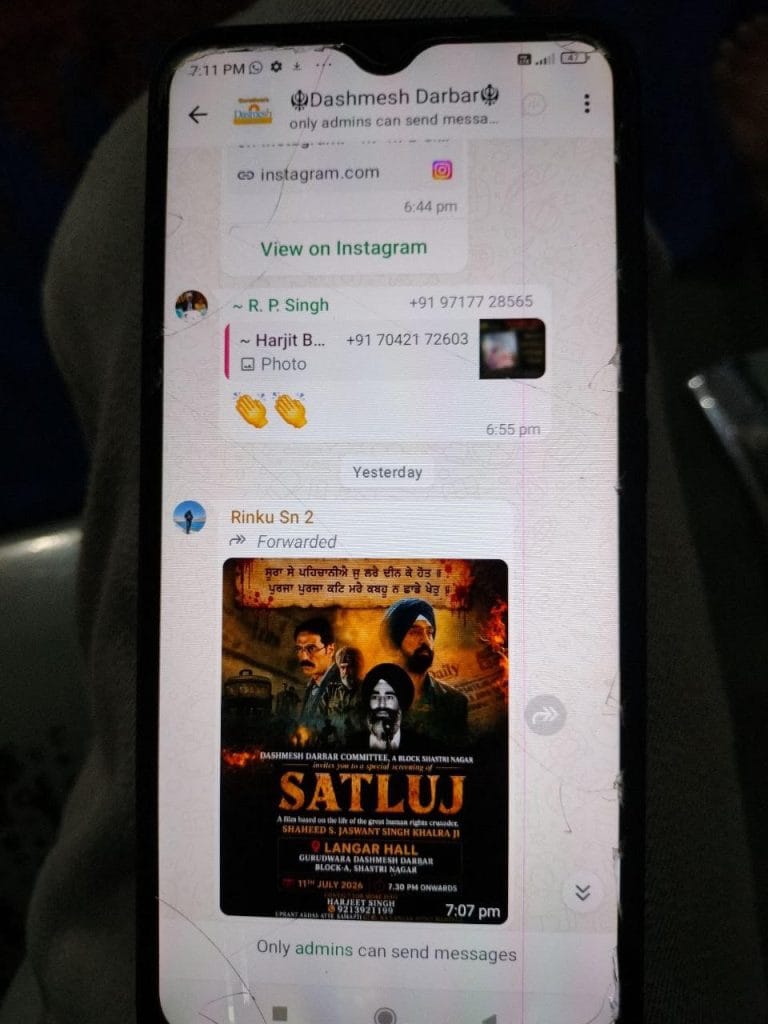
For the community’s elders, the film reopens the horrors of both the insurgency years in Punjab and the 1984 anti-Sikh violence that followed in Delhi. For the children, teens, and Gen Z beside them, who know that history only from family stories, it has ignited a fierce curiosity and served as an emotional bridge to the painful chapters of their families’ pasts. Ever since it was pulled from the streaming platform ZEE5, the film has attracted droves of defiant viewers, with screenings from Punjab villages to Delhi gurdwaras.
Many families in Shastri Nagar had migrated to Delhi during the Punjab insurgency and later lost loved ones during the 1984 Delhi riots. Karnel Singh recounted that the langar hall where the film was being screened had once been a park, where Sikhs and members of the other community confronted each other several times during the riots.
“The dark chapter of Punjab… and a similar horror experienced by me and my family during the Delhi riots,” he said in Punjabi . “A group of men tried to burn our houses and vehicles with petrol bombs. Kids and women around the neighbourhood used to throw stones from their balconies at these people.”
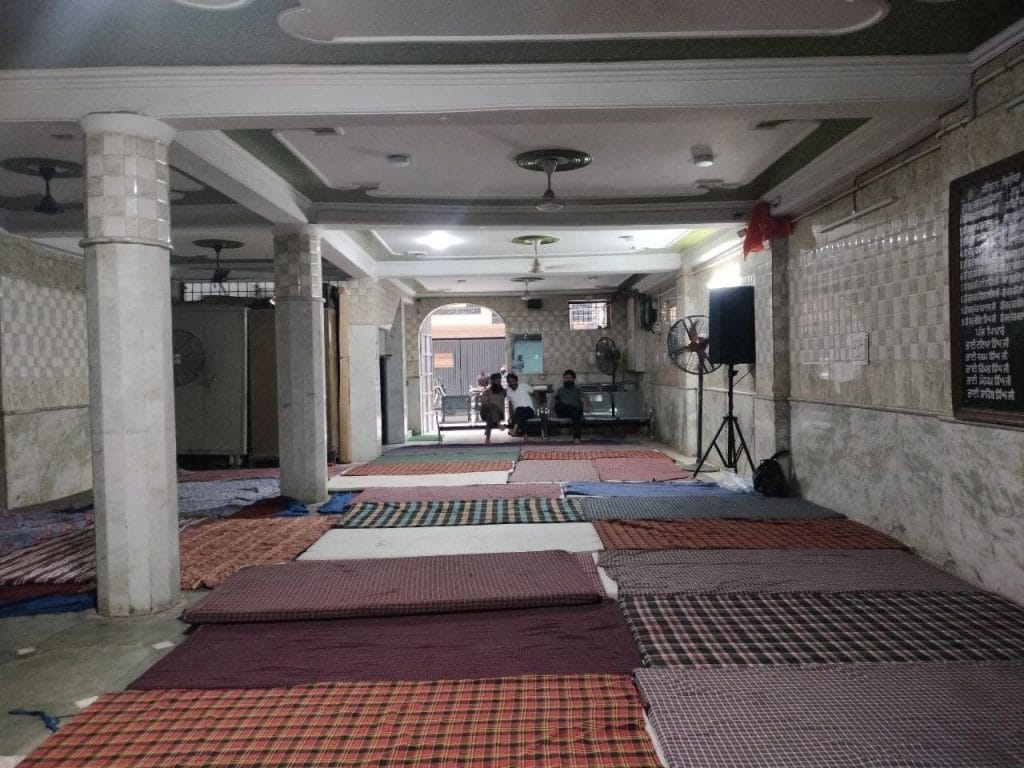
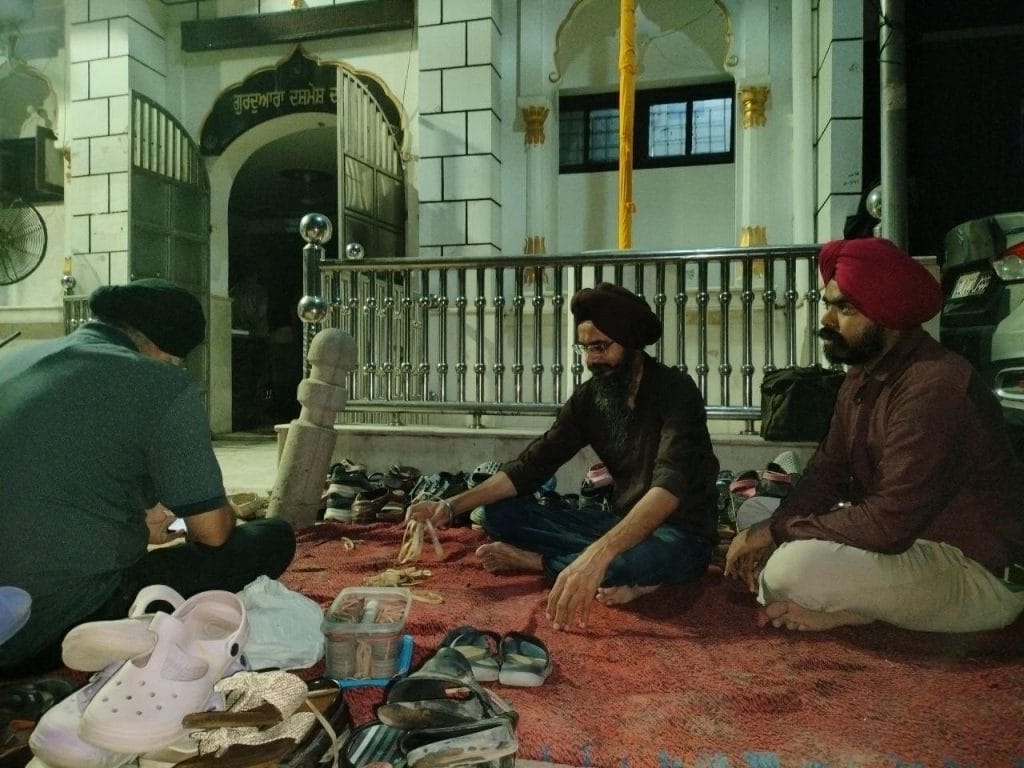
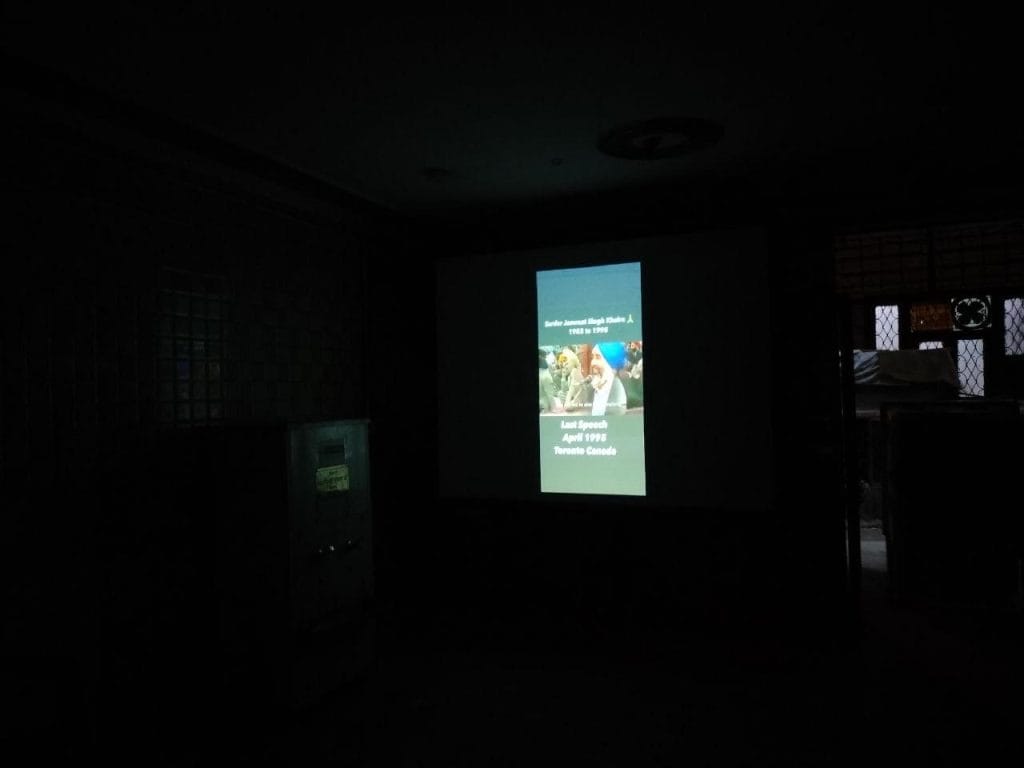
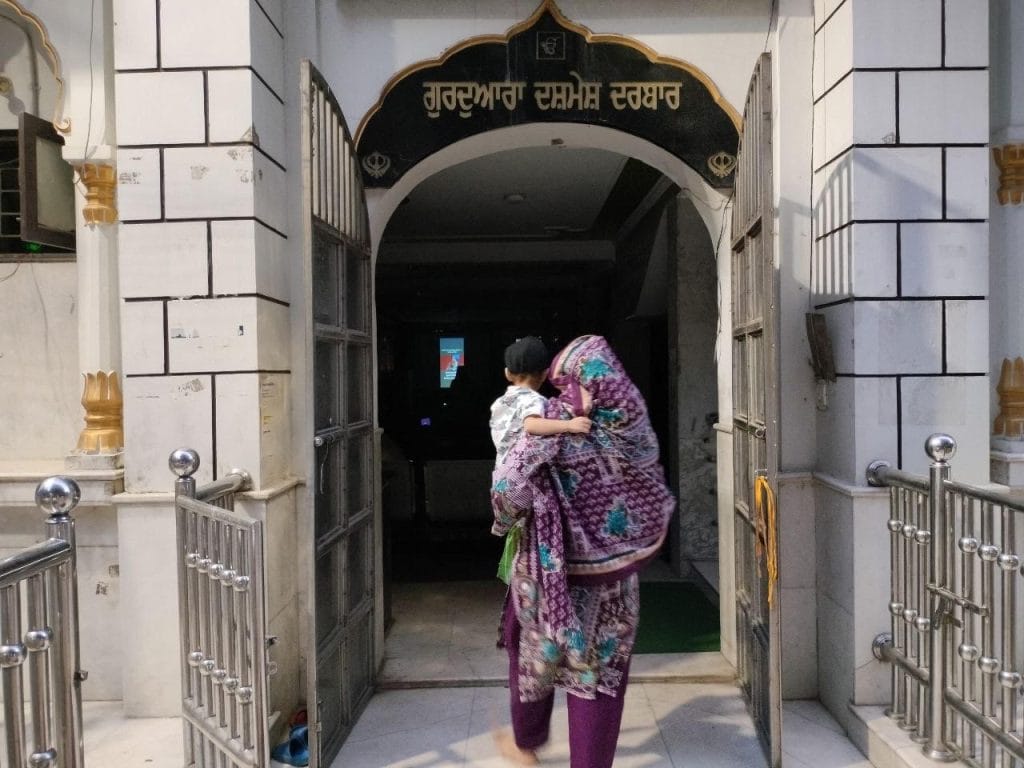
Before the film started, a speech by Jaswant Singh Khalra was played in the hall from a projector that had been placed on top of a bucket. At the entrance of Gurudwara Dashmesh Darbar, volunteers collected the shoes of those going inside. Others served glasses of water and meetha paani to people entering the premises.
Among the men doing sewa was Sukhbir, around 40. Ten or 15 minutes into the film, he had handed out 150 tokens for footwear placed in the cupboards. Many others had left their shoes there without taking a token. He’d already watched the film on YouTube.
“The film is just a documentation of what our elders have gone through, and now we are forced to feel the same while watching the film in a gurudwara,” he said.
Also Read: Satluj risks rekindling anger & distrust in Punjab. It’s not about the film, but the votes
‘It feels like déjà vu’
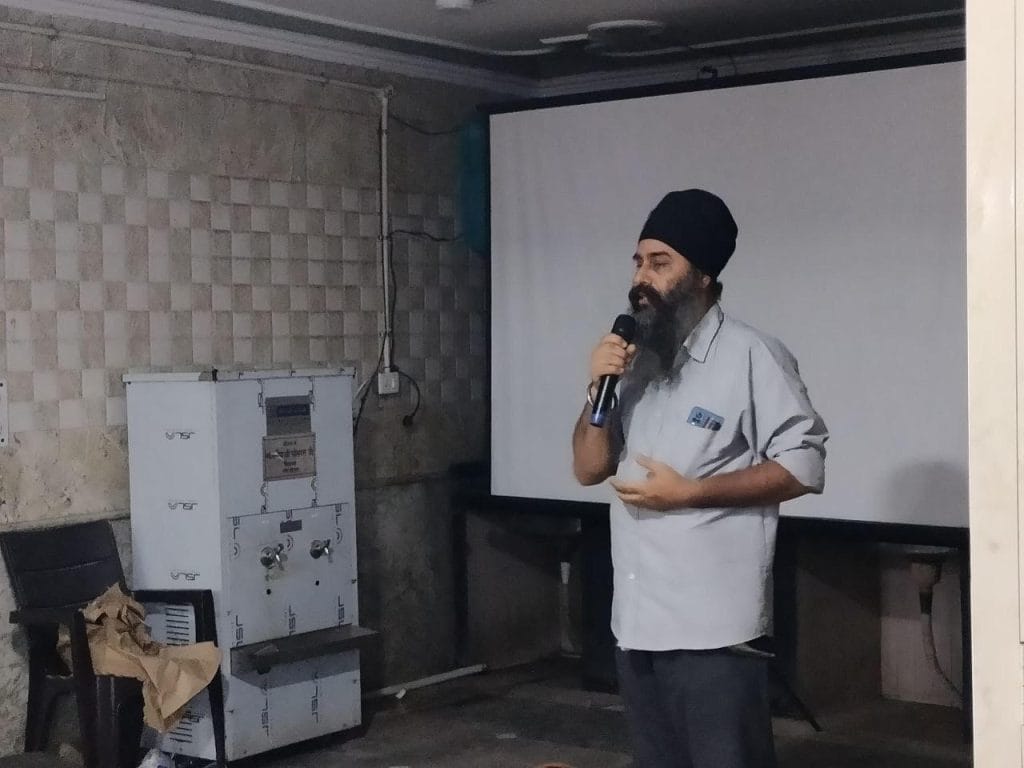
Before the film started, gurudwara secretary Harjeet Singh told the crowd why the screening was being held. It was time, he said, for younger people to see what Jaswant Singh Khalra and others had endured so that future generations could have the privilege of living in today’s world.
As the screen flickered to life, the hall echoed with the Sikh greeting of Fateh. The entire gathering chanted in unison, filling the hall with energy.
Most of the Gen Z and millennial audience had already watched the film and were showing each other the platforms from where they had downloaded it. Many said they had received the film through WhatsApp. While they had not witnessed the Punjab insurgency first-hand, several shared that their grandparents and parents had often told them stories of the violence. Watching the film, they said, brought back every story they had heard as children.
“It feels like déjà vu,” one of them said.
Gagandeep, in his 20s, said this was the history he had grown up hearing from his family while they were trying to rebuild their home and business in Delhi.
“The film was stopped for years because the authorities know there is truth in it,” he said.
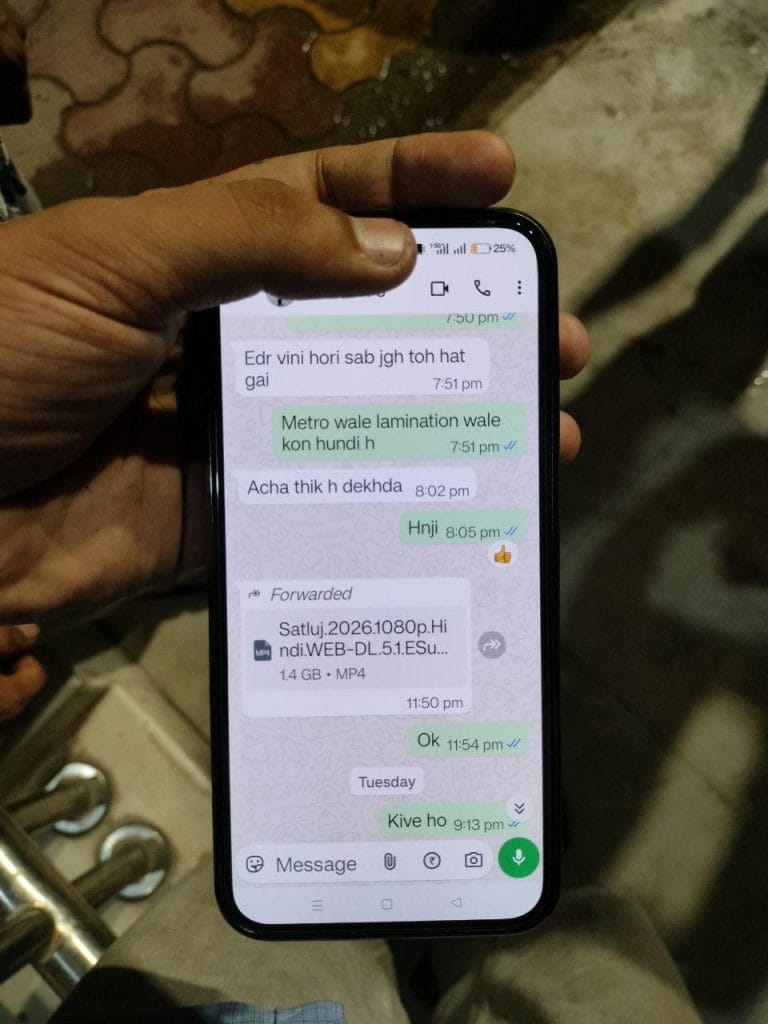
Gagandeep said people had taken note of an old livestream in which Diljit Dosanjh warned that the film could be removed from Zee5. Many had therefore downloaded it onto their phones in advance. His own family watched it while it was still available on the platform. He said the film served as a historical documentation of Punjab’s past and was making younger people more aware of that chapter.
Sitting beside him was 15-year-old Ikam, who had watched the film with his father on Zee5. He said he had known nothing about the subject before then, adding that his father had told him, “Watch the film now, it will surely be taken down.”
The youngest viewers sat closest to the screen, most of them between seven and 15. They were not as attentive as the women sitting with them on mats laid out by gurudwara members, but some whispered indignantly about how such things had happened only to their community.
Standing in one corner was Gurmeet with her two-and-a-half-year-old child. Having grown up in Delhi, she said she had never fully understood or related to the horror that older members of her family spoke about.
“Watching the film, with Diljit’s acting, now I know what really happened and why my family was so horrified by the idea of returning to Punjab,” she said.
Fearing the police
As the younger set discussed the film, the older men spoke of the brutalities they had lived through.
On the film’s depiction of bodies being disposed of from a dam-like structure on the Sutlej, some said they knew the spot and that they and their fathers had travelled the same route. One man broke down as he remembered his family being forced to leave Punjab. Several said relatives later moved to Canada, while they had remained in Delhi.
Among them was Indrabaal. He had not personally faced the violence, but his cousin was arrested by the police during that period and released a week later. The fear stayed with the family for years.
“They bought a Gypsy because it looked like an officer’s vehicle,” he said. “The family was living in Punjab and wanted to avoid any confrontation.”
Around an hour into the screening, the langar hall was crammed with people and not even standing space was left. Those who could not get in gathered outside near the volunteers doing sewa. Most had already watched the film, but had come to meet friends, neighbours, and elders they had not seen for months because of work. They said the community rarely came together like this otherwise.
Those standing outside discussed the cuts made to the film. Some said they might never have watched it had it not been pulled from ZEE5. Many had not even known that the film was being made.
Standing near the entrance of the gurudwara, occasionally helping distribute meetha paani, was 30-year-old Kanwarpal Singh. He said he had been waiting for the film since its poster was released in 2022 because it was deeply connected to his family’s history.
“I grew up hearing about 1984, and members of my mother’s family were killed at that time,” he said. Most of that side of the family now lives in Canada.
History repeats itself, just as fashion does, according to him.
“Bell bottoms have come back, and with this screening the community is again remembering what happened to our people,” he said.
His family was originally from Tarn Taran, where Jaswant Singh Khalra lived and where several scenes of the film were shot.
“Unless you have gone through such panic yourself, you can’t fully explain it. Only the person who has lived it can describe what it feels like,” he said.
Kanwarpal added that he knew little about Khalra before seeing the film’s poster. He began reading about him afterwards. His family, however, knew people who had been picked up by the police during that period.
“My father was also detained once, but somehow he managed to escape,” he said.
He recalled another incident from nearly a decade ago, when his bua was travelling to Bathinda for a wedding and the police detained the family. Although they were released in a few hours, the incident revived memories they had long tried to leave behind.
Kanwarpal no longer wants to forget. He now reads accounts of Punjab’s insurgency years and seeks out films about them, such as Hawayein (2003) and Punjab 1984 (2014).
Also Read: Diljit Dosanjh’s Satluj is Punjab’s biggest controversy. How it got here
‘We are not scared’
When the film ended, the hall echoed with chants of “Waheguru Ji Ka Khalsa, Waheguru Ji Ki Fateh.” Harjeet Singh then returned to the front, holding a framed photograph of Jaswant Singh Khalra.
“Everyone present should keep a photograph of Khalra in their homes and offices,” he said.
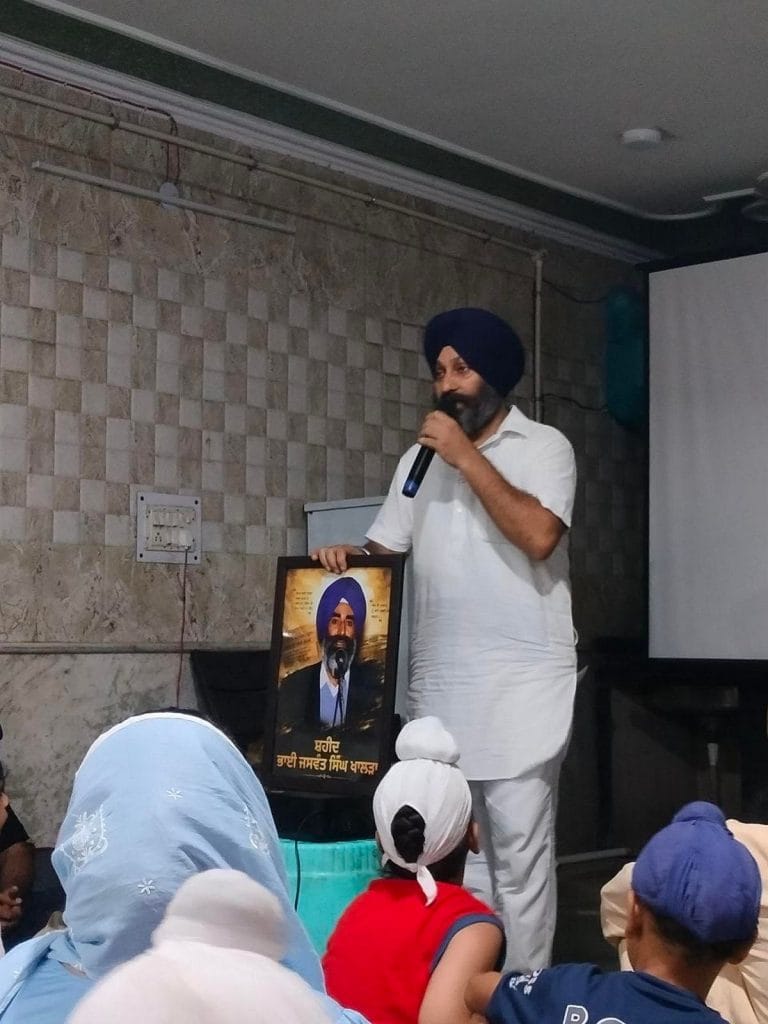
Harjeet said the local police station had called several times to ask about the screening. Later, a police officer in plain clothes also visited the gurudwara and clicked photographs of the audience watching the film.
“But we are not scared to screen the film. This is our history, a black chapter that should be known to the younger generation,” he said.
Another community member then came forward and broke down as he recalled watching the film for the first time. He said he had known people who were killed during that period, and that the film had reopened wounds that had never fully healed.
After the address, langar was served to everyone seated in the hall.
(Edited by Asavari Singh)